

Türkiye and Abkhazia
A public campaign entitled “Let’s End the Isolation of Abkhazia” has been underway in Türkiye since late June 2026. The main initiators are activists from the Abkhaz diaspora in Türkiye, as well as representatives of Circassian civic circles. The initiative received support from Türkiye’s Labour Party, EMEP (Emek Partisi). Subsequently, the campaign gained the support of representatives of several Turkish opposition parties: DEM Parti (the Peoples’ Equality and Democracy Party), TİP (the Workers’ Party of Türkiye), Yeni Parti (the New Party), DEVA (the Democracy and Progress Party), Saadet Partisi (the Felicity Party), Gelecek Partisi (the Future Party), and Yeni Yol, a parliamentary group bringing together members of parliament from several parties.
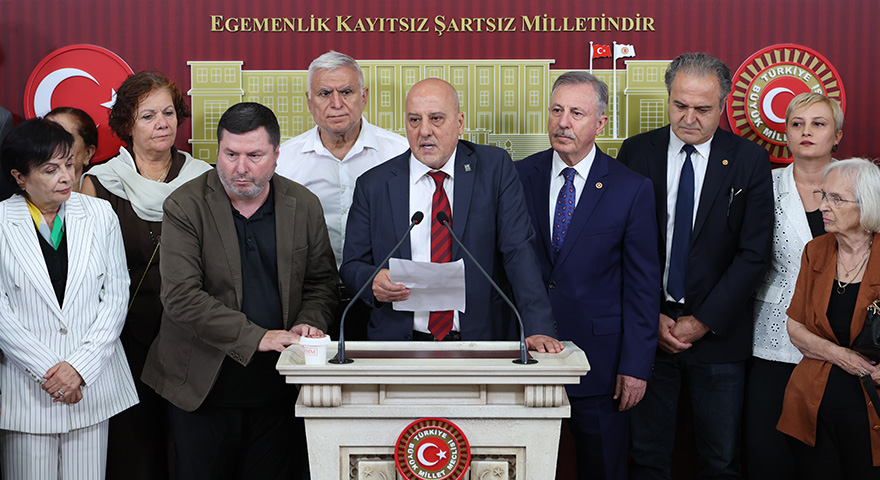
On 5 August 2026, representatives of these political forces took part in a joint press conference. Their appeal called on Ankara to take the following steps:
The campaign has received relatively limited and superficial coverage in the Abkhaz media. It could be said that the local political leadership and media have largely paid little attention to this process.
We present the comments of several local experts on this issue. The following key points emerge from their responses:
Questions for the experts and their answers:
Question: Since August, the campaign “Let’s Put an End to Abkhazia’s Isolation” has been underway in Türkiye. It aims to establish direct transport links between Abkhazia and Türkiye and to have the Abkhaz passport recognized as a valid document for entering Türkiye. In your view, how could Abkhazia help bring this initiative to fruition? Should we provide more active support to our compatriots participating in the campaign?
Respondent 1: Without a doubt, we should support them more actively, and this support should be evident at every level and across all segments of Abkhaz society.
I also believe it is extremely important to communicate the unequivocal benefits that such an outcome would bring to all residents of Abkhazia. At present, there is a sense that it is primarily ethnic Abkhaz who support this initiative. No real effort is being made to explain the prospects that would open up for all residents of Abkhazia if this issue were resolved positively.
There are apparently no such materials, or almost none – I do not know, as I have not come across any serious analytical publications—that, for example, demonstrate the prospects for economic and cultural de-isolation or the opportunities this would create for young people, including access to education and knowledge.
Broadly speaking, the Republic of Türkiye itself remains a closed subject in Abkhazia. In other words, on the one hand, we want to end Abkhazia’s isolation from Türkiye, but perhaps, in this case, it would make sense to turn the question around and ask: how much do Turkish citizens actually know about Abkhazia?
I am afraid that today Turkish citizens may know more about Abkhazia than Abkhaz citizens know about Türkiye. Perhaps I am exaggerating somewhat, but this is the essence of what I am trying to say: paradoxical as it may sound, we too must take steps to “de-isolate” Türkiye from our side, in its relationship with us.
I believe this would be an honest conversation: a process of reaching out to one another, in which we also make genuine efforts. Just as Turkish politicians, public figures, and our compatriots are working towards this from their side, we must do everything we can on our side to open Türkiye up to Abkhaz citizens. What do we actually know about Türkiye, apart from a few clichés? Very little, really. I therefore believe there is a great deal that could be done in this regard, including, incidentally, in terms of building grassroots connections and fostering early forms of cooperation – for example, with Turkish medical professionals.
Respondent 2: In any case, the state must do everything in its power, first, to overcome Abkhazia’s isolation and, second, to secure the broadest possible international recognition of its statehood. In this regard, I would not separate the citizens from the state: it was these very citizens who once determined which state they wanted to live in.
This is consistent with the principles underpinning our vision of statehood. Therefore, the state, through its authorities, should be guided by these principles as a matter of course and take every possible step in this direction on all international platforms.
Respondent 3: I believe Abkhazia could work within Abkhaz society to explain what isolation means and how ending that isolation could tangibly change people’s lives and improve the quality of life for Abkhazia’s population. It seems to me that a more detailed discussion could be held within the country, involving different groups and taking place across various media platforms and at the university. The aim would be to convey the meaning and importance of this initiative for Abkhazia—that is, the normalization of Abkhazia’s presence on the world stage.
Furthermore, in my view, the outcomes of these discussions must also be communicated to our compatriots. Simply talking about the issue and reposting content is one thing; receiving support and feedback from Abkhazia is quite another. Without such support and feedback, it is very difficult to sustain this process and expand it on a larger scale.
Question: The campaign is receiving virtually no coverage in the official Abkhaz media. What do you think might account for this?
Respondent 1: As for the campaign that our media are not covering, I think the reason is parochialism. It is becoming increasingly prevalent in our politics.
Sadly, there has been a lack of grand ideas, accompanied in recent years by persistent lamentations, particularly on the part of former President Bzhania. This tendency began earlier and continues today, but it was neither as pronounced nor as absolute as it was under him: “We are worthless; we can do nothing on our own; we are led by the hand; we do not know how to do anything; we have to look to someone else for guidance.” We spend a great deal of time looking to others for direction, and those who are always looking up to someone else never look around them. They do not merely fail to see beyond the tip of their own nose—they cannot see beyond someone else’s mouth. And that is how the whole situation unfolds.
Why should we look for a long-term perspective? Why should we think about a national strategy? Why should we concern ourselves with anything that cannot be put into our pockets or into our mouths here and now, allowing us to live comfortably and happily for the next few days, perhaps weeks, perhaps months, provided we are allowed to do so and behave ourselves?
In the case of this initiative, there is a sense that someone might decide we are not behaving properly. And in these mind games about what is right and what is wrong, unfortunately, the machine wins.
In Abkhaz politics, the “mammon” – the cult of money and material wealth – has now definitively and irreversibly gained the upper hand, not throughout the entire political landscape, but certainly within its mainstream. This is what drives the Abkhaz establishment today, and not just the establishment: many voters, too, are sending unmistakable signals to this effect. Thank goodness, not all of them, but many.
And so we are struggling to follow the prescribed course of “proper behaviour” – in other words, the path of Pavlov’s dogs. We are finding it difficult and encountering obstacles, but, with considerable effort, we are still moving along that path.
Apparently, this initiative is particularly unwelcome to people of this kind because it pulls them away from that trend. It shows that if you demonstrate willpower – even a minimal amount – and stand up to circumstances that may seem insurmountable, you can still achieve results.
Suddenly, we begin to remember something that, by today’s standards, seems almost subversive: we resisted Georgian aggression, stood our ground, and won in a way that, by today’s standards, would be extraordinary and inexplicable. In other words, it seems that today’s Abkhaz establishment does not even ask itself what decisions its members would have made under those circumstances. Sadly, today we have neither Vladislav Ardzinba nor Zurab Achba nor Yuri Voronov. We have grown smaller in stature, and our political class has diminished along with us.
Respondent 2: I think these are the usual complexes stemming from last year’s presidential election and the tone adopted during the election campaign: smear tactics and so on. At the time, people who opposed the authorities or did not belong to their camp of supporters were branded as Turkish agents.
For example, a story was vigorously promoted claiming that opposition candidate Ardzinba was the candidate of some mythical pro-Turkish forces. Everyone knew this was nothing more than the kind of lie commonly encountered in election campaigns. Nevertheless, I think the myth worked.
Now everyone is afraid of being labelled as part of pro-Turkish forces, against the backdrop of current geopolitical developments, when there is a lack of trust in all the players involved. In a situation where Russia is confronting half the world, all sorts of phobias emerge. The West is indeed probably Russia’s number-one enemy, and the European Union unconditionally supports Ukraine. But there are also regional players about whom questions are raised and towards whom a shadow of mistrust also persists.
In this context, Türkiye is also perceived as a rival, and any discussion of policies that our authorities might pursue on Turkish territory is likely to be viewed as ambiguous or open to suspicion. That is probably why our authorities are being so cautious.
Respondent 3: In my view, this is extremely important, and this point leads directly to the second question. On the one hand, of course, we need to maintain a balance. As we understand it, any expression of Abkhaz presence on the international stage invariably provokes a negative reaction from the Georgian authorities, who then use every means at their disposal, fair or otherwise, to try to obstruct it.
Consequently, this process needs to be discussed and covered in the Abkhaz media, but certain issues must be approached strategically. It would probably be worth maintaining some distance and making it clear that this is a process initiated by our compatriots, who are citizens of the Republic of Türkiye today, and that it is their own initiative. Naturally, these efforts need to be coordinated, and there must be communication with Abkhazia, their historical homeland.
At the same time, to safeguard this process, it is both possible and necessary to strike a strategic balance and, at times, wait for the right moment. As I have already said, discussions within Abkhazia about de-isolation itself and its benefits for Abkhazia could be pursued more actively. I always say that our main goal is comprehensive and all-encompassing international recognition. But to achieve that, we need a process through which we can attain short- and medium-term objectives.
At present, in my view, the de-isolation of Abkhazia is primarily humanitarian in nature. If implemented properly, it would resolve a vast number of problems: it would provide mobility and create opportunities for Abkhazia to be represented and heard.
Question: Outside Abkhazia, some commentators have suggested that the campaign may pursue political as well as humanitarian objectives. To what extent do you consider this view justified?
Respondent 1: In this case, we are seeing doubts being cast on the sincerity of the message conveyed by the initiators of the campaign to end Abkhazia’s isolation in the Republic of Türkiye. One is tempted to say that the guilty person’s hat is on fire. In other words, who, exactly, is criticizing this initiative? As the saying goes, let the one who is without sin cast the first stone.
All of this is nothing more than a political charade and an unworthy act of manipulation—something that does not deserve even the slightest attention from us. We should understand just one thing: if this initiative irritates someone deeply, if someone categorically opposes it and frantically searches for arguments to denounce, ridicule, or belittle it, that is a clear sign that the initiative is touching on someone’s political interests.
Today, just as we have throughout the past several decades, we find ourselves at the height of a political struggle for our future, for our very survival as a nation. Attempts have been made to impose a policy of erasure on us since Soviet times, and we have been resisting Georgian nationalism for many years. Today, other problematic factors are also becoming entangled with this phenomenon, against which our people have had to resist to the best of their ability.
Since 1992, this resistance has taken on an unmistakably armed character, and we stood our ground back then. Those who now criticize, ridicule, and belittle this idea of ending isolation from various directions are certainly not our friends. At the very least, I would view with considerable suspicion anyone who tries to undermine this initiative: who are they, what do they stand for, and how do they present themselves? How should we identify and characterize these individuals who stand apart from the rest, whether in the future or even now? More likely, we are dealing with a systematic approach, because certain trends point to a serious danger: the danger that many of the actors around us may find themselves facing an Abkhazia that is more sovereign—truly sovereign—and more independent.
For many people, and unfortunately not only external actors but also the various political figures who have proliferated within the country, this prospect may be hard to swallow. Yet this is an important moment that reminds us of something fundamental: if you are not afraid to act as an independent political actor, you can move mountains. And that is precisely the attitude we should adopt towards this initiative. It should strengthen our belief that we are doing everything right.
Respondent 2: There is always a political dimension behind humanitarian issues. If Turkish politicians begin examining our problem, questions directly related to politics will inevitably arise: Georgian-Abkhaz relations, the war, and the history of the conflict. In any case, it will already have become a political matter. At the same time, the more people talk about Abkhazia, the greater the interest in its history and the current situation in the country, making it increasingly difficult to describe this campaign as purely humanitarian. Politics will always be present, at least indirectly.
I do not see any risks for us. Our situation, so to speak, is at the zero stage, and any movement, however small, is a step forward. Therefore, broadly speaking, I see no risks from the Abkhaz side. Risks could probably arise if this issue became a subject of domestic political debate in Türkiye. But that would be a Turkish problem, although I do not think the Abkhaz issue is so vital to the Turkish political elite. I believe this agenda concerns primarily representatives of the Abkhaz diaspora and perhaps the Circassian and other Caucasian diasporas, but little beyond that.
On the other hand, in the current context, when the world is undergoing a new division of spheres of influence and new rules are being established, the question of Abkhazia in Türkiye itself may be viewed not only from a humanitarian perspective but also through the lens of geopolitical interests. I do not rule this out at all, given what is happening in Azerbaijan and the development of Türkiye’s relations with the republics of Central Asia and all Turkic-speaking republics, including those located within Russia itself. In this respect, Türkiye may well have interests of its own, and that is perfectly normal.
Respondent 3: This is undoubtedly a humanitarian initiative, but it may also lead to certain political developments, as there will be more direct contacts between Abkhazia and the outside world. What makes the Abkhaz situation unique is that the idea of establishing an independent Abkhaz state is supported not merely by an overwhelming majority, but by the entire population of Abkhazia.
Therefore, whether we want it or not, this idea will continue to move forward. Here, returning to the previous question, we need to safeguard the process strategically so that, by the time it naturally moves into the political sphere, the necessary foundation for discussion will already be in place.
Question: Do you see any signs of a reversal or slowdown in the repatriation process today? If so, what do you think might be causing it?
Respondent 1: To be fair, we have to acknowledge that, in previous years as well, repatriation never became a national project in which our state and society invested serious effort and resources. This was due to a combination of objective and subjective circumstances.
What I want to emphasize is that this very process of de-isolation, which I sincerely hope will prove successful – whether fully or partially – could become a turning point for repatriation. It is also another concrete reason why external actors may find this prospect so unpalatable: each of them seems to dream of seeing fewer Abkhaz people in Abkhazia. They would prefer the Abkhaz to become less numerous and, consequently, more timid; better still, they would like them to forget their very essence, their distinct identity, altogether.
This initiative could turn any underhanded scheme involving apartments and the other tempting benefits that certain external players have in store for us on its head. They all want to grab their share of the pie, but what do they agree on? That the Abkhaz themselves, quite clearly, should have no place in this equation in the twenty-first century.
I very much hope this will not happen, although lately it has become difficult to hope for anything when we look at Palestine, devastated and wiped off the face of the earth. I hope that such a full-scale, deeply entrenched genocide cannot be allowed to happen, and so we are left having to endure the situation.
In this case, then, this is a card that could become a joker. This campaign could become the joker in our deck, capable of trumping the strongest cards held by those who assumed that they would always be able to determine our intentions, our prospects, and our understanding of things – both in the immediate future and for the foreseeable future, perhaps even indefinitely. Yet suddenly, it has turned out that a grassroots initiative launched in another country by our compatriots can take on such a scale and character.
In that sense, this initiative is equivalent to full-fledged repatriation. Moreover, it is an initiative that changes the very meaning of the process. People will no longer have to view repatriation in such stark terms: that they must abandon everything, burn their bridges – at least to a considerable extent – and completely change their lives in order to move to their historical homeland.
In other words, it suddenly becomes clear that repatriation can be carried out in a much more gradual and less disruptive way. This initiative could radically transform the very concept of repatriation. I think that everyone except us has already calculated both the real threats this poses to them and the potential gains it could bring us. But why are we so poor at doing these calculations? Why do we lack proper, comprehensive research, including in the field of internal migration? For example, what demographic groups and social strata do we have? What population movements took place after the war? Who has studied these patterns? Who has examined the specific characteristics of these movements and how people’s ways of life have changed? No one has.
And if this process comes to an end – and I hope it will end successfully – it could turn everything upside down. It is a remarkable thing, but sometimes the effect can be multiplicative, I think, when you finally get off your backside and decide that you need to do something for your country, that you need to take real action. If some Abkhaz people – not all of them, but even a substantial proportion – take this step, and if that substantial group can also rally others around them, as they did before the war, during the pre-war period of 1990, 1991, and 1992, explain the situation, suppress the first signs of arrogant nationalism and chauvinism directed at the Russian-speaking population, and bring them over to their side, then the combined effect would, of course, be extraordinary.
I believe people will very quickly recognize all the benefits they stand to gain when, for example, we are able to trade fully with the Republic of Türkiye. For us today, that would be tantamount to having full-fledged access to the rest of the world.
Respondent 2: I do not think there has been any major overall reversal in repatriation. It seems to me that the issue lies in the capacity of the Abkhaz state itself. There were no large-scale waves of return to the homeland in the past, and it is unlikely that there will be any now.
When the fourth, fifth, or perhaps even sixth generation has lived outside its historical homeland, there needs to be a sufficiently compelling case for people to return. Under current conditions, this means, first, a competitive economy; second, security; and, of course, transport links.
If the initiative pursued by the activists currently working to establish maritime connections succeeds, it could at least accelerate the return of our diaspora to Abkhazia, even if only by a small step. If, however, there were substantial flows of returnees and those flows were being obstructed, then it would be reasonable to speak of deliberate action by the authorities.
But when, by and large, no such flows have existed, it is difficult even to suggest that the authorities are holding anything back. People may think whatever they like privately, but when there are no substantial flows of returnees in the first place, there is simply no visible evidence of any efforts to obstruct them.
Respondent 3: In my view, repatriation is a declared goal of our society, at least in name. But, like many other issues, it has not received the thorough discussion it deserves. There are very successful examples of members of the Abkhaz diaspora—Abkhaz people who lived outside Abkhazia – returning to their historical homeland after 100 to 150 years and becoming fully integrated into our society. Today, Abkhazia is their only homeland. It is a wonderful process.
Unfortunately, there are other examples as well, and our society lacks a clear, unified position on the matter. The absence of integration initiatives is also a factor: we have not created spaces that would allow repatriates to interact normally with ordinary citizens. In my view, there are universal, unwritten principles shared by all Abkhaz people, wherever in the world they may live. These often transcend religious differences and cultural particularities, which may be the first factors influencing how the local population perceives repatriates.
Furthermore, there need to be ongoing support programmes – not simply programmes that provide housing, but ones that enable repatriates to achieve financial stability. It is crucial that people feel they have opportunities to develop and build a future. Abkhazia should not be a place to which someone flees when they encounter problems; it should be a place they actively choose to move to. In my view, this is one of the most important considerations when we plan repatriation and discuss it. Such approaches should probably be applied to the development of our society as a whole.
The terminology, place names and views expressed in this article are those of the author and do not necessarily reflect the editorial position of this website.