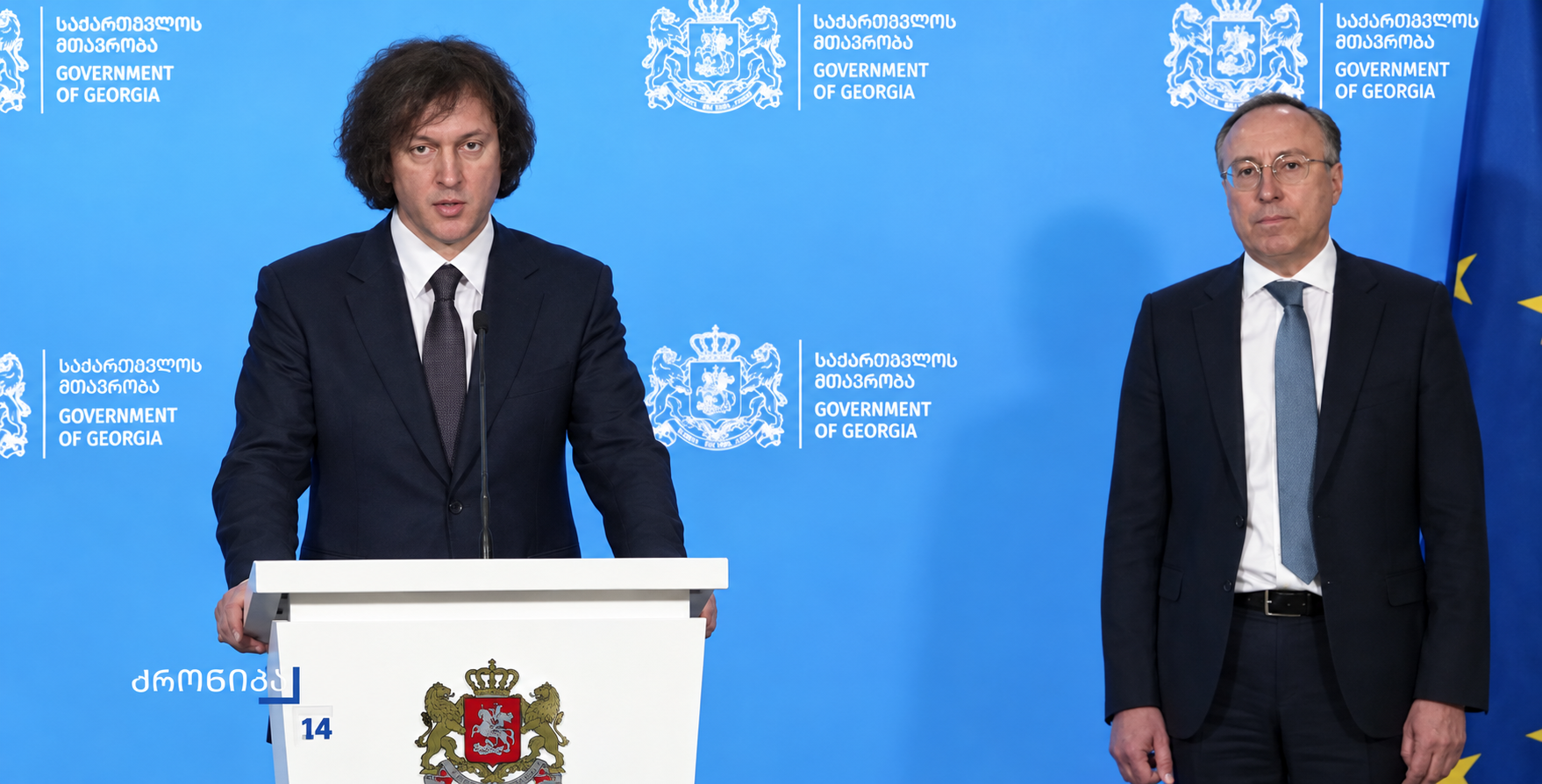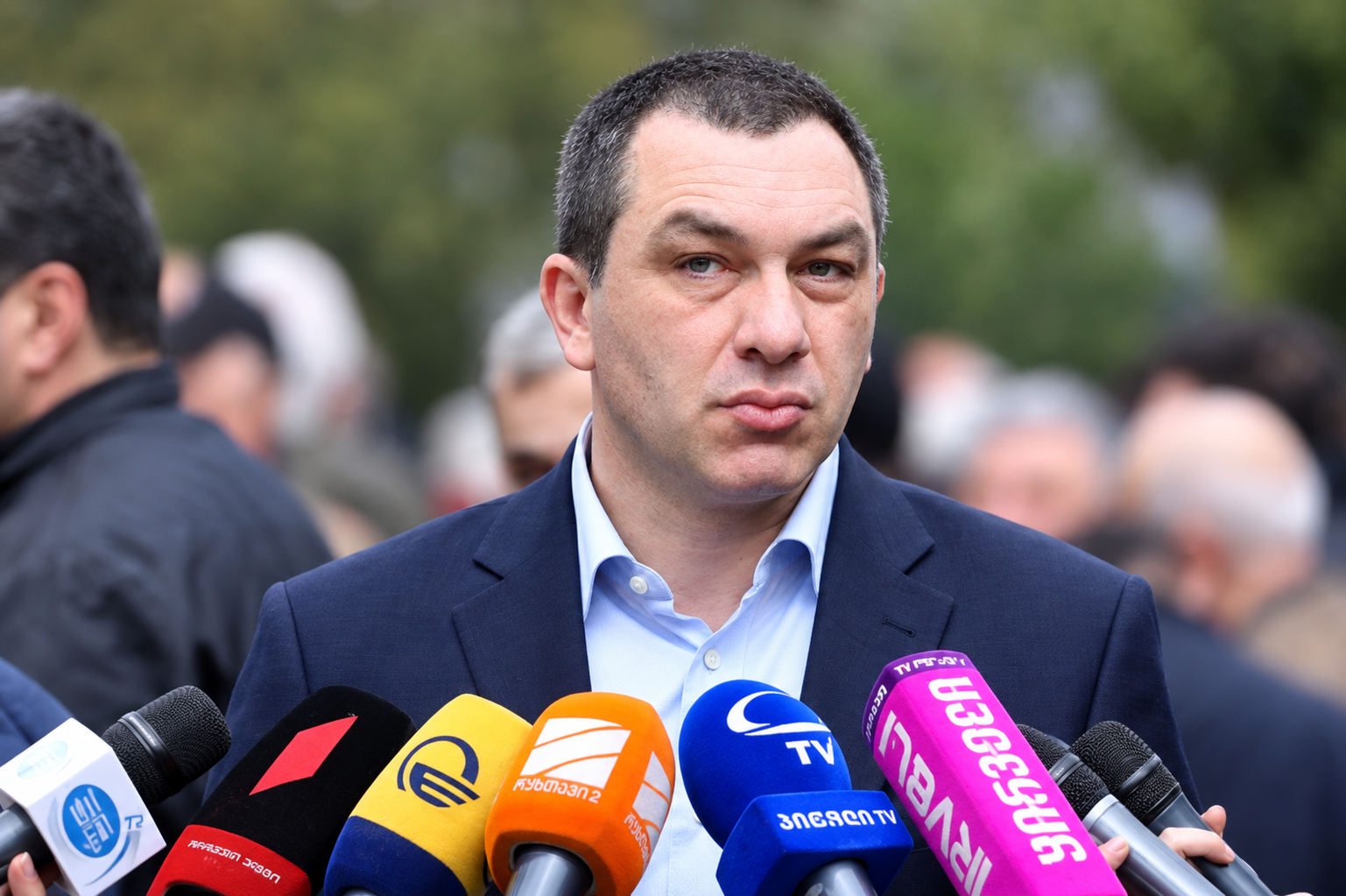


This discussion focuses on the appointment of Giorgi Zurabishvili as Georgia’s Prime Minister’s Special Representative for Relations with Russia and First Deputy Minister of Foreign Affairs. This personnel change has sparked a strong reaction in Georgian media and among experts, raising questions about a potential shift in Georgia’s foreign policy.
Key points and arguments:
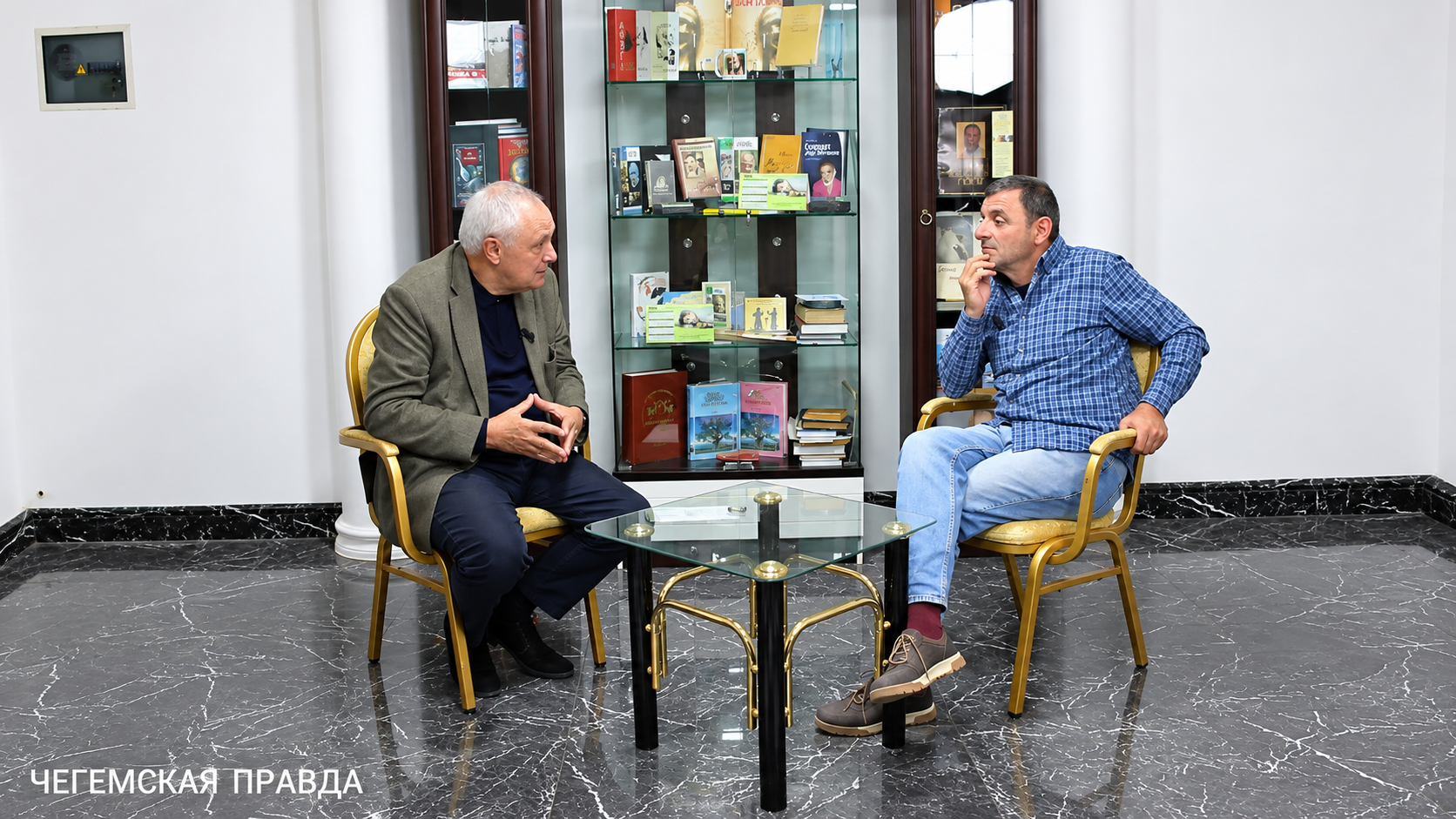
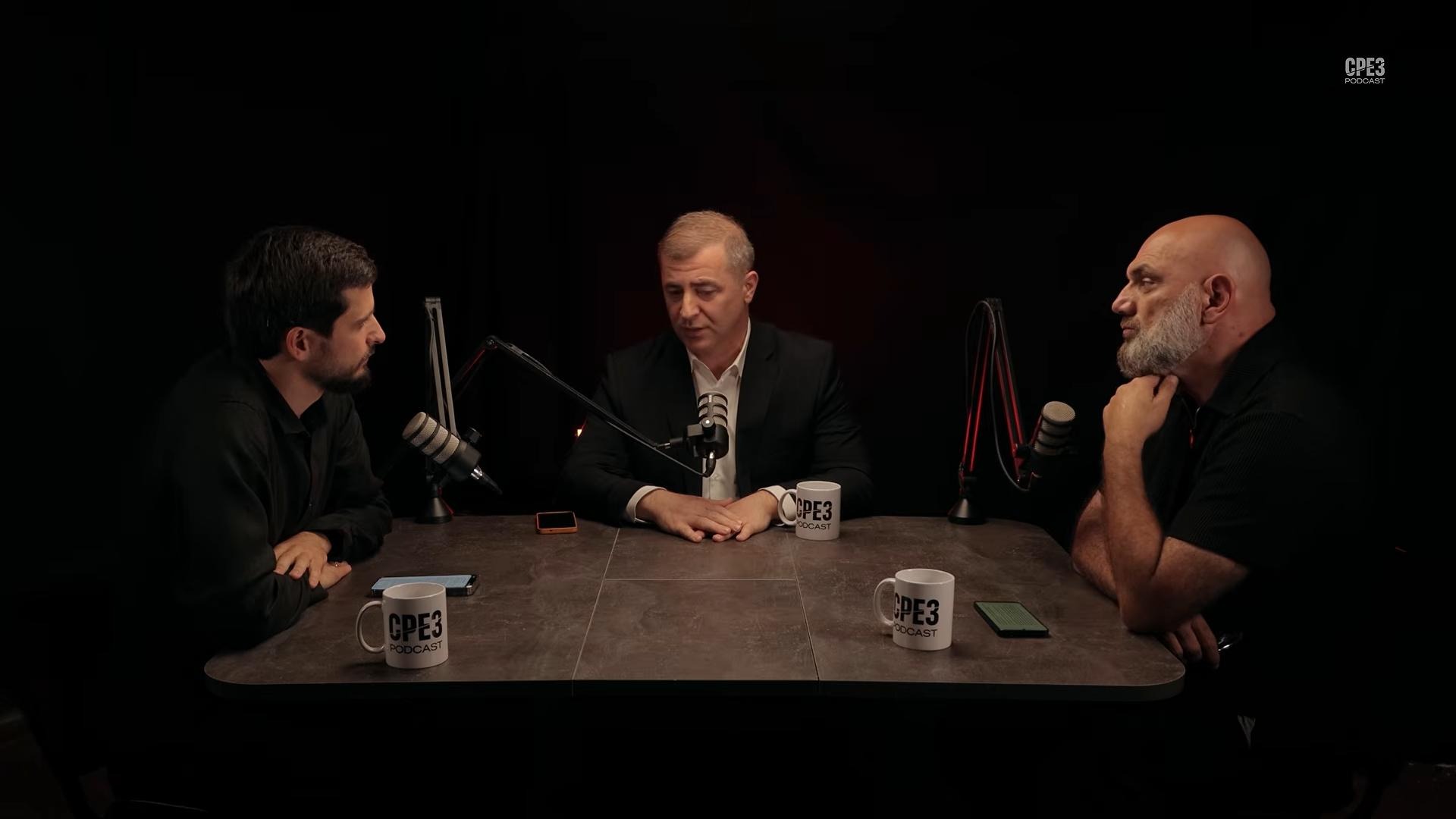
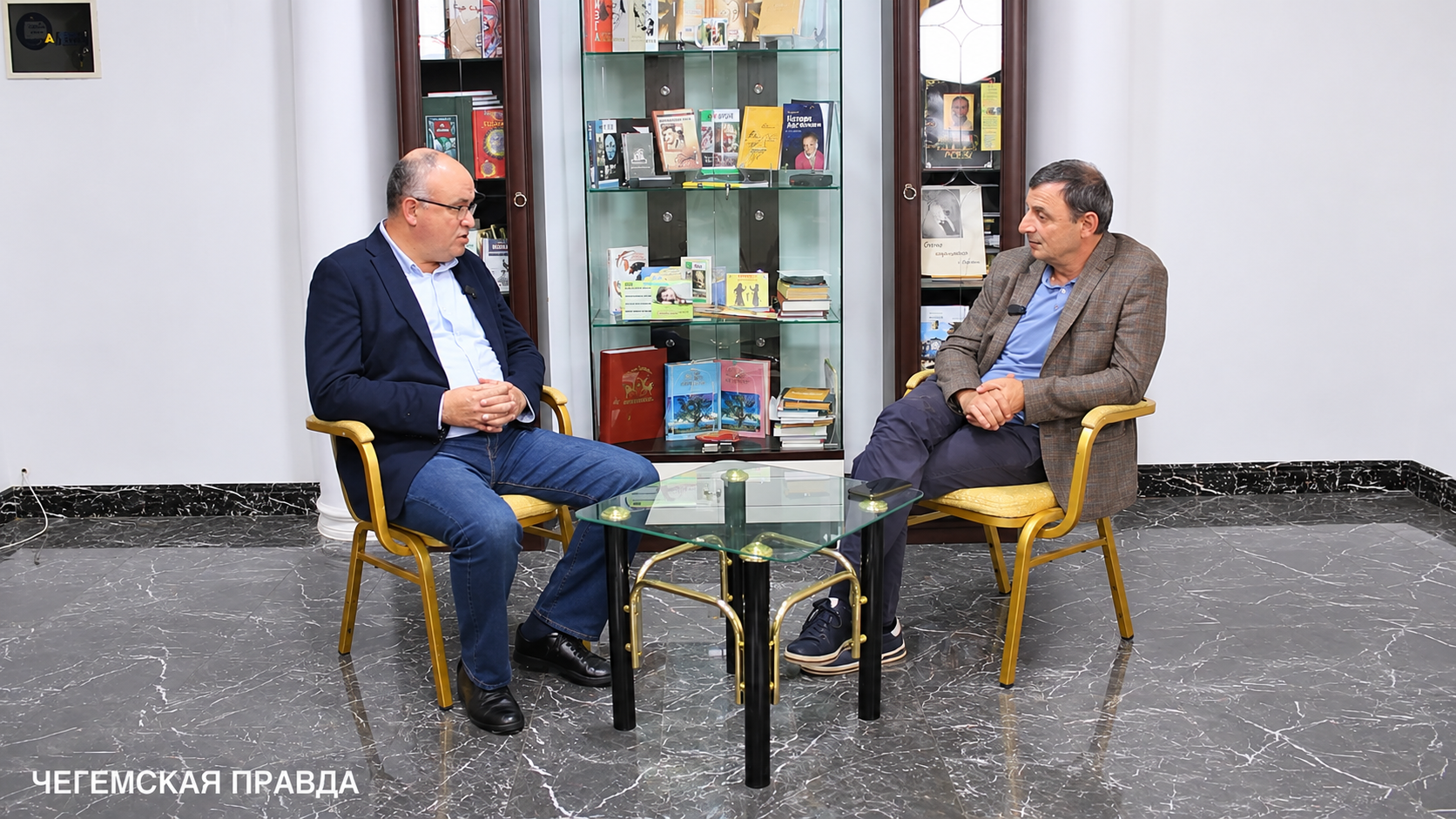
Inal Khashig: Hello, this is Chegemskaya Pravda on the air. Today we’ll be talking about Georgia, or more precisely, about the Geneva negotiation process, about Georgian-Abkhaz-Russian relations in the context of a new appointment. A new special representative of the prime minister for relations with Russia has been appointed in Georgia; he is also the first deputy minister of foreign affairs, Giorgi Zurabashvili. In this context, in the context of the personnel question, when personnel decide everything, we’ll talk with our regular expert, Astamur Tania. Astamur, good afternoon.
Astamur Tania: Good afternoon.
Inal Khashig: On the face of it, an ordinary personnel matter. He was appointed, so he was appointed, but I’ve been reading the Georgian media, and there’s literally a kind of storm there, a kind of suspicion that some big moves will follow this appointment. But so far he hasn’t been officially confirmed, Zurabashvili hasn’t been confirmed as head of the delegation at the Geneva talks, but, as the Georgian social networks and media write, experts are saying that it’s a done deal. What do you think about this appointment in general? It seemed the process was just going along and going along, and nothing was changing. And suddenly such an appointment, where a new person, an official, is deliberately brought in.
Astamur Tania: For now, I think, it’s too early to say. I’ve read the comments. I consider them completely premature, because what difference does it make what position a person holds, whether he’s a deputy minister, a first deputy, or has no post in the Foreign Ministry at all? What matters is whether there is political will to solve the problem and whether some kind of model exists. For overcoming at least part of the contradictions that exist.
Of course, one can suppose that combining the posts of deputy minister and special representative for dialogue with Russia may point to some kind of reformatting. Or it may not mean that. After all, we live in such a volatile state, the region is such that it may well mean nothing at all.
I just want to express some wishes. We probably need some ideas for overcoming a deadlock that has lasted many years. I have to read about the uselessness of the Geneva discussions. I don’t think they are useless, because there is a functioning format that can be turned into something useful, or used to highlight some problems. There is no other. This is better than nothing.
Criticizing the Geneva format is the same as criticizing the UN. The UN doesn’t take proper measures to restore order in the world. What instruments does the UN have? Does it have an army or something? Or do the leading states obey the UN Secretary-General as if he were an emperor?
Everything depends on how the context changes, what political will there is. The only thing, I’m coming back to it once again, is that we need ideas for a way out of the deadlock. In my view, the deadlock is created by the existence of this legislation on the occupied territories. It gets in the way of the Georgian side itself. Repealing this very law would not mean recognition of Abkhazia, and neither would transforming this law. But this law prevents the Georgian side itself from establishing a dialogue on the most elementary issues. Even if some dialogue is established, it’s unclear how to implement it, because there are no parties to the conflict.
We keep saying, regularly, from broadcast to broadcast, that we need a format in which there are parties to the conflict. That does not mean any mutual recognition. It means that we are ready to be jointly responsible for resolving certain issues. Security issues, humanitarian issues, what agenda could be built around that. Otherwise, we can demand forever, on our side, a legally binding document on the non-use of force. By the way, several such documents were signed with us in the course of the negotiations. And then, in our day, to believe that a piece of paper will give you something is, in my opinion, completely naive. How long will it last, this legal obligation? It depends on the context, after all. From the Georgian side [the line is]: we will not talk to anyone under any circumstances. This is not a Georgian-Abkhaz conflict, it is a Georgian-Russian conflict. One can keep spinning one’s wheels like this endlessly and get nowhere. In general, maybe this situation actually suits someone just fine.
Inal Khashig: What I see in this appointment. Look. Since he, Zurabashvili, will also be overseeing the Geneva negotiation process. You have to know that, in fact, ever since Saakashvili’s time the Geneva negotiation process…
Astamur Tania: It’s not a negotiation process. It’s a discussion. If it were a negotiation process, that would be a different matter. They didn’t know what to call it, they thought, let’s call them discussions of experts who are not responsible for anything and don’t represent anyone.
Inal Khashig: Fine, discussions. So, the Georgian side at these discussions, this Georgian delegation, which, just like the Abkhaz one and all the others, takes part in a personal capacity, as it’s recorded in the document.
Astamur Tania: Whoever wanted to came, that’s what it’s called.
Inal Khashig: But nevertheless, there is a delegation. And ever since Saakashvili’s time it has been headed by Lasha Darsalia. Who regularly speaks of the occupation of Georgian territory, of occupied territories. Even though after Saakashvili the government changed radically, and Georgian Dream is also doctrinally completely different. It differs from what Saakashvili and his party, the United National Movement, said. Nevertheless, Lasha Darsalia was, as it were, the only connecting link with his thesis about the occupation.
Astamur Tania: He didn’t just walk in off the street either, right?
Inal Khashig: He didn’t , but I read Paata Zakareishvili. Paata Zakareishvili says there were two different centers. That is, when he headed, say, the Ministry for Conflicts and there was a special representative, Abashidze, that is, they didn’t get in each other’s way; more precisely, Abashidze dealt with purely situational things.
Astamur Tania: When was that, anyway? Ten years have passed already?
Inal Khashig: Yes, they have.
Astamur Tania: So what? Can nothing change? People can grow older, their, I don’t know, functions, some vision may change. In our case, they’ve already changed a thousand times. .
Inal Khashig: But it seems to me that the main thing in this, still, is the goal, which isn’t stated separately now; it is, probably, after all, the restoration of diplomatic relations with Russia.
Astamur Tania: And how is that possible without repealing the legislation on the occupied territories?
Inal Khashig: That’s already a detail, which, one way or another, must lead to this. What we’re talking about here, it seems to me, is either a serious revision of the law on the occupied territories, or its repeal. Because it hinders the deeper development of economic and other relations with Russia, since Tbilisi has seriously distanced itself from Brussels. On the other hand, other factors also have to be taken into account. Right now the Constitutional Court of Georgia is considering the question of banning five opposition political parties. It seems to me that Georgian Dream has gone all in, building its system of governance on the Azerbaijani model. But Azerbaijan has oil. Georgian Dream doesn’t.
Astamur Tania: We shouldn’t fall into the trap of these extrapolations at all. Because what’s good, as the saying goes, one man’s meat is another man’s poison. Of course, international experience matters, but you always have your own specifics. I don’t think people sit around drawing inspiration from Azerbaijan’s experience. We should look. Azerbaijan has its own history, Georgia has its own, Armenia a third, and we a fourth. Everywhere there are differences in the state of society, in the configuration of society. The authorities choose the toolkit that suits them best.
Frankly, I don’t see near-term prospects for repealing this law or restoring diplomatic relations. This is a question not so much from the rational sphere. Rationally, it would be beneficial to repeal this law, both for Georgia and for everyone. Because, I say again, it deprives Georgia itself of the ability to pursue any constructive policy in this direction, it ties its hands. Declaring what has been as never having been won’t work anyway. The law proceeds from the premise that what has been never was.
There is also the domestic political situation. The Georgian authorities are under serious domestic political pressure. And if they don’t talk about this law, people there will shout at them through the window from the street. We can see, after all, how the topic of conflict settlement is used for speculative purposes.
There are some completely exotic ideas there. I recently read Bokeria, Giga Bokeria. A man who seems not to live in Georgia at all. He says that civic nationalism and a single civic nation must be created. Georgia is multiethnic. Fine, let’s leave the Abkhaz and the Ossetians aside. Georgia itself is a multiethnic country. There, formulas of consensus have to be found, including against the background of these differences, national, religious, economic, regional. Georgia is practically meant to take the path of federalization.
Putting it mildly, we called them right-wing populists. Maybe someone has the idea that if Georgian Dream goes, wonderful, wonderfully stuffy liberals will come to replace it. That’s not the case at all. Because the state of society predisposes toward right-wing populists coming. Which is dangerous for Georgia, for its prospects, and for its neighbors, such as us. That’s why they are forced to… Georgian Dream will maneuver. Certain steps in the propaganda sphere that would be perceived negatively, they are unlikely to take.
In general, I think we need to think about how to get out of this deadlock. What could the model be? We had a good model, in which there were parties to the conflict.
Inal Khashig: Before 2008.
Astamur Tania: Before 2008 there was a functioning negotiation format. Of course, one can convince oneself that Abkhazia lacks agency, that it can’t conduct negotiations. But it’s obvious to everyone that Abkhazia has agency. Naturally, we can’t have the same kind of agency as Russia or the United States of America. And yes, Georgia too is far from that kind of agency. But there is a range of issues. Let them be small at this stage, but they can contribute to a transformation, a change in the climate, which we could agree on and resolve.
We recently had the fuel situation. It’s clear that the Georgian authorities showed goodwill. We may have issues that are more prolonged in time and need to be resolved, issues that concern the interests of the local population, security, and so on. But if some model could be worked out, agreed, and fixed in some way, that, the fixing, we can’t do now. Because this legislation obstructs such an approach. Certain bold steps are needed here.
Relatively recently I listened to Paata Davitaia. He was commenting on the situation in Abkhazia, and, on the other hand, he said that we ourselves propose nothing. Indeed, if you look at it that way, there are the positions of certain expert groups, there are some comments, Saakashvili said something, Bokeria said something, Gvaramia said something. But from any more or less significant group, whether in power or not, no models are being proposed. Because the Abkhaz theme is used exclusively for domestic political purposes. For stirring up certain sentiments. And in fact both we and Georgia have gigantic problems. Apart from whipping up these sentiments, such harsh ones.
If you look, there are gigantic demographic problems. Gigantic economic problems. We can see, after all, what protests are happening there over the sale of land. We had that too, by the way. Our protests were connected with real-estate issues. But with us that is banned. And in Georgia it’s allowed, it’s legalized. In effect, the most liquid land is being bought up.
Gigantic demographic problems. For example, I looked at both ours and Georgia’s. For example, in 2016, 59 thousand children were born in Georgia. And in 2025, 37 thousand. That is, over 20 thousand fewer children were born. In Abkhazia too, I looked. In Abkhazia it’s unclear where children are born, because many of us are born in Sochi, but there are other indicators. You look, and our situation isn’t very wonderful either. Roughly the same.
These issues need to be dealt with. In my opinion, they determine the future of a people altogether. And here, perhaps, to discuss some ancient myths, fairy tales and so on, that’s entirely a matter for specialists. One can sit for hours pulling the wool over people’s eyes, distracting them from real, pressing problems.
Inal Khashig: The first pithecanthropes were…
Astamur Tania: Yes. Who, when, and whose blood is better, purer, and the like.
Inal Khashig: Still, it seems to me that this appointment is a kind of unease on the part of some of the Georgian expert community.
Astamur Tania: Something has to be commented on, after all. And you and I also have to comment on something. But fortunately, there are very few issues to comment on. Everything is so calm, for now.
Inal Khashig: But still, it seems to me there’s some more thought-out action here than just a personnel appointment, where you simply took one, replaced him, and don’t know what you replaced him for. It seems to me there’s a deeper strategy here, probably, after all.
Astamur Tania: We don’t know about that, you and I.
Inal Khashig: We don’t, but, again, we should probably proceed from the circumstances.
Astamur Tania: But taking the opportunity, we can appeal to them to tell us why they did it.
Inal Khashig: Yes.
Astamur Tania: So that there would be more opportunities.
Inal Khashig: I think the next round of the Geneva discussions will take place literally in the first days. Yes. In November, it seems, in the first days.
Astamur Tania: Let’s wish the next round success. You know, the main success of the next round is that after it there be another one, at the very least, a following round, that it take place. But I’m not joking. If this round takes place, and then the next round takes place, that’s already not bad.
Inal Khashig: It seems to me that nothing at all threatens the Geneva discussions right now. Maybe something did some time ago, but now, it seems to me, the whole thing is probably, after all, heading toward an end, toward some agreements on the Ukrainian-Russian [issue].
Astamur Tania: That’s unclear.
Inal Khashig: Unclear, but still there is a desire to arrive at some common denominator.
Astamur Tania: You know, when such tectonic plates in international politics have shifted, it’s very hard to change this inertia. A great deal has changed in the world over this period. I think the world will remain in motion for a long time yet. It’s not calm around us either.
Inal Khashig: The dynamics, with the end of the conflict, say, in Ukraine…
Astamur Tania: It’s not a chessboard at all, unfortunately. The world is not a chessboard. There are a great many unpredictable factors. There are climatic and economic factors, a mass of others. In Iran, for example. The situation in Iran. Which way will it go, does anyone know? It seems to me that Trump himself doesn’t know.
Inal Khashig: Trump announces every time that he has won.
Astamur Tania: Possibly, yes. But where this situation will go, we don’t know. Elections are being held in Israel right now. Our task, I think, neither we nor the Georgians can influence global politics, [is] to take our minds off all of this a little, the mythology, the fairy-tale creativity. It is developing, by the way. The fairy-tale creativity, I see, especially in the comments, where people are working very productively. I don’t want to retell these new interesting ideas. Ingorokva is ready to jump out and applaud these people, I think.
We need to work on keeping our region calm. On that front we can do something. If Zurabashvili’s appointment helps ease the situation, even if, say, diplomatic relations with Russia are not established, but some de facto relations develop, I think that’s beneficial both for us and for the Georgians.
Inal Khashig: What do you mean by de facto?
Astamur Tania: Some economic issues will be resolved. Some transport issues will be resolved. Some coordinated positions. There are issues, say, issues of the Black Sea. Russia’s and Georgia’s positions may coincide, can’t they?
Inal Khashig: On a par with the Strait of Hormuz, that’s the most dangerous.
Astamur Tania: They may coincide. You can find a mass of problems. If their approaches to solving these problems dovetail, I see a positive factor in that. If this appointment of Zurabashvili is aimed at solving such tasks, then that’s good. That’s what I think. I don’t see a direct threat here.
Some of ours say: the Russians and the Georgians will strike a deal over our heads, and then we’ll be done for. Well, first of all, that’s a very primitive picture of the world, because, I say again, what has been can’t be made not to have been. Abkhazia, of course, is not a gigantic factor, but it is a factor.
Inal Khashig: Well, in general, it’s hard for me to imagine this picture, when, say…
Astamur Tania: What, from tomorrow we close the doors, is that it?
Inal Khashig: Like Dmitry Medvedev, as in 2008, [who] spoke from the rostrum, that’s when he talked about recognition, Abkhazia will now speak out there and say, “Sorry, we made a mistake, we’re stopping.”
Astamur Tania: Well, that’s a completely naive idea of the world.
There are factors, you may like them or not. Neighbors can be difficult, with a difficult character, but they exist, they’re not going anywhere. Iran, for example, isn’t going anywhere. Many people don’t like Russia, Russia isn’t going anywhere. We can see how the Trump administration’s policy toward Russia is being carried out now. Because there is a factor in play. Everyone reckons with it.
So the fact that it’s quieter here is good. If our neighbors are searching for some mutually acceptable approaches, if things go well for our neighbors, Georgia and Russia, I don’t think things will go badly for us. So perhaps some configurations will start working here, including in the area of transport, transit. There are other issues too. There are also other issues that may arise. Issues of security for the local population, of cross-border contacts. It seems like a minor issue, but for us these are big issues. For Georgia and for Russia too.
I say again, if we could influence a change in the climate of our relations, every such opportunity should be used. The decision, say, to supply fuel at a difficult moment for us, didn’t it contribute to improving the climate?
It seems that such steps… But they are one-off. That’s why I say, if there were no obstacles in Georgian legislation, it would be possible to find some kind of systematic model for interaction on various issues. We had that; now it’s perceived as some sort of know-how, but all of it happened in our own, actually, not in some Martian history, it happened in our history.
I don’t believe in big decisions yet. But big decisions rarely come about by shooting straight up to the peak in one go. Usually in politics it goes step by step, little by little. And then, what big decisions there will be will depend on what set of small decisions has been adopted. That also affects the situation, the mood. And what’s happening in the world around us also has an effect. That has to be taken into account.
Inal Khashig: What do you consider a big decision? Say, repealing the occupation law, is that a big decision?
Astamur Tania: It seems to me that repealing the occupation law is not a condition. The occupation law forbids the Georgian authorities from signing with us the slightest piece of paper, even on the most pressing problems. Isn’t that an absurd situation? During the war we signed documents with each other. But that didn’t lead to Georgia recognizing us and us recognizing [Georgia’s] integrity. After the war, too, that didn’t mean that our positions on these issues were radically different. But, by the way, we discussed these problems too.
Many issues, by the way, were cut off precisely because the Georgian authorities of various formations and periods were concerned, first of all, about the domestic political context, and not about regulating the conflict.
Inal Khashig: But, say, not repeal but adjustment, a revision of certain specific articles.
Astamur Tania: I’m saying that we need to think, step back, there has to be some kind of brainstorming. What issues, not of astronomical scale but down-to-earth ones, small, mutually beneficial, could we resolve right now. Create a menu of these issues. Then think about how we could set about resolving them.
Now, if somewhere this runs up against legislation, it seems to me that legislation can become outdated, right? Which means legislation at the very least needs transformation. If we’re talking about a shared desire to resolve the conflict. If there’s, say, a desire to build a Great Wall of China, that’s a different matter. That’s also a possible solution. So, after all, we were given heads to model things and to think with.
Inal Khashig: I think there’s a heap of things here, because nothing has changed all these years. Nevertheless, there should be some cases in the interests [of both sides]. I’m not talking about unrealizable interests, I’m talking about some real things that interest someone. Both the Georgian and the Abkhaz side. Each has things it is interested in. The Georgians also have enough of these issues, connected with the residents of the Gali district.
Astamur Tania: The Gali residents… I believe that we ourselves need to work on changing policy, on correcting our own mistakes regarding the Gali district.
You’re talking about cases. A lot of our positions today have been raised to the rank of some kind of religion. Even though they arose relatively recently. Everyone is afraid to touch them. Sooner or later they will have to be touched. .
Inal Khashig: And what do you mean by that?
Astamur Tania: I mean that constantly engaging in propaganda that doesn’t lead to solving practical issues, sooner or later that will become obvious. You can’t keep being hostages to your own propaganda. It’s clear that it’s also propaganda that materializes. That too has to be taken into account. That’s why I think it’s too early for us to say what this appointment attests to. Maybe it attests to nothing at all, but I’ve voiced some wishes of mine on the subject.
Inal Khashig: Well, I’ll wrap up here. At the very least, the new appointment to the post of special representative for relations with Russia has given us a reason to talk about today’s Georgian-Abkhaz conflict.
I’ll be saying goodbye to you. With you were our regular experts Astamur Tania and I, Inal Khashig. See you. Keep watching us on our YouTube channel, comment, like. Stay well!
The terminology, place names and views expressed in this article are those of the author and do not necessarily reflect the editorial position of this website.