







Vision for the unification of Georgia
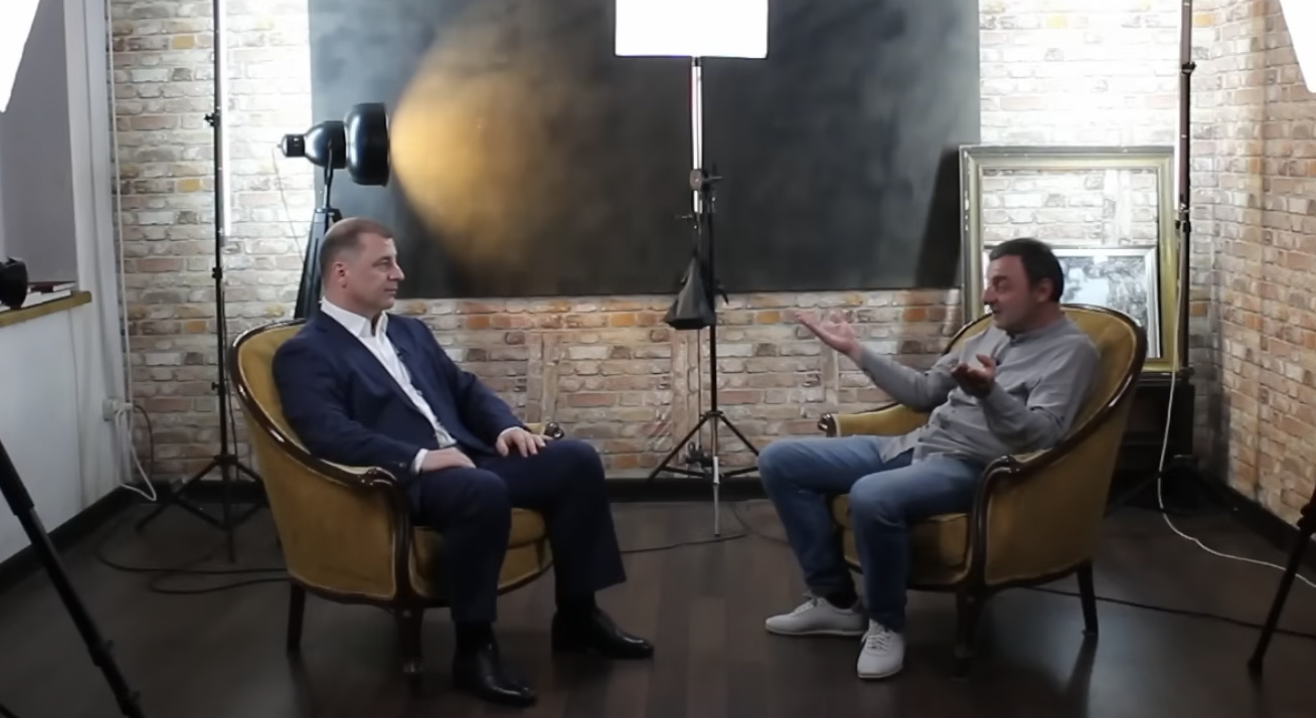
The interview with Nika Gvaramia and his views on resolving the issue of Georgia’s territorial integrity sparked widespread discussion in Georgian society. He linked the idea of restoring Abkhazia to Georgia with the country’s accession to the European Union and the prospects offered by the Middle Corridor trade route.
Mikheil Saakashvili responded to Gvaramia shortly afterwards. He emphasized the Russian-Georgian dimension of the conflict. According to him, the restoration of Georgia’s territorial integrity should be achieved by any means necessary when Russia is weakened.
According to the Free People’s Party, trade plays a central role in restoring Georgian-Abkhaz relations, while the positions of Georgian Dream and Saakashvili are either illusory or militaristic.
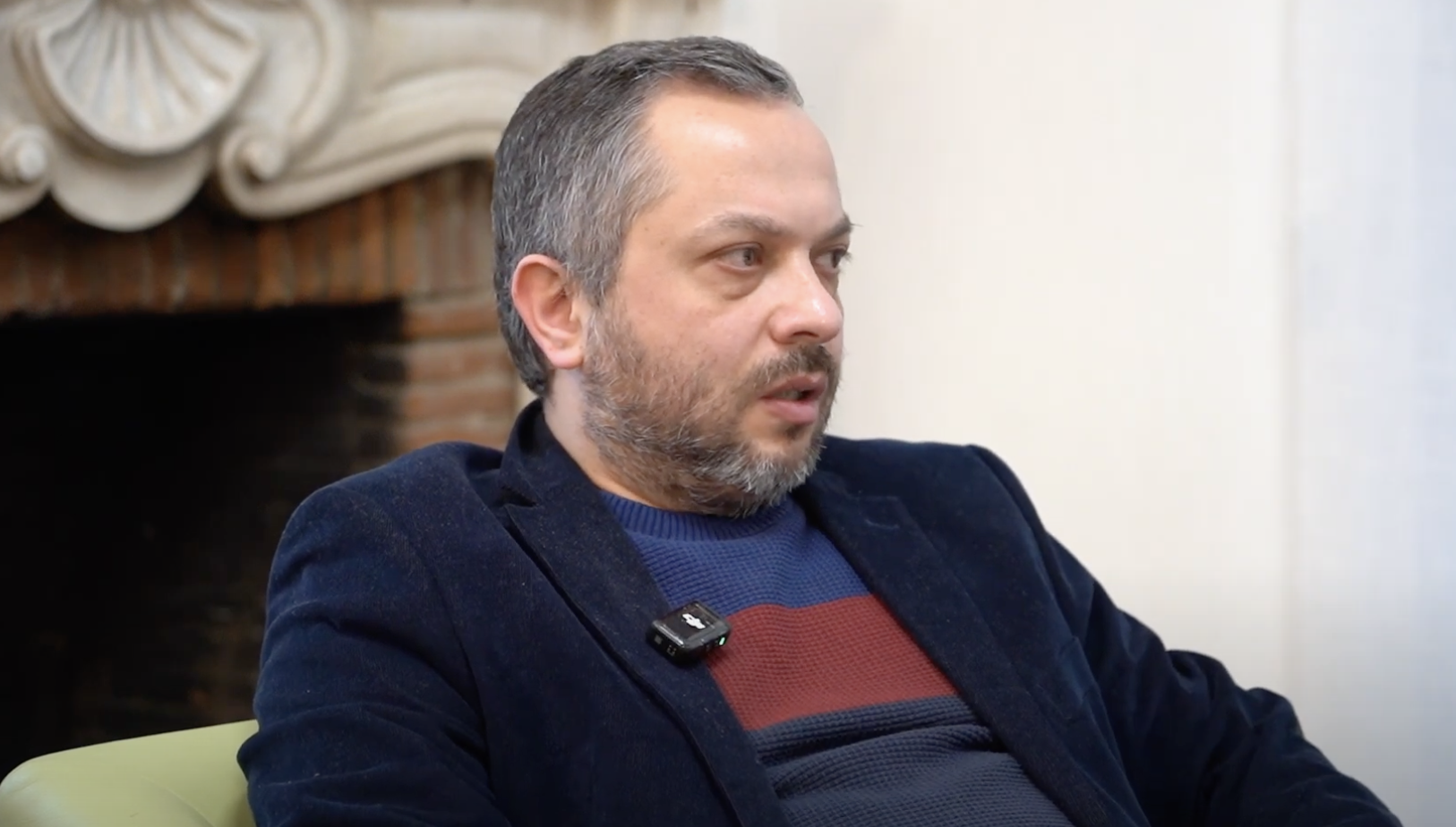
One of the leaders of the Federalists party, Giga Bokeria, also commented separately on the discussion surrounding this issue.
In addressing the problem, he focuses on the following issues and emphasizes the essential steps that need to be taken next:
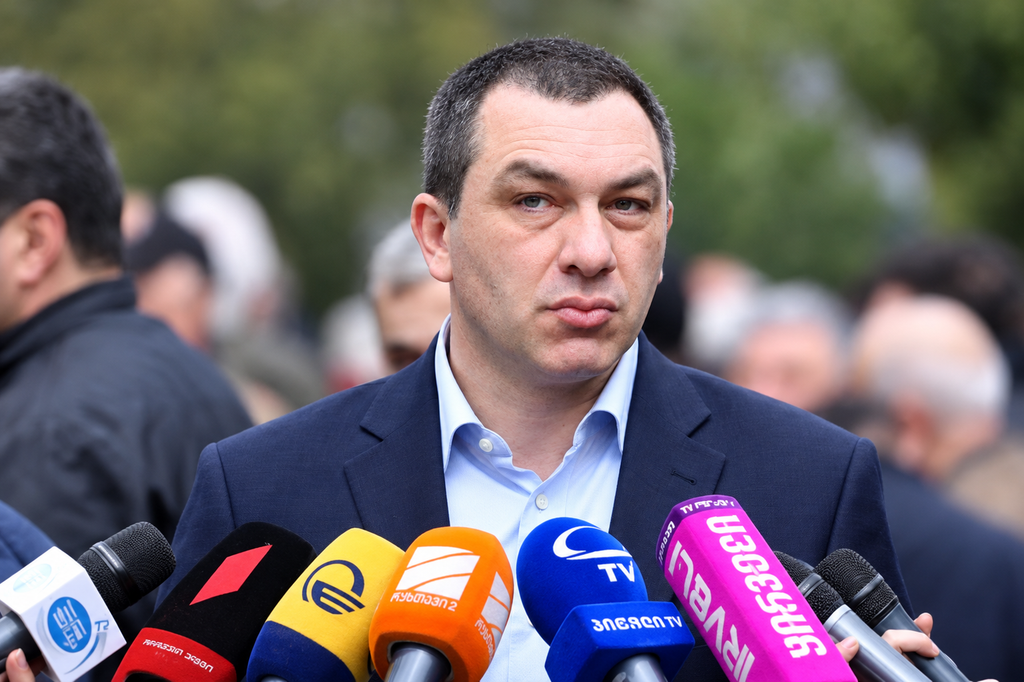
Giga Bokeria: Why is the message about Abkhazia delivered by Nika Gvaramia, one of the leaders of the Akhali party, such a serious problem?
Quotes from Nika Gvaramia’s interview:
- “In a single state shared by Abkhaz and Georgians — yes, absolutely, let it be so.”
- “Wasn’t Karabakh a case of surrender? Armenia said, ‘Get rid of it for me.’”
- “You cannot keep stoking people’s deepest fears every day instead of helping them forget.”
- “That is why I admire Pashinyan. What this man managed to do was overcome trauma.”
- “We are offering the Abkhaz a good life, and there is no Abkhaz person who would turn down a good life.”
Giga Bokeria: And why, in a certain sense, is this an even bigger problem than the treacherous propaganda of the Ivanishvili regime considered on its own?
A quote from Bidzina Ivanishvili’s speech: “We will definitely find the strength within ourselves to apologize.”
Giga Bokeria: Or the harmful messages put forward by other misguided figures [Iago Khvichia, members of Girchi, or Paata Zakareishvili]?
A quote from Iago Khvichia’s interview: “In my opinion, we should first offer Georgia a plan for reconciliation with Abkhazia.”
Giga Bokeria: For the simple reason that the most effective enemy propaganda is the kind that penetrates the ranks of its sincere opponents. I consider Nika Gvaramia to be such an opponent. He is our partner in the opposition alliance, as members of the Federalists party. During this period, he has been subjected to numerous completely unjust and defamatory attacks by the propaganda apparatus of the Ivanishvili regime, which has accused him of wanting to “give up Abkhazia.” Saakashvili and his entourage joined in, and for weeks now they have been conducting a completely defamatory campaign against the Akhali party. This is unfair. However, the point is that he must blame himself for having brought this situation upon himself.
Let us begin with one of the key issues: the reference to Armenia and Pashinyan as an example.
An excerpt from Nika Gvaramia’s interview: “That is why I am actually an admirer of Pashinyan. What this man managed to do was overcome trauma.”
Giga Bokeria: Here, I want to clarify once again that Mr. Gvaramia also said at the time that he was not drawing a parallel between the Armenia–Karabakh–Azerbaijan situation and the situation between Georgia and Abkhazia. In other words, he is not calling Georgia’s territorial integrity into question. I had no doubts about that in any case, but this makes the scale of this entirely harmful mistake even more serious.
If you are not drawing such a parallel – and he himself says that he is not – then what on earth does Pashinyan and Armenia have to do with this?! Where is the political, geopolitical, moral, or any other kind of parallel between these situations? What does Pashinyan have to do with it at all? The position of all of Georgia’s major political parties, its citizens, and the state has always been to recognize Azerbaijan’s territorial integrity. That means recognizing the borders that took shape after the collapse of the Soviet Union, that evil empire. Within those borders, Abkhazia and the Tskhinvali region are part of Georgia. That is our position.
Consequently, our position was that Armenia had occupied not only Karabakh but also Azerbaijani districts beyond Karabakh. Azerbaijan regained these territories and restored its control over its sovereign territory. There is no doubt that there is no parallel here. So where, then, is the parallel?
I heard an astonishing statement here. For reasons that are entirely incomprehensible to me, the journalist himself went along with it and raised the issue, suggesting that Pashinyan had somehow helped Armenian society come to terms with certain traumas, traumas that had been an obstacle to Armenia’s development. A parallel was drawn here with Armenia’s traditional position, when it called on the Turkish authorities to recognize the Armenian Genocide. And, alongside that, it was suggested that Pashinyan had also helped Armenians come to terms with the loss of Karabakh.
An excerpt from Nika Gvaramia’s interview: “He did the same thing, and it was even more difficult in the case of Karabakh. Karabakh was, in reality, a surrender, wasn’t it? There was a war and so on, but in the end Armenia said, ‘Get rid of it for me; take it.“
Giga Bokeria: I have rarely heard such absurdity. First of all, what does it mean to say that he helped people come to terms with the loss of Karabakh? Here, Mr. Gvaramia has, perhaps unintentionally, made another completely incomprehensible and absurd accusation against Pashinyan. He has repeated what Pashinyan’s pro-Russian opponents and Russian propaganda accuse him of: that Armenia did not fight and effectively handed Karabakh over. Where did he get the idea that Armenia did not fight? There were two rounds of military hostilities. Armenia was defeated in those hostilities. That is simply a fact.
This happened because Azerbaijan’s leadership, President Aliyev, spent billions on military preparedness and strengthened ties with its partner and strategic ally, NATO member Turkey. Azerbaijan is effectively bound to Turkey by an agreement equivalent to a fifth article of a collective-defense treaty. Azerbaijan seized the opportunity and took advantage of the fact that Russia was preparing a large-scale aggression against Ukraine. Ukraine was the priority of Putin’s Russian imperial project, and Russia did not risk confronting Azerbaijan and its ally Turkey. Instead, it abandoned its partner and, in practice, political vassal, Armenia. It betrayed the commitments it had made to Armenia. It acted as Russia so often does.
If we are to use this example for anything, it should be to counter the propaganda that tells us that relations with Russia can be put in order and that partnership with it is possible. Armenia is precisely an example of how Russia will sacrifice even a state that has accepted the status of a vassal whenever it suits Russia’s interests at a particular moment. That is what this example demonstrates. Yet, instead, he says that Armenia “surrendered” Karabakh. I repeat: today, a sincere opponent of this regime has repeated one of the gravest accusations leveled against Pashinyan by his pro-Russian opponents.
What does any of this have to do with Georgia, with our past, our present, or our future national interests? What are we supposed to come to terms with? In our case, is there even the slightest parallel? None whatsoever! This is the mistake Gvaramia made, and, of course, his opponents will exploit it unscrupulously. However, those of us who criticize him for this statement should not be attacked in return. What are we supposed to do, then? Should we declare this mistaken – catastrophically mistaken – position to be the position of every opponent of Ivanishvili, simply to give Ivanishvili’s propaganda even more ammunition? That is not how this works, friends.
But I asked where the parallel was. Unfortunately, the parallel Mr. Gvaramia draws – and he is not the only one; there are others, including people in our civil society, some of them acting in good faith, who make this catastrophic mistake – is most clearly expressed in another of his deeply misguided statements concerning this idea of “coming to terms.” He says that we should indeed know our history, but then raises the issue of retraumatization.
This is not the first time he has said this. He has criticized us before, the Federalists, our partners – the Assembly of Abkhaz, Tabula, and the Liberty Institute – who are running the “Before Bucha was Abkhazia” campaign. He has suggested that this campaign is, in one way or another – sometimes putting it mildly, sometimes more forcefully – an obstacle to restoring our territorial integrity and achieving reconciliation.
An excerpt from Nika Gvaramia’s interview: “Trauma is a very important part of a nation’s historical memory. Very important. But traumatic memory carries risks. It works like an anchor. It prevents you from moving forward. It blocks development.”
Giga Bokeria: So, what follows from this absurd logic? That our campaign, which seeks to remind Georgian society and bring to the international arena the war crimes committed against humanity during military aggression organized by the Russian state – not by any ethnic groups, but by the Russian state – is a barrier to restoring our territorial integrity and reconciling with the Abkhaz?
In my view, our campaign on this issue is, on the contrary, long overdue. It should have been undertaken much earlier. Even in our own society, the memory of these events has been suppressed because of the tragic circumstances of the 1990s, and many things are completely unknown to the generations that came after us. This gives ammunition to campaigns by our enemy, ill-wishers, and useful idiots, who portray this conflict as an ethnic conflict, talk about crimes committed by both sides – in other words, muddy the truth with evil – and seek to demoralize and disorient society. But let us set that aside for a moment. If this campaign does not take place, if we forget these events or avoid bringing those traumatic memories back to the surface, will that make it easier for us to restore our territorial integrity?
What follows from this? Another grave mistake by Mr. Gvaramia and everyone who follows his lead: portraying the problem of our occupied territories as fundamentally an ethnic conflict. If you look at his narrative, he consistently discusses the resolution of this problem through the lens of ethnic, tribal, and communal confrontation.
An excerpt from Nika Gvaramia’s interview: “Our future generations will fall in love with each other again. We will not!”
Giga Bokeria: I want to emphasize something here. We, the Federalists, and I personally, have said this before. Nobody denies that the problem involved groups with different ethnic identities within Georgia and that this was a factor in the situation in Abkhazia. Nor do we deny that a significant part of Georgia’s political class had a conception of state-building rooted in an ethno-tribal, chauvinistic, and nationalist framework – which was highly damaging to our national interests. Instead of civic nationalism, based on the principle that all Georgian citizens are equal and are Georgians in political and state terms, they leaned more toward ethnicity. And the enemy exploited this.
This problem is understandable. However, we must all understand, and speak about this frequently, that the aggression in the Tskhinvali region during Zviad Gamsakhurdia’s presidency, the aggression in Abkhazia during Eduard Shevardnadze’s presidency, and the subsequent aggression against Georgia in 2008, under the previous government, were all acts of Russian state aggression against the Georgian state.
In every one of these conflicts, Russia, to varying degrees, organized and committed crimes against humanity, including the genocide of Georgians in Abkhazia and ethnic cleansing in the Tskhinvali region. This is simply the truth. It is also a reality that, in this process, particularly in Abkhazia, virtually the entire local political elite – or political class, if we can use that term – became integrated into Russia’s aggressive military, political, and propaganda machine. But that does not change the fact that this was not an ethnic conflict.
In the early 1990s, Georgia suffered not only an extremely severe blow as a result of this Russian aggression: the occupation of these territories, hundreds of thousands of displaced people, and the undermining of Georgian statehood. Undermining statehood was, and remains, a central objective of the Russian state. On its way to achieving this objective, Russia also managed to establish the stereotype that these were ethnic conflicts. It did so under conditions in which Georgia was weakened, Western public attention was limited, and the collapse of the Soviet Union was surrounded by an atmosphere of celebration, confusion, and uncertainty. To achieve this, real problems, as well as invented and exaggerated ones, were exploited.
The narrative that these were ethnic conflicts became established, and the Russians assumed the role of peacekeepers. They took full advantage of this, thereby significantly reducing or neutralizing the political cost Russia had to pay on the international stage. At the time, the Russian Federation was much weaker than it became after Putin consolidated his power in the early 2000s.
Russia depended on Western public opinion. It was therefore crucial for Moscow that these conflicts should not be unequivocally defined as Russian aggression, but instead be presented as ethnic conflicts. This allowed Russia, even after the initial aggression, to continue using the occupied territories and the associated issues to destabilize Georgia and carry out subversive operations against the Georgian state.
Under every Georgian government, this remained an instrument in Russia’s hands. It was extremely important for Moscow that these conflicts be portrayed as ethnic conflicts, so that even in the free world people would say that there was some kind of misunderstanding and that the parties simply could not reach an agreement. Blocking any legitimate peace initiative was also much easier under these circumstances, whenever doing so served Russia’s interests.
I want to remind everyone of the well-known Boden Plan, drawn up under the auspices of the United Nations. Whatever criticisms may be made of it, the plan concerned the status of Abkhazia within the framework of Georgia’s unified statehood. Russia blocked it, but not openly through its own direct intervention, because doing so would have created a problem for Moscow. Instead, the Russians said that they themselves were not opposed to the plan, but that the Abkhaz were a party to the conflict [under the old Geneva format, Abkhazia was indeed considered a party] and did not want it. The Georgians, they argued, should negotiate with them.
We still hear these messages today, presented as bait – even from Putin himself: “We are not opposed; you should negotiate among yourselves, and we will support the outcome.” The propaganda of the Ivanishvili regime uses the same argument.
So, to return to the point once again: portraying this conflict in ethnic terms is a lie. It does not reflect reality and serves the interests of our enemy.
That is why it is so harmful when we hear people emphasize that Abkhaz, Kabardians, Chechens, or the Bagramyan Battalion fought against us – in other words, when the focus is placed on ethnicity. Of course, the fact that members of these ethnic groups, or the leaders of communities living there, were used and fully incorporated into Russia’s military, political, and propaganda machine was a problem. We must acknowledge that. But this does not alter the reality that Russia was the aggressor.
As part of the campaign being conducted by the Federalists, the Assembly of Abkhaz, Tabula, and the Liberty Institute, we have collected an enormous amount of material documenting not merely Russia’s direct involvement in creating the conditions that led to these events, but also the direct participation of Russian military units, the full coordination of military strategy and tactics, and much more.
An excerpt from the film Before Bucha was Abkhazia. Speaking is Mikhail Demianov, a GRU officer captured by the Georgian side. The original recording was made in 1993: “This trio – Sorokin, Chindarov, and Sigutkin – these three commanders took turns at the Gudauta base. They would arrive for a certain period and then return to Moscow.”
Giga Bokeria: …The participation of aviation, naval forces, and the personnel of numerous military units in this military aggression. Anyone interested in the circumstances that led up to these events can watch a revealing interview with Andrei Kozyrev, Russia’s foreign minister at the time [who has now apparently seen the light and at least occasionally speaks half-truths]. In it, he recalls how the Confederation of Mountain Peoples of the Caucasus was created and why it was established. It was created because Georgia wanted independence – they say this explicitly. Indeed, at the time, the central issue was the dissolution of the Soviet Union. Our enemies used the ethnic dimension as a propaganda tool to achieve their aims.
An excerpt from the film Before Bucha was Abkhazia. An excerpt from an interview with Andrei Kozyrev, former Russian foreign minister: “The idea emerged that the autonomous republics needed to be activated so that we could present them with a fait accompli. You want to leave the Soviet Union? Then Abkhazia and South Ossetia will break away from you.”
Giga Bokeria: But let me return to the point once again: the aggression was organized entirely by Russia. It is a tremendous mistake for any sincere person to criticize Georgia’s various governments without keeping this context in mind. There are many grounds on which to criticize Gamsakhurdia’s government, especially when discussing figures such as Kitovani after the coup d’état; Shevardnadze’s government; or the previous government. One can criticize any of them in any context, including the question of what steps should or should not have been taken to counter or neutralize Russian aggression during the aggression against Abkhazia, during the aggression in the Tskhinvali region under Gamsakhurdia, or in 2008.
However, when making such criticisms, we must always maintain a firm framework: under all these governments, Russia was the aggressor. Anyone who abandons this framework, blurs the distinction, raises the question of blame in a misleading way, or declares that one side or another government started it is, whether intentionally or unintentionally, serving falsehoods and playing into the enemy’s hands.
In a certain respect, these mistakes – and the way they were exploited by the propaganda of the Ivanishvili regime inside the country and by Russian propaganda abroad – resemble what happened when Gia Baramidze made a completely irresponsible and harmful statement. This is how he phrased it:
An excerpt from Gia Baramidze’s interview:
“- They stopped handing over prisoners to us, and we had no prisoners. Our people did not take prisoners.”
“- Why?”
“- They executed them.”
Giga Bokeria: He subsequently denied this and corrected his statement, but he described one episode from his time in Abkhazia in such generalized terms that it came across as an admission of systematic crimes by Georgians. Of course, the Ivanishvili regime seized on this. They blamed him for everything and nearly treated his participation in the fighting in Abkhazia as a crime in itself, which was completely unfair. But when you make such an absurd statement, your domestic opponents and your enemies abroad will naturally seize on it…
An excerpt from a speech by Vasily Nebenzya, Russia’s Permanent Representative to the United Nations: “Georgia’s former Minister of Defence, Giorgi Baramidze, spoke about war crimes committed by the Georgian side. He stated that Georgians did not take prisoners.”
Giga Bokeria: …And the propaganda of the Ivanishvili regime, which does the enemy’s work, will exploit it.
An excerpt from a news broadcast on TV Imedi, presenter’s voice: “Giorgi Baramidze accused Georgians of executing prisoners of war during the war in Abkhazia…”
Giga Bokeria: …And in such circumstances, you should not start throwing mud at others by accusing them of doing the work of the Georgian Dream, if they – or other opponents of the regime – criticize you for making these statements.
Exactly the same problem arises whenever a politician or a public figure with a sense of responsibility emphasizes ethnicity when discussing these conflicts.
I want to stress that this does not mean denying the problems that will arise when Georgia has the opportunity – which I firmly believe it will inevitably have – to restore its territorial integrity. What kind of country are we? How will we address the legacy of this brutal Russian aggression and the ethnic, anti-Georgian fascism that took root there? These are understandable and important questions, and we can discuss them separately. But as soon as you talk about resolving the conflict and constantly repeat, “The Abkhaz did this; how are we supposed to respond to the Abkhaz?”, you can see the problem. In Nika Gvaramia’s interview, this is mentioned a hundred times, while Russia is mentioned only once or twice.
An excerpt from Nika Gvaramia’s interview: “How could the Abkhaz not be interested in this? We need to think about how, at this moment, we can pragmatically become useful to one another. We should at least have a port built, one that would be of interest to the Abkhaz. We are offering the Abkhaz a good life.”
Giga Bokeria: This is playing into the enemy’s hands.
I might be told in response that this kind of discussion could take place once Russia’s influence has been neutralized. But that position is rarely stated clearly. More often, the propaganda of the Ivanishvili regime uses the ethnic-conflict narrative to downplay or obscure the Russian factor. Ivanishvili’s scandalous and shameful remarks about the need to apologize are presented to the public precisely in this way – as though this were the path forward.
A quote from Bidzina Ivanishvili’s speech: “We will definitely find the strength within ourselves to apologize.”
Giga Bokeria: Instead of neutralizing the Russian occupation and its influence, the proposal is to build bridges directly with the people living there, supposedly allowing us to bypass the Russian dimension altogether. According to the propaganda of the Ivanishvili regime, this could even happen with Russia’s blessing. These are two variations, differing in degree but combining the same harmful falsehood.
This path does not exist. Our main obstacle there is Russia’s military and political occupation. Even after this situation has been neutralized, the legacy of everything that happened will remain, and addressing that legacy will be a serious challenge.
But to emphasize this issue today as the solution and a panacea is not only substantively wrong [I will return to that in a minute or two]; it is also putting the cart before the horse. In other words, the main problem – the need to neutralize Russian military and political aggression—is being postponed, as if it will somehow resolve itself and its legacy will somehow disappear on its own, leaving us with nothing but “bridges to build.” I am putting these phrases in quotation marks because they are characteristic of virtue signaling, whether people speak of building bridges between brothers or between communities. This is precisely a case of putting the cart before the horse.
And another, to put it mildly, highly problematic message that Nika Gvaramia conveyed in his stream of consciousness concerns the so-called restoration of territorial integrity through the use of force.
Excerpt from Nika Gvaramia’s interview: “If we want to work with these people, and we are politicians, we need to understand that Abkhazia matters to them too, but they do not want war either.”
Giga Bokeria: I need to preface this with a brief introduction, because it is extremely important.
We all know that one of the most pernicious yet effective messages promoted by the Ivanishvili regime is one built around the fear of war. The regime tells society that it, and the status quo it maintains, protect people from Russian aggression. To paraphrase its message: “However bad things may be, at least there is no war, right? At least you have peace.” That is what it tells people.
And because the threat of Russian aggression is real, this message remains effective, even though it rests on a false premise and is subsequently wrapped in lies. The Georgian political opposition, or at least the overwhelming majority of it, made a grave mistake before the previous elections, for example, when it completely ignored this issue. Its message was simple: there would be no more war.
Mr. Nika Gvaramia was one of the leading proponents of a position opposed to ours on this matter. We found ourselves in the minority at the time. Mr. Gvaramia was proudly declaring back then, too, how brilliantly they had acted by making the issue disappear.
Excerpt from Nika Gvaramia’s interview: “That matter is settled. That message is dead. Everyone knows that this is not some kind of referendum between war and peace. The issue is dead; it has faded away. Georgian Dream knows this, too. I congratulate them on that, because they simply do not have time to come up with a new message. The media handled this very professionally; in my opinion, it took an absolutely correct path through a difficult situation, incidentally. The political parties did the same, and we were among the first to move in this direction.”
Giga Bokeria: How naive and misguided is it to think that you can make an issue disappear when it is on the air every day, against the backdrop of Russian aggression in Ukraine; when we ourselves rightly say that the confrontation between Russia and the free world includes Russia’s desire to destroy Georgian statehood? In other words, you yourself link these things together and then declare that there will be no war. By doing so, you give the Ivanishvili regime extremely fertile ground for manipulation, allowing it to mislead at least some part of Georgian society into believing that relations with Russia can be put in order in such a way that we can preserve our statehood and avoid war. Or the regime can take the next step and say: “You know what? We have to surrender part of our statehood to secure peace”- which is tantamount to surrendering it altogether.
The truth is what we should have been saying, and what we, the Federalists and our partners, have been saying all along: the idea that it is possible to reach a rational accommodation with Russia is a lie. If such an accommodation were possible, these problems would not still exist – not with Georgia, not with Ukraine, not with Moldova, and not with the free world.
Russia does not accept the existence of Georgian statehood. It wants to destroy us, and when it believes it has an opportunity to do so, it will inevitably act on that desire. It will do so if we are weak, demoralized, helpless, infiltrated from within by its agents of influence, and left without partners or allies in the free world and our region. In other words, if we are alone. That is precisely what the Ivanishvili regime is doing.
That should have been our response. Instead, a significant part of the opposition, along with the overwhelming majority of opposition-aligned television media, ignored this issue, apparently believing that doing so was some brilliant tactical maneuver. In my view, together with the illegitimate and fraudulent methods used in the elections, we all paid the price for that mistake in the results that followed.
Now, instead of learning from that mistake, the same thing is happening again, in an even more pernicious form. Mr. Gvaramia has now decided to throw mud at us first, claiming that we want war because we disagree with his message. If there is a parallel with Georgian Dream’s propaganda, this is precisely where it lies. At the same time, he has lumped us together with Saakashvili. That, apparently, suits him tactically as well. The irony is that he himself knows that Saakashvili has simply seized upon his mistake to pursue his own slanderous campaign; fundamentally, however, they share the same views. Only recently, Saakashvili himself was talking about a Georgian-Abkhaz state and quotas, as well as sharing responsibility with Abkhazia for security and foreign policy matters. That is a catastrophic mistake.
Excerpt from Nika Gvaramia’s interview: “Could it be within a united Georgian state, a state of Abkhaz and Georgians? By all means, let it be so…”
Giga Bokeria: They attacked us, and we need to discuss the use of force at length.
First of all, this is an even clearer example of putting the cart before the horse.
Our society has a legitimate fear of Russian aggression: Russia may once again launch large-scale aggression against us in an attempt to destroy Georgian statehood. We have recent experience of this, and the aggression in Ukraine is ongoing. Even if Russia is defeated and weakened, this threat will not disappear entirely.
That is the reality!
As I have already said, the Ivanishvili regime exploits this reality in a pernicious way, relying on lies to justify its treacherous policies. We must confront this.
But now Mr. Gvaramia and others are linking this threat to the question of Abkhazia’s return. They make it seem as though the problem is that Georgian society fears that we, being hotheaded, might decide to launch an assault. Apparently, that is the danger.
What nonsense!
The danger lies in how the Ivanishvili regime exploits this issue. The real danger is that the threat of Russian aggression genuinely increases if we are isolated, unprotected, weak, and infiltrated from within. It does not lie in introducing this chimera – the claim that the danger arises when Georgia decides to restore its territorial integrity by force. And then Mr. Gvaramia, presenting himself as a paragon of virtue, common sense, calm, and moderation, portrays himself as the one who will prevent us hotheads and reckless people from charging into Abkhazia.
He even used a phrase along the lines of: “What if we go in, and then they come charging back at us all the way to Kutaisi? What are we going to do then?”
Excerpt from Nika Gvaramia’s interview: “If you go in, how do we know that the Abkhaz will not come all the way back to Kutaisi, given the state of our army [after what Georgian Dream has done to it]?”
Giga Bokeria: Can you imagine how deeply disempowering and demoralizing a message that is?
If the enemy, even with a weakened Russia, can take advantage of our lack of readiness and march into Kutaisi, does that mean they will refrain from doing so otherwise? Do you think there is any chance of defending sovereignty, statehood, and freedom in this region, or in the world we live in, without the capacity to use force?
Ultimately, that is precisely the message of the Ivanishvili regime. Through these utterly foolish, tactical, supposedly pseudo-Machiavellian maneuvers, every one of its opponents who goes along with them ends up doing the work of the Ivanishvili regime and Russian propaganda. They spread and promote helplessness, despair, demoralization, and weakness. Gvaramia also said that the next generation is pacifist.
Excerpt from Nika Gvaramia’s interview: “This generation consists of people who have grown up with a very pacifist outlook. You can accept that reality or refuse to accept it.”
Giga Bokeria: So, in the midst of the propaganda being disseminated by the Ivanishvili regime, are we now singing its praises by suggesting that pacifism is the solution?
The reality and the truth are precisely the opposite.
It is precisely so that we have a chance to preserve peace that we must first protect our statehood from Russian aggression and then, once we have managed to do that, restore our territorial integrity as well. If there is any chance of getting through all of this peacefully, that chance exists only if we are strong and prepared to use that strength.
The sequence of steps is crucial here. The first issue we face is preventing further Russian aggression. That problem will not automatically resolve itself even if Russia is defeated in the war in Ukraine.
We have already experienced what happened in the early 1990s, when even a weakened Russia inflicted enormous damage on us because we were not prepared.
So, first, we must be ready for this scenario in order to prevent enormous losses. This means strengthening our defense capabilities, seeking allies in the region and in the free world – NATO, the European Union, and, above all, the United States – and neutralizing the infrastructure of the enemy within our own country.
One of the factors that encouraged Russia to risk launching large-scale aggression against Ukraine was the messages it received from pro-Russian Ukrainian politicians and from its own intelligence services. They told Moscow that Ukrainian society was prepared to accept the surrender of its statehood and the Russian boot. Those are exactly the messages we hear here, directly from Putinists who are intertwined with the propaganda of the Ivanishvili regime, and sometimes indirectly, sometimes explicitly, from the regime’s own propaganda as well.
What is necessary, therefore, is to neutralize these influences, not to preach pacifism. Pacifism, in this context, amounts to inviting the enemy to spill blood on your territory if it knows that your society is pacifist and unprepared to resist. That is precisely an invitation to war, suffering, and bloodshed.
Mr. Gvaramia skipped over this issue and moved straight to the question of Abkhazia. Here, too, he frames the matter as though we must rule out the use of force, and that territorial integrity will be restored only if we exclude the use of force and make the Abkhaz – once again, he introduces an ethnic framing, and presumably means the Ossetians as well – offers that they cannot refuse.
I do not know where Mr. Gvaramia got that phrase. Perhaps he has seen the classic film The Godfather. In it, a leader of organized crime makes offers of this kind to people with whom he wants to achieve a particular outcome. But if that film inspired him, Mr. Gvaramia should not have forgotten that the entire point of the message is that it was backed by power and a willingness to use force. That was precisely why the offers were ones the recipients could not refuse.
For us to have a chance – which I believe we will have – of restoring our territorial integrity peacefully, our enemy, any remnants it has left behind there, or anyone else who happens to have power and weapons in their hands at that moment, must know that we are prepared to use force. That is precisely where the possibility of a peaceful return lies. That is why it is utterly foolish and dishonest to accuse us, as Georgian Dream’s propaganda does, of being a “pro-war party,” and to lump us together with Saakashvili.
“You want war,” they say. On the contrary, it is precisely because we want to prevent war that we need strength and a willingness to use it, a willingness that our enemy, our adversary, or whoever holds power there must be aware of.
Without that, the chances are zero!
There are countless examples of this. I want to give a few deliberately exaggerated examples as well. There are some almost comical statements, such as: “There is no Abkhaz” – again, he is constantly talking in ethnic terms—“who does not want a good life.”
Excerpt from Nika Gvaramia’s interview: “We are offering the Abkhaz a good life, and there is no Abkhaz who would turn down a good life.”
Giga Bokeria: As though there were any other nation whose members, taken as a whole, would prefer a bad life.
But he introduces the idea that as soon as people become aware of the prospect of a good life, those evil forces will immediately be neutralized.
Excerpt from Nika Gvaramia’s interview: “Incidentally, the Abkhaz love money. And in this case, cynically speaking, that works to our advantage.”
Giga Bokeria: Where did he get that idea? Once again, I repeat: an exaggerated but fundamentally accurate example of the opposite is Gaza.
Over the past 20 years, the international community, the free world, has probably spent more money per capita in Gaza than anywhere else. Billions. But because the terrorist organization Hamas had the initiative on the ground, supported by an external power, that money went toward building tunnels and supporting terrorism rather than prosperity. Otherwise, Gaza would now be a paradise. We have many examples like this.
If, even after Russia is defeated or weakened, power there remains in the hands of forces with a different outlook—forces shaped by Russia and characterized by an anti-Georgian form of ethno-fascism—the chances of achieving our goal will be zero, no matter what offers we make to them.
I am reminded of an episode that Mr. Gvaramia really ought to remember.
There were historic negotiations under the auspices of the European Union. At the time, people were explaining to Shamba how beneficial the European future would be for the Abkhaz people – once again, the discussion was framed incorrectly in ethnic terms. The response from the other side was entirely candid: “Why does anyone imagine that we would give up our ethnic hegemony?” That was the answer.
Other examples were also brought up amid this display of virtue-signaling and intellectual posturing. The case of Cyprus was mentioned, too. There, the Greek Cypriot part of the island, recognized by the European Union, rejected reunification with the other part, which is de facto under Turkish control. But those making the comparison forgot to explain why the Greek Cypriots rejected it. The proposed arrangement was based precisely on a system of quotas, which, in the best-case scenario, would be doomed to dysfunction, or would plant the seeds of future confrontation and conflict – as we see, for example, in Bosnia. The Greek Cypriots considered it tantamount to giving up a unified state.
This was the decision of an EU member state in a geographically much less dangerous situation. And yet we – these same people, including Mr. Saakashvili, who attacks Gvaramia over this, and Mr. Gvaramia himself – continue to talk about a Georgian-Abkhaz state and cite this example, involving the EU-sponsored process, as a positive one, saying that the Greek Cypriots simply rejected the proposal in a UN referendum.
Excerpt from Nika Gvaramia’s interview: “A solution had been found in Cyprus, but the Cypriots themselves rejected it. I consider that a very unfortunate fact, and a surprising one, too.”
Giga Bokeria: They forget how much of a time bomb this approach contains: ethnic quotas and this kind of power-sharing. We, the Federalists, support the greatest possible degree of regional self-government. This could be a factor in the future, once we have overcome the other obstacles, in determining how we can establish civil peace and, above all, build a good country. However, under any model, security, foreign policy, and defense must remain the prerogatives of the central government. And Saakashvili’s statement that we would be willing to concede these areas as well is a catastrophic message. It is tantamount to dismantling statehood.
But in this case, the mistake is even more serious because of the implications of the argument. If we are talking about a Georgian-Abkhaz state, the question immediately arises: why not a Georgian-Ossetian state, or a Georgian-Armenian state, or a Georgian-Azerbaijani state? It is understandable that the Constitution contains a provision concerning Abkhazia, but why should we deepen that distinction instead of sending the message that Georgia belongs, as a state, to all Georgian citizens; that it is a country with extensive regional and local self-government, where every citizen is equal?
No message other than this can lead us toward peace. Anyone looking for ways to circumvent this principle is either heading into a dead end or planting a time bomb beneath Georgia’s future.
I also want to address two further issues.
The first is the romanticization of the situation in occupied Abkhazia today. Mr. Gvaramia has done this, and I have heard the same approach from others, including well-meaning people. To me, it is completely incomprehensible, absurd, and harmful. They say: “Look how courageous the Abkhaz are” – again emphasizing ethnicity – “they refuse to lie down for the Russians, they prevented the Russian law from being adopted, and they stand up to the Russians in various ways.” They fail to understand how absurd these statements are.
Excerpt from Nika Gvaramia’s interview: “The Abkhaz are not a people who are in love with the Russians. They never have been. They really dislike the Russians – very, very much, incidentally. And if you look at Abkhazia, the Abkhaz hardly ever simply roll over for the Russians. On the contrary, they tend to put up more aggressive resistance.”
Giga Bokeria: In other words, we are talking about an occupied territory where Russia has a completely free hand on every geopolitical, military, and security issue that matters to it – naturally, because it controls everything – and where the entire political class, to varying degrees, swears allegiance to the Russians. The fact that this political class may sometimes oppose Russia on certain issues does not change the nature of the situation. Under these circumstances, it could hardly be otherwise, given that, unfortunately, a very large part of the local population, along with the political establishment and the so-called governmental infrastructure, is fully integrated into the Russian state apparatus. They are also part of Russia’s ongoing aggression in Ukraine, helping it with resources, propaganda, and in every other possible way…
Excerpt from Badra Gunba’s speech to Vladimir Putin: “Our boys continue to fight together today on the battlefield of the special military operation for what we believe is right. In this sense, this is a shared victory and a shared future for us.”
Giga Bokeria: Under these circumstances, are we really supposed to present the fact that there was a local, tribalist protest over a particular issue – the privatization of property – and that the authorities refused to give in on certain points, as some kind of story of courage and an exemplary act? You can find plenty of such conflicts in Russia’s former empire and in the territories it controls today. And not only in places inhabited by people with a different ethnic identity. Even ethnic Russians may resist the central government for various reasons, including local or tribalist considerations. What kind of example is that to cite!
As for the Russian law, it is clear why Ivanishvili’s regime in Georgia needed it and why its introduction, along with everything that accompanied it, suited our enemy, Russia. But what significance did this have there? The entire territory is occupied. Someone tried to pass a law, someone said they did not want it, and the authorities backed down. What on earth is there to romanticize about this example? What absurdity it is to search this story for grounds for hope that some form of resistance exists there, will eventually erupt, and that we will then be able to take advantage of it.
All of us who are outspoken opponents of this regime and want Ivanishvili’s regime—a natural ally of Russia—to be removed from power, so that the Georgian state can then get back on its feet, we can avert Russian aggression and restore our territorial integrity, must rid ourselves of these illusions. We must not succumb to the temptation of virtue signaling, nor entertain any kind of pseudo-Machiavellian illusions that we can sidestep the threats facing Georgia in our region. Because those threats will catch up with us, and our enemy will exploit them against us.
We need to counter this propaganda with the truth. And yes, rather than preaching pseudo-pacifism, we must convey a very different message to Georgian society, to every single person: to defend our freedom, our statehood, and peace, we need to be strong. We need strong allies, so that the enemy has no foothold within our own society and knows that any attack on Georgia will come at the highest possible cost.
That is precisely where our chance to defend freedom and peace lies.
Once we change this regime, we must immediately and dramatically strengthen our defense capabilities. We must secure tactical allies in the region and, above all, be allies of the free world—first and foremost, the United States, Europe, and Great Britain. Our path leads toward NATO membership and the European Union. Whatever obstacles we may encounter along the way, that is the world we must strive to join, because, given our geographical circumstances, it offers us the greatest chance of protecting our statehood, our freedom, our identity, our Georgian national identity, and our Georgian citizenship.
This is our mission. And to everyone who tells us, “You know, peace must be the first priority to protect,” our answer is this: yes, to protect peace, we need a strong army; to protect peace, we must ensure that the enemy has no foothold within our own society; to protect peace, we must clearly distinguish friend from foe. And if certain tactical compromises are necessary, we must make them only from this position of strength, not from a position that conveys weakness and helplessness.
Now, as for restoring our territorial integrity after the Russian threat has been neutralized.
Here, too, it will be extremely important to ensure, both within the country and especially internationally, that the issue is discussed not in terms of resolving an ethnic conflict, but in terms of reversing the consequences of Russian aggression.
Alongside establishing moral clarity, this is the purpose of the campaign we are conducting through the Federalists, the Assembly of Abkhaz, Tabula, and the Liberty Institute: “Before Bucha was Abkhazia.”
Everyone must understand that once the principal threat has been neutralized and Russia has been weakened, we must work to undo the consequences of its aggression and the crimes it has committed against humanity.
As for how we subsequently manage relations among citizens of different ethnic backgrounds within our country, and what kind of country we choose to be, that is our sovereign affair.
Our goal is not to be a free country for Abkhazia or for any particular region, but for Georgia as a whole – a country where all citizens are equal, where everyone is Georgian in terms of their allegiance to the state and is a citizen of Georgia, and where there is extensive self-government, including at the regional level.
This will allow us to live together in a united Georgia that is strong and secure, and within which every citizen, regardless of ethnic origin, feels that they are a co-owner of this country; that they are Georgian in terms of their allegiance to the state and a citizen of Georgia, and that they have the right to life, liberty, and the pursuit of happiness.