







Drone attacks over Abkhazia
The discussion over what Tbilisi would – or should – do in the event of a Ukrainian attack on Abkhazia was prompted by the appearance of about 30 military drones in the skies over Abkhazia on March 4–5.
According to the region’s de facto deputy defense minister, all of them were neutralized: some fell into the sea, while others came down near several villages.
In the following weeks, air raid alerts were declared several more times across Abkhazia. The drone incursions have so far caused neither damage nor casualties.
It is believed that the primary target was likely not Abkhazia itself, nor the specific Russian military infrastructure within the region.
Speculation has arisen that this may have been a reconnaissance mission intended to expose Russian air defense systems stationed in Abkhazia.
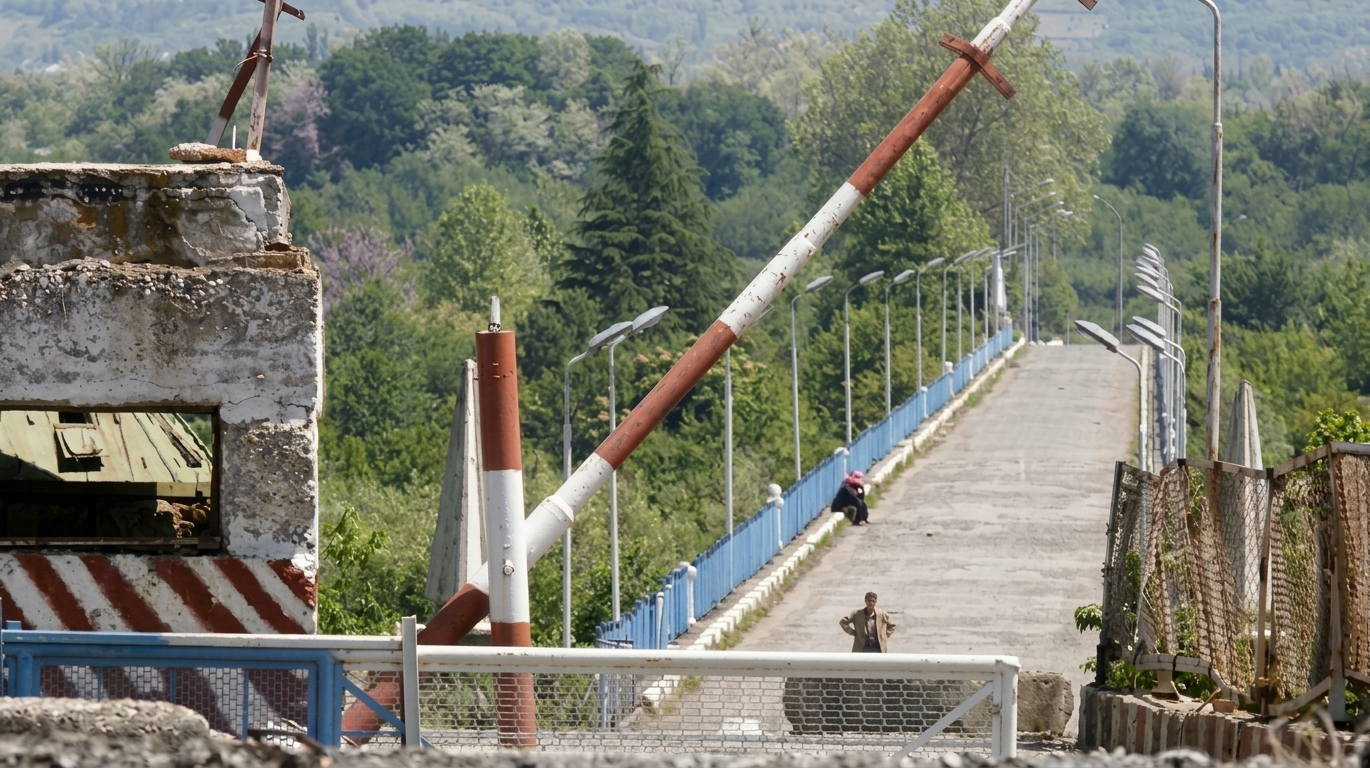
The presence of Ukrainian military drones over Abkhazia, or any potential future military strike on the region, carries significant political weight. Currently, Abkhazia is de jure part of Georgia; however, the Russian Federation maintains effective control over the territory – a situation official Tbilisi classifies as an occupation.
On a formal level, a Ukrainian strike on Abkhazia could be interpreted as an attack on Georgian territory.
Such an action could elicit varied political evaluations depending on specific interests; however, objective realities and the multi-layered circumstances surrounding Abkhazia must be considered.
How valuable is the Russian military infrastructure in Abkhazia to Kyiv, and what steps should official Tbilisi take in such an event? We asked security experts for their insights on these and other pressing questions.
The platform “Georgian–Abkhaz Context” invited several Georgian security experts to share their views.
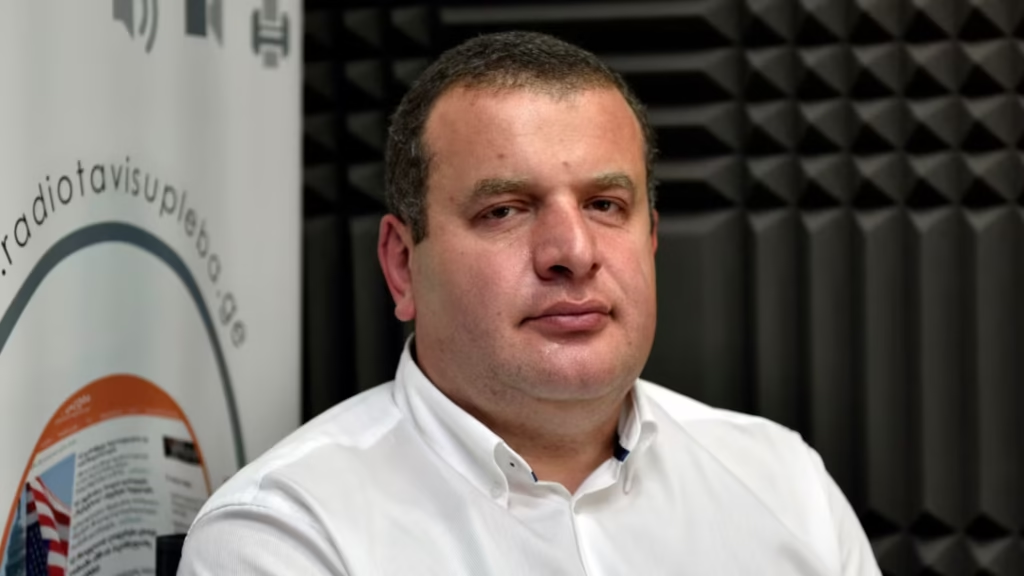
Shota Utiashvili, a security expert, believes that Ukraine currently has only two primary military interests in Abkhazia: the Ochamchire port and the Russian air defense systems deployed across the region.
Beyond military utility, an attack on these targets holds psychological value for Kyiv. By taking this step, they demonstrate to Russia that their Black Sea Fleet will find no sanctuary – neither in Russian ports nor in Ochamchire.
However, Abkhazia is not Russian territory, and an attack could trigger political tension. To date, Ukraine has largely refrained from striking military targets outside of Russia proper. This explains why military strikes have not been directed at Belarus, despite the fact that a major Russian offensive was launched from that direction in 2022.
Utiashvili argues there is a qualitative difference between Belarus and Abkhazia.
The Russian army remains in Belarus with the consent of Minsk; conversely, Russian forces are stationed in Abkhazia without the permission of the Georgian government and against its will.
This creates an ambiguity: the Russian military infrastructure in Abkhazia is a legitimate target for Ukraine, and an attack on it cannot be considered an attack on Georgia, as Russian forces are present in the region illegally.
In the event of an attack, the Georgian government could choose to ignore the move and refrain from responding. Tbilisi’s priority should remain the safety of civilians in Abkhazia, as well as the protection of civilian infrastructure and cultural heritage sites.
In such a scenario, a drone or missile could miss its military target, leading to civilian casualties. Therefore, the Georgian authorities should, where possible, warn locals in advance and urge them to maintain distance from military installations.
Utiashvili notes that the operational range of Ukrainian drones and missiles is expanding. This reality is forcing Russia to relocate parts of its Black Sea Fleet further east from the Novorossiysk zone.
Consequently, the concentration of Russian military infrastructure and potential targets in Abkhazia may increase, heightening the risk of direct Ukrainian strikes on the territory.

Teona Akubardia, Deputy Secretary of the National Security Council of Georgia from 2014 to 2018, believes Ukraine’s open position is clear: any location from which they face a Russian threat during this war is their legitimate military target.
One such target could be the Ochamchire port in occupied Abkhazia, where Russia has moved vessels of its Black Sea Fleet during the conflict.
Akubardia recalls that following the announcement of the initiative to station the Russian military fleet in this port, fifty Georgian opposition MPs—at her initiative – addressed NATO and EU member states in 2023.
This resulted in a public assessment from the NATO Secretary General regarding Black Sea security. Any Russian military infrastructure, she argues, could become a target.
Russia has effectively integrated Georgia’s occupied regions into its war against Ukraine. Given that Russia maintains effective control over these regions, official Tbilisi must theoretically account for this factor in the event of a possible attack.
Currently, Georgia’s inter-agency mechanism for security policy planning and coordination is fractured; the country has also lacked an updated Threat Assessment Document since 2018.
Georgia must be guided by its national interests, which include the peaceful de-occupation of the country, the restoration of territorial integrity, and accession to NATO and the EU. In this regard, there is a total alignment of interests between Georgia and Ukraine.
We are witnessing how Ukraine utilizes long-range capabilities to strike Russian military and energy targets, including those in the Krasnodar region.
As Akubardia points out, Ukraine has succeeded in bringing the war to Russian territory. This is significant for those living in the occupied regions, as they see how weak Russia has become in protecting its people from such proportional attacks. She notes that the repeated drone alarms in occupied Abkhazia, where the origins of the drones remained unconfirmed, were telling.
These incidents signal Russian vulnerability. For Georgia to transform this Russian weakness into its own strength, a national security policy aligned with the country’s true interests is required.