







Cyprus model for Georgia
The original article was published on The new Union Post
Author: Federico Baccini, Editor in chief of The New Union Post
Since Cyprus joined the Union in 2004, the lack of territorial integrity has not posed “any sort of existential problem for the EU as a whole,” explains Denis Cenușa, associate expert at the Geopolitics and Security Studies Center, citing the peculiar relation with Türkiye.
The situation with Ukraine, Moldova, and Georgia, however, could be very different
There is one challenge that Ukraine, Moldova and Georgia- the last three candidates to join the European Union – have in common. A closer look reveals that the same issue also ties them to Cyprus, which has been part of the EU for more than twenty years.
In each unique case, the central authorities lack full control over parts of their national territory.
For Ukraine, it is Donbas and Crimea; for Moldova, Transnistria; and for Georgia, Abkhazia and South Ossetia.
For all three aspiring members, the existence of separatist regions or Russian-occupied territories is not only a pressing national concern but also a highly complex issue for the EU.
Meanwhile, thirty years after the division of the island between the Republic of Cyprus and the Turkish Republic of Northern Cyprus, it was the former that acceded to the Union in 2004 – without reunification with the latter.
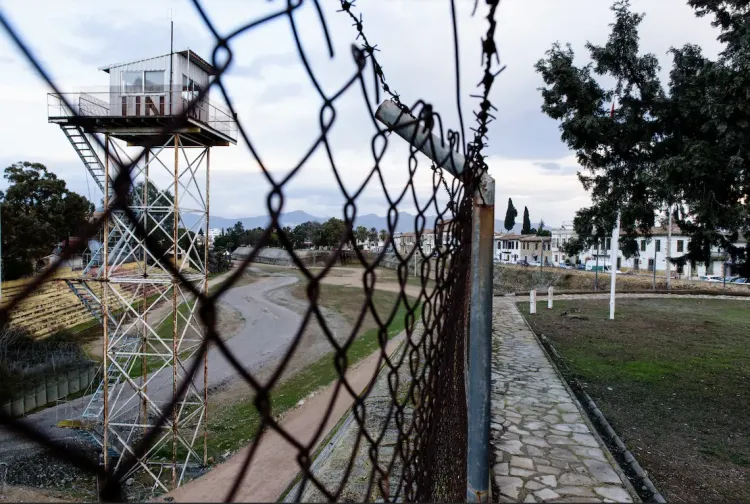
This raises an important question: to what extent can Nicosia serve as a precedent for Brussels in considering the accession of these three new candidates?
“In my view, it is very hard to call Cyprus a positive solution. I would say that this is the only way for the EU to move forward,” explains Denis Cenușa, associate expert at the Geopolitics and Security Studies Centre (GSSC), in an interview with The New Union Post.
The issue becomes even more delicate when viewed in the context of the current EU enlargement process.
One key factor is that EU accession could form part of the “security guarantees” offered to Ukraine in any future peace negotiations with Russia.
At its core, the dilemma is whether Kyiv and Brussels should pursue rapid accession for a Ukraine that – at least de facto – lacks control over its Russian-occupied regions, or whether membership should be postponed until Kyiv reasserts full sovereignty across its internationally recognised borders.
“When the EU granted candidate status to Ukraine, it did not distinguish between regions controlled by Kyiv and those under Russian occupation,” Cenușa notes. Accession, whenever it occurs, will apply to the country as a whole—”and the same principle applies to Georgia and Moldova.”
A further question is whether active hostilities might still be under way, even though the Brussels “has already set a precedent” by opening membership talks with a country at war against a direct threat to the EU’s own security.
“This is unprecedented in the history of enlargement,” Cenușa stresses. Not even the example of Cyprus can help untangle this diplomatic knot.
“The lack of territorial integrity in Cyprus has never represented an existential problem for the EU. Presumably, the same assumption applied to the territories in Georgia, Moldova and Ukraine,” Cenușa acknowledges.
When these countries were granted candidate status, “the EU knew full well what it was doing,” yet chose to proceed, drawing on the example of a member state whose territorial dispute “has not really created problems for the Union as a whole.”
Following the Turkish occupation of the island’s northern region in 1974, no diplomatic effort to achieve reunification has succeeded, not even EU accession. The referendum held at the time failed due to opposition from the Greek Cypriot community—the population that ultimately joined the Union.
The Turkish Republic of Northern Cyprus remains excluded from the EU project, recognised only by Türkiye.
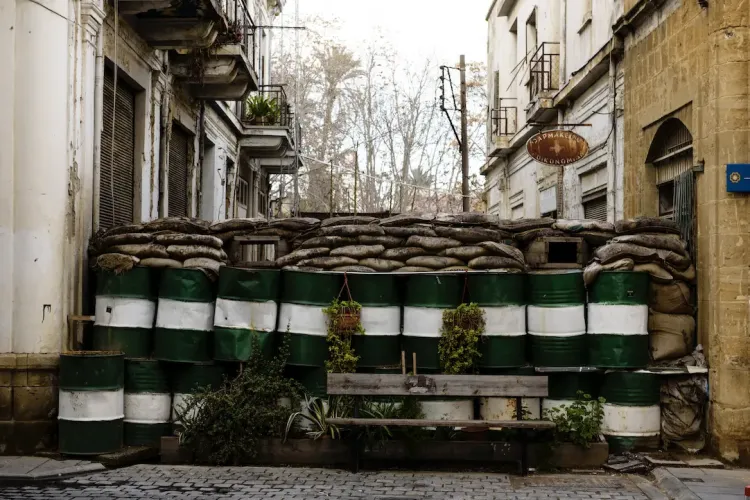
Yet the division of the island – unique within the EU – has never been considered a security concern in Brussels. “It served as a sort of learning process, highlighting the limits of what can be done in a problem that is existential for the country but not for the EU as a whole,” notes the GSSC associate expert.
It is difficult, however, to see the same logic applying to Moldova, Georgia, or, above all, Ukraine.
Firstly, the opposing party is “a third non-candidate state occupying the territories of its neighbours” – not a candidate state like Türkiye (albeit with a frozen accession process).
Secondly, the geographic proximity of the danger makes it an existential concern for Eastern and Baltic EU members, turning Russia into the main threat for the Union as a whole.
“This has never been the case with Türkiye,” Cenușa emphasises.
It is true that “the Cyprus case” illustrates how the EU can use European integration “as a driving force” to encourage those communities to re-engage with constitutional authority. Yet a key difference exists with the three candidate countries.
In Cyprus, the Turkish-controlled area enjoys “a certain degree of development,” as Türkiye is a regional power with a functioning economy – despite its many challenges and weaknesses.
By contrast, in Russian-controlled or separatist territories in Ukraine, Moldova and Georgia, even if Russia were suddenly to experience rapid economic growth, these regions would likely remain “grey zones where nobody would be genuinely interested in investing,” with far fewer opportunities for development.
Moreover, neither Türkiye nor the Turkish-controlled territories in Cyprus are subject to international sanctions, unlike Russia and the Russian-occupied territories in Ukraine, which “will not be able to develop at all.”
What Cyprus demonstrated is that integrating a country lacks full control over its territory comes with inherent structural limitations.
“This is both a security and a socio-economic issue,” Cenușa explains, pointing to territories that develop unevenly, disputes over public administration, population outflows from the Turkish-controlled area, and the deterrent effect on foreign direct investment.
At the same time, when it comes to separatism, such situations can also create tensions between EU member states and candidate countries.
From Ankara’s perspective, “they sometimes claim that Nicosia and Athens are the main obstacles to Türkiye joining the EU“ – not deficiencies in democratic institutions or the rule of law, but rather poor relations with neighbouring states.
Nonetheless, Cenușa is sceptical that this will fundamentally alter relations between Ankara and Brussels.
“Türkiye will not make any trade-offs, as security is now one of the main points on the agenda in its discussions with the EU.” Strengthening European security requires dialogue with Türkiye, and “defence has become a crucial factor in shaping the EU’s enlargement policy.”
Politically and economically, the reunification of the island is widely considered highly unlikely.
Yet the EU continues to support the Turkish Cypriot community through part of its budget, amounting to €438 million in the proposed 2028–2034 Multiannual Financial Framework (MFF).
As Cenușa explains, “this is a kind of hidden hand aimed at keeping development in Cyprus as balanced as possible,” though this can only be done in close coordination with Türkiye, “as it would not accept anything taking place there without its agreement.”
Such a scenario could apply to Moldova, but not to Georgia or Ukraine.
Industries in Transnistria are already trading with EU member states – particularly Romania – and are able to benefit from access to the European market, albeit “not entirely in a synchronised way,” through the implementation of the EU–Moldova Association Agreement.
In Ukraine, even before 2022, Donbas and Crimea were unable to trade with the EU, as they were subject to international sanctions.
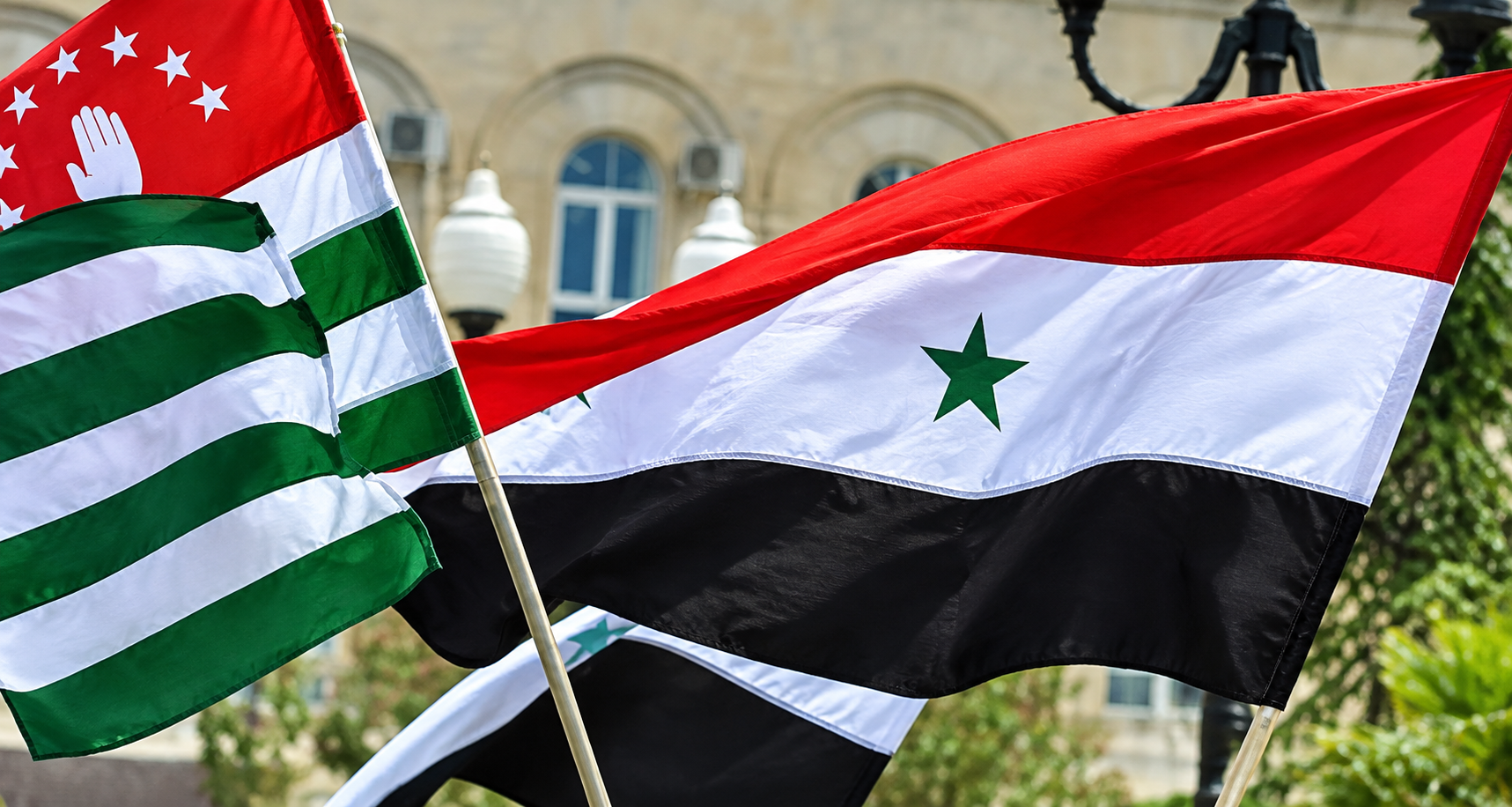
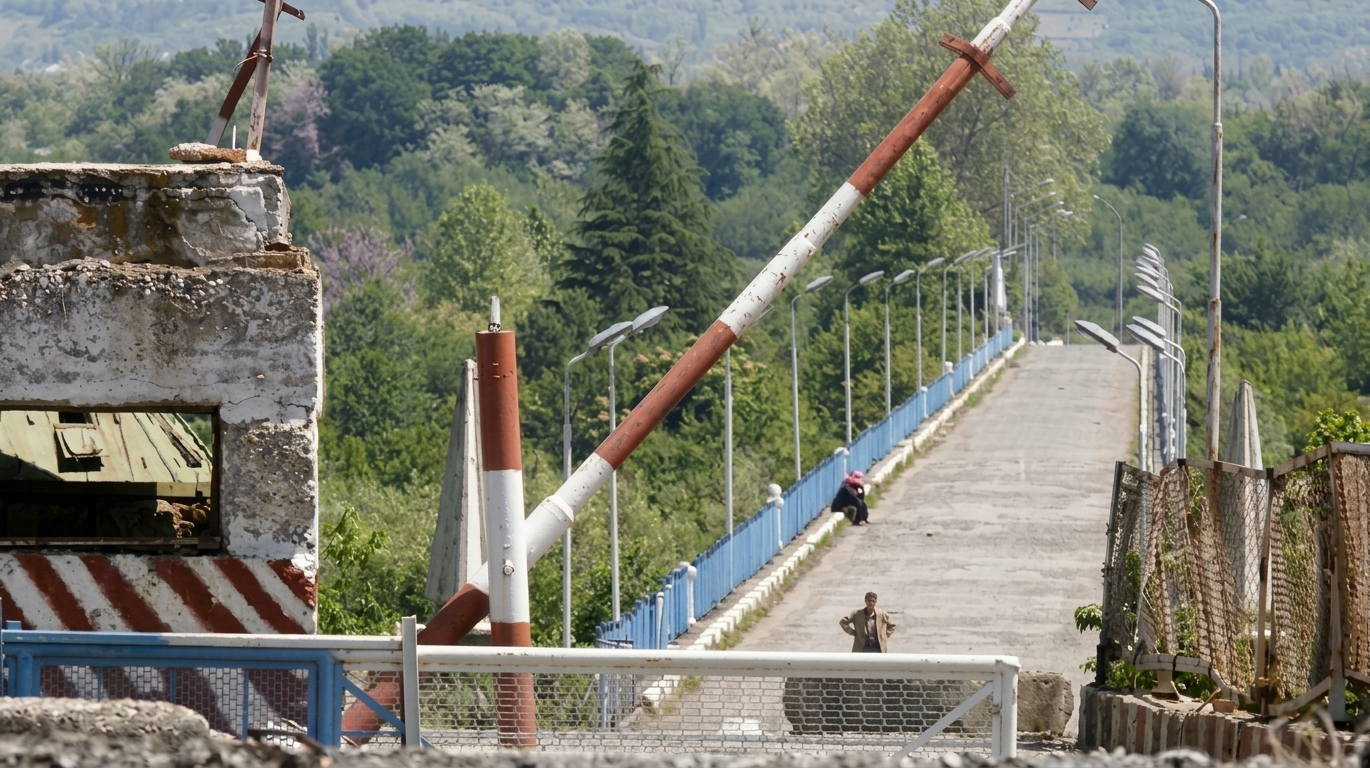
In Georgia, Abkhazia and South Ossetia – recognised only by Russia and a few other countries – exist de facto as independent states.
“The EU really cannot do anything with those two territories, because Georgia lacks any leverage to impose EU norms,” unlike Chișinău, which retains some influence over Transnistria, squeezed as it is between Moldova’s constitutional territory and Ukraine.