







Adgur Ardzinba on unity in Abkhazia and relations with Georgia
Adgur Ardzinba, head of the opposition “Abkhazian People’s Movement,” believes that Abkhazia faces two main tasks: achieving unity among political forces and society, and strengthening the republic’s defense capabilities.
In conditions of growing global and regional instability, it is necessary to stop political squabbles and prioritize national security. Ardzinba discusses this in an interview with the editor of the newspaper “Chegemskaya Pravda,” Inal Khashig.
His main arguments:
Full text version of the interview:
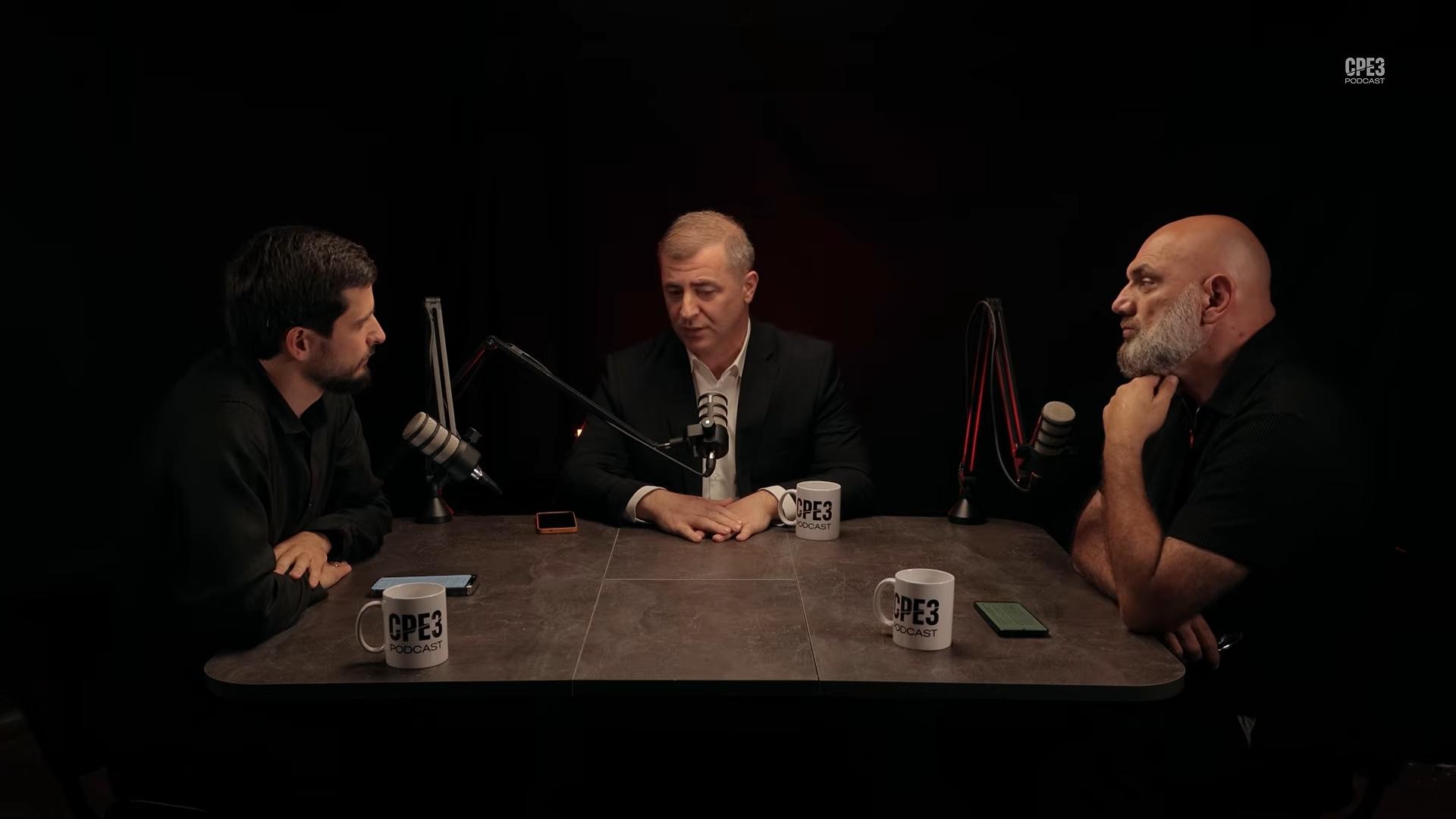
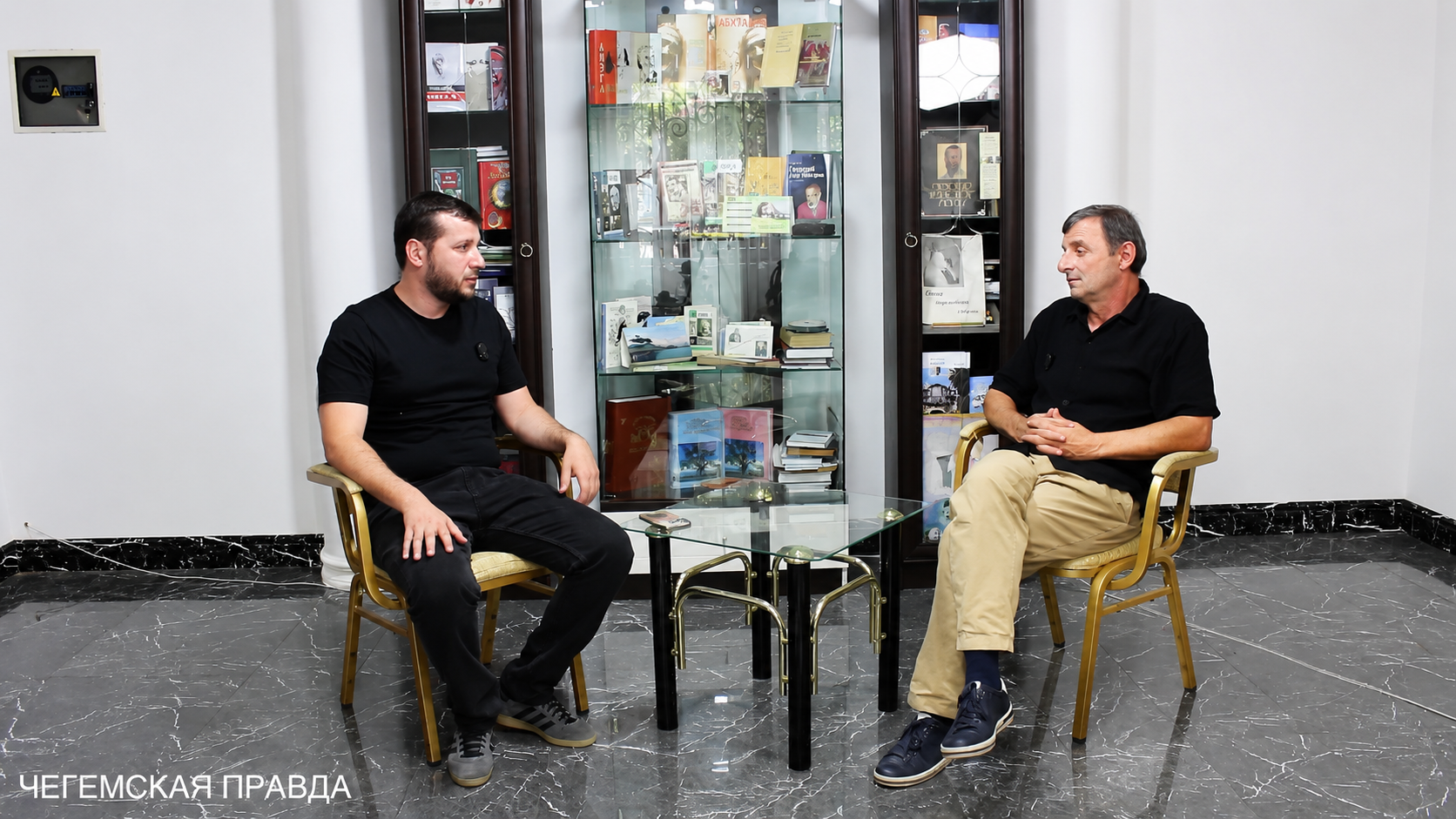
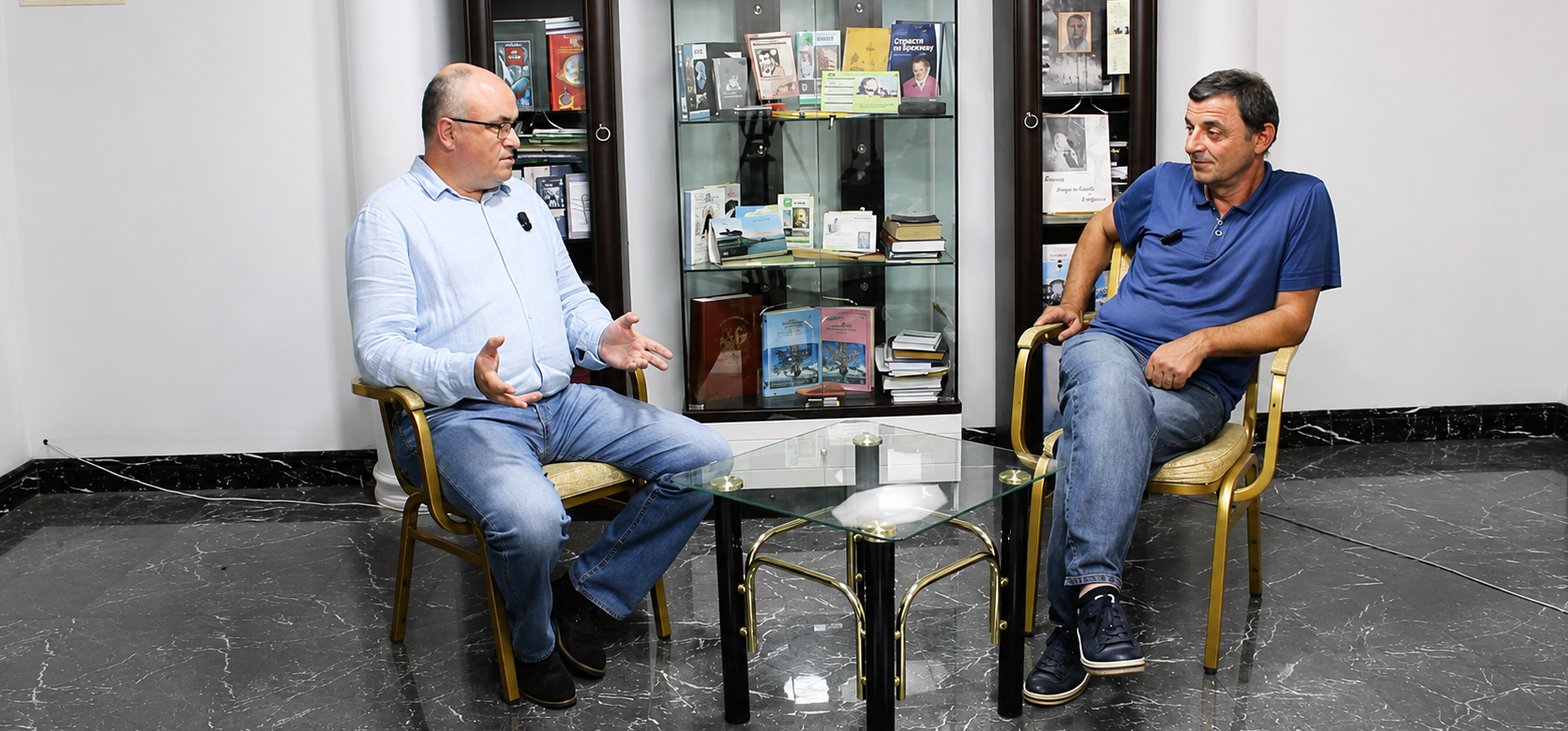
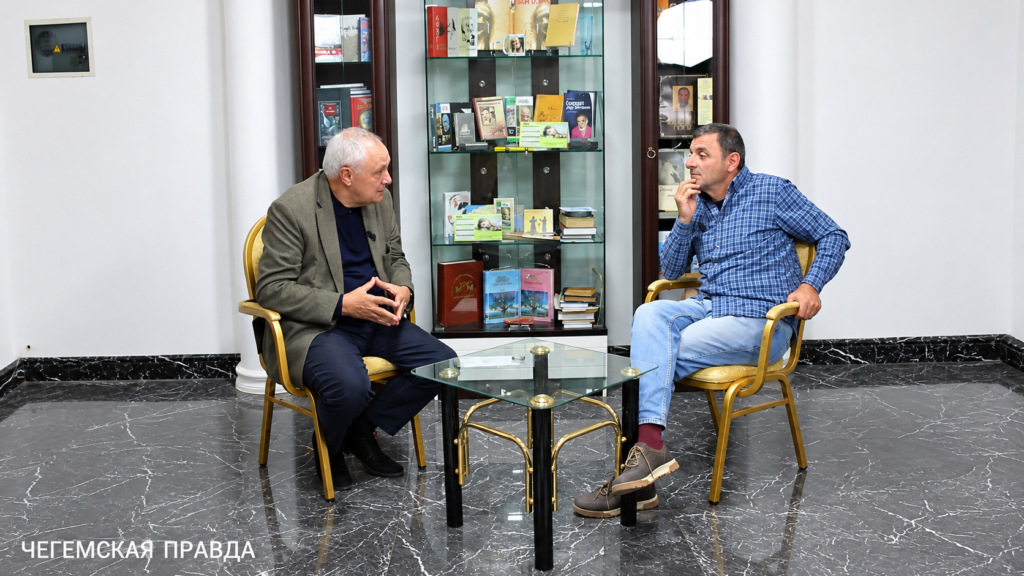
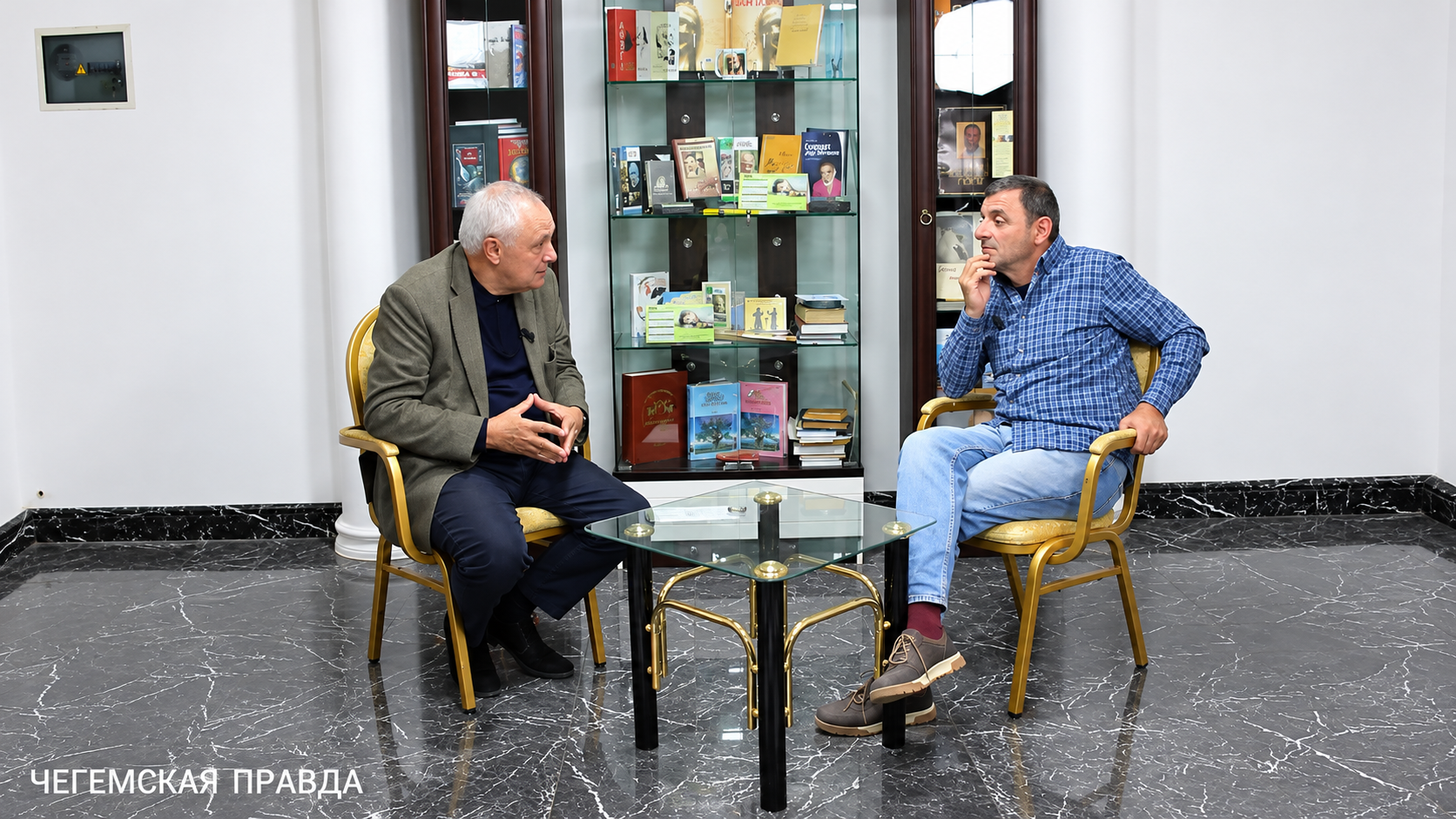
Inal Khashig: Hello, this is Chegemskaya Pravda. Today, we are returning to the most pressing issues of the day. Our guest is Adgur Ardzinba, head of the opposition organization, the Abkhazian People’s Movement.
Adgur, looking back at the ARUAA congress, I listened closely to your speech. Welcome; good to have you here. To me, your speech didn’t sound like a typical opposition address. Given the tense times we live in – with conflict blazing all around us – you focused on the need for unity and national defense. That was the main takeaway for me. I’d like to delve deeper into that position. What exactly is it that we need to agree on within Abkhazian society?
Adgur Ardzinba: Good day, Inal. Indeed, those thoughts were voiced at the congress of the veterans’ organization ARUAA; they aren’t just my own. Similar fears were expressed in the speeches of many war veterans. Honestly, looking back at the last few years, I don’t think ARUAA has been wrong once. It was back in March 2021 that the organization first called for the ex-president’s resignation and provided a whole list of issues that would arise if that didn’t happen. By the way, the chairman, Timur Lesikovich, and I recently reviewed the resolution from that congress five years ago, and every one of the worst-case forecasts voiced back then has proven to be accurate.
I say this because the word of veterans should still carry significant weight; these are people who experienced war not through words, but through deeds. They know what war is, and they understand what real danger looks like.
In our current context, what is our starting point? We aren’t asserting that war is 100% certain to break out tomorrow, but the probability is high enough to be a serious concern. In school and university, we were taught that if a worst-case scenario exists, you must use it as your baseline for planning – especially when it concerns the security of the country and its people.
Therefore, we are calling for national security to be our number one priority to ensure our safe existence for decades to come. And if we are talking about security, it is impossible to achieve as long as we are divided by internal political strife and confrontation.
Therefore, we believe – and I personally subscribe to this view – that now is not the time for political squabbles and games. It is essential to consolidate society; national security must be our number one priority. Regarding our defense capabilities, we maintain communication with the relevant agencies and have access to various types of information that I cannot discuss publicly.
As of today, the situation is as follows: we are capable of repelling enemy aggression. I say this with full responsibility. We are prepared to stand our ground if we are attacked. However, we have not yet reached the level of deterrence where no one would even dare to think about attacking us. That is a completely different level of readiness. It is my opinion that we can take additional steps to fully guarantee our security, regardless of how circumstances unfold or which forecasts come true. Simply put, the enemy should be deterred from even considering an attack against us.
Regarding Georgia, we do not harbor hostility toward anyone. Thirty-three years have already passed. We have no intention of attacking anyone, nor do we have territorial claims against anyone. We live within the framework of our historical borders. We are a sovereign, independent state, open to a normal, full-fledged, and fair dialogue.
The precedent of Kosovo and Serbia is relevant here. Yes, they still have a confrontational relationship, but they maintain trade relations nonetheless; in fact, Serbia is Kosovo’s number one export destination. There are channels of communication mediated by the European Union and other bodies. While these talks occasionally hit a dead end, a certain level of stability has been achieved. To reiterate: we are not looking for a fight, and we do not want war. However, we must be prepared for one.
I believe that today, you don’t need to be an expert to see that the global situation is spiraling out of control. One of the worst-case scenarios is a direct clash between the great powers. Looking at a medium-term horizon of two to three years, many experts suggest there could be a direct confrontation between Europe and our ally, the Russian Federation.
Russia has been, and will continue to be, the guarantor of our security. However, when a country is involved in a large-scale conflict, it becomes our responsibility to be strong ourselves. We must ensure that, should anything happen, there is no need to divert forces to our aid, and that we are capable of defending our own borders. This is exactly what we are calling for.
Regarding social unity and the consolidation of our people, the primary responsibility lies with the authorities, as our own capabilities are limited. It is up to the government to take these steps. For my part, I can say that President Badra Zurabovich, from what I can see, is also trying to take certain actions aimed at unifying the nation and establishing clear priorities. Of course, there are things happening…
Inal Khashig: But what is the formula? I hear about unifying the nation to eliminate domestic political friction; both the President and the opposition speak about it. But how do we actually achieve it? Perhaps there are meetings taking place behind the scenes, but publicly, we still see sharp, aggressive statements from pro-government organizations directed at the opposition.
What kind of mechanism needs to be developed so that representatives from both sides can actually sit down and discuss their problems at the same table – perhaps in some established format?
Adgur Ardzinba: As far as I know, work is currently underway to create a mechanism that would bring all political parties and public organizations together at one table – a sort of consultative council. Efforts are moving in that direction now. This initiative came from the Forum of National Unity of Abkhazia, as I understand it, and it has received support from representatives of the authorities.
By the way, I’d like to emphasize one particular element: the current president has, to a certain degree, distanced himself from the so-called pro-government parties. If we look back, the former president used to gather his supporters around him, and everyone simply agreed with whatever he said. We aren’t seeing that now. I think this is a positive signal. In my view, the current president is attempting to view everyone from the same perspective by maintaining that distance. This seems like a wise position to take. Of course, there are people – both in the government apparatus and the presidential administration – who are unhappy with this approach.
Inal Khashig: Some parties, by the way, give me the impression that they are falling all over themselves to show loyalty: “We’re with you, President! We’re on your side!”
Adgur Ardzinba: We see that happening, too, but it’s just part of our political culture. After all, Inal, we all live here, don’t we?
Inal Khashig: I wouldn’t exactly call it our culture. This habit of making a show of support – “I’m with you, I’m with you” – and these openly flattering gestures were never really respected here. What bothers me most is that later, if that same president is overthrown, these are the very people who criticize him even more harshly than the original critics did while he was still in power.
Adgur Ardzinba: Well, that certainly happens. If you read Fazil [Iskander], you’ll find plenty of interesting moments like that and can easily draw analogies. But that isn’t the heart of the matter. These are all just trivialities.
Speaking seriously, how do we unite? There are indeed various forces across the political spectrum, and I don’t wish to elevate or diminish anyone. However, veterans should naturally lead this effort. Today, the largest veteran organization is ARUAA; there are no others of such scale. While ‘Amtsakhara’ is now a political party with a different format, I still acknowledge and accept their role.
In my view, this is how it should be done: we sit down together and agree that now is not the time to argue over who is more popular. We are living in a time fraught with risk. We must structure our work by setting clear priorities. Naturally, the top priority is mobilization and preparation. A whole series of requirements follows from that. No one is suggesting we ignore agriculture, the economy, or tourism – those must move forward in parallel. But we must distinguish between what is critical and what is secondary.
I am certain that all the healthy forces in Abkhazia are ready to come to the table. I speak with many who say that if the Motherland is in danger – and it truly is – they are ready. We don’t live in New Zealand; we live at the epicenter of global events. This requires a joint effort to engage the public and communicate the risks we face. The resources or media reach of a single president may not be enough; in this regard, we must work together.
Our veteran organizations include highly experienced people who fought in the war and have continued to learn and grow since. Their skills and knowledge must be applied. As the saying goes, ‘two heads are better than one.’ I believe this common ground gives us the opportunity to unite society and take concrete steps. Regarding the Ministry of Defense – and this is just my opinion, I’m not imposing it – I believe certain changes are necessary.
The style and nature of warfare have changed, as we can all see. Consequently, we have the opportunity to learn directly from our men currently at the front. There are very experienced people there, including our elders, such as Raul Kharabua – a true professional. There are many others as well. Their experience must be utilized, and the methods of modern warfare should form the foundation of our defense system.
What are the ‘benefits’ of this new era, if you can call them that? Technology has made defense much more affordable. Previously, repelling aggression required hardware and equipment costing millions. Today, we have unmanned aerial vehicles (UAVs). This allows us to make significant strides even with our own resources. I also know that, without going into detail, there has been serious support from the Russian Federation over the past year. The situation here in Abkhazia is indeed changing, which is very encouraging. But returning to my original point, we must also take initiative ourselves.
There are basic things we need to discuss, Inal. For us, there can be no concept of the ‘army’ being separate from the ‘people’ or the ‘front.’ We are so few that we must embrace a single concept: the Abkhaz army is the Abkhaz people. Every citizen must be a participant in the resistance, whether at the front or in the rear. Every person needs to know exactly what to do under various scenarios. Currently, I see that this awareness is too limited. The specialists and officials are informed, but the general public is not.
We need training and drills. People need to know how to behave in the event of a drone attack, for instance. Everyone should have a specific task. Reservists should know their roles, and we must know who is responsible for evacuating civilians. In a typical apartment building, who is in charge of communications? There are many such questions, though I won’t raise them all now.
Inal Khashig: Warning systems, and so on. The need to strengthen our defense capabilities is clear. But we also need stability and sustainable development to avoid the internal political divisions that regularly throw us into a fever. We have parliamentary elections right around the corner – less than ten months away. I notice the rhetoric from both the opposition and the authorities is the same: “we all want stability.” Yet, I don’t see a mechanism that actually guarantees it.
The Public Chamber was recently formed, but the opposition immediately released a statement pointing out that not a single one of their representatives is included. It’s as if the institution itself has no real influence or power; it isn’t a branch of government, and its role is purely representative. Still, it could have been a platform where different political groups and forces could debate and discuss issues.
Then there is the Parliament. We always look to it for stability, and it unequivocally supports the government – perhaps right up until “Hour X.” The government has enough support in Parliament to even change the Constitution. But eventually, when you realize this support no longer reflects the actual public mood, a crisis hits. Only then does the Parliament seem to “sober up” and begin to function as a stabilizing force.
How can we ensure that this isn’t just a sporadic occurrence? How do we make the Parliament a normally functioning, independent, and truly representative branch of power? “Representative” is the key word here. If you look at the Parliament today, there are realistically only two opposition deputies.
Adgur Ardzinba: There are a few more than that.
Inal Khashig: Well, there are two open oppositionists; the rest are mostly independents, and a large majority supports the executive branch one way or another. We always view elections as a rivalry between teams, rather than focusing on the institution itself. These are anxious times. We admit that anything could happen, yet we don’t treat these elections with the same gravity we did in 1991, when the “Golden Parliament” was elected.
Adgur Ardzinba: That is a very good example.
Inal Khashig: Because then people were chosen not because “I employed him, and then through him I will solve some of my questions.” Then the most important issue was the Abkhaz question, the public question, the question of our people, the preservation of our people at the time when the Soviet Union was falling apart, when there was a threat of war. And, in general, this war came and thanks to this unity, which was laid in this principle of the formation of the parliament. And then through this parliament, properly speaking, this victory was also achieved, by and large. If we will again be forming the parliament now according to that principle which exists now, then I already would think about how all this will look, if the situation, God forbid, goes according to the worst scenario.
Adgur Ardzinba: Inal, the ‘Golden Composition’ parliament is a perfect example. Remember how those representatives were chosen? Back then, power wasn’t in Abkhaz hands; the Georgian SSR was dominant. It wasn’t the government that selected those people – it was the people themselves. United by a common sense of danger, the masses took charge.
This brings me to why I’m here today: I don’t see that same level of awareness today. Across all levels of society, there is a lack of understanding regarding the threats existing in the world right now. This apathy is dangerous because it leads to a careless approach to electing our next parliament. This next term could be one of the most critical in our history; we may face challenges so great that everything will depend on the strength of that parliament. I’m not trying to be a pessimist, but we only have to look at recent events in Iran to see how quickly things can change.
You see, within the system of the hierarchy of power and across its various branches, every individual has value. Look at how it turned out in their scenario. We must understand this. While there are certainly people within the government offices and in society who assess things soberly, I do not see a dominant awareness or a critical mass of such understanding. This worries me deeply.
From what I can see, the President understands this; he assesses the situation in the same way. However, the efforts of the President alone, or of you and me, are not enough. We need to involve other forces and take a wiser approach. If we let things drift as they are, the next parliament will be elected just as it was before.
If we look at the current convocation as an example – specifically the crisis of November 2024 – out of the 35 deputies in parliament, how many actually stepped up to participate in the process or joined the negotiating group?
There were deputies who took the initiative – a group that met with the ex-president, maintained communication with all sides, and looked for solutions. These were individuals who were respected and recognized by both camps. On the other hand, there were deputies who simply went with the flow. Yet, when a country is facing a confrontation, that is a moment of immense responsibility, and that is exactly when a deputy needs to show leadership.
There were also deputies who, over the last few years, openly voiced their opinions in parliament on key issues. They spoke out against initiatives that are now – quite rightly – viewed by everyone, both inside and outside Abkhazia, as harmful. These deputies were the first to raise alarms within the parliament, even when everyone else argued against them. If I were in power, these are exactly the kind of people I would rely on first and foremost
Ultimately, I believe it was the stance of these individuals, along with the support of the public, that led to today’s positive outcome: the removal of these contentious issues from the agenda.
The relationship between Abkhazia and Russia is developing quite well, with a vast number of new social and public initiatives – so many, in fact, that I sometimes struggle to keep track of them all. This is a very welcome development.
However, we must remember what brought us to this point: the people’s struggle, their critical thinking, and the courage to speak out. If I were asked to choose a deputy for parliament today – even from the current pool of incumbents – my personal likes or dislikes wouldn’t matter. I would choose those who defended their opinions in the best interests of the Abkhazian state. To that end, it is essential that we form a parliament that is truly balanced; I spoke about this at the congress as well.
But you know, for some reason, to my great regret, we seem to have reached a plateau in our political development. I have the feeling that we are stuck, simply circulating in the same repetitive cycle. Take the former administration, for example: when parliamentary elections were approaching, we communicated with the ex-president about these issues, but we were ignored. Consequently, the elections were held, administrative resources were exploited, and they claimed victory, boasting a ‘constitutional majority with a reserve.’ I even had the displeasure of reading some of the reports and notes from that time.
And what was the result? To what did all of that lead? Did it stabilize the situation? Did it ensure that power in Abkhazia changed hands through a timely, orderly process? No. Instead, it led to a situation where people who were marginalized by the weight of administrative and financial resources were pushed out into the streets. When they were left with no way to convey their truth within the established institutions, they had no choice but to express their opinions from the street.
Unfortunately, we once again endured a political crisis that set our country back. Even now, I see certain circles within the government who want to take that same approach. But we must speak openly: in Abkhazia today, we are no longer alone. There are various participants in the political process with whom I maintain contact and exchange information.
Yet, here we go again – it’s the same old story. Shouldn’t we be drawing conclusions by now? Doing the same thing over and over while expecting a different result is, at the very least, unprofessional. Given the immense responsibility we carry and the dangers lurking in the world around us, responsible people from both the government and the public must come together and make a choice.
Some might criticize us, claiming this approach is undemocratic or that we are operating in ‘manual mode.’ But in 1991, we did exactly this, and the result was successful.
It is essential that we bring together the brightest minds, the wisest individuals, and the most active young people in parliament. We must strive to ensure that this branch of power becomes a distinguished element of Abkhazian political life. Think of how many people you and I know – I could list several names right now. Take, for example, Nodar Chanba, Kesou Khagba, Nugzar Logua, Ruslan Khashig, and many others. If people of this caliber were in parliament today, wouldn’t that be a major asset for Abkhazia?
Inal Khashig: Under the system we have now, people like that never – they simply never make it in.
Adgur Ardzinba: But I as a citizen of Abkhazia, I would dream of having people of such a level in the parliament. But I as a citizen of Abkhazia, have no possibilities to make it so that these people got into the parliament. You understand, in what is our main problem? We “overplayed” a bit, Inal. Such people – and such I have now listed, there Batal Dzhopua, there are many such people with us – such people we all should come and beg so that they came there, and not like now, so that they will go to elections, still they need to go, carry out some engineering-technical manipulations at their precincts so that someone deigned to vote for them. Well, you see, with us everything got derailed. Derailed. And we today in the parliament, when sometimes… Well, people have already lost interest, many, toward this institute. Why? Because everything is in our hands, but we need to organize ourselves in a smart way. Such people need to be chosen. And it is necessary for us with you to ask them so that they came to the parliament. And we have such people.
And there are young active guys, it is necessary [to include] them, responsible people. And president Badra Zurabovich Gunba in this sense first should be interested. This is because he will have people. This is his right hand, if everything is done competently and correctly. He will be able with them to share responsibility in case of something. He will be able with them to consult. He through them will have a real picture of public mood and opinion. Well, you will gather people who in everything agree with you. Yes, it is pleasant, I understand. It is comfortable when you say something, everyone claps. This someone likes. But we are not in a circus with you. We have big difficulties. Our country is destroyed. We are used to everything, of course, but we have a destroyed country. We have a colossal quantity of problems. Such a feeling, we simply overplayed a bit, Inal. Overplayed to such a degree that it is comic to observe some episodes of our life. It worries me strongly what is happening. I say sincerely.
I worry very much for all processes which happen around us, inside us. And now for me it is unimportant who is for whom, who voted for me, who voted for that one. I am ready to remove all this. I am making the appeal publicly, sincerely making it. If somewhere my help is needed as a citizen, I am ready. I do not need any positions, nothing. I worry very much. And I am not alone such.
Inal Khashig: Are there any actual interactions happening now? Any signals, negotiations, or informal talks? Clearly, none of this is happening officially, but as I always say, Abkhazian politics is usually conducted behind the scenes.
Adgur Ardzinba: I’ll put it this way: Badra Zurabovich Gunba and I are from the same generation, and we have known each other for a long time. As I’ve said publicly before, we have always maintained a good relationship, despite being political opponents on two occasions – first when he ran for Vice President, and now as a candidate for Head of State. Despite the various twists and turns of political life in Abkhazia, we’ve managed to keep our relationship stable and even warm.
We live in Abkhazia, where everything is interconnected through kinship and social ties. There is a mutual understanding between us. I can see that the perspective I’m sharing is shared by him as well. If the sitting president had chosen a different path, our rhetoric and the country’s reality would look very different today. We would be behaving much more harshly than we did under the former president, because the current situation is so critical. But that isn’t the case. The recent congress involved criticism, yes, but it was constructive.
Of course, there are certain forces and individuals who don’t want this stability. For over twenty years, people in Abkhazia have learned to ‘fish in murky waters,’ and they are even passing these ‘skills’ down to their children. It’s becoming generational. These people won’t stop, but the current situation doesn’t allow for that anymore. We need to push those interests aside, assess the real threats we face, and move forward. We can settle other matters later.
I hope for stability and for the chance to expand our planning horizons. Today, even superpowers can’t plan more than a few weeks ahead. Who can say if the situation in Iran will escalate further, or if tactical nuclear weapons might be used? No one in the world knows the answer to that.
Inal Khashig: Even Trump probably doesn’t know for sure.
Adgur Ardzinba: Exactly. We might laugh, but it’s a very serious matter. This is the world we live in, and I want everyone to realize that. We aren’t on another planet; we don’t live in New Zealand. And even New Zealand is feeling the effects now, with fuel shortages and other issues. Even being far removed from global centers doesn’t make you immune.
As for those in our society – not just those in power – who are always looking to exploit the situation for personal gain: I’m hearing signals again that ‘there is no opposition.’ But those are just illusions.
Inal Khashig: That happens regularly. Since 2004, every administration eventually loses its way and starts believing the opposition has disappeared. That kind of complacency always leads to dramatic consequences a short time later. In fact, the more vocal an opposition is, the more secure the government should feel. When the opposition is silent and the government assumes ‘everything is fine,’ it usually leads to an explosion – like a volcano erupting – because the social signals aren’t being received. A blockage occurs. Right now, it seems the opposition isn’t being very active.
Adgur Ardzinba: Not so aggressive, you mean.
Inal Khashig: Aggressive, yes. And it’s a good thing that the opposition isn’t being aggressive right now regarding other matters. Now is not the time for internal squabbles; everything around us is ablaze. We need to find new impulses for our development – not just to preserve our state, but to further develop our sovereignty. It seems to me we lost our bearings long ago. We need those “beacons” back. What are we striving for? I look at the rhetoric of some of our politicians. They seem to care only about whether welfare will improve or if investments will keep coming. Even a massive country like Russia – or the United States, for that matter – carefully chooses which investments are acceptable and which are not based on their national security. We are a small country and a small population. There is no other country where Abkhazians can live and still be called Abkhazians.
Adgur Ardzinba: And there never will be!
Inal Khashig: Exactly. There are half a million Abkhaz living in Turkey, yet you won’t find a single one today with an Abkhaz first or last name. There are about fifty families of the “Khashig” clan living there, but you won’t find them listed as such. They live under Turkish surnames. People have been deprived of their very identity; they can’t use their family names or even openly state their nationality. It was incredibly cynical to accuse a part of our Abkhazian elite of “striving toward Turkey.” We know what Turkey is. My point is that we must have a goal. During the war, our goal was victory. After the war, during the blockade and the devastation, we strove to endure and rebuild. Then we strove for international recognition, and we achieved it. But after that, we seem to have lost our sense of internal mobilization.
Adgur Ardzinba: Yes, that is exactly what we were discussing earlier.
Inal Khashig: Since then, we’ve just been moving by inertia. The people solving Abkhazian affairs are chosen based on some “khachapuri principle” – meaning positions are viewed simply as a “bread place” (a lucrative post). How can we allow this? In a place as small as Abkhazia, we cannot afford to see public office as a personal meal ticket rather than a way to serve the interests of society and the state.
Adgur Ardzinba: This brings us back to what we said before, Inal. I am certain any sane person assesses the situation exactly as we have. If we assess the situation soberly, our actions must correspond to that reality. The parliamentary elections must be conducted with a full awareness of the current risks. If the elections – or even the preparatory process – follow the old patterns of the past, it will inevitably lead to an escalation.
Inal Khashig: One last question, Adgur. You mentioned some iconic names of people respected in society. Should the parliament be made up of people who truly represent the interests of the nation?
Adgur Ardzinba: People like your frequent guest, Astamur Taniya, could certainly be included.
Inal Khashig: They would need to be persuaded. But my point is this: given the threats surrounding us, we rarely see a member of the opposition and a representative of the government exchange positive signals. Right now, everyone is talking about stability. But is it possible to take this agenda directly to those in power? To someone like Badra Gunba, or through political organizations? Will there be a real dialogue to find a common denominator?
Adgur Ardzinba: I’ll say this, Inal, a dialogue does exist. There is a mechanism currently being discussed, initiated by our elder comrades. Consultations are underway to create a platform for this. I won’t comment on the recently formed Public Chamber; while there are many respected people there, the way it was formed led to issues I’d rather not get into. However, there is a signal, a movement, and I hope we are heard. This isn’t just about our interests or the interests of the people I’ve named. We have many worthy people with colossal experience and patriotism. We should be asking them to serve. It’s not that they need the positions – they are fine – but we need to beg them to lead this branch of government. We need such people in the executive branch as well.
Inal Khashig: But the executive branch needs to be mobile. It should be full of young, idealistic people who keep pace with the times. The parliament, on the other hand, should be more experienced and representative.
Adgur Ardzinba: I agree, but we must be careful with the terms “young” and “idealistic.” A person is only “young” as long as they are still learning. I’ve met people over 80 who overflow with ideas that are on a level I, as a younger man, can’t even reach. So, times have changed. The signals are there, and a mosaic is starting to form. There is a potential platform. If the government has the desire, we certainly do. Returning to those “illusions,” Inal – there are certain figures who refuse to change and who try to deceive themselves and everyone else by claiming there is no opposition. They shouldn’t mistake our constructive, state-oriented position for weakness. We simply recognize the dangers. I believe the President recognizes them too, but there are many layers between us and him. Whether due to internal or external factors, it’s vital we move in the right direction and set clear priorities. First and foremost, we must ensure our security. You ask about the future of our country; at this stage, let’s just ensure the security of our children so that we can at least preserve the country for them. We can worry about the rest later. The world is changing dynamically; that is indisputable. Great powers will clash – that is a certainty. It could happen in a month or a year. The world is being redistributed by the “right of the strong.” No one knows how it will end. But if we, as the state of Abkhazia, manage to protect and preserve ourselves during these prolonged trials, we will undoubtedly occupy a worthy place in the future world and receive the international recognition we all strive for. We will become a fully recognized, sovereign participant in the international process. We may be micro state, but…
Inal Khashig: Well, at least a micro-state.
Adgur Ardzinba: Yes, in that sense, and to conclude – we talk about Georgia all the time. It always surprises me that their Constitution contains an article stating their aspiration to join the European Union. Yet, there is a clear contradiction: they strive for the EU, a framework that includes micro-states like Liechtenstein, Monaco, Andorra, and Luxembourg. These states exist peacefully, and no one tries to conquer or dismantle them. Georgia aspires to that model, yet they refuse to accept the reality that right here, there can be a small, stable, and beautiful state called Abkhazia. They simply refuse to acknowledge this fact. But in the end, I think our Georgian neighbors – some of whom may watch this interview – need to stop building these illusions.
In Abkhazia, the people are kind and hospitable; we welcome everyone as guests. We are ready to talk, we want to reach an agreement, and we want to coexist normally with all our neighbors. But Georgia must also take concrete steps. For example, I hear the public discussion regarding transit. That is a good initiative, why not? But how can it even be discussed when Georgia undermined the project back in 2008 by passing the “Law on Occupied Territories”? It is an absolutely irrational law.
Inal Khashig: Which means we must ensure that this law…
Adgur Ardzinba: Exactly; it’s a total contradiction. Their legislation labels the Russian Federation as an “aggressor” and an “occupier.” They say this even though they know the full truth perfectly well – perhaps even better than we do. Yet, at the same time…
Inal Khashig: …Russia remains Georgia’s primary economic and trade partner.
Adgur Ardzinba: Precisely. Such contradictions are simply not serious. Let’s reach a serious agreement. If you want to enter the European Union, which accommodates states like Liechtenstein, why can’t you recognize the same possibility here? Furthermore, among their youth, there is a push for the idea that we are not “Abkhaz,” but “Apsua” – that Abkhaz were someone else entirely and we are just an imitation. But the funny thing is that they still recognize the Abkhaz language. It exists, they recognize it, and they even teach it in their institutes.
Inal Khashig: Legally, the Georgian Constitution even lists Abkhaz as a state language.
Adgur Ardzinba: So they recognize the language. But if the language is recognized, and we are allegedly not the real Abkhaz, then they should take a closer look at that language. It is directly related to…
Inal Khashig: The law says Abkhaz is a state language, but it implies the people speaking it are “Apsua” and that the “real” Abkhaz are someone else. I’d like to know: which language do they think is the “Abkhaz” one, then?
Adgur Ardzinba: The Abkhaz language is the one you and I are speaking right now. It is a language related to our brothers, the peoples of the North Caucasus. The contradictions are elementary. Even if you take the Ingorokva theory – which Astamur Taniya discussed on your program – even by his version, we’ve been here for about 500 years, right?
We see a certain pragmatic stance in the current Georgian leadership. The official leaders in Georgia are roughly the same age as Badra Zurabovich and me. Our children are likely peers as well. I don’t think they want to leave this conflict as a legacy for their children, and we certainly don’t want to leave it for ours. So, if they are listening…
Inal Khashig: They are listening, believe me.
Adgur Ardzinba: I hope we can reach a resolution. I believe Georgia is full of very educated, intelligent people. But one thing must be understood: if we don’t reach an agreement ourselves, we will simply remain instruments in the confrontation between great powers.
Inal Khashig: Adgur, thank you very much for this conversation. I hope that our discussion on the necessity of internal political dialogue – for the sake of preserving and developing Abkhazia and preparing for this turbulent world – has been productive. Thank you. Goodbye, and all the best. Until next time.
Adgur Ardzinba: Thank you very much.
The terminology, place names and views expressed in this article are those of the author and do not necessarily reflect the editorial position of this website.