







Abkhaz language and civic nation
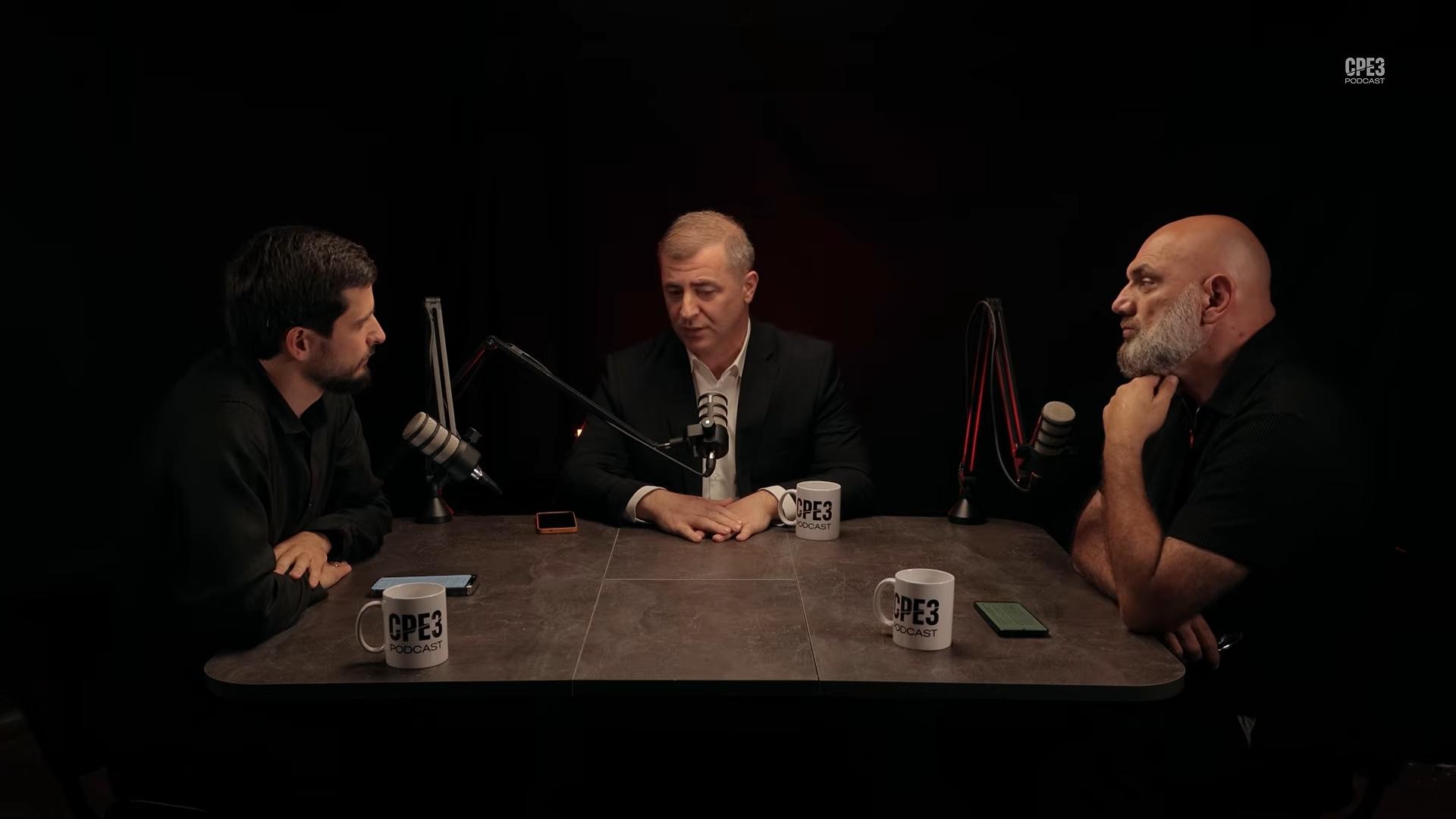
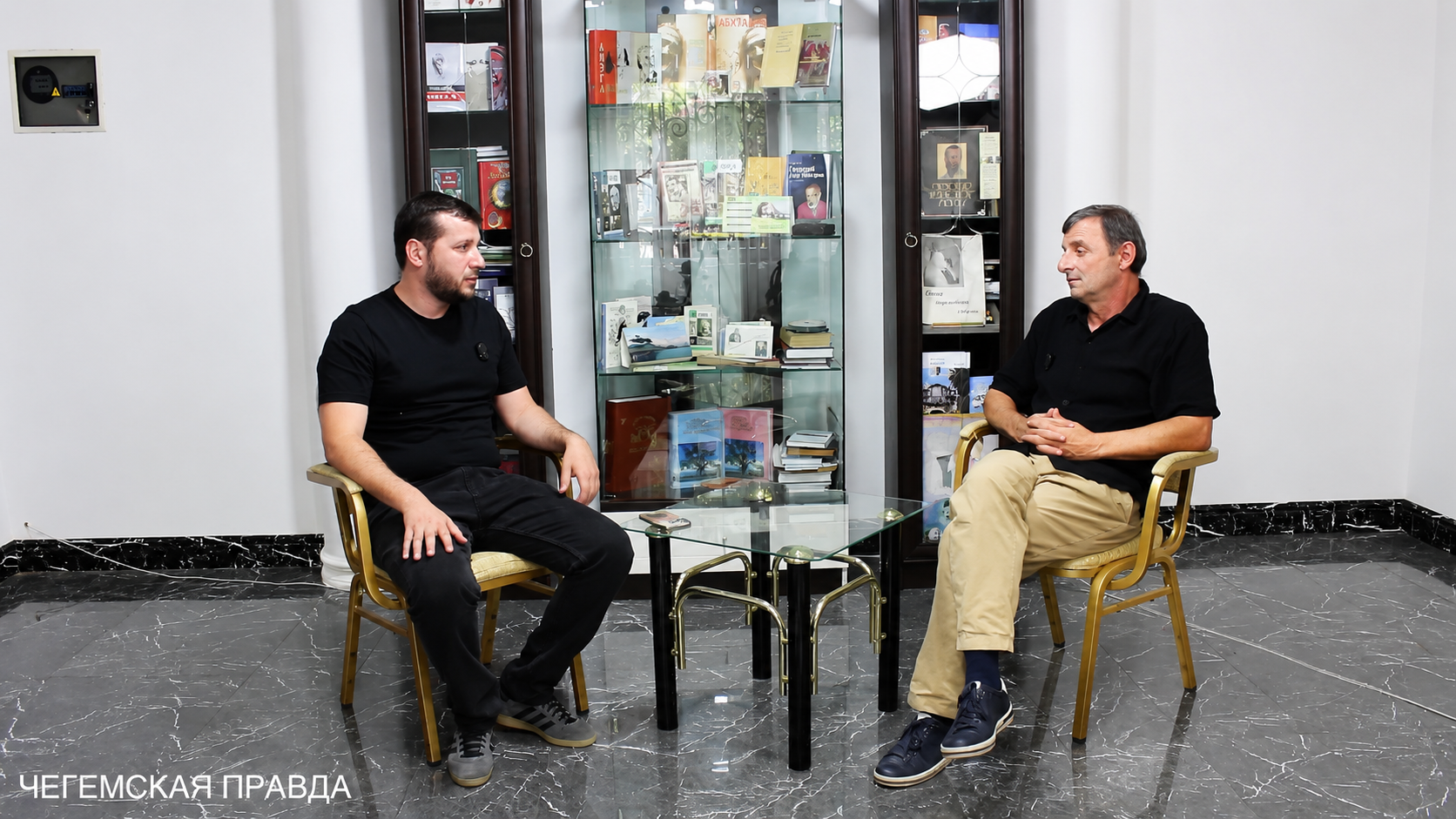
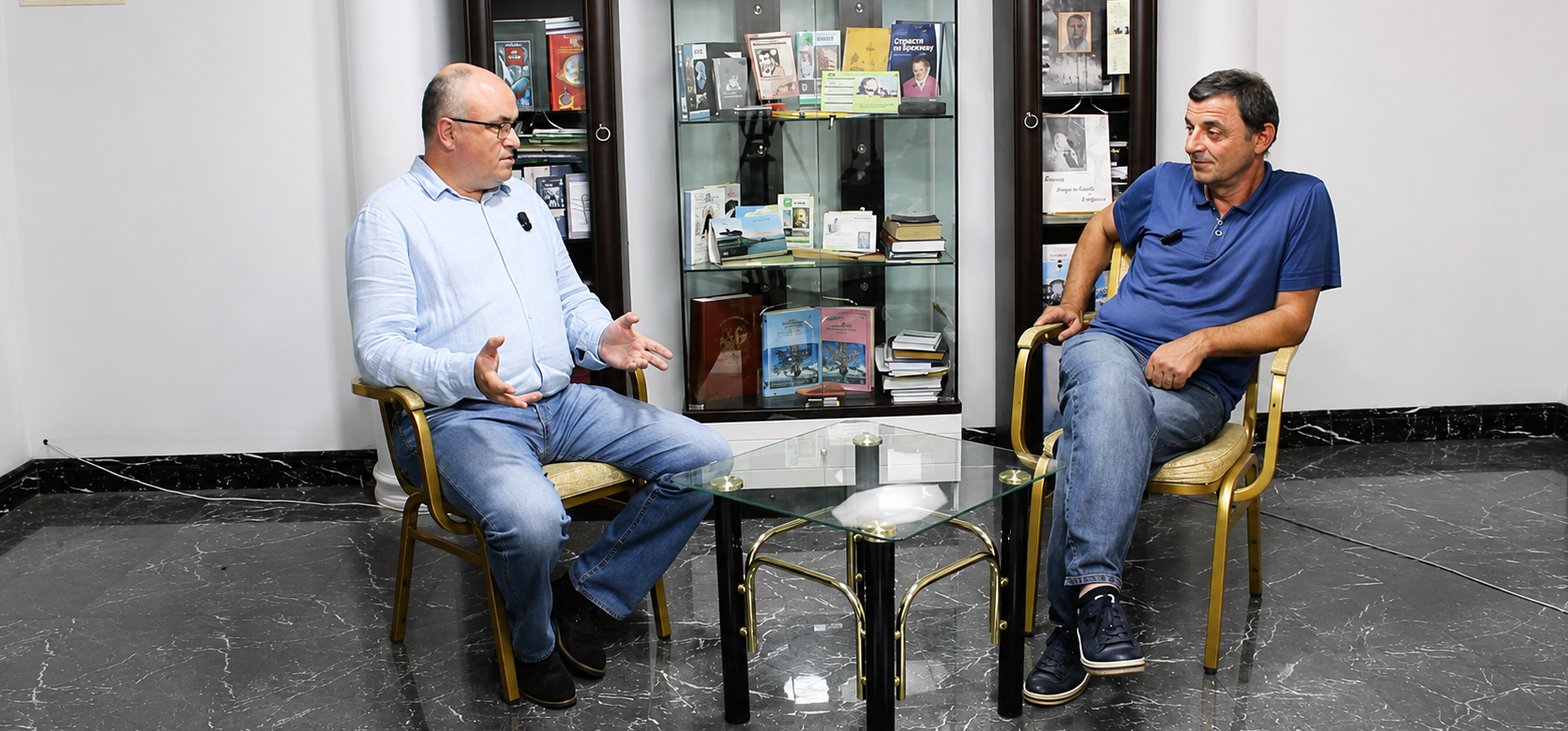
The editor of the newspaper Chegemskaya Pravda, Inal Khashig, and political scientist Astamur Tania discuss the challenges and state policy regarding the Abkhazian language, the shift in historical narratives surrounding the Georgian-Abkhaz conflict, as well as the necessity of building an inclusive civic nation for the sustainable future of Abkhazia.
Main theses and arguments:
Inal Khashig: Hello, Chegemskaya Pravda is on the air. Today, we are going to speak again about the very same topics that concern our Abkhaz society. This prolonged discussion regarding the Abkhaz language, the standards of proficiency in this language, the state language for members of parliament. At the parliamentary hearings, the parliamentary committee rejected – that is, did not recommend – the draft constitutional amendments proposed by the president. But, nevertheless, legally this does not mean, as I understood, that the issue has been removed from the agenda; one way or another, it can be included in the agenda of the parliamentary session, even without this recommendation from the profile committee. Our guest today is Astamur Tania.
Astamur Tania: Good day.
Inal Khashig: Good day. Generally, what do you think about this whole situation that has arisen with these amendments to the constitutional law?
Astamur Tania: Here, the topic of the Abkhaz language is periodically raised in the form of certain information campaigns, usually during some pre-election period or in connection with certain events. It is also impossible to manage without information campaigns. It is necessary to sharpen public attention on this problem.
I hope that this information campaign will not have an independent significance of its own, but will transform into some programmatic actions. Because, probably, everyone understands—both supporters of one approach and supporters of the second approach—that in itself this decision means little. Because here it should still be about a state program.
This program is both educational and ideological, because much rests even on questions of self-awareness. Because it is clear that with the help of the Abkhaz language it is impossible to obtain the volume of information necessary to participate in any competition. So, there must be some other incentives. Just like that, in a natural way, unfortunately, it will not work.
These must be administrative measures and measures of an ideological nature. The Abkhaz language is inextricably linked with issues of identity. This is a big task on all fronts.
Now, regarding the presidential initiative specifically: to be honest, I consider it rational. Some argue that it involves an unequal approach, but I believe it is not aimed at discrimination.
On the contrary, its purpose is to address potential concerns so that advancing the Abkhaz language development program is not perceived as discriminatory by non-Abkhaz residents. After all, preserving interethnic harmony, maintaining consensus, and building a unified civic platform are fundamental for our society.
From this perspective, the approach is entirely sound. However, we must ensure this does not lead to endless postponements. The state must actively work on this by defining clear criteria in legislation to specify what constitutes fluency in the Abkhaz language.
This requirement should apply not only to the parliament but also to the executive branch. Implementing it within the judiciary will be more complex, as it requires extensive work to adapt the full body of legal terminology, which demands highly specialized legal expertise.
Inal Khashig: There are terminologies. All of that exists.
Astamur Tania: I know that preliminary work has been carried out—mostly at the level of compiling dictionaries of legal terms, as far as I am aware. However, implementation within the judiciary is far more difficult purely due to professional constraints.
That is why I believe the presidential initiative reflects today’s realities. It creates a space for compromise among political participants and allows us to develop proper criteria for assessing Abkhaz language proficiency.
If we fail to reach an agreement and leave everything as it is—which could easily happen if the president’s proposed law fails to pass—we will remain at a standstill. The entire process could degenerate into a formalistic routine, similar to what we witnessed during the presidential elections, and only spread further.
Therefore, as an initial step, I view this approach as very reasonable. Since there is no discrimination involved, I see no basis to claim it is unconstitutional.
Inal Khashig: I have my own perspective on this, though doubts constantly trouble me. The initiative grants a deferment to non-ethnic Abkhazians, but I am convinced that in five years, by 2032, we will find ourselves with the exact same results.
Astamur Tania: That certainly cannot be ruled out.
Inal Khashig: Indeed. But my concern is the formalistic approach toward the Abkhaz language itself. For instance, the language law was adopted in 2007 and was meant to take full effect in 2015, requiring the entire Abkhaz bureaucracy to be fluent in the state language.
Yet, even if a good half of them are fluent today, we should consider ourselves lucky—especially since no actual testing or measurements were ever conducted.
Astamur Tania: If at least a “bad half” had command of it.
Inal Khashig: Yes, yes. I am afraid that, strictly speaking, we will simply do this—formalize the commission itself, which we will bring to formal absurdity. Like, here is a good guy, he knows 10 words.
Astamur Tania: If we do not change our attitude toward our state, then in the Abkhaz language, and in security, and in the economy, we will have roughly the same result. You are right. This is a broader question than the Abkhaz language. It is just that now it is at the peak of relevance due to the debates in parliament and in society. In fact, this is a question of our attitude.
Various arguments are brought up that the quality of parliamentarism may drop from this. It seems to me that despite the absence of this norm, the quality of our parliamentarism was declining anyway. So the problem, after all, is not only in the Abkhaz language. This is a hackneyed phrase that we always get the government we deserve, that it is a reflection of our society. Therefore, this is a giant societal problem. But it must be dealt with.
First of all, the authorities, you see—to change the quality of authority, those in power must work on changing the quality of society as well. This goal must be set. Not simply to sit out one’s tenure in parliament or executive power. It is necessary to influence society, its enlightenment, its self-awareness, its creative potential. Therein lies the main task. Otherwise, you are right, it will drift on its own, like everything else.
Inal Khashig: It seems to me that the situation around the Abkhaz language is indeed much broader. It shows, probably, our attitude toward the law in general. This applies not only to the Abkhaz language.
We have passed very many all sorts of legislative acts, proper laws, but then we tried in every way to bypass them. An active advertising campaign is taking place on the internet: acquire Abkhaz real estate, and so forth. So many lances were broken over this law on apartments, and still they sell Abkhaz real estate to foreigners. It is possible, it can be acquired.
Astamur Tania: Yes, that is also—you know what the matter is? It is impossible to contain the onslaught; it can only be directed into some profitable channel. Of course, it is possible for some time to contain the natural course of events with prohibitions. But we must nevertheless forecast how we can direct these investments, where our weak zones are.
Simply sitting like a dog in the manger will not work. Therefore, we must understand how in this harsh reality—what is our place. Today one hole was plugged, in another place it tore open. We must have some clear program of action, at least for the short term.
This concerns the economy, security, foreign policy, everything. What I am saying is very banal, but unfortunately, we always have a reactive response to something, to already accomplished facts. Although it was not difficult to predict that the course of events was leading to this. And we live for today. If an individual person can live for today like that, the state should not live like that.
Inal Khashig: The state somehow manages to.
Astamur Tania: It should still plan its future, the society.
Inal Khashig: I would like to switch to another topic now. Periodically, we are reminded of the unresolved Georgian-Abkhaz conflict, which continuously remains at a dead end. Last time, we discussed how Georgian perceptions of Abkhazia and the Abkhaz people have changed, particularly through the influence of Pavel Ingorokva’s theory, which took a strong hold in Georgian thought.
Shortly after our conversation, I watched an interview with the Georgian historian Tsurtsumia on a Georgian YouTube channel. He noted that Ingorokva’s theory is actually marginal and lacks official state support.
Nevertheless, just the day before yesterday, I came across a vividly animated video. It was set in Sukhumi on the embankment, depicting peaceful civilians in a setting reminiscent of 1992, when a Russian military aircraft suddenly swoops in and begins bombing. The people are shown fleeing the embankment, trying to escape by ship or heading into the mountains.
Astamur Tania: Those are slightly different scenes, probably. Maybe it is one pie, but different slices.
Inal Khashig: Yes, but you see, this is proceeding very actively – why I understood this is not only Ingorokva’s theory about who the Abkhaz are and what their origin is, but in Georgian society the understanding of what the Georgian-Abkhaz conflict was is changing very actively. And what happened 33 years ago, 34 years ago. How the war started.
According to this cartoon… A cartoon is a certain part of upbringing. It also has its own audience. Directed at a certain audience. At children. It is important for me to understand why the Georgians converted this conflict into a conflict not between Georgians and Abkhaz, but a certain conflict between Russia and Georgia.
Astamur Tania: That is completely understandable, as acknowledging it would require admitting responsibility for starting the armed conflict. By the way, Shevardnadze did admit this responsibility—and while he claimed Kitovani was to blame, Kitovani was not the Defense Minister of Russia, but of Georgia. Everyone remembers, and archival footage still shows, how this war began and how the local Georgian population reacted.
Acknowledging this would require erasing entire sections of history. Instead, there is an effort to reshape the narrative of 1992 and merge it with the events of 2008, framing everything around legislation and the narrative of post-2008 occupation. Yet, a detailed examination—including the report by the International Fact-Finding Commission led by Heidi Tagliavini—confirmed that responsibility for initiating military action in both instances lay with the Georgian side.
Naturally, there is a desire to obscure this in the media space to advance narratives about occupation, aiming to shape international opinion to justify a forceful resolution or delegitimize the Abkhazian state.
We must react to this. The fact that animated videos are being produced on this topic shows an intent to pass this worldview down to the next generation. If we carry such a perspective into the future, achieving a peaceful settlement or joint progress will be extremely difficult. This is why it is essential to present the fullest possible picture, starting with the factual timeline.
Regarding Zura Tsurtsumia’s comments: first, it is positive that Georgian-Abkhaz relations are being examined at a solid academic level, attempting to move beyond today’s propaganda clichés toward a historical assessment of the conflict’s roots.
However, claiming that Ingorokva’s theory is marginal ignores reality in the Georgian media landscape, where it remains the most widespread view on the origins of the Abkhazian people. While prominent Georgian scholars considered it pseudoscientific—such as Javakhishvili, who noted that ancient Adyghe tribes inhabited Western Georgia prior to the Kartvelians and recognized the Apsilals and Abasgs as direct ancestors of modern Abkhaz—these classical works are largely ignored by mainstream media.
Instead, hate speech dominates the discourse among commentators—and we must acknowledge that hate speech exists on the Abkhaz side as well. Neither side benefits from this.
Objectively, neither we nor Georgia have any interest in a renewed armed conflict, which would yield disastrous consequences for both. Some in Georgian society may assume their larger population makes it an easy victory, but that is far from reality. We cannot afford to trigger such a dangerous cycle.
Both sides are equally served by abandoning hate speech and language that demeans human dignity and belittles culture, especially given that all human cultures, including Abkhazian and Georgian, are products of historical interaction and symbiosis.
Finally, addressing Tsurtsumia’s assertion—which is not unique to him—that the Abkhaz nation was deliberately engineered by Soviet authorities to counter Georgia: while Soviet policies influenced the development of both the Georgian and Abkhazian nations in the late 19th and 20th centuries, it is vital to recognize that the Abkhaz national identity was not an artificial creation.
In fact, during the 1930s and 1940s, deliberate repressive measures were used in an effort to suppress the formation of the Abkhaz nation.
Inal Khashig: That was when schools were closed.
Astamur Tania: Schools were closed, and the destruction of the intelligentsia—the bearers of this very idea—took place at that time. This inflicted a serious trauma.
But one must understand that this process is accomplished. It is an accomplished fact. And in dialogue with the Abkhaz, everyone must proceed from the premise that this is not simply an ethnos, but a formed nation. With its own ideas about borders, policy, with its own national mythology. This is not always equal to history. Here there is a completely different approach.
As I once spoke with an Abkhaz, he said in his heart: why did Gurandukht, the daughter of the Abkhaz king, marry Gurgen, the ruler of Tao-Klarjeti? Since then, the unification of the Abkhaz state with the Georgian one began. That is the feudal era. It is an accomplished fact. We can only look at it like that. It sounds like a parody.
The same applies to this issue. It is closer to us. These are already accomplished facts. We must take them into account. Proceed from the fact that this is a given. Second, there were in fact certain inaccuracies there.
I do not want to delve into that now. In itself, this attempt to approach the understanding of the origins of the Georgian-Abkhaz conflict with a cool head, using academic material—if this happens more or less regularly, in the same calm atmosphere, then it seems to me that both societies can win from this.
Inal Khashig: On the other hand, it seems to me, given that this seems to be a recent event—the war is relatively a historical event, only 30 years ago—nevertheless, judging by what I read in social networks, certain articles, certain speeches of politicians or experts…
Astamur Tania: Very much so.
Inal Khashig: I still see a lot of statements specifically adjusting to the political opportunism of the moment. If you remember, in the 80s, in the 90s after the war, what were we called? Abkhaz separatists. Now you practically do not hear this term.
Astamur Tania: By the way, they started calling us Abkhaz separatists back during the war, and before that—Gudauta separatists. Although during that period Abkhazia had not yet declared that it was ceasing any relations with Georgia and was not going to live with it within common borders.
In its time, on the initiative of Georgian figures, the process of all kinds of division began in Abkhazia. They separated the Georgian sector from the Abkhaz State University. Then they withdrew the football team. Then they withdrew the Georgian faction from the Supreme Council. They began to sit separately. That is, they apparently assumed that gradually they would somehow paralyze things. And here the question arises: who was the separatist?
And the same with this term. And, by the way, “Gudauta separatists”—later this very term migrated into the documents of the United Nations. And for some time after the end of the war, when our authorities were already located in Sukhumi, they continued to call us Gudauta separatists. I think for the Abzhua Abkhaz this is a bit offensive. Gudauta-Abzzua separatists would have been sound better.
Inal Khashig: But, nevertheless, this term somehow went out of circulation. And we have already been switched to the idea that Abkhazia is a territory occupied by Russia. And at the same time, as for the Abkhaz—let us leave aside those social networks where we generally came down from the mountains, according to the Georgian version—in official rhetoric nothing is said about us anymore.
Astamur Tania: “Came down from the mountains” is also quite amusing, because on most of the coast, based on climatic conditions and the unhealthiness of this climate, it was practically impossible to live permanently. Even if you open the press of, say, the late 19th and early 20th centuries, it is evident that the affluent portion of the residents of the city of Sukhumi left Sukhumi for the summer period. Precisely when there was the peak of this disease, people left for the foothills, because living here was a bit dangerous.
Inal Khashig: And the most prosperous ones lived there.
Astamur Tania: Generally, we have a perception as if in the Middle Ages communications in Abkhazia—this applies to everything, we are talking about Abkhazia—ran along the coast like that; there was the Ancient Roman railway running, next to it the Byzantine highway, but in reality all communications passed through the foothills and across the ridges. It was later, with the arrival of the Russian Empire, that this network of communications familiar to us began to develop. And psychologically we begin to tie our perception of the past to what had already taken shape in the 19th and 20th centuries. There was no railway at the beginning of the 20th century yet.
Inal Khashig: This highway that exists now.
Astamur Tania: For example, construction of the Black Sea railway continued in 1918 still. The Russian Empire no longer existed, but it was unclear what would happen. But they continued to build it in the Gagra region in 1918. And now it seems that it was always there.
Inal Khashig: But nevertheless, I tried to understand. Why do they depict Abkhaz who did not participate in this conflict, or played some secondary role in this Georgian-Abkhaz conflict? In the war that took place in 1992-1993.
Astamur Tania: A moment is omitted. What quantity of weapons was transferred to Georgia under the Tashkent Agreement on the eve of the conflict? The Russian authorities of that time were far from being, to put it mildly, pro-Abkhaz.
This is evident from everything. This is visible if one reads at least the transcript of September 3 of the meeting of Shevardnadze, Yeltsin, Ardzinba, representatives of the North Caucasus, representatives of our various parliamentary deputations. Not only should documents be studied, one should read the transcript.
But why did Georgia start armed conflicts? It received at its disposal several motor rifle and tank divisions of the Transcaucasus Military District. Therefore, in their joy, they thought that it would be possible to quickly finish this business.
Inal Khashig: But nevertheless, why am I saying all this—I read an interesting Georgian perspective on why this is happening, that Abkhaz are being excluded from this conflict, that through such an exclusion—and, say, when a certain image of the enemy is removed from the Abkhaz in this conflict, in this war, if the Abkhaz played a non-primary role, it means they are not enemies. There is a hypothetical possibility they retain that later at some point we will make peace with them.
Astamur Tania: That is very hypothetical. In my opinion, it is impossible to do that. Because how can one take a segment of a section of thinking and take something out of there… It seems to me this is very much a laboratory theory.
Inal Khashig: But this is laboratory on the one hand, and on the other hand the Abkhaz themselves have their own perception of the war.
Astamur Tania: To reiterate: those in Georgia who deal with the Georgian-Abkhaz settlement or seek to study this issue must start from the accomplished fact of the Abkhazian nation’s existence. A nation cannot be treated as a third-party observer—it is an active subject. We are an active subject in our relations with Georgia. Recognized or unrecognized, by our internal structure, we are a nation—with our own statehood and our own distinct perception of both the past and the future.
Our perspectives may not always align, but if we look at history honestly, our centuries-long—even thousand-year-old—relations with various Kartvelian peoples, primarily Megrelians, cannot simply be painted in black-and-white. History saw different periods, including feudal wars, which, it should be noted, occurred internally among those groups as well. There was continuous interaction, symbiosis, and movement back and forth. This is why we find Megrelian surnames in Abkhazia, Abkhaz surnames in Zugdidi, and why Gali in particular serves as a concentrated microcosm where everything is intertwined.
We, too, must draw important policy conclusions from this. But there must be a foundational understanding that if there is a real desire to settle our relations or develop a pragmatic approach—though I do not expect major breakthroughs given our disagreements—it starts with recognizing that a political nation has formed here. Its members are not solely ethnic Abkhazians, but all citizens of Abkhazia. We, too, must recognize this and move away from a narrow communal mindset.
Inal Khashig: But, by the way, it is present.
Astamur Tania: That is natural, because that is where it started. But we must nevertheless move in the direction of a civic nation.
Inal Khashig: Well yes, a political nation. This distinction is crucial because, unfortunately, many people’s perception of the Abkhazian situation and where we stand today was shaped back in Soviet times.
Astamur Tania: In fact, the post-Stalin Soviet period wasn’t all bad. Despite setbacks during that recovery process, it was unthinkable to express such vile ideas in writing back then.
Inal Khashig: My point is slightly different. In Soviet times, the Abkhaz struggle focused on ethnic rights—opening schools, theaters, literary journals, and universities—since few anticipated the collapse of the Soviet Union. The political nation back then was subsumed under the concept of the ‘Soviet people,’ right?
Astamur Tania: Well, ‘the Soviet people’ was an ideological construct, though autonomous frameworks did exist.
Inal Khashig: Yet today, some still take a fragmented approach, viewing society purely as separate ethnic groups—Abkhaz, Armenians, Russians, and so on—rather than…
Astamur Tania: You mean moving toward a unified civic nation?
Inal Khashig: Exactly. That is essential.
Astamur Tania: That requires active political education. Some processes occur naturally: living within the same state fosters shared views on security, peaceful development, and the necessity of an independent Abkhazia. However, we must establish clear criteria for this political nation to avoid repeating the mistakes made in Georgia during the Gamsakhurdia era. As a polyethnic society, we must embed protections that guarantee the survival of the Abkhaz people. Our fellow citizens understand this foundational principle.
That brings us back to language. Over time, our entire society must achieve sufficient command of the Abkhaz language for daily communication. Naturally, our society will remain bilingual due to demographic and geopolitical realities. This is why Russian is constitutionally designated alongside Abkhaz. But ‘alongside’ must not mean replacing Abkhaz. Striking this balance requires preserving the Abkhaz language while maintaining interethnic harmony. We should engage Abkhaz academic circles and draw on international experience—such as the major initiatives used to revive and preserve Welsh alongside English.
Ultimately, we need a sense of proportion in both domestic and foreign policy. Though emotions run high, avoiding extremes is vital. A population of our size can only survive through moderation and consensus.
Inal Khashig: Having come full circle, it seems clear that the survival and development of Abkhazia depend on building an inclusive civic nation that encompasses all ethnic groups residing here as citizens…
Astamur Tania: Including Georgians, of course.
Inal Khashig: …who would also command the state language.
Astamur Tania: Regarding the Gali district specifically, we must rethink our policy. We must acknowledge that regardless of how they identify ethnically, the residents there represent a native Megrelian-Georgian population, many with historical Abkhaz roots.
Inal Khashig: We can dedicate a separate conversation to that topic. But building a civic nation—governed by the rule of law and grounded in our constitutional language framework—is key to securing our future so that we aren’t constantly fearing our own disappearance.
Astamur Tania: Though I think we are destined to sound the alarm for many years to come!
Inal Khashig: Building a civic nation takes time and represents a broader movement toward a state governed by the rule of law.
Astamur Tania: To end on a reassuring note: perhaps artificial intelligence will solve all these problems for us!
Inal Khashig: I hope so! On that note, we will wrap up today’s broadcast. Today, Astamur Tania and I discussed the Abkhaz language, the Georgian-Abkhaz conflict, and why these complex questions persist. Goodbye. Until new meetings. Thank you.
Astamur Tania: Thank you.
The terminology, place names and views expressed in this article are those of the author and do not necessarily reflect the editorial position of this website.