







Adgur Ardzinba on Georgia
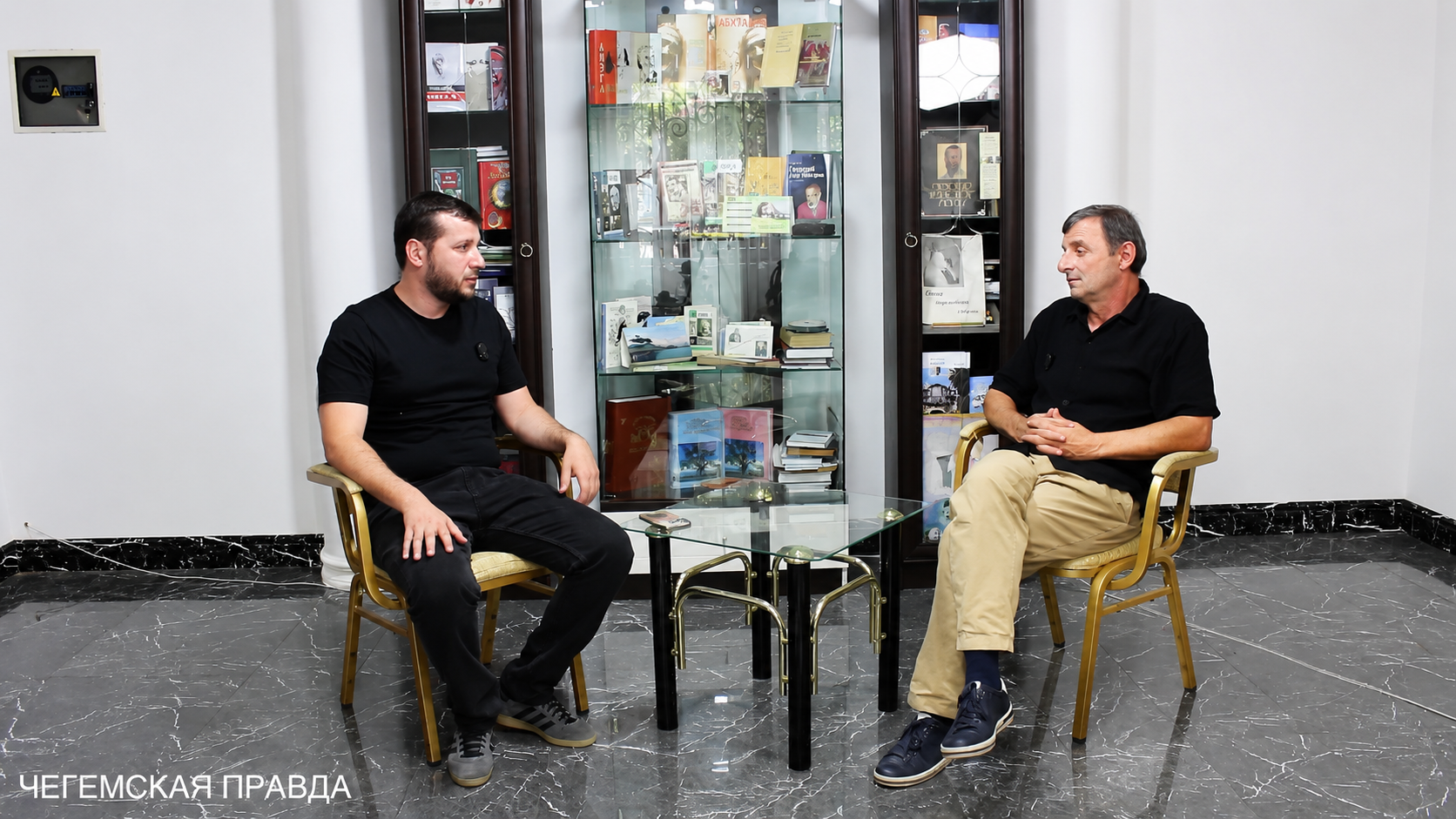
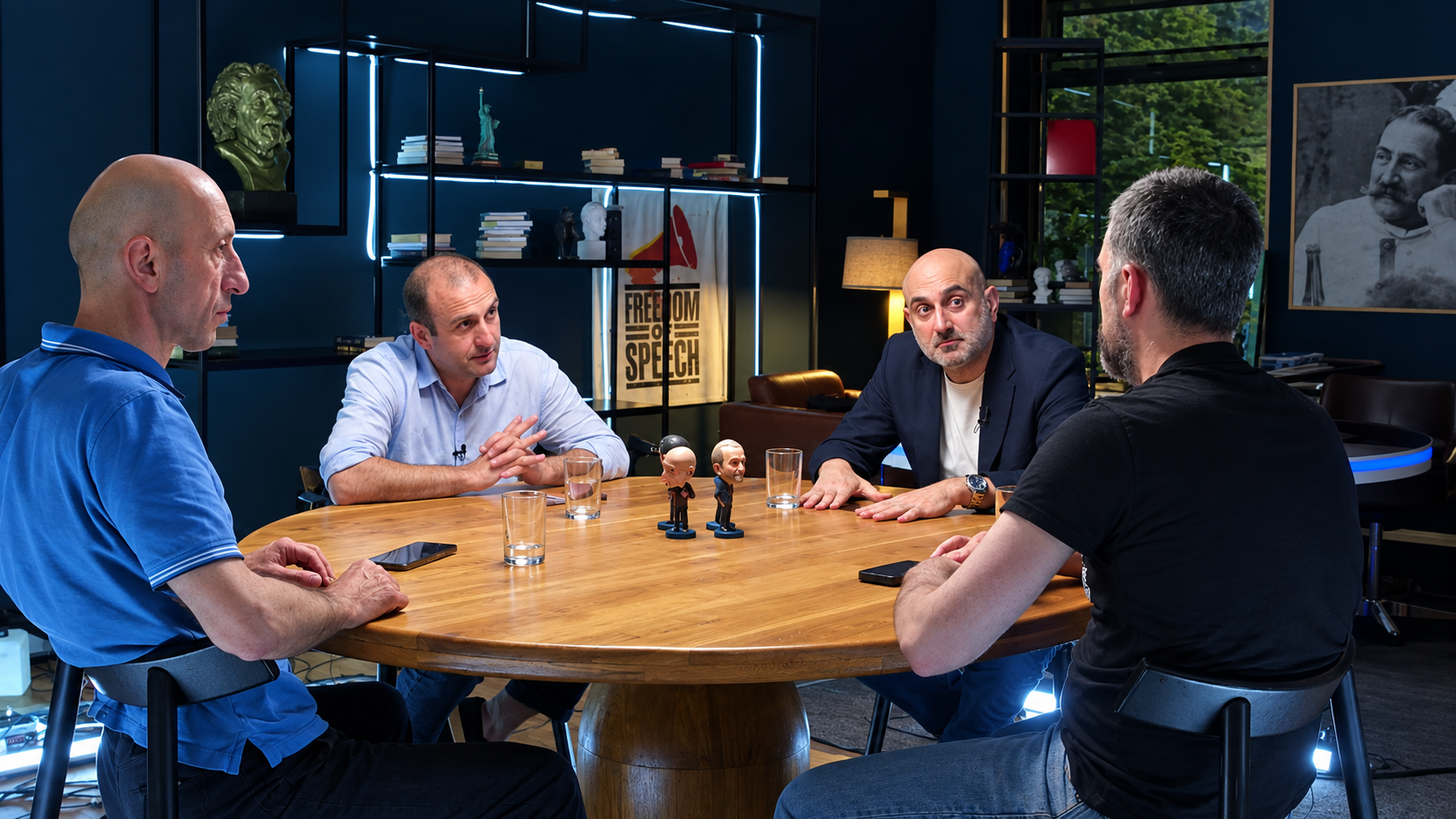
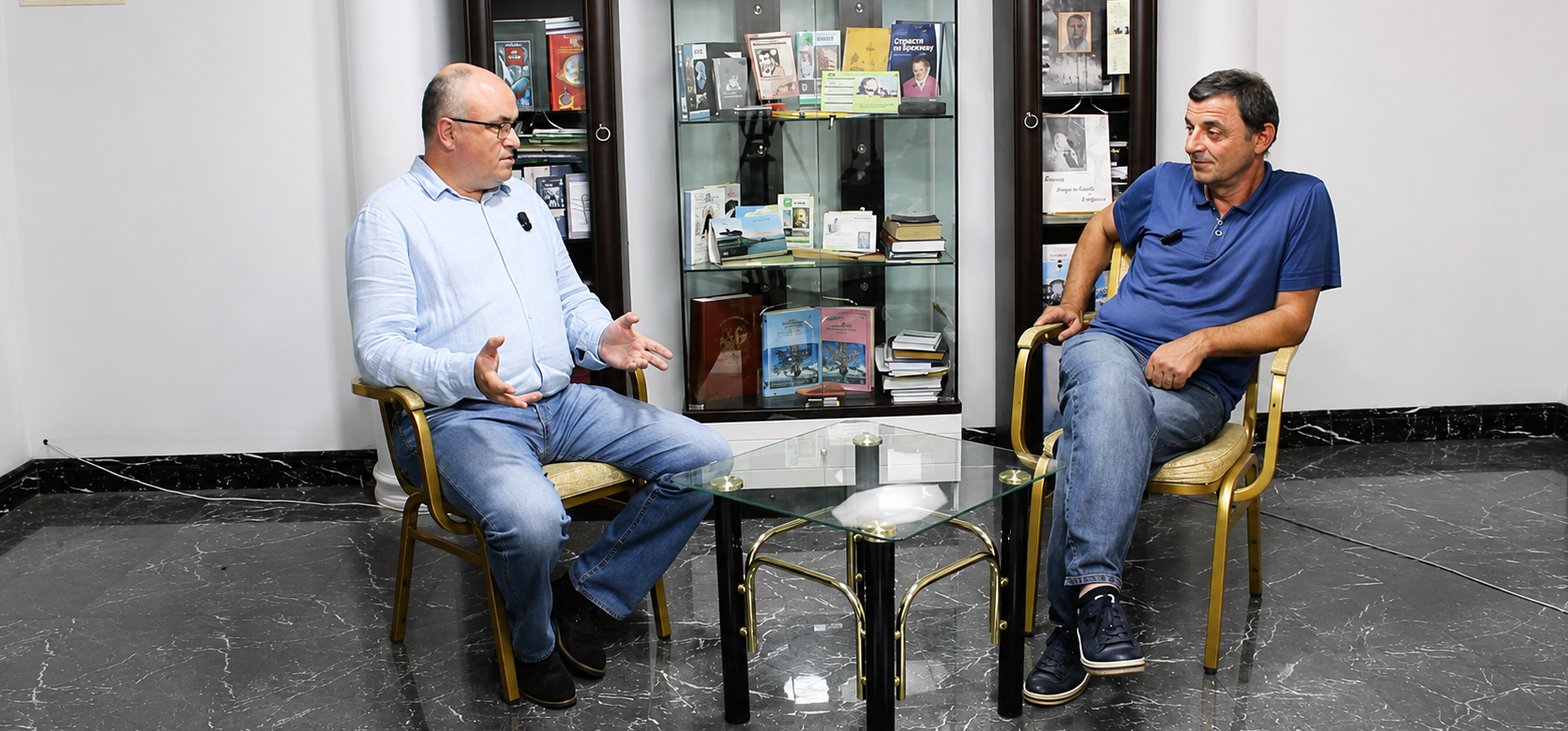
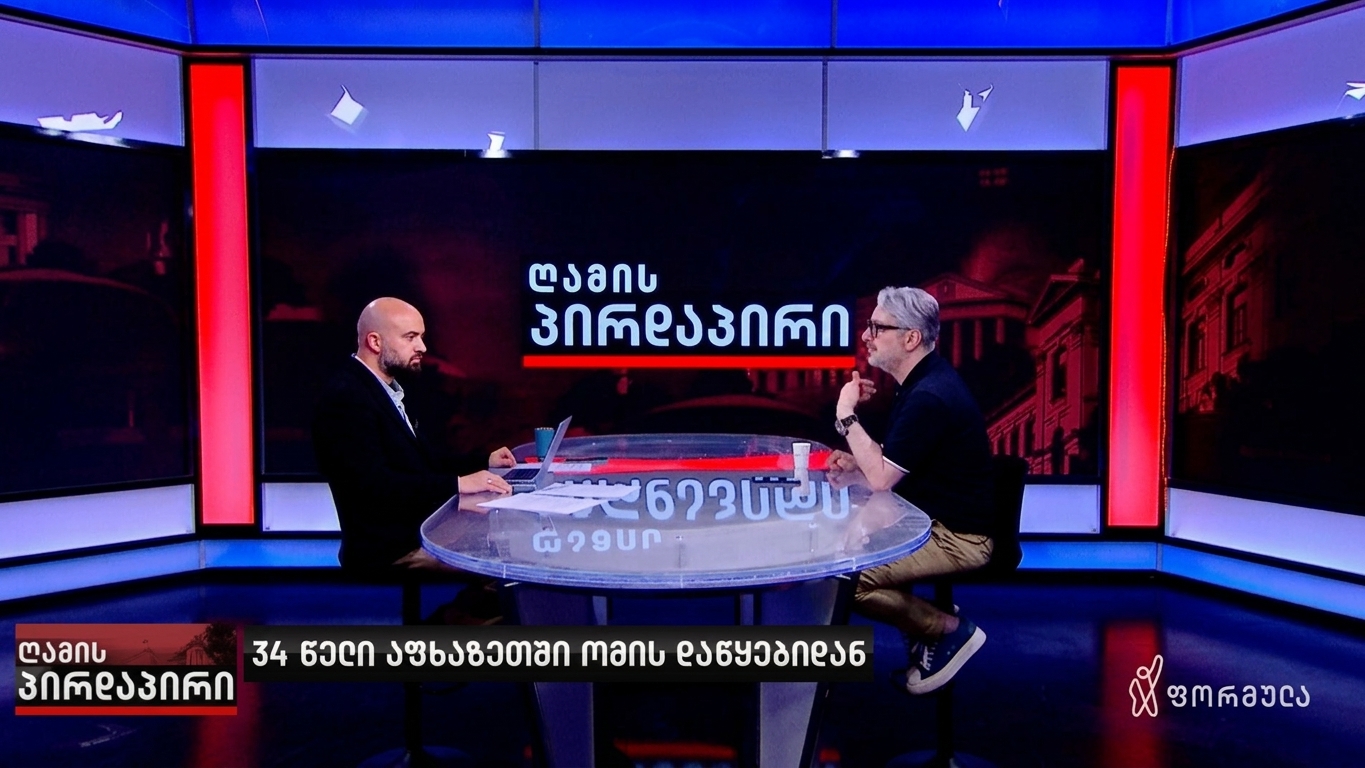
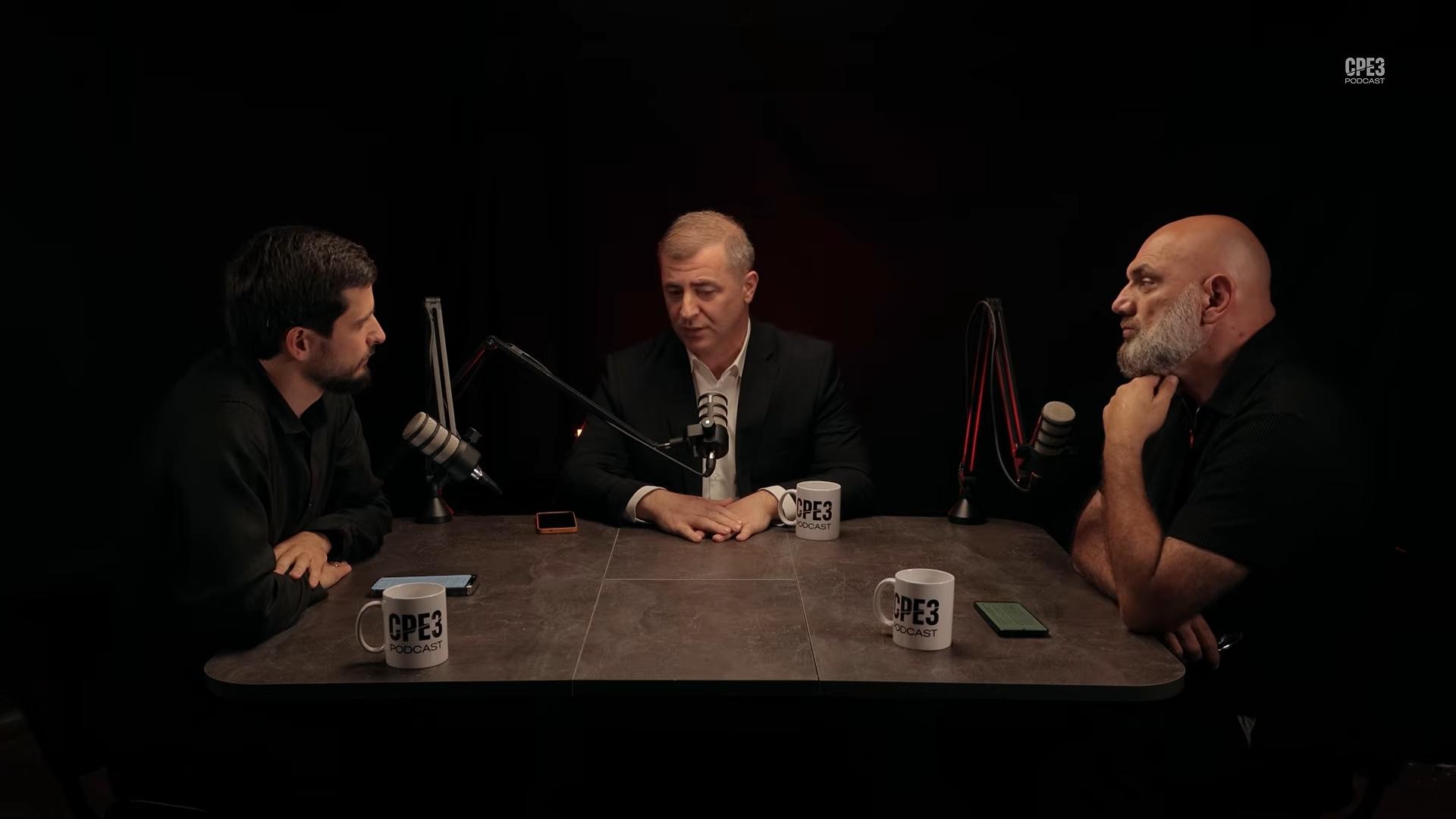
In this episode of the Srez Podcast, hosts Georgiy Berzenia and Alkhas Gagulia interviewed Adgur Ardzinba, chairman of the Abkhazian People’s Movement and former candidate for the presidency of Abkhazia. During the conversation, they discussed the key challenges facing the country, national security issues, prospects for foreign relations, and necessary systemic reforms.
Main theses and arguments:
Georgi Berzenia: Good evening. Our guest today is the chairman of the Abkhaz National Movement and former presidential candidate of the Republic of Abkhazia, Adgur Ardzinba. Good evening, Adgur Amiranovich.
Adgur Ardzinba: Good evening. Hello.
Georgi Berzenia: We are glad to see you in the Srez Podcast studio.
Adgur Ardzinba: I am glad to see you too. Thank you for the invitation.
Alkhas Gagulia: Good evening, Adgur Amiranovich. This is our first time in this studio, although we have had plans to shoot an episode with you for a long time. You have finally found the time.
Adgur Ardzinba: My turn has finally come.
Alkhas Gagulia: Either it was your turn, or the stars aligned somehow. In any case, we welcome you to this studio. As always, we hope for a candid conversation. I think it will be interesting.
Adgur Ardzinba: Possibly.
Alkhas Gagulia: We recently started a tradition… Usually, blitz questions are asked at the end. We decided to do it at the beginning. Can you name one Abkhazian politician whom you respect, despite internal disagreements or personal differences?
Adgur Ardzinba: I try to treat all politicians and all opinion leaders with respect. That is how I was taught and raised—to look for the good in people. So, I probably do not have the right to single out just one person.
Despite our internal contradictions, which have been clearly pronounced since 2004, we have a fairly competitive political environment. In this competitive environment over the past 20-plus years, many politicians of the older generation, as well as younger ones, have proven themselves. Currently, a lot of new people have joined. Each of them has their own strengths and weaknesses, just as I do. Therefore, I try to treat all politicians with respect.
Because to a greater extent—at least I want to believe so—people enter politics out of patriotic feelings, out of a desire to benefit society. It is a rather difficult endeavor. It might seem easy to someone looking from the outside until you immerse yourself in these processes. It is quite a difficult matter. It impacts your loved ones and your family members. It affects how your family and relatives perceive things, including the criticism that is always present in one way or another on social media or expressed openly. But it is not easy work. At the very least, it deserves respect for that alone.
Georgi Berzenia: What, in your opinion, should a political leader be like in today’s Abkhazia?
Adgur Ardzinba: Courageous.
Georgi Berzenia: Do you consider yourself to be such a leader?
Adgur Ardzinba: Well, I do not have the right to speak about myself in the third person right now, but I will say this: where the interests of our people are and were concerned, I have never hidden behind other people’s backs. I have always tried to express my point of view openly, and it seems to me that this point of view is supported by the majority of our citizens. Especially in our recent history, when it concerned critical issues like—as you remember—apartments and various anti-popular initiatives. We expressed our point of view openly and courageously.
Why can we talk about courage? Because I feel great gratitude toward our citizens, toward everyone who actively expressed their opinion. Such economic issues usually have certain people and certain interests behind them. Naturally, when someone’s economic plans crumble, no one says thank you for that. Therefore, standing up to these kinds of initiatives or groups of interested parties requires a certain level of courage. Once again, I want to say that I feel immense gratitude toward our citizens and our people.
We did not just settle things among ourselves; we also showed the whole world that without taking into account the fundamental interests of the Abkhazian people, it will be impossible to push through any initiatives here.
Alkhas Gagulia: Have you ever felt ashamed of your actions or words in politics? If so, could you give an example?
Adgur Ardzinba: A person should always be self-critical, and that is normal. Well, there were moments—without going into details now. I felt…
Again, as you move forward and look back sometimes, of course, you evaluate yourself when you had to come out with harsh criticism. Sometimes it concerned people who later proved themselves quite well. You feel a little ashamed before yourself for that. But then, I have never abandoned anyone. I have always had—again, as I was raised—the strength to approach someone, apologize, and say that I drew the wrong conclusions about them, that I was hasty. That is normal. Again, I believe every person should be critical of themselves. Then it becomes easier to build relationships.
Georgi Berzenia: Over the past year and a half, following the election period, have you ever thought about leaving politics permanently?
Adgur Ardzinba: Well, every person always has doubts. Anyone who says everything is absolute for them and so on is likely not telling the truth. Every person—especially when facing serious difficulties that affect not only you, but your family, your loved ones, and your children—naturally experiences doubts.
Human life is filled with these doubts and with struggle, primarily within oneself. Overcoming these doubts and all these difficulties, one must find the strength to press forward. That is why I am here today, and I have no intention of leaving Abkhazian politics. Well, at least for now, because I see the existing problems. I do not have the luxury to sit quietly on the sidelines and ignore what is happening.
I believe that the active life stance I have maintained for the past 15 years will continue in the interest of our citizens and our beloved Homeland. Therefore, we will keep going.
Alkhas Gagulia: Complete this sentence: the main problem or threat to Abkhazia today is…?
Adgur Ardzinba: There are many problems. In my view, the primary problem—even though other issues have become pressing now, and I will explain why I say this—is still the education system.
The education system is the main priority that must be placed at the core today.
Yes, the situation in the world today is very complex. Defense and security are coming to the forefront, along with several other issues, naturally. But if you broaden the horizon and think about the perspective of the coming decades, it is undoubtedly education. Today, the education system relies on the conscientious attitude of teaching staff, educators, and teachers who do their jobs for a pittance. But relying purely on enthusiasm is very difficult, Alkhas. I talk to these people, and the new Minister of Education is trying hard. I had a conversation with her. She approaches this matter with heart, so to speak. But what is needed here is state policy.
Priority number one must be education. Our numbers, our size—if we look at global examples, before this broadcast we talked about Israel. The size of that state, its population, and the influence and political weight it carries are disproportionate. Why? Because at one time, they paid immense attention to education.
In our case, we can only be competitive and achieve success if our nation is better educated than other peoples in the region or neighboring countries. Therefore, the main problem and the main priority is education.
Georgi Berzenia: Today’s podcast format allows us to speak as candidly as possible in a free-form manner, within reasonable limits. Maybe I will voice some naive questions that I think interest a segment of our society. It seems obvious, even from the blitz, that one of the first questions to ask—which could even serve as a news hook—is that your political activity past and present shows a stark difference. That is, in the post-election period, it has visibly decreased. I want to ask: what is this connected to? You mentioned you do not plan to leave Abkhazia’s political life. Why has there been such low activity over the past year and a half, and how do you plan to develop in this regard moving forward?
Adgur Ardzinba: Thank you, Georgi. In fact, there are a number of subjective factors that I hinted at above. I do not want to go into detail, as there are matters a person must resolve on their own. If there are obstacles and difficulties, I believe a responsible politician should not turn those problems into problems for their people. There are issues that must be silently and honorably overcome and resolved—especially when they concern your family members, relatives, children, and so forth. So, there are several subjective factors, as well as an objective factor.
If you look at the retrospective, Georgi, during the term of former President Aslan Bzhania, if you take the first year or year and a half, we did not have much activity either. Since 2004, the confrontation between the opposition and the authorities has mostly been reactive. That is, the government takes certain steps, a portion of society reacts, and that is how things unfold for us. We do not have systemic work like in some other countries, such as a shadow cabinet or a party presence in parliament as a standard practice. Therefore, if you look back at Aslan Bzhania’s presidency, during the initial period, we also gave him the opportunity to assemble his team, start working, and prove himself.
You remember the incident when the former president brought Georgian politicians to Abkhazia incognito—which later became public knowledge—and they visited our Ilori Church and gifted an icon. That served as a detonator. Then came a series of other initiatives, one after another, leading to escalating activity… Yes, he proved himself quite quickly.
Today, our activity is systemic. During this period, two major congresses of our two organizations were held. Roundtables were conducted. Statements are issued on various occasions and topics. Active work with people is underway in the districts. I just returned today from one of the districts, where I had a meeting this morning. Preparations for the parliamentary elections are underway. A dialogue process with the authorities is taking place. All of this is political work. Moreover, I want to tell you that there is not a single significant issue occurring or that has occurred over these past eighteen months that I was unaware of, or that we did not react to within our capabilities, which are naturally limited. So at this stage, our activity looks like this.
The next stage, as I have said, is preparing for the parliamentary elections that will take place in just a few months, at the beginning of next year. In a number of constituencies, we have already identified the candidates we will support. In some districts, negotiations are currently ongoing, but this is routine work.
Unfortunately, in our society, some of our citizens measure the opposition as weak or absent simply because there are no rallies. When there are rallies and confrontations, they say… But I will tell you honestly: political activity consists of 85% routine—routine in a good sense, involving grassroots work, communication, and so on. As for rallies and serious confrontations, one would prefer to avoid and erase them from our history altogether. They happen as a reaction to certain things. Looking ahead, I can say that the government today, to some extent compared to what it was, is trying to…
Georgi Berzenia: Let’s not get ahead of ourselves then. We have a separate block for that, and there…
Adgur Ardzinba: I wanted to praise the government, but you didn’t let me.
Georgi Berzenia: Alright. We will give you that opportunity. You mentioned… In fact, I haven’t even pronounced the word “opposition” yet, if I’m not mistaken. You yourself said “opposition,” “opposition work,” and so on. It seems to me that this is also a key question: you mentioned that society evaluates the opposition in a certain way. Who do you represent today? What kind of opposition? I understand that you represent the opposition. Which opposition? Do you represent the Abkhazian National Movement? A block of opposition forces? Or the entire opposition that exists?
Adgur Ardzinba: First of all, Georgi, one needs to understand that in our society—we often encounter this misunderstanding—some people believe that everyone who opposes the government constitutes the opposition and should all be united. That is not the case anywhere in any country.
There are people who are opposed to the government as a matter of principle, but they oppose it for short-term reasons. Then there is the systemic opposition. I would like to… I think everyone understands this, but it is worth stating again what systemic opposition means in the context of Abkhazian politics. Today, I am part of this systemic opposition. Systemic opposition in Abkhazia refers to political organizations that continuously conduct political activities and participate in all political cycles, meaning parliamentary and presidential elections.
If a political force does not participate in presidential and parliamentary elections, it cannot be considered systemic. That is, appearing sporadically to create three-person organizations and issue statements—everyone has their own path, and I am not judging anyone, but that is work of a different order.
In my case, I am not only part of these political organizations that are in a coalition; I am one individual among a large number of people who believe that the path of Vladislav Ardzinba is the priority—meaning an independent state, love for the Homeland, and so forth. This includes preserving the protective mechanisms established under Vladislav Grigoryevich, including those regarding real estate and apartments. I am part of this large community that extends far beyond a few organizations.
Georgi Berzenia: Naturally, the majority of our population supports Vladislav’s path—the path of independence.
Adgur Ardzinba: That is why I said I am part of this society. I do not represent it single-handedly. Some politicians have a habit of claiming turf for themselves. You can call yourself whatever you want. The question is how many people will follow you. And even that is not the main thing. The main thing is where you are leading those people and what you intend to achieve. That is crucial. It is always important to understand that in politics, subjective elements should be kept to a minimum. Problems arise for all politicians—that is normal during a confrontation, and it depends on the capabilities of particular politicians—nevertheless, you must not drag your people into processes that will lead to even greater problems in the long run. Therefore, when you engage in politics, you must be as responsible as possible.
I think that is precisely what many of us lack. This does not necessarily apply strictly to the opposition or the government. To be honest, we have more than 11 different, more or less active organizations in Abkhazia. At one stage or another, I think everyone could make claims against one another.
Returning to what is happening around us—as I mentioned earlier, Georgi, and Alkhas knows very well as a war veteran—times are extremely unstable and dangerous. In these times, as I have said repeatedly—and I even want to offer a bit of criticism here—I see that the people authorized to resolve these issues do not fully understand what I am talking about. And I am not the only one saying this. It cannot be that the entire planet around us is on fire while we sit back, letting a resort mindset prevail, believing nothing will happen to us. History has never worked that way.
Abkhazia is situated in a location where… Look at the collapse of the Soviet Union, the revolution in Russia, World War I, World War II. Abkhazia has never… Geographically, we are in a place where these events never pass us by. Under these conditions, if there are romantics or extreme optimists who believe this will not touch us, I envy them. But in these conditions, we must show maximum tolerance toward one another and maintain stability. We must concern ourselves with defense and security issues first and foremost, because a segment of Georgian society and a segment of the Georgian political establishment are extremely aggressively disposed toward us. We do not know what tomorrow will bring.
In politics, especially in statecraft, a statesman must always proceed from the worst-case scenario: that there will be a war tomorrow. I am not saying there will be one; God forbid there should be. But there certainly will not be a war if we are well-prepared for it. That is what we need to think about now—put aside ambitions and get to work.
Very regrettably, I can responsibly say in this studio that such awareness and understanding do not exist today where they ought to. The people responsible for this approach it differently. Lost time, God forbid, could come back to haunt us. We will not lose a war; we will defend our Homeland. I am not talking now about who will win or lose. I am saying that we need to prepare.
Georgi Berzenia: Just three months ago, you gave an interview to Inal Khashig, where you expressed a similar opinion, saying everyone needs to unite on security issues. You mentioned that you were in contact with the president specifically on this issue and that he had an understanding of it. I am not immersed in this situation, but I see certain actions taking place, exercises being conducted, and news at least about some modernization of military forces. There is some progress. Based on that interview, it seemed as if there was mutual understanding with the authorities on this issue.
Adgur Ardzinba: It is not enough, Georgi. There is progress, there are exercises, and there are decorative measures. That is not enough. I mentioned above that we will not lose a war; we simply need to be so prepared that the war does not happen in the first place. That is the first point. But if, God forbid, it does begin, we must minimize casualties.
Alkhas Gagulia: Alright. We know how things stand now, and we know what we need to achieve. But I have a very specific question. Let’s imagine a situation where Adgur Ardzinba is president. What are your actions? I want to hear it in this studio: “I will do this, and I will do that.”
Adgur Ardzinba: I have spoken about this on numerous occasions.
The first priority is mobilization readiness. Every citizen of Abkhazia of draft age, when a general mobilization is announced—and without it, it will be impossible to fight in Abkhazia—every man from 18 and older who falls under this mobilization must know what to do in the event a war begins. Until we reach that state of readiness, the issue of general mobilization must be prioritized above all else. That is first.
Second is communications. Third is food security. Transport and many other consequential issues follow. Yes, on issues of communications, transport, anti-missile defense, and other areas—without going into details now—we have started moving somewhere recently. But it must be understood that no matter the equipment, where a soldier’s foot has not stepped, there will never be victory. As a veteran, you know this.
Alkhas Gagulia: You have repeated several times that I am a veteran, but I want to share my outlook on life with you. When a person goes through something like that—whether an Abkhazian veteran, another veteran, or the people who fought against us—you have two choices. Either human life becomes absolutely priceless to you, or it means nothing to you. I think the vast majority of veterans who were my age, who had children and grandchildren… And I am sure it is the same on the other side—they will try to preserve that life. I believe that common sense should prevail sooner.
Look, mostly those who do not know what war is are the ones sent into battle. Every time a new conflict emerged over these 30 years, I would sit, hold my head, and say: “You don’t know what comes next.”
I do not want a repetition of this. It seems to me that the main, fundamental trait of a politician is the ability to look beyond the horizon.
Adgur Ardzinba: You just said a key thing, Has—sorry to interrupt. You are a war veteran, and war veterans know what war is.
But now a new generation has grown up in Georgia—fanatical, as we see on social media and across the border—who do not know what war is, who have never smelled gunpowder. It seems to them like a walk in the park, so to speak. There is a risk that this group, the active, radical part of Georgian political life, could gain the upper hand. Is there such a risk? There is.
Moreover, such forces exist inside Georgia, and from the outside, we understand perfectly well that there are numerous forces trying to drag Georgia into this. Naturally, there are many wise people in Georgia; we see that.
After all, who wants war? In the end, Georgians must also understand: listen, how long can we stand looking at each other through the sight of an assault rifle? We need to reach an understanding—how many generations are we going to live like this?
First of all, we are losing economically—both Georgia and Abkhazia are losing. Imagine this: Georgians are currently focused on the European Union and want to become part of that European community. Suppose you arrive in the south of France, rent a car, drive along the French Riviera, and enter Italy without even noticing the border. Going further, you can drive up through the pass into Switzerland. Any tourist visits with pleasure because they can see several countries and experience different cultures in a single trip.
Now imagine a picture where a tourist could arrive at the airport in Sochi, get into a car, drive into Abkhazia, travel through Abkhazia into Georgia, and move along the Black Sea coast. Why can’t we here—in Abkhazia, Georgia, and Russia—agree among ourselves and live normally, like human beings? Everyone would benefit from this.
We must understand—both we and the Georgians, especially the Georgians—that political agency is not just words. It is necessary to realize that it is time to stop being a tool in foreign hands. We must determine our own destiny. That is why Georgian politicians—as I have stated in previous interviews—are quite young today; they are our peers. Their children and our children are also peers.
Do they really want our children to face each other with weapons in hand? When I say that we need to prepare for war, it is not because I want it.
Alkhas Gagulia: When you are weak, it is an invitation. It is always a temptation.
Georgi Berzenia: Speaking of Georgia, there is also an opinion today that statements like these—even coming from my own lips, though I hold the same position that we must prevent even the possibility of this happening—look alarmist and are perceived as hostile, especially when coming from politicians. This is occurring against the backdrop of what we hear regarding a certain warming in relations between Georgia and Russia. There are signals from the Georgian side, informal ones regarding Abkhazia. How should Abkhazian politicians react to this? Should they also send signals? People speak of a probable…
Alkhas Gagulia: First, we need to understand: is there a demand for this among the people?
Georgi Berzenia: Among the Abkhazian people?
Alkhas Gagulia: Yes.
Adgur Ardzinba: Listen, nobody wants war. Neither I nor you. Nobody wants war, because we all remember very well what war is. We were children, and you fought. But we do not want a repetition.
There is a demand in Abkhazia to settle this long-standing, protracted conflict with Georgia. But Georgia must understand that reality exists: an independent Abkhazian state exists. No one in Abkhazia is prepared to abandon this reality.
Georgi Berzenia: A statement by the Georgian politician Gvaramia, if I am not mistaken, is being widely discussed online. He proposes a certain peace plan. I have his quote. In essence, he wants the same thing: he simply wants the return of Abkhazia without war. He proposes it, and he is so confident—I noted his quote from a recent interview—he says: “I am simply confident that the Abkhazians will not refuse a European Union passport, will not refuse such a large economic project and huge profits, and will not refuse security guarantees from the EU for the development of the Abkhazian ethos and culture. But in terms of statehood and international recognition, Abkhazia has no prospects.”
Adgur Ardzinba: As long as that position remains… On the other hand, there are examples. Take Northern Cyprus, for instance. Greece does not recognize it, yet the airport operates there, international banks are present, and businesses operate. There is the example of Kosovo.
I often give this example, Georgi. You know, when a student is given a test with 10 questions and has an hour to solve it, but does not know the answer to the first question, instead of moving on to other questions to solve what they can and returning later, they spend all their time on that one question. We have a multitude of issues.
The Georgians aspire to the European Union, meaning they supposedly share these so-called European values. Let me explain then: how do they share these values if, when our young children travel to various competitions—for example in chess, I love chess and try in every way to support this community—when children travel under our flag, Georgian diplomatic forces attempt to block them? I do not know what adjective to use here, but imagine a full-fledged diplomat, who probably studied for this profession, sitting there restricting young children from playing chess, and then reporting that he was effective in some way. It is laughable. Therefore, there are things that need to be resolved here and today. Can they be resolved? Why not? A lot is being said about transit right now.
Let’s discuss transit. I have always advocated for…
Let there be transit through Georgia.
You must understand: it is not just us, but Georgia too, that is in a transport dead end. We cannot move in that direction, and they cannot move in this direction. But let’s sit down and calculate. I am an economist. Let any economist from Georgia make contact; I am ready to sit down. Let’s calculate what Georgia and Abkhazia stand to gain from transit through our two countries.
Georgi Berzenia: Without recognition—just establishing economic relations.
Adgur Ardzinba: We exist as a state on our territory, from one river to the second. This is our territory. Under our law, all cargo will move accordingly. It will be cleared in the appropriate manner and move forward. There is specific international transit legislation. We have separate clauses in our customs code that regulate this activity. Everything on our end is transparent.
Georgi Berzenia: We are discussing an issue of national magnitude—relations with Georgia. You are expressing an opinion now, and even setting aside the opposition and the government, someone will criticize this opinion. Relations with Georgia are a very complex issue for us. In such matters—and not only these, but security issues, relations with Georgia, and others—our society needs consolidation to resolve them. That is, these are supranational issues requiring consolidation and understanding, free from subjective factors.
Now I want to bring this back to your relationship with the current government and President Badra Gunba. How are your relations structured? Do they exist at all? What dialogue is taking place? I will throw out a cluster of questions for you to frame. There is an initiative to create a consultative council involving representatives of the opposition. How would you comment on this initiative? What is the current state of consolidation in Abkhazian society regarding these global issues?
Adgur Ardzinba: Well, Georgi, for our part—if you paid attention—after the elections, regardless of how they went, we chose not to challenge them, again in the interests of our people. From day one, we expressed the view that we are ready to help.
With Badra Gunba, speaking about me personally, we have a working relationship. There are issues on which we maintain contact.
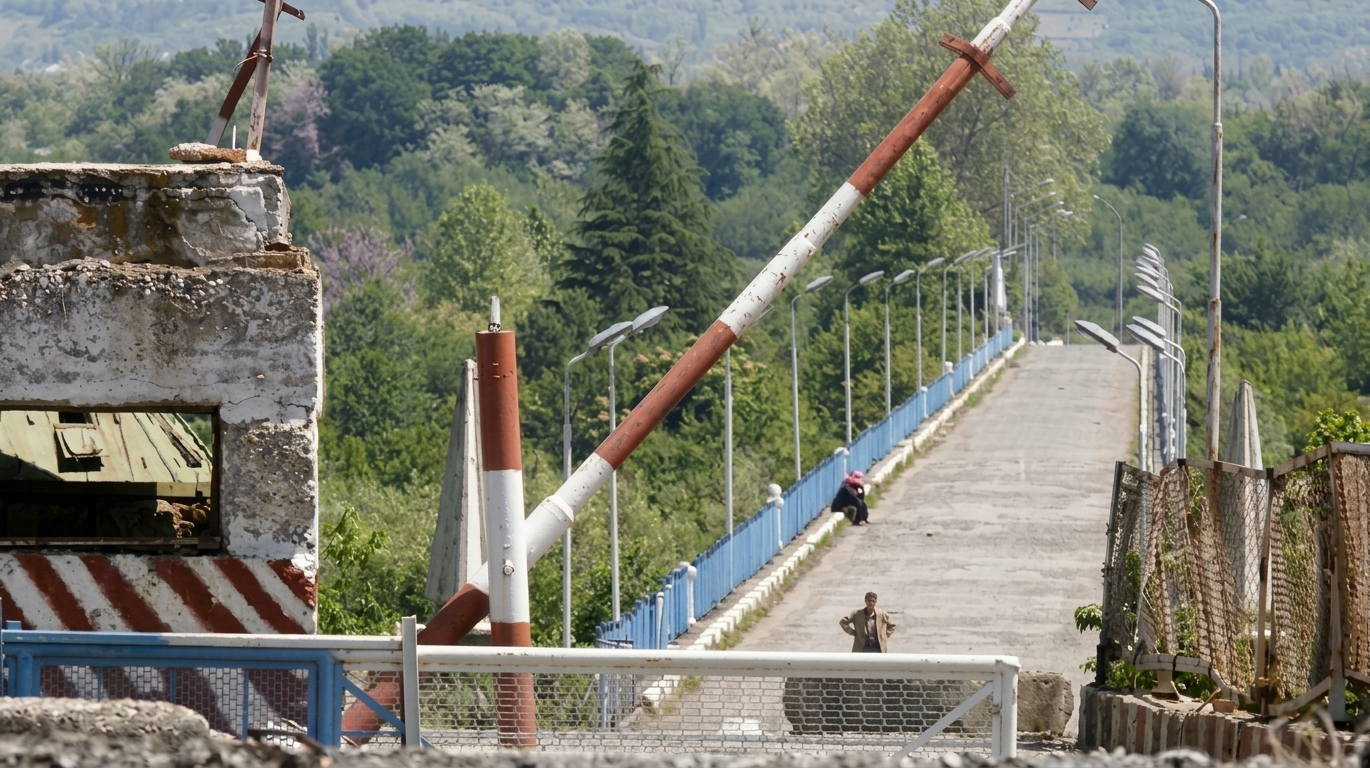
I want to remind you, or inform those who may not know: a large number of our citizens—I don’t know what word to use to avoid offending anyone—when crossing the state border at the Psou River, are subjected to certain interrogations, questioning, and delays. A segment of our citizens has been under investigation outside Abkhazia since the 2025 elections for various reasons, allegedly because someone intimidated someone else, and so on. These are all topics we are trying to resolve, because they directly affect our relations.
Georgi Berzenia: Is the government involved in this?
Adgur Ardzinba: We are trying to resolve it, and in some areas, we are getting results.
Georgi Berzenia: Did the current government initiate these actions?
Adgur Ardzinba: No, this all remained with us after the elections. I do not know which government initiated it, but as a matter of fact, this is what we are dealing with. While six months or a year ago we could say this was the legacy of the former president, the elections, and the hot phase, a year and a half has passed since then. During this time, it was possible to sort things out and separate the wheat from the chaff. There are precedents. Everything could have been translated clearly long ago. But this process is not moving very dynamically, and I must tell you, it does not reflect positively on any of us.
By the way, I want to tell you that this does not always happen out of malice or due to poor systemic work. Sometimes it is a technical failure on the part of certain individuals who ought to take responsibility and report it. Here, a person has been put on a registry. People need to sit down. Incidentally, a new ambassador has arrived in Abkhazia and is quite active in the information space. He could take on this issue. He has sufficient authority to request from the FSB Border Directorate of Russia a list of all citizens of Abkhazia—who are simultaneously Russian citizens—who are listed there for one reason or another… Let him take the initiative to clean up this list, and people will only thank him for it.
Alkhas Gagulia: Are you acquainted with him personally?
Adgur Ardzinba: No, I haven’t had the opportunity yet.
Alkhas Gagulia: Alright. To summarize this question: you are in contact with the president. In private conversations on these issues, do you see progress?
Adgur Ardzinba: I say this constantly. I see the desire, and some things are being resolved.
Georgi Berzenia: There are examples. Inal Khashig was designated a foreign agent, and he ceased to be one. Baras Kudzhba is giving concerts today. There are other examples…
Adgur Ardzinba: Georgi, the very fact that we are discussing this is already wrong. Because it shouldn’t be this way. Punishing people in one state due to political processes occurring in another state is simply wrong. That’s the first point.
Second, regarding a number of initiatives: there are initiatives with which we disagree, and we say so openly. Take, for example, the current disputes over segregation on an ethnic basis—whether taking an Abkhaz language exam should be mandatory or not.
Alkhas Gagulia: By the way, what is your position on this?
Adgur Ardzinba: Yes, I do not share that point of view. I believe that, first of all, let’s set that issue aside for a moment—along with a host of other questions. Changing the so-called rules of the game just a few months before an election is fundamentally wrong. It characterizes the entire political system as rather inconsistent and un-systemic. That’s the first thing.
Second, according to our Constitution, we have three branches of government. As for the Abkhaz language, the previous convocation of parliament adopted such a norm five years ago. That is, the legislative branch itself regulated itself in such a way that the incoming convocation would be required to master the Abkhaz language. Again, as far as I understand, there is no intention to restrict anyone here.
There are members of parliament, Georgi—regardless of nationality—who have served for more than one convocation and cannot speak a single sentence in Abkhaz, nor do they strive to learn it.
To be honest, there are a lot of emotions surrounding this issue—a great deal of emotion, and populism has crept in. Although, in my view, all decisions were already made five years ago. Now it just needed a technical adjustment. Yet a whole issue was made out of it.
Georgi Berzenia: Indeed, the issue is being politicized, even though it is one of the most vital questions for our ethnic group as a whole and for our state. To solve it—I’ll just share my personal view as someone who didn’t know the language from childhood—I learned it up to a certain level, and the state provided virtually no help in that process. Now, if we take members of parliament, for example…
Adgur Ardzinba: The Abkhazian state isn’t that wealthy, Georgi. The state does what it can. You shouldn’t target the state for everything. I understand.
Georgi Berzenia: The point is, if a person went through the war, for instance—I don’t usually talk about an abstract person—went through the war, has certain achievements in culture or science, or is a brilliant economist, but simply lacks the capacity at age 50 or 60 to learn a language…
Adgur Ardzinba: Alright, but does he lack the capacity to learn a single sentence?
Georgi Berzenia: Well, we’re not just talking about one sentence here.
Adgur Ardzinba: But if a person doesn’t speak a single sentence over three convocations, what does that tell you? I’m not saying we should impose overly rigid criteria. For example, when we had presidential candidates, there was a very tough examination. I won’t comment further on it, but several cameras were set up, and journalists were present. That’s how I took the exam; I don’t know how others took it.
I’m not saying candidate deputies need identical, strict conditions. Certain concessions could be made within the Central Election Commission framework for specific ethnic groups. But that isn’t the point, Georgi. What we want to see is effort—people’s willingness and desire. That is how we will move forward step by step.
Georgi Berzenia: Yes, but what is lacking? We want to see commitment, but in my view—and I am not singling out any specific administration here—this decision was made under the previous administration. Now there’s a new administration, and before that there was another. This is a systemic issue; simply passing a single law is not enough.
Adgur Ardzinba: We talked about Israel earlier. We seem to be talking about Israel a lot today! But what did the Israeli state do to foster Hebrew?
Georgi Berzenia: What did they do back then? At the very least, they created a new alphabet; they essentially created a new language.
Adgur Ardzinba: It all started with the initiative of specific individuals—working at home, in kitchens, and so on. That is how it all happened. Do you think the state… Listen, everyone criticizes our state. Our state is not as strong as we would like it to be.
Georgi Berzenia: Abkhaz language courses are almost non-existent. If we draft and pass a law, we must embed mechanisms within that law to make it work…
Alkhas Gagulia: It’s like a toll road. If there’s a toll road, you are obliged to provide a free alternative route.
Georgi Berzenia: What I’m saying is that a law alone is insufficient. There needs to be systemic work, which is missing, and a comprehensive approach.
We were talking about how you currently represent a certain segment of the opposition—a bloc of several organizations. One thing I’ve noticed is that when statements are released by your bloc, not all signatures are present on every statement. As I understand it, there are disagreements on certain issues.
Adgur Ardzinba: Naturally.
Georgi Berzenia: Could you perhaps explain what your opposition bloc represents today, and how you would comment on the rhetoric coming from other parts of the opposition?
Adgur Ardzinba: Well, regarding individual organizations that sometimes sign or don’t sign statements, that happens for various reasons. Unfortunately, not everyone is capable of holding the line critically under different circumstances. That, too, is part of political life. Holding the line can be tough for some.
Georgi Berzenia: Yours is not an authoritarian system, then?
Adgur Ardzinba: Sometimes—to put it bluntly—you even have to act as if the ship is sinking. You know what happens next when you pretend your ship is sinking; certain comrades… That, too, is part of the political process. But in most cases, it simply comes down to having different opinions.
We have no authoritarianism; ours is a democratic society, and various organizations view different issues through their own lenses. That is actually a very good thing, because when one person decides everything, it doesn’t always lead to a good outcome.
As for the statements made by other parts of the opposition or other critically minded individuals, I am not inclined to offer reprimands or criticism. They carry out their work as they see fit and as they deem necessary. In varying circumstances, one could even say: such are the times, such are the heroes. So different things happen, Georgi.
When you engage in social and political activity—looking back in retrospect—we opposed the former president, and I tried to unite everyone. Everyone, because we were confronting a very serious force not only within Abkhazia, but outside it as well. Then came the next stage—the presidential elections—and if you remember, not everyone who took part in those protests stood beside us during the presidential race. That is also normal; everyone has their own path. Now we are at a specific stage as well. But that doesn’t mean all these forces won’t unite if another threat to our statehood arises.
I simply want to remind those who today… We read various public pages, and we have the opportunity to read analytical notes that circulate through various offices about “the split opposition,” “a weak opposition,” and so forth. We read and heard the exact same things during the previous president’s term. Just a few months prior—in August, I recall—I had a meeting with the former president. I tried to convey to him that the situation was extremely precarious. I simply advised him to remove that issue from the parliamentary agenda and go into the elections with that platform. Later, I made a public appeal as well. To be honest, the response I received was somewhat surprised, reflecting his belief that everything was going wonderfully for him.
Georgi Berzenia: We remember that, of course.
Adgur Ardzinba: Therefore, I would advise no one to underestimate what Alkhas mentioned earlier.
Alkhas Gagulia: With your permission, I’ll reveal a little secret to our audience. I remember when those events were just gathering momentum and there were no obvious signs yet, though discontent was brewing and people were gathering. You and I were sitting in a cafe, drinking coffee, and discussing that exact topic—unrest and revolution. I don’t want to debate terminology for what transpired; what happened, happened. In reality, that is the sacred right of the people. If the government goes too far and there are no legislative mechanisms to stop it, then, as the Icelanders say, it is the sacred right of the people. But back then, you were strongly opposed to that kind of scenario.
Adgur Ardzinba: You remember the criticism I faced, including from within opposition circles. I remain opposed to it even now, Alkhas.
Alkhas Gagulia: You said back then, “I do not want things to unfold this way.”
Adgur Ardzinba: What is good about it? What is good about international news channels showing that…
Alkhas Gagulia: Well, why? The same thing keeps happening here. There aren’t that many of us. When people start talking about civil confrontation in Abkhazia, I don’t believe it, because the same people show up every time.
Adgur Ardzinba: What is happening, Alkhas?
Alkhas Gagulia: Any opposition becomes the moderator of these events. You don’t have two civilian crowds attacking each other with wooden stakes; instead, people show up and face fairly passive security forces. Mind you, those security officers are no pushovers—they are tough, motivated guys. But you can tell when they feel in the wrong about defending something. On a global scale, everyone here is personally known. Every officer has a name, surname, and patronymic, which is why people hesitate, and why things unfold the way they do. I want to understand why every single president has departed office in this exact manner, and why we cannot reach an agreement within society to stop making the same mistakes. What is going on?
I am not directing this at you specifically; these are just my reflections. People need to find common ground. There are opposition leaders. There is the sitting government, which, if it suddenly becomes the opposition, will also produce plenty of leaders for that opposition. Find a common language. That needs to be the message to society, because society itself is fed up with us. And times are different now.
Adgur Ardzinba: That is precisely what we are saying. To consolidate all of this, concrete steps are needed—real actions and brave moves from both sides. Consolidation must happen not around a title or position, but around specific programs and priorities for preserving the nation.
I will do everything in my power to consolidate the Abkhazian people.
Do you know what our problem is? When a person enters the president’s office, a certain circle immediately forms around them. As a rule, it’s like a horse wearing blinders—they are always roughly the same people. There is always the temptation to steer everything yourself. A feeling arises that there is no opposition, that no one else exists. Snapping out of that illusion takes political will and courage—the courage to step outside one’s comfort zone.
Alkhas Gagulia: It comes down to human qualities as well; people start escalating things, adding more fuel to the fire.
Georgi Berzenia: Yes, let’s try to look back, as you like to do—at the previous period.
Alkhas Gagulia: Well, what else can we do? If you don’t know the past, it will repeat itself.
Georgi Berzenia: We know the past. Today, is there potential to set the situation straight? Around what should society consolidate?
Adgur Ardzinba: I will put it this way: there are dangers that President Gunba recognizes just as I do, based on my interactions with him. That is, we view the dangers and threats surrounding our state in the same way. This is one of those vital elements that can form a platform for consolidation. Issues like defense and security are developing, and we can move forward on them together. We can maintain an open dialogue.
So far, we do not have a mutually confrontational agenda, which indicates that this window of opportunity remains open.
When I spoke with our respected journalist Inal Khashig, I mentioned that these upcoming parliamentary elections carry far greater significance than previous ones, because the times are extremely complex and dangerous. We do not know what challenges we will face in just a couple of months, or perhaps later.
Under these circumstances, it would be proper for both the government and the opposition to gather, choose a parliament, sit down, and agree not to turn the parliamentary elections into another petty competition among ourselves.
Unfortunately, for now, I do not see such an attitude toward this issue from either the contact group, Badra Gunba, or other representatives of the authorities.
Consequently, what can we predict? If we approach the parliamentary elections in such a fragmented state—in a competitive atmosphere where, objectively speaking, we are not the only players on the political field—there will inevitably be people and political strategists looking to tap into budgets again. That creates an additional catalyst for tension. It is quite probable that the upcoming parliamentary elections could turn into a very serious political crisis.
Georgi Berzenia: But weren’t the amendments regarding foreign interference adopted?
Adgur Ardzinba: May everything happen according to the law. But were people acting according to the law before those amendments? Did law enforcement not know who was doing what? Did special services not know about it, or did they require a separate amendment? We cannot pass new laws every week bearing specific names and surnames. That is the responsibility of law enforcement agencies.
By the way, that incident with the political strategists was quite unpleasant—a bad situation altogether. But who is to blame? Foreign citizens were operating right in the center of the city, focusing specifically on local government elections. In the end, when a conflict arose with our citizens, what felt most distasteful to me personally as an Abkhaz was that not a single Abkhazian citizen came forward to say, “These guys are our guests; if they made a mistake, it’s our mistake, so don’t lay blame on them—it’s our responsibility.” Not a single person stepped up. That was very dishonorable, you know?
Those guys came here and did their job the way they knew, were trained, and were accustomed to doing it. I don’t know where they received their training. I am not justifying them, but someone brought them here. Someone met them, and someone found that space for them. Where were those people when things went wrong?
To prevent such things from happening, there are special services and law enforcement agencies that must react to public signals. And what did it turn into? A full-blown scandal—a major problem that we still haven’t been able to resolve to this day. What good came out of it? Criminal cases, and so forth.
Georgi Berzenia: Aside from your interactions within opposition circles, I would like to ask how your relations are structured with other political forces, political organizations, and public movements. Over the past year and a half since the elections, there has been a trend toward renewal in some areas, while new organizations are emerging elsewhere—such as Apsua Rymch and Public Force. The youth movement Young Abkhazia has been refreshed, and leadership changes have occurred in organizations like United Abkhazia. Roundtables are being held in which your representatives participate. Overall, how is your work structured? Is there interaction across the broader political spectrum?
Adgur Ardzinba: Naturally, we all maintain contact with one another. For instance, active contact exists between the two veteran organizations: AMTSAKHARA—formerly a veteran organization, now a political party—and ARUAA. There is contact on specific issues, and within the consultative council framework, this contact has taken on a more formal character.
Speaking for myself personally, I interact in one way or another with almost everyone involved in active politics; it is part of my job.
You mentioned renewal. Changes took place in the leadership of the United Abkhazia party. Not everyone knows this yet, but Alkhas Barzania, the new leader, is a former colleague of mine. We worked together in the Ministry of Economy when I headed that department. He served as the deputy trade representative—and the trade representation is a structural unit of the Ministry of Economy.
Alkhas Gagulia: At the Embassy of Abkhazia in Russia.
Adgur Ardzinba: Naturally, in the Russian Federation. We have known each other since then, share a normal, trusting relationship, and maintain it. Yes, there are disagreements—naturally so—but there is a normal, living, constructive dialogue, as there is with others.
The Abkhazian political landscape is fascinating—its palette is quite broad, yet at the same time small. It is impossible here not to cross paths or interact with one another. The real question lies in the effect of this interaction. The consultative council that was created, along with all our conversations and interactions, must culminate in a primary outcome: a positive effect for our people and our state. If that doesn’t happen, then all our contacts and interactions are worthless.
To conclude my answer to this question—Alkhas, our respected veteran, touched upon this earlier—how do we rid ourselves of these harsh confrontations with one another? Part of the answer lies in a generational turnover—a new generation. Without intending any offense, our elders walked a very honorable path: they lived through the war and weathered the incredible post-war formation under the blockade. At the same time, old-school politicians have accumulated a great deal of mutual grievances, and a lot of subjective baggage is present.
I have observed several times when we tried to seat everyone at one table: mutual claims come out, and a great deal of history surfaces. Politicians who are just starting their path have much less of that negative background. That forms a foundation upon which constructive frameworks can be built.
Georgi, during this broadcast, you have repeatedly asked about my contact and communication with the president. We are people of the same generation, which to some extent simplifies mutual understanding between us. But again, that communication must lead to concrete results. We can sit at a table, toast one another, and visit each other’s homes as much as we like.
We are not merely neighbors or acquaintances; we represent a segment of society. Some head the executive branch as leaders of state, while others engage in public activity. People are watching us. The fate of our state depends on our work. We must be filled with this sense of responsibility, and then I believe all obstacles can be overcome.
Alkhas Gagulia: We keep talking about unity, but the underlying reality remains the same: society is divided. I bring this up episode after episode because it truly worries me. A way forward must be found, especially as sides become radicalized with extreme positions where people refuse to look at each other. Citizens who once sat at the same table and shared drinks now… And this rift could widen. Yet, I noticed some movement from both the opposition and the government in the creation of this consultative council—is that what it’s called? How would you characterize its work? Does it serve a purpose, is it working or not, given that not all opposition parties are included?
Adgur Ardzinba: It was created only recently, with just two meetings so far. One was an introductory meeting, while the second was formal in nature—a meeting with the ambassador. What positive aspect can I note? The president is trying to distance himself equally from so-called pro-government organizations. That is, he seats everyone at the same table and tries to engage in dialogue. That is actually a big plus. In the recent past, we had situations where the president gathered his supporters around him, said certain things, they all applauded him, and in the end, they all left the building together in November 2004.
Right now, I see an attempt to build a genuine dialogue, but nuances are crucial here. We can sit endlessly, take photos, and talk about how good we are and how much we love the Homeland, but concrete actions must follow.
The parliamentary elections are ahead—an agenda drawing closer by the day. Regarding these elections, again, we do not yet see any clear understanding of how the government intends to approach them.
Georgi Berzenia: I’m not sure I understand either: do you want to jointly determine the candidates for each district with the president? There still needs to be competition.
Adgur Ardzinba: There must be competition, but competition takes different forms.
Georgi Berzenia: Are there indications that an unhealthy situation will arise?
Adgur Ardzinba: We must sit down and establish the rules of the game. If what happened before—during the presidential elections and local government elections—repeats itself, it will lead to serious consequences. So far, I don’t see a readiness to depart from that… I am simply trying to…
Georgi Berzenia: Understand what needs to happen. There is a law, right? If the law is followed, there shouldn’t be any problems. What additional action should come from the government?
Adgur Ardzinba: We judge the future based on past experience, right? The law was disregarded very recently. What guarantees do we have that the law will be followed in the future? The proper approach would be for authorized figures—the president and those managing the elections—to sit down, whether publicly or formally, and state that these are the rules of the game, identical for everyone. Whoever the people choose wins; administrative resources, wild criticism, anonymity, and all other negative practices must be left behind.
Georgi Berzenia: Is there a legal mechanism or initiative, in your view, that would raise the quality of parliament? We often cite the “Golden Parliament” as an example. Today, frankly speaking, people frequently become or run for deputies simply to protect commercial interests.
Adgur Ardzinba: A mixed electoral system was proposed—a wonderful mechanism where parties present candidate lists. That is international practice.
Georgi Berzenia: And that would improve quality?
Adgur Ardzinba: Any party would want to feature the most respected and worthy people on its list. That elevates the party itself and attracts votes worldwide.
Georgi Berzenia: Publicly, everyone seemed to support it. Why isn’t it happening?
Adgur Ardzinba: I don’t have the authority. I am not a member of parliament, nor am I the president. I lack legislative initiative.
Alkhas Gagulia: Do you plan to run?
Adgur Ardzinba: For parliament? Alkhas, I will participate in the parliamentary elections one way or another, and most likely as a candidate. A significant number of people with whom I communicate are taking the initiative, encouraging me to run and represent them in the Abkhazian parliament. Because—and I won’t hide it, though it might sound immodest—they believe I can represent them.
Georgi Berzenia: In which constituency?
Adgur Ardzinba: When the time comes, you will find out. We have legal deadlines… You were referencing the law just now, right? When the legally established time arrives, you will find out. What should a future member of parliament be like? We are debating this right now.
Georgi Berzenia: We aren’t debating.
Adgur Ardzinba: I am expressing my opinion. Now, returning to the current convocation of parliament: I am absolutely convinced that 90% of sitting deputies will want to run again. But if you ask me who I definitely wouldn’t want to see in the next parliament, it’s those deputies who, during critical situations—such as those we experienced previously—hide from their voters. When voters travel from the villages to see a deputy who is hiding from them, looking to ask how he intends to vote, and he hides—those deputies should not be in parliament. And there isn’t just one, two, or three of them; we have seen this across different periods. Or when a deputy’s core supporters from the city invite him to a meeting, cannot reach him by phone, and he hides from them—such individuals have no place in parliament.
I have far more respect for those deputies who took a stand—say, in favor of a measure—and openly expressed their viewpoint, rather than playing both sides. Listen, entering parliament carries responsibility, Georgi. That responsibility must be understood; it is immense. I do not want to see irresponsible people in parliament. Regarding the influence or capabilities I possess—you asked whether I will participate or not—I will participate not only as a candidate, but I will also try to ensure that in every constituency where I have influence, deputies who conducted themselves in that manner do not make it back into parliament. I don’t think I will be alone in that effort.
Alkhas Gagulia: Frankly, such actions severely damage a deputy’s own reputation.
Adgur Ardzinba: Or when a precedent is set where a session is held at 5:00 AM. That remains in our history forever and will be associated with those individuals. What good comes from that? It shouldn’t be done. One must think about consequences and the future. Every one of us makes mistakes every day.
Georgi Berzenia: A year and a half has passed since Badra Gunba was elected president.
Adgur Ardzinba: Yes.
Georgi Berzenia: Briefly or in detail, what is your assessment of the good and the bad?
Adgur Ardzinba: As for the good, as I mentioned earlier, I see efforts being made, if we compare.
Georgi Berzenia: He tries not to divide people, as I understand it?
Adgur Ardzinba: He tries to do that, although in practice there are moments where division occurs. But that doesn’t always depend solely on the president either.
What is bad? I will tell you what I dislike. I still do not see our priorities or our plan. Take our government: how do you determine a state’s priorities? It’s a very simple exercise. Open the government website and look at the prime minister and his deputies: we have five deputy prime ministers, 15 ministries, and so on down the list. As a practitioner, I can tell you that when a minister is granted the title of deputy prime minister, it signifies that the domain they oversee is top priority—meaning it receives more attention and carries greater authority.
Now look at who our five deputy prime ministers are today. Some of them, in my opinion, still don’t understand why they hold those positions, other than perhaps meeting ethnic or quota criteria. I am not speaking about them specifically, but take the Ministry of Internal Affairs: in my view, the law enforcement situation is a complete failure. Take your own Gagra District—you know what has been happening there recently. And it isn’t limited to Gagra District; criminal clashes continue unabated. Yet the primary task of a law enforcement system is prevention. I consider it a total failure.
Another example is the Committee for Youth and Sports. Yes, youth and sports are important to develop, but in my view, the state’s paramount priority must be education.
Georgi Berzenia: Isn’t there a deputy prime minister for education?
Adgur Ardzinba: No, there is a minister. Following that logic, I believe the Minister of Education should be the First Deputy Prime Minister. That is how priorities are defined. What happens instead? This might sound a bit dry, but it’s practical reality: the Minister of Education has to go to her deputy prime minister, and then together they must go to the prime minister.
Georgi Berzenia: Setting aside those details, what do you dislike on a global level?
Adgur Ardzinba: There are no clear priorities, and I see no development plan. A year ago, the president issued specific directives that were widely publicized. I have a report here on the execution of those directives, and the majority remain unfulfilled, while another portion was completed merely on paper. In my view, even this short one-year timeframe has been squandered. I have always said, and will continue to say, that we need a development plan, reforms, and defined priorities.
Today, the long-term priority must be education and enlightenment. Enormous focus needs to be directed here.
On a positive note in this regard, I recently spoke with the Minister of Education, and she shared very good news that you may have heard as well: the Primakov School in Moscow Oblast—in my view, one of the best schools in Russia, if not the best, because it combines modern foreign educational methods with our Soviet system—is a unique, elite institution in the Odintsovo District. They have agreed to build a branch here in the city of Sukhum. That is fantastic news. Furthermore, from what I gathered in my conversation with the minister, this school will adhere to those high standards while accommodating our local features and mentality—incorporating Abkhazian culture, language, and customs. That is precisely what we have all dreamed of. A state that fails to cultivate its own elite is doomed to failure, so this is a wonderful development. I hope it materializes quickly.
Otherwise, regarding general priorities, they remain absent.
Finally, regarding agriculture: there is talk about the “Year of the Village”—the current year was declared the Year of the Village, which is a good idea in itself. But what is happening in practice? Once again, decorative steps are taken that won’t yield long-term results. Agriculture requires a multi-year strategy. Without science, there is nothing to be done in agriculture or anywhere else.
How can we talk about developing the agricultural sector when the Institute of Agriculture is left to fend for itself? It’s simply impossible.
Adgur Ardzinba: I will also tell you something else that, in my view, illustrates this lack of systemic structure. Returning to the Ministry of Agriculture, the Ministry of Economy ought to be involved in these processes. We speak about cultivating certain crops. Yet there is such a concept as marketing, market analysis. Now, the potential target market is the Russian Federation, correct? Accordingly, economists should be tasked with analyzing the Russian Federation market to identify which crops imported into Russia—potentially adjacent ones, if working with agricultural institutes—could realistically grow in Abkhazia and yield the maximum added value. Do you understand what I am saying? Moreover, benchmarking needs to be conducted. Benchmarking means evaluating competitors. We would look foolish if, for instance, we were to visit a megamarket in Moscow, spot a particular variety of persimmon, and say, “Oh, how wonderful, a new persimmon, it costs 600 rubles, let’s plant it.” We will look foolish if, at that very same moment, tens of thousands of hectares had already been planted in Azerbaijan three or four years prior. And by the time we gather ourselves to enter the market, that product will already be right here. In other words, that is competitor analysis. It is an engaging, creative effort. That is precisely the work I do not see happening.
Handing out a million rubles to every village based on mere intuition—sure, that is better than nothing. Of course, anyone listening right now might say, “Well, at least something is being done there, it’s better than nothing.” I agree, that is also fine. But if we are talking about systemic work aimed at serious, long-term results, then without new technologies, without new crops, and without new approaches to the economy, there will be no serious results.
Georgi Berzenia: Right now, you are speaking about agriculture, providing specific examples, discussing what you dislike about education, and so forth. I just caught myself thinking how much I miss the debate format we used to have. The kind that existed previously. You are addressing each sphere now. We cannot and should not discuss every single detail. However, it seems to me it would be right if opposition figures today could sit in a single studio, for example, and discuss every topic with government representatives, where they could defend their point of view while the opposition presented theirs. Overall, that would have a positive effect.
Adgur Ardzinba: It would not have an effect, and I will explain why.
Alkhas Gagulia: We used to have that.
Adgur Ardzinba: If you recall our famous broadcasts where we debated energy policy and debated apartments. On energy, do you remember our discussions on Afganskaya’s airwaves? Where we were told, “That’s it, you were worrying over nothing.” In the end, everything we warned about occurred in the worst possible form, without them even acknowledging it.
Georgi Berzenia: That was un-systemic back then.
Adgur Ardzinba: A real application would follow the results of such a debate. But what if the state apparatus, the executive branch, completely refuses to see public opinion?
Georgi Berzenia: We are talking about a new stage now. We are talking about a new stage. I am asking what you like and what you dislike, and you are delving into details that we, as laypeople in this matter…
Alkhas Gagulia: I would like to add something regarding agriculture. There is a program in the Ministry of Agriculture…
Adgur Ardzinba: There is a subsidy program within… It is a good, decent program. But that program is insufficient. There is no science in that program. If there is no science, there will be no result. That is what I am trying to convey. First, there is no consistent, systemic work. Second, simply distributing money—yes, that too is better than nothing when people’s costs are subsidized. That is also good. But my concern lies elsewhere. I want a maximum long-term effect to be achieved. Without making our countryside competitive, we will not make this sector profitable. Consequently, we will always have a negative balance sheet. Why do we speak so much about the countryside? Because it is a cornerstone. We all say that the countryside is the cradle of our traditions. It is not merely an economic category; it is also a social, political, and cultural one. That is why we dedicate so much attention to it here.
Georgi Berzenia: Yes. That is a very interesting topic. A topic about which, truly, a great deal can be said. I simply brought it up because I asked you to provide an overall assessment. It feels to me as though, judging by what you are saying, you concentrate heavily on certain critical moments and specific details, whereas you haven’t touched upon the positive aspects at all.
Adgur Ardzinba: No.
Georgi Berzenia: You simply stated that the president does not divide people, broadly speaking, and that was essentially all.
Adgur Ardzinba: I focused on certain details because I… I articulated the premise that work is being conducted in an un-systemic manner, and I provided a series of examples. I could cite a great many such examples.
Georgi Berzenia: Perhaps you could name some positive aspects after all? For instance, even with agriculture, my association—I understand a deep conversation is one thing, but as an example—they opened a dairy plant in the Ochamchira District. That is agriculture, and as I understand it, it is a high-tech facility.
Adgur Ardzinba: Well, that is the agro-industrial complex.
Georgi Berzenia: Which also engages local villagers, provides jobs, and allows us to consume local produce, even if the raw material isn’t local. Just to give such an example, broadly speaking. And if we look back at the past, Abkhazia previously had much less to take pride in and showcase. Today, there are also things that can be highlighted.
Adgur Ardzinba: Well, an economic forum was held. A rather interesting event. A great number of people came to Abkhazia—top officials, bureaucrats, ministers. I cannot recall anything like it since the time of recognition. We hosted an economic forum. That is wonderful. We introduced many people to the country and drew attention, including media coverage. Following that attention, when an ordinary Russian citizen watches the news on the Rossiya television channel and sees several federal ministers and the First Deputy Chief of the Presidential Administration in Abkhazia discussing the development of this country’s economy, a desire arises in some to go and do business there. Upon arriving here, he does not see the Deputy Chief of Staff or our president. He goes to the Technical Inventory Bureau, he goes to the district administration. And there, he gets caught in such a whirlpool that, God willing, he might escape from it only after several years. That is what needs to be addressed immediately.
Alkhas Gagulia: Back in 2024, you stated that relations between Russia and Abkhazia were at their lowest point. A couple of years—a year and a half—have passed since then. How do you assess these relations now?
Adgur Ardzinba: The most interesting part is that the very same thing was voiced on March 7 of this year during a concert here in our capital. A representative of the Presidential Administration, one of the department heads, spoke there. I cannot recall his surname at the moment, but he was a rather pleasant person. He mentioned that…
Georgi Berzenia: The Russian Administration?
Adgur Ardzinba: Yes, the Russian Administration. He mentioned that our relations had cooled somewhat over the recent period, but that we need to fix all of this. By the way, I was pleasantly surprised by such a sober assessment. However, a whole host of factors contributed to that state of affairs. Without speaking of oneself, one cannot speak of others. To a greater extent, it was the activity of the ex-president, who attempted to resolve his own economic matters and tried to smear everyone opposing him as pro-Western and so forth. Naturally, when an official of such stature writes briefing notes on his fellow citizens, that information is examined at a serious level, to say the least. And when the head of state visits a district and tells people that their pensions will stop being paid unless we vote for the Pitsunda state dacha, and so on—how can that not reflect in the minds and hearts of the people? Those errors were committed. Now, over this period of time, I see that in Russia, with the arrival of a new team of individuals responsible for our direction, they have drawn the correct conclusions from what occurred previously. Once again, as we discussed above, far from everything has been rectified yet.
Alkhas Gagulia: And what specifically needs to be rectified?
Adgur Ardzinba: The persecution of citizens. That is what causes harm. On the whole, however, the agenda has shifted. All those harmful initiatives have receded into the background. Incidentally, they themselves acknowledge that those were not beneficial. Right now, as I see it, very broad opportunities are open before us, before our small country. By the way, similar opportunities were open to us right after recognition, during that flourishing period. Later, to some extent, everything experienced a slight decline, but now there is such a surge. We cited the economic forum as an example. Several federal ministers, governors, heads of republics, and the First Deputy Chief of Staff came to Abkhazia, to the city of Sukhum, to discuss the development of our economy. Those are enormous opportunities. In other words, a tremendous amount of attention is being paid to our relatively small country in this regard. And that ought to be capitalized on in the best sense. I do not see that same level of initiative from our side—from the authorized bodies and structures—to make full use of all this. Because such chances may not present themselves again in the future. Russia is a vast country. It is navigating a very complex period right now. Further escalation could follow, and people will focus on solving their own problems. Why should they travel with entire government delegations to Abkhazia, sit with us here in Sukhum, and try to help us figure out how to make our lives better? That is primarily our own responsibility. There is transportation infrastructure—the train has started running, work is underway at the border, the airport has begun operations. Most importantly, what genuinely pleases me is that very positive information about Abkhazia is circulating across the Russian Federation’s media space. There is outright promotion of Abkhazia as a resort destination. That provides a huge impetus for the growth of our tourism sector and the overall economy.
Yet, returning to those matters: when such promotion is taking place and top officials are calling Abkhazia an ally, prioritizing it, we must work proactively right here on the ground. Do you understand? Rather than simply trailing behind, picking up scattered initiatives, and failing to carry even those through to completion. That is what I am concerned about. And I will tell you why I am so concerned, Georgi. Alkhas, 2008 brought recognition. Following that, starting in 2010, Abkhazia was provided with financial assistance. Substantial financial assistance—exceeding one billion dollars. However, those funds dissolved across various projects. Back then, too, there were no clear priorities or plans. As a result, where we had the opportunity to completely resolve the situation—at least within the energy sector, given the possibilities that opened up at the time—we would not be facing these problems today. We would not be talking about a deficit today had we utilized that opportunity wisely back then. Therefore, I simply do not want history to repeat itself this time, which is why I am so concerned. The fact that there is a warming of relations, a mutual understanding, and that people are frankly paying far more attention to Abkhazia than before—that is a reality. That is a fact. The other question is what we ourselves are capable of proposing and what we ourselves are capable of achieving; that is where the problem lies.
Georgi Berzenia: And what role do you see for Sergei Vladimirovich Kiriyenko?
Adgur Ardzinba: Well, I already noted above that he is a person… First of all, let us be frank. Every official possesses a certain degree of capability. There are a number of leaders in the Russian Federation, and they all have differing levels of capability. As far as I can see, this individual possesses quite substantial capabilities. Within the scope of those capabilities, he is doing everything possible to assist Abkhazia and to involve as many federal leaders in this work as possible. Let us recall—we live here after all—past periods. Let us recall the period from 2020 to 2025. How many federal leaders visited Abkhazia over those five years? The Minister of Sports came. The Minister of Economic Development came a couple of times. To my memory, that was all. Yet now, in a span of a year and a half… Again, when these people visit, our officials and top leaders have the opportunity to sit down over a cup of coffee and discuss specific issues. I assure you, I know the situation in Russia: not every governor or regional leader has the opportunity to sit down with ministers and drink coffee whenever they wish. Yet we have that opportunity. And all of this is thanks to this new team.
At the same time, I cannot fail to mention our people here. Had our people not stood up in 2024—and throughout the period leading up to November 2024—to defend their core interests, none of this would exist. Absolutely no changes would have occurred. Had that entire proposed agenda passed quietly and silently, no one would have given us a second thought. The Abkhazian people courageously defended their interests, their core interests. And the Abkhazian people—who, by the way, are exceptionally friendly toward the Russian people—stood up, protected their interests, and drew attention to themselves. That commands respect, and I observe that respect coming from these leaders.
Georgi Berzenia: Speaking of the development of relations between Abkhazia and Russia, I have also recalled with several guests in this studio the 2014 treaty. It was signed more than 12 years ago now, back in 2014, so ten years have passed. Political events were taking place back then as well, yet no review was conducted, no outcomes were summarized, and it was extended automatically. How would you evaluate these 10 to 12 years of that treaty, and where do we go from here? Does it require refinement, or is a new treaty or a new phase in relations with Russia needed?
Adgur Ardzinba: The treaty is quite thoroughly developed. Moreover, when it was adopted, as you remember, there was a certain degree of opposition here as well. The very people who in the recent past accused us of being pro-Western and anti-Russian were themselves blocking the border to prevent that treaty from being signed, to speak specifically. But the treaty itself became a foundational document following the 2008–2009 post-recognition agreements. Coming after them in 2014, it served as a foundational document that touched upon economic forms of interaction, social matters, and other areas.
Of course, time moves forward. It keeps moving forward. And I am certain that we have not fully realized the potential of that agreement. There is still much to discuss within it. However, Georgi, we can also recall other agreements. We have a whole host of agreements that remain unfulfilled. If we return to defense and security, within the framework of signed agreements regarding joint efforts to strengthen the state border along the Ingur River, nothing has been done—neither from our side nor from the side of the Russian Federation. Furthermore, matters regarding the joint group of forces in that direction remain poorly developed.
If we speak about the economy, we have an agreement on the mutual protection of investments. In that direction, too, we need to look at what genuinely concerns investors from the Russian Federation—not those who sought to create a tailored, exclusive climate for themselves, but regular businesspeople. And they do not necessarily have to be billionaires; they can simply be people capable of investing 10 million rubles, or 20 million rubles, conditionally speaking. We need to communicate with them and examine the rules and standards that exist in the Russian Federation. They could be implemented here. For instance, the public service system in the Russian Federation—the MFC system, “My Documents”—which several years ago was announced to start operating here, has seen nothing done. That system is objectively considered one of the best and most efficient in the world. So, please, let us integrate it here.
Georgi Berzenia: In Russia, which…
Adgur Ardzinba: Yes, in Russia. We all use it, as we are Russian citizens. It is an incredibly convenient system. As for tax administration, one of the most effective systems has been established in Russia. That is a reality; you can see it in all surveys. Russia has specific criteria for evaluating the investment attractiveness of various regions. At the St. Petersburg forum every year, if memory serves, a specific rating and classification is assigned to one region or another. That, too, is a positive thing. Well, as I mentioned above, the entire local economy resides in the districts.
Georgi Berzenia: In September, elections to the State Duma will take place in the Russian Federation. These elections will also be held on the territory of Abkhazia, allowing citizens of Abkhazia who are simultaneously citizens of Russia to participate. What is your view on the significance of these elections for citizens of Abkhazia, and should citizens take part in them?
Adgur Ardzinba: Well, look, posters reading “Abkhazia’s Voice Matters to Russia” are currently hanging all across Abkhazia, right? If Russia, which has provided us with such immense support all these years, sends a message that our voice matters to Russia, is it really that difficult to go and vote if it truly is so important? And it is important, first of all because we are almost all Russian citizens, for the most part, when provided with such an opportunity… I remember in past periods there were issues with the number of polling stations and so forth; as far as I can see, it is being approached more systematically now. Of course, people should go and vote. Why not? It isn’t that difficult to do. If people say it is important, and one can demonstrate civic engagement in that sense, I believe one should go and vote.
As for whom to vote for, that is a separate question. I do not have the right to engage in campaigning here right now, but one should also look at the retrospective. Various political forces have existed throughout Abkhazia’s history; you are younger, but Alkhas and I remember the blockade times and the post-blockade period when the new team came in. We must also understand for ourselves which political force is minded to help Abkhazia, and which political force recognized Abkhazia’s independence. These are different teams with different viewpoints, so here too, I believe our choice is straightforward; we simply need to understand it all.
Alkhas Gagulia: We have spoken at length about relations with Russia—it is our strategic partner—but an event took place in the Turkish parliament recently. People view it in different ways, and opinions vary. In my view, it is a very landmark event when 30% of the Turkish parliament raised the issue of ending the isolation of Abkhazia. Recognition was not on the table, and there were differing opinions regarding the motives behind that speech. It turned out to be primarily the opposition party. But anticipating your answer, I would say—as one Chinese sage or general secretary put it—it doesn’t matter what color the cat is, as long as it catches mice. What is your view on this initiative, and what, in your opinion, actually happened there?
Adgur Ardzinba: Alkhas, your late relative Gennady Leonidovich Gagulia once told me a story about cats and mice too. He said that when you try to play political cat-and-mouse, make sure that you are not the mouse. Yes, of course, it is a positive signal. Incidentally, our organization issued a statement on this matter. The signal itself is positive, even if, as some note, it represents an element of internal political struggle to attract our large diaspora and secure votes. Even if that is the case, it remains positive. It shows the role and significance of our diaspora, which we utilize very weakly—and not only in Turkey. But that is a vast, separate topic. Therefore, it is a positive signal, and that is how we assess it. However, actions and deeds matter most. Words are fine—we approve and welcome them—but deeds are what count. Russia went ahead in 2008 and established diplomatic relations with Abkhazia, recognizing our independence. Those are real actions.
Alkhas Gagulia: There was a caveat there, if I am not mistaken, that there was no question of any recognition.
Adgur Ardzinba: When politicians speak about it to attract votes, again, it is still a good thing that the topic of Abkhazia and ending its isolation is being discussed, forming a positive agenda to attract votes. But I very much hope it will not remain mere words.
Alkhas Gagulia: Adgur Ardzinba of 2024 and Adgur Ardzinba of 2026. What advice would you give today to the person you were back then?
Adgur Ardzinba: That is a good question; I hadn’t thought about it. That is actually too short a time frame. I wouldn’t have changed much.
Georgi Berzenia: Significant events have occurred. First of all, the elections. They surely brought about some…
Alkhas Gagulia: Takeaways from the elections. What mistakes were made?
Adgur Ardzinba: Look, yes, of course, we made a whole host of mistakes. But it is not a given that if I had told my former self to avoid those mistakes, other mistakes wouldn’t have been made instead. Mistakes are part of any process.
Alkhas Gagulia: Nor is it a given that he would have listened?
Adgur Ardzinba: I will tell you this: it has been a rather interesting period of time. I consider myself fortunate. I feel fortunate in that—and I say this sincerely—the Abkhazian people, a portion of the Abkhazian people, and a substantial portion at that, entrusted me with this responsible mission. That is a great, immense honor. There is nothing above that, Alkhas. Any obstacles or hurdles are minor by comparison. When serving your people is not mere rhetoric but a reality—if done sincerely and from the heart—there are no obstacles. That is the highest honor.
Therefore, what would I advise my former self? I would advise him not to doubt, because a person always experiences doubt when faced with immense difficulties. Alkhas, we speak about this so casually now. For instance, when people entered the building in November 2024, some said they shouldn’t have entered, while others asked what would have happened had they not entered. Someone had to take responsibility. Other politicians were there; we were all together. While we achieved a certain goal on the one hand, on the other hand, during all those days—and I slept inside that building for three nights to ensure people wouldn’t clash with one another—it was a difficult period, followed by the election process.
Naturally, any person experiences doubt. Our recent presidential elections were unique—they were engaging and event-filled. But those elections were particularly interesting because our team faced such a formidable, serious opponent equipped with vast resources. When you have a very serious opponent, it mobilizes you immensely. I assure you, had that not been the case, the elections might have turned out very dull. Instead, they unfolded the way they did.
Alkhas Gagulia: To be honest, I dream of dull elections for all branches of power.
Adgur Ardzinba: We are speaking about personality and perception right now. Yes, I too dream that our country, like Switzerland, could have dull elections. But if we talk about what existed then versus now, it has been a very fascinating period during which I came to respect my people even more. I feel immense pride in being part of this nation—small in numbers perhaps, but possessing a grand spirit and a vast heart—a people that cannot be intimidated, no matter how hard anyone tries. And with such a spirit in our hearts, we are bound for success.
I am absolutely certain that we will succeed in everything. All those misunderstandings and unpleasantries, including those in relations between Abkhazia and Russia, are entirely surmountable. I am confident that… Look, we are talking about certain incidents right now, and they are indeed unpleasant. Yet we had a period when the entire country was under a blockade for six to seven years. We were under a blockade—the whole country. Now we are talking about a few individuals being unable to travel, whereas back then it was the entire country.
Even then… Vladislav Grigorievich Ardzinba—for which I will always be grateful to him—was a great, exceptionally wise man. He always maintained that we must orient ourselves toward a union with the Russian Federation; that time would pass, people would change, and understanding would arrive. And he was right. Although you remember, Alkhas, how many different proposals there were, delegation after delegation, yet we did not deviate from our path. All these misunderstandings taking place are simply part of the process. Just as there are mistakes on our side, there are mistakes on theirs as well.
I am confident that everything will be fine. The main thing is to remain vigilant. Times are very dangerous. I will repeat it endlessly: defense and security.
Alkhas Gagulia: Well, I want to say thank you for today’s broadcast, for coming to join us so that a thorough conversation could take place on all the questions that interested us. The only thing I would like to add, of course, is that while we spoke about priority tasks—about defense and education—all of this stems from a single overarching priority: our sovereignty and our independence. If that serves as the main guidepost, everything else is meant to serve that exact priority. There are no other options. You mentioned my age twenty times today; in any case, my generation accepts nothing less. We lost far too many people for this land, and it is thanks to them that we stand on this land today. That is what I want to say to every single politician, without exception, on both sides. Thank you for the broadcast and for coming. I look forward to our next meetings.
Adgur Ardzinba: Thank you, friends. I believe that while our conversation was lengthy, it was candid, and we answered a number of questions. If we missed anything, I think we will have another opportunity to meet. As for sovereignty, Alkhas, that concerns not only your generation. The younger generation and the youth—the rising generation with whom I interact—see no other path across all generations than the building of an independent, sovereign Abkhazian state in Abkhazia. If anyone thinks otherwise, that would be their mistake. All of us have stood, are standing, and will continue to stand for this. Fundamentally, our entire conversation has been dedicated to strengthening that sovereignty, to making our state less vulnerable.
Today, our state is vulnerable. Let us be frank. To eliminate these weak points, we need systemic work, the establishment of priorities, societal consolidation, and defense to preserve our territory, as well as our language—which you raised, Georgi—and our culture. All of this is vital, because knowing a language alone does not make you Abkhaz. The upcoming parliamentary elections are also crucial; the quality and substantive content of that body are of great importance. All of this, as was rightly stated, Alkhas, exists in order to preserve, strengthen, and pass down. Thank you.
Georgi Berzenia: Thank you for an engaging conversation.
The terminology, place names and views expressed in this article are those of the author and do not necessarily reflect the editorial position of this website.