







Vision for the unification of Georgia
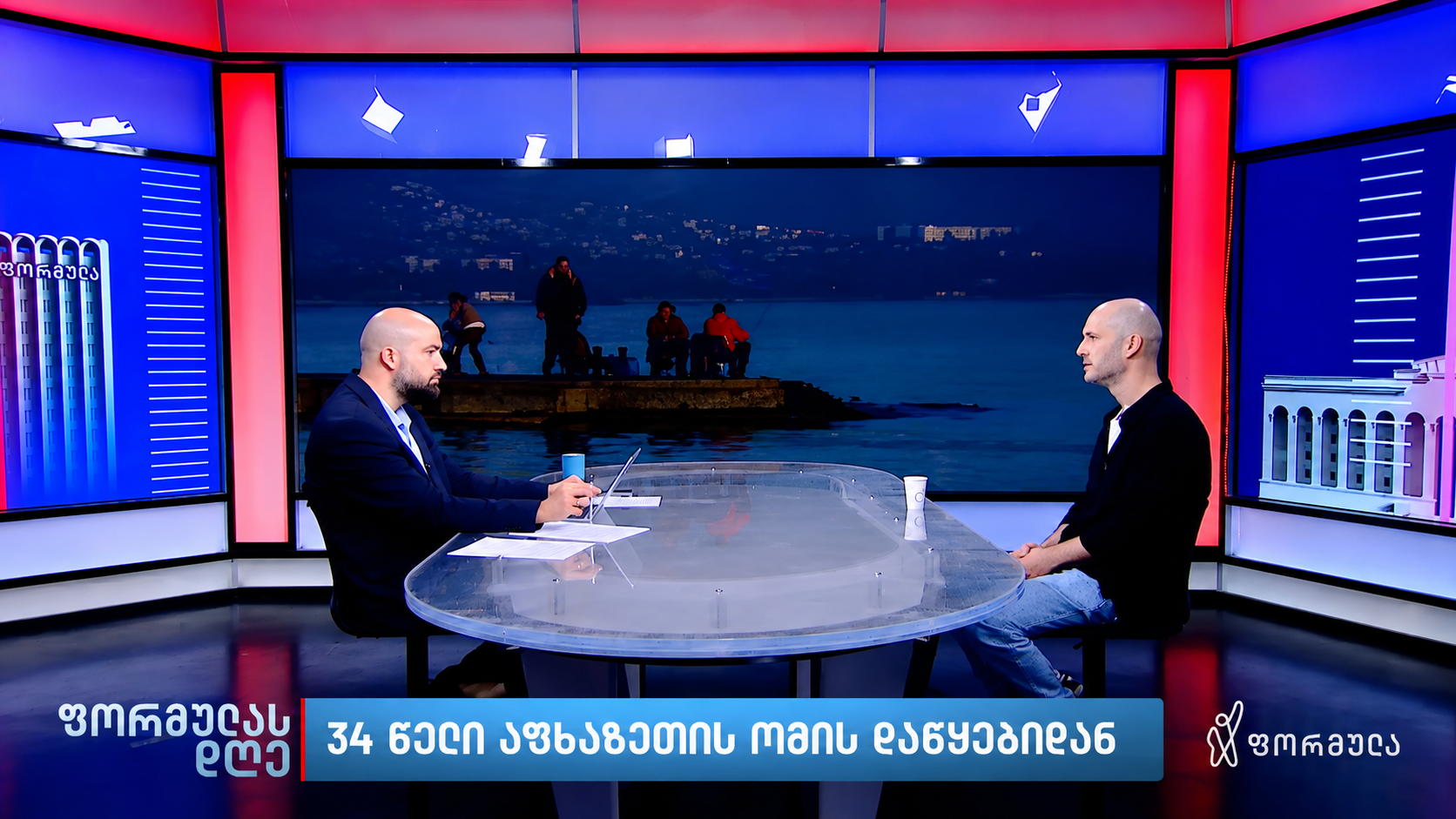
Nika Gvaramia’s interview and his vision regarding the resolution of Georgia’s territorial integrity have sparked a broad discussion within Georgian society. The comparison drawn between Abkhazia and Nagorno-Karabakh drew particularly sharp criticism. The opinions expressed can be broadly categorized into several groups.
The views of the first group were voiced by the former President of Georgia, Mikheil Saakashvili. He heavily criticized Gvaramia’s stance, focusing primarily on the Russo-Georgian dimension of the conflict. According to Saakashvili, the restoration of territorial integrity must be achieved by any means possible under the conditions of a weakened Russia.
Mikheil Saakashvili published two statements on Facebook regarding this matter. Below are the full versions of his statements.
These days mark another anniversary of the war unleashed against us by the Russians in Abkhazia. As if the shameful “Mshibzia” campaign—the apology to Abkhaz in their own language injected by the Russians a few years ago—was not enough (back then, prior to Ivanishvili’s 2024 apology speech, the FSB was testing the reaction of Georgian society on this matter).
Now Nika Gvaramia, and not just him, has floated the idea that just as Pashinyan shed the “trauma” of Karabakh, we too must overcome the trauma of Abkhazia and move forward. This thesis is not only entirely unacceptable and harmful, but it also absolutely fails to reflect historical and political reality.
Before the war, Abkhazia was the most developed, one could say the most Europeanized region, populated predominantly by Megrelians. It would have undoubtedly become the engine of Georgia’s drive toward Europe, much like the Baltic states, had it not been for the war planned and organized by the Russians.
Academician Georgi Arbatov, a “liberal” member of Gorbachev’s Politburo, warned me about this planned war back in 1989 when I was a second-year student. He told me, “Mikheil, the events of April 9 in Tbilisi are just the beginning. If you continue to demand independence, the main blow against you will be delivered in Abkhazia, and plans for this already exist in the General Staff.”
Arbatov was mistaken about one thing: the first blow hit Tbilisi in the form of an armed coup supported by the Russians, and Abkhazia followed right after. By driving Georgians out of Abkhazia, the Russians castrated the Georgian state from the very beginning.
I am categorically against the romanticization of Abkhaz society. I want to tell you a specific story. During the war in Abkhazia, I worked, among other things, on the exchange of prisoners. In Sukhumi, our group used to stay in the city center with Misha Kokaia, a very refined young man from Sukhumi, in his large apartment. This was the so-called “White House,” where well-known Abkhaz members of the Abkhaz Writers’ Union also lived, and Misha personally protected them from violence, maintaining the best possible relations with the Abkhaz. When the Abkhaz units entered Sukhumi, one of the very first people they executed was their defender, Misha Kokaia.
To go back even further, before the war my family often took me to Abkhazia, and even then, the hostile attitude of the Abkhaz toward us as Georgians was striking. We teenagers were never allowed to go anywhere alone because physical attacks were frequent.
My last pre-war experience was in the summer of 1991 in the dining hall of the “Zolotoy Bereg” guesthouse, where my friend protested against a poor-quality meal, and the Abkhaz cook told us: “Dog’s food for dogs.”
Thus, to this day, Abkhaz society is entirely steeped in a fascist-type ideology of intolerance toward other nations, and this does not apply solely to their attitude toward Georgians. We must remember that during the war, they also expelled over 100,000 Greeks, Jews, and Estonians, and recently they have been actively oppressing Armenians, who once fought on their side.
I have no sympathy whatsoever for such people. Moreover, these people are clearly incapable of developing the territory they have occupied. An utterly feral group of people is squandering this golden land for nothing; they neither thrive themselves nor let anyone else thrive (just compare it to Batumi).
The statement that “we must overcome the trauma of Abkhazia” is equivalent to King David the Builder—who took 30 years to liberate Tbilisi—saying at some point that “we must overcome the trauma of Tbilisi,” leaving Tbilisi to the Arabs and moving on to other matters forever.
Beyond the fact that my blood calls me to Abkhazia – to the house of my grandfather, Domenti Alasania, in Eshera – let us look at this issue purely pragmatically. It is calculated that in the coming decades, more than half of the world’s population will live along coastlines because that is where communication and development lie.
Today we control less than 100 kilometers of the coastline from Sarpi to Anaklia; Abkhazia represents an additional 200 kilometers. Furthermore, a flight to Europe from Sukhumi is 40 minutes shorter than from Tbilisi. The return of Abkhazia means at least doubling Georgia’s economy immediately, and given the high probability of oil on the sea shelf along the Abkhazian coast, increasing it several times over in the future. What are you proposing—that we give all this up and leave it to the Russians and Abkhaz?
If we had not ripped Adjara away from the Russians and the local separatist feudal lord in 2004, today someone would similarly be arguing that we need to “overcome the trauma of Adjara.”
I do not know what others think, but I, Mikheil Saakashvili, alongside other patriots, intend to return the ancestral Georgian lands of Gali, Ochamchire, Tkvarcheli, Gulripshi, Sukhumi, Gudauta, Gagra, and Kodori under Georgian control as the empire weakens. If anyone remaining among the population there does not like it, they can move to live in other countries. My children think the exact same way, and I hope your children do too.
We will restore control using all necessary means. What exists today is a temporary situation caused by the lingering agony of the Russian Empire, but this empire is in decline, and we certainly must not sacrifice what legally belongs to us for its sake.
The comparison with Armenia and Karabakh is utterly misplaced. There, Azerbaijan reclaimed territory that belonged to it. During my presidency, I spoke about Abkhazia constantly; the Chorvila regime placed a taboo on this subject.
Now, once again, we must all remind ourselves first and foremost: Abkhazia is Georgian territory over which we have lost control only temporarily. Just as Azerbaijan reclaimed its territory after 34 years, and just as Croatia reclaimed Split and other territories, we will definitely restore this control. The wound of Abkhazia will not heal until this happens. For my part, I intend to build and develop Sukhumi far better than Batumi. In fact, I believe Georgia’s capital should be located there, close to Europe and Ukraine, while Tbilisi will remain Georgia’s most important city—essentially the capital of the Caucasus.
Anyone who thinks that the path to restoring control over Abkhazia relies solely on reconciling with a maximum of 50,000 Abkhaz has fruit leather instead of brains. The Abkhaz despise us, and nothing can be done about that.
Abkhazia is a major geopolitical issue whose resolution depends on the weakening and potential collapse of the Russian Empire. It is a matter that hinges on Ukraine’s successes, the strength of the West, and, of course, Georgia itself staying in shape.
So stop your fortune-telling, see the big picture, and right here I would like to express my condolences to the family of the deceased Abkhaz blogger, Daur Buava.
The views of the second group were expressed by the “Free People’s Party” [formerly “Girchi”] during their traditional YouTube live stream. According to them, trade holds a central position in the restoration of Georgian-Abkhaz relations, while the stances of both Georgian Dream and Saakashvili are either illusory or militaristic. Georgian society must determine whether it desires the return of Abkhazia or merely revenge.
Aleksandre Rakviashvili: What is Georgian Dream’s narrative? “We will work things out with the Russians; we might end up inside Russia, but we will enter reunited.” Misha says: “I will take up arms and strike them on the head.”
Georgian Dream’s talk about apologies and the Treaty of Georgievsk essentially means that we will become part of Russia in some form, but the Russians will return Abkhazia to us because we will be better slaves than the Abkhaz or South Ossetians. We will adopt that function. That is Georgian Dream’s narrative. The opposing narrative is “we will take revenge,” we will kill the Russians, and where will the Abkhaz go then? They will accept our order.
Vakhtang Megrelishvili: Even though these seem like radically different positions on the surface, in reality, they lead to the exact same practical outcome.
Aleksandre Rakviashvili: Yes, in a sense, punishing the Abkhaz.
Iago Khvichia: One position is “I will work things out with the empire regarding Abkhazia.”
Vakhtang Megrelishvili: For the Abkhaz, both are hostile moves.
Aleksandre Rakviashvili: Yes, exactly. In our society, there are people who would prefer to have money and be part of Russia. There are also people for whom the motive of revenge is paramount, and they do not care at all whether there is trade with the Abkhaz or not. For them, the main thing is simply to seek revenge. This particularly applies to the older generation. Misha will use this segment—those who want revenge. Those who want a decent life will be our electorate.
Georgian Dream says that we know nothing, we are dead, we are opossums, and that is why they do not eat us. If the Russians take us over, they will also return Abkhazia to us because we are better opossums than the Abkhaz.
Iago Khvichia: “We will work things out with the Russians and do something” is their main narrative. The narrative that we will enter Russia and unite with Abkhazia there is not Georgian Dream’s direct narrative.
Aleksandre Rakviashvili: It is not direct, but you are simply left with no other illogical possibility. You would have to assume that Putin will wake up one day and say, “The Georgians are behaving great, so why don’t we gift them Abkhazia?”
Herman Szabó: There is no need to fulfill that promise. You can constantly keep people tethered with this narrative. Create an endless expectation and, within that expectation, maintain the narrative that “I have some perspective there.” Nothing actually needs to happen. How many times has it been that way?
Aleksandre Rakviashvili: Yes, Misha might not be planning to start a war anywhere either. Look at it cold-bloodedly. There are people who are deceived by one narrative, and there are people who are deceived by another narrative. Meanwhile, these leaders are deceiving these people. Then you come along and tell them: “People, we don’t want to fight; let’s live well…”
Vakhtang Megrelishvili: If we live well, we will have a chance that those people will also want to live together like us. Take how we visit a good country, a good city, and we like how they live. Just like what happened in divided Berlin. If you achieve a radical difference in the quality of life here, then you are not treating them out of humanitarian charity—they will know that in Georgia, whether it is documents or business, everything can be done, and overall living here is good, including professional education, education for their children, and so on.
Herman Szabó: Their truth will be protected, their property will be protected.
Vakhtang Megrelishvili: There are not many paths. You have only one way to get Abkhazia back. All other paths are nonsense.
Aleksandre Rakviashvili: There is a demand for lies. What is our position? We must open up trade. It is understandable that Russians and Abkhaz are standing over there. It is clear that they will not let your products in so easily. There is separate corruption there and other issues.
Doing the following from your side: when you come from the Abkhaz side, bringing your products [cigarettes, mandarins, hazelnuts, whatever you bring]—you are welcome. Just as I do not prevent a person from Kakheti from bringing something to Tbilisi, do not search them, and the Security Service does not stand over them—I will not stand over you either. Just do not bring weapons. You don’t have weapons and you’re bringing mandarins? Take them. A huge market opens up on the scale of the Abkhaz economy.
Herman Szabó: Just like the EU market is for us.
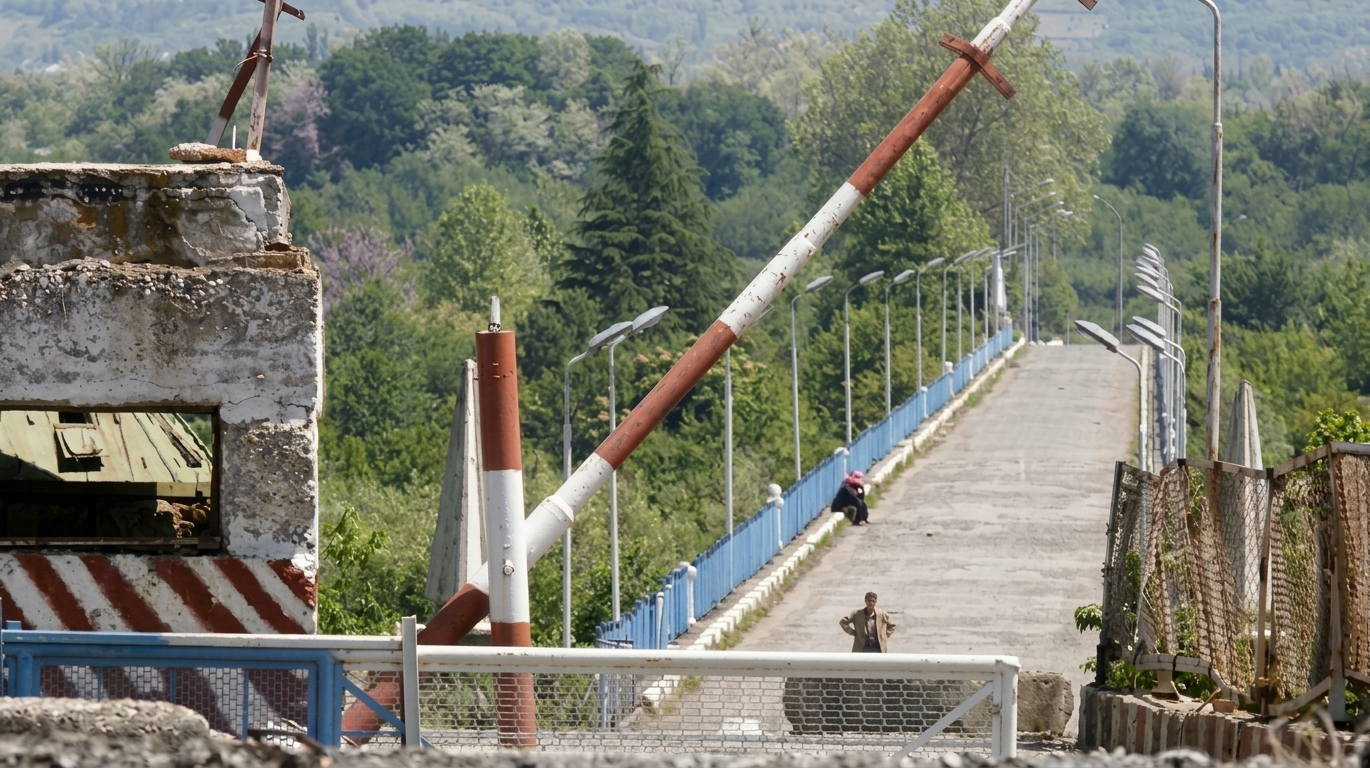
Aleksandre Rakviashvili: What need will arise for them? The need to build warehouses on this side, set up logistics centers, repair the bridge so trucks can cross quickly.
Fine, it is clear that they do not let us into Sukhumi, but we will exist even without the Sukhumi market. For them, however, our market is a huge market.
Some Abkhaz businessman, whom we do not create problems for here, will move to Tbilisi, fall in love with a Georgian girl, start a family, or vice versa. This has always happened. Human relationships have always existed. They will become business partners there, there will be family relationships, they will visit each other simply because they have common business and common interests. People will emerge among the Abkhazians whose family well-being will be tied to Georgia.
It is clear that the Russian occupation will not end with this, but occupying a territory whose population is opposed to you is difficult, isn’t it? In this reality, occupying Tbilisi is much harder than occupying Sukhumi, isn’t it?
Now, if the Abkhaz come around to our point of view and think: “It turns out things are so good with the Georgians, the Russians are hindering us, starting wars, killing my youth in this war, and here we live well with the Georgians”—they will resist the Russians, and it will become difficult for the Russians too.
If they want to, they can conquer Georgia too, but you simply won’t derive any benefit if you face resistance on the ground.
Vakhtang Megrelishvili: I am saying about our politicians that we foolishly help the Russians like this.
Aleksandre Rakviashvili: Yes, we constantly help the Russians. Look at how we organized a blockade against the Abkhaz in the 1990s. The Russians closed it off, and we closed it off too. We almost doomed them to starvation, instead of saying: “Do not go toward Russia, come toward us.” We made them even more embittered. We must do the opposite.
For example: I see that an Abkhaz does not recognize me, does not recognize our passport. I recognize that he is my citizen. If the Spanish government can bring over some African, give them money, and help them—why can’t I do the same for an Abkhaz? Not everyone will come over. Someone might despise me. If they despise me, fine, stay in Sukhumi, in Gagra. Am I forcing you?! But whoever comes over will bring mandarins and sell them—they will earn money. When they return, others will see that this man trades in Georgia, bought a car, renovated his house, and so on, and others will want the same. Time will pass, a few years, and an entirely different reality will emerge.
Herman Szabó: This relationship should not extend to things we do today, when we give away many things for free. Just like when migrants arrive in Europe and they shower them with money, provide insurance, and many other things.
We are gifting things from here, and the attitude over there is that Georgians are obligated to do this.
Do not gift anything; simply give them the opportunity to do their business together with Georgians. Without any subsidies or free medical treatment.
Aleksandre Rakviashvili: Nothing is free, and you cannot do that. But when they come over here and need insurance—issue them state insurance just as your citizen is entitled to it. Do not demand your passport from them. When our citizens register for insurance in Europe, they do not acquire citizenship there, do they?
Whatever order we have here—let us extend the same order to them from our side. If someone falls ill or has a problem in Sukhumi, they will come down to Zugdidi, stand in line like any other Georgian, and receive the same service. They will get some things for free, but they will fit into the general order.
I treat them as my citizens. If I want revenge—that is another story, but if I am telling the truth that they are our citizens—then I treat them accordingly.
Many people do not even understand what trade is.
Vakhtang Megrelishvili: Look, one viewer writes about this: “Returning Abkhazia through trade is a fairy tale. Returning means free movement, the absence of border control.”
We are not even remotely close to that stage yet. We are talking right now about the mechanism for changing human perceptions.
Herman Szabó: Return is not scheduled for a specific time, like saying you have to return on Tuesday at five o’clock…
Vakhtang Megrelishvili: These people want an armed soldier to stand there and, if anyone enters, to shoot them.
Aleksandre Rakviashvili: Some even say that uncontrolled, illegal trade will increase. Meaning that if a Kakhetian brings grapes to Tbilisi, that is supposedly illegal trade.
Herman Szabó: The only thing you said is that weapons and other things prohibited by law should not come through from this side, which is something police would stop a Kakhetian for as well. Trade does not return anything by itself. Look, we traded in Ergneti for how long…
Vakhtang Megrelishvili: We were on very good terms with the Ossetians during that period.
Herman Szabó: Yes, but Samachablo was not returned. This trade is a prerequisite for establishing as much contact as possible on a human level. Over there, the Russians and Abkhaz deliberately fan enmity toward Georgians, and even children who have not seen the war despise Georgians. That is what you are countering.
Vakhtang Megrelishvili: They have no other story. What are they supposed to tell children? If you had a child and were living there as an Abkhaz or an Ossetian—you would tell your child something, wouldn’t you? Why are we like this with the Georgians? They have the internet, and that child sees that other things are happening in the world while nothing is happening here. They think about it, and who is to blame for this? The Russian cannot be to blame—an armed man stands right there protecting them. So someone else must be to blame, someone they are being protected from.
Aleksandre Rakviashvili: And how does that person treat you? You cannot carry five liters of petrol; it is for personal use only, and if you take extra, it means it is meant for sale. Our State Security Service and police do not allow the transport of five liters of petrol.
Vakhtang Megrelishvili: A viewer writes to us: “What are you doing about the issue of taxes?” When an Abkhaz comes over here and buys something—doesn’t that mean they are paying taxes? If they bought something and are taking it back there to sell—it turns out they have already paid that tax.
Aleksandre Rakviashvili: People worry about this. They think: who will pay the customs duty? If some cargo enters from Turkey, who will pay the customs duty? Who will pay VAT, who will pay excise tax?
If duty-free cigarettes enter from Abkhazia, what is the problem with that? If the government abolished the excise tax altogether, it would be a benefit anyway.
Iago Khvichia: The Abkhaz excel at something, and cigarettes are cheaper there. The reason bringing cigarettes from there is prohibited is to hide our defect.
Aleksandre Rakviashvili: Many people are bothered by the idea that Abkhaz will not pay taxes in this trade. How about we don’t pay them either, rather than banning Abkhaz from trading?
The main problem with trade is that many do not want a peaceful return. We are living in a lie.
Vakhtang Megrelishvili: I don’t think this applies to everyone. Let’s not accuse everyone. There are people who speak purely out of emotion.
Aleksandre Rakviashvili: Yes, emotion. And that emotion is that our people were killed, a genocide was committed against us in Gagra. They have this negativity. People like that want to hit someone; they say: “You want to trade with these people too?” Imagine telling someone about bad people, saying we should trade. You use words like—let them make a profit, let them cooperate… At the same time, they think: “Aren’t these bad people, aren’t they our enemies?” If you ask them whether they want territorial integrity and the return of the Abkhaz, they will tell you they want it. You live in this lie. There is a demand for this lie.
Our society has failed to decide: do we want territorial integrity, do we want the return of the Abkhaz, or do we want revenge?
Iago Khvichia: Revenge is not good, but it is generally a powerful idea.
Vakhtang Megrelishvili: Somehow we need to align these visions. Misha is on the side of returning through revenge; Bidzina is on the side of joining over there, returning in some form. Joining under Russia. And we are somewhere else entirely.
Aleksandre Rakviashvili: We want a good life.
The 2024 elections show us this too. We told people: live well, we will distribute the National Bank’s reserves to you, we will privatize, we will give you the money that is being spent on flying around—what didn’t we tell them? And people said: “Are you crazy? We are in a fight! What time is it for that? There is a Russian regime here, or the UNM are returning; we want to fight.” Now the government is robbing them, politicians are deceiving them, and the people are in a fight.
The same problem exists among the Abkhaz. People over there are in a fight too. And we come along and say: “People, let’s live decently.”
I, for instance, want my grandfather’s house in Sukhumi to be mine, and when I retire, I want to deliver lectures at Sukhumi University. Some Abkhaz is living in that house. Should I go, shoot him, and move on with life? That is what one side offers me. I don’t want that! Or should I enter Russia, buy that house with Russian citizenship, and return that way? That is what Georgian Dream offers me. What if we just live well? In the end, I will settle with that Abkhaz in court. Say I keep the house, and he takes a double or fivefold price. I won’t have a problem with that. That is what I want.
Herman Szabó: Maybe they realize that we want something good, but they worry about how we can want that good for the Abkhazians. People, it is the exact opposite. If what we want for Georgia succeeds, what we are saying about Abkhazia will automatically succeed too.
Vakhtang Megrelishvili: You are stating a universal truth. It is not as if one thing is good for Georgians and another for Abkhazians.
Aleksandre Rakviashvili: And any smart Abkhaz realizes that they have no prospects whatsoever. If you offer from here: while this madness is happening, while on my side there are people who want revenge, and over there are the Russians who couldn’t care less about both you and me and have completely different goals, let’s start trading.
Vakhtang Megrelishvili: You first need to be in government to do something like that.
Aleksandre Rakviashvili: Yes, but if you make people here understand that an entirely different foundation is created by this… If the Ergneti market had not been closed, the war could not have started. Starting it would have been much more expensive.
Vakhtang Megrelishvili: We invested in that. First we stormed the Ergneti market, then we filled tax black holes while cursing them. We had Okruashvili as a minister, and we talked nonsense.
Aleksandre Rakviashvili: We haven’t even analyzed this properly. Closing the Ergneti market was a mistake. We haven’t even broken this matter down, and it is difficult for people.
But if we explain this, gain support for it here, and then among the Abkhaz – who knows what will happen tomorrow.
If we were in parliament, at the very least we wouldn’t do what is happening now, when you can carry one or two cheeses, but not three, or five liters of petrol is forbidden.
We turned the administrative boundary into a real border from our side. What complaint do we bring against the Russians? We stand there with armed people and fight some smugglers. If you treat your own territory like this, how can you demand anything from the Russians over there?
Vakhtang Megrelishvili: You are actually helping the Russians.
Aleksandre Rakviashvili: Yes, and in this case, both Dream and UNM are helping. This narrative helps the Russians.
Regarding the UNM narrative, a Russian will say: “You see, as soon as they have tanks, they will conquer you, they will kill you; only I will protect you.” Both narratives are pro-Russian, just in different ways.