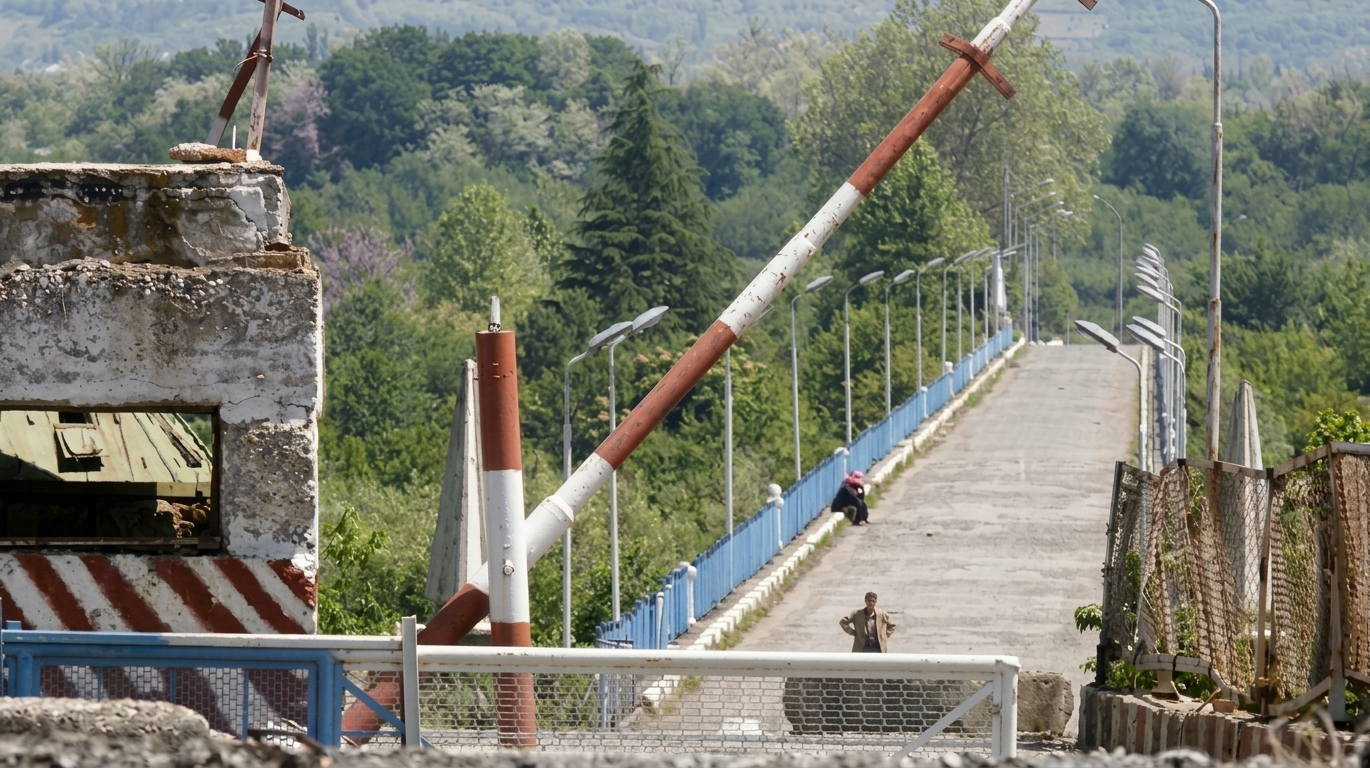








De-isolation of Abkhazia
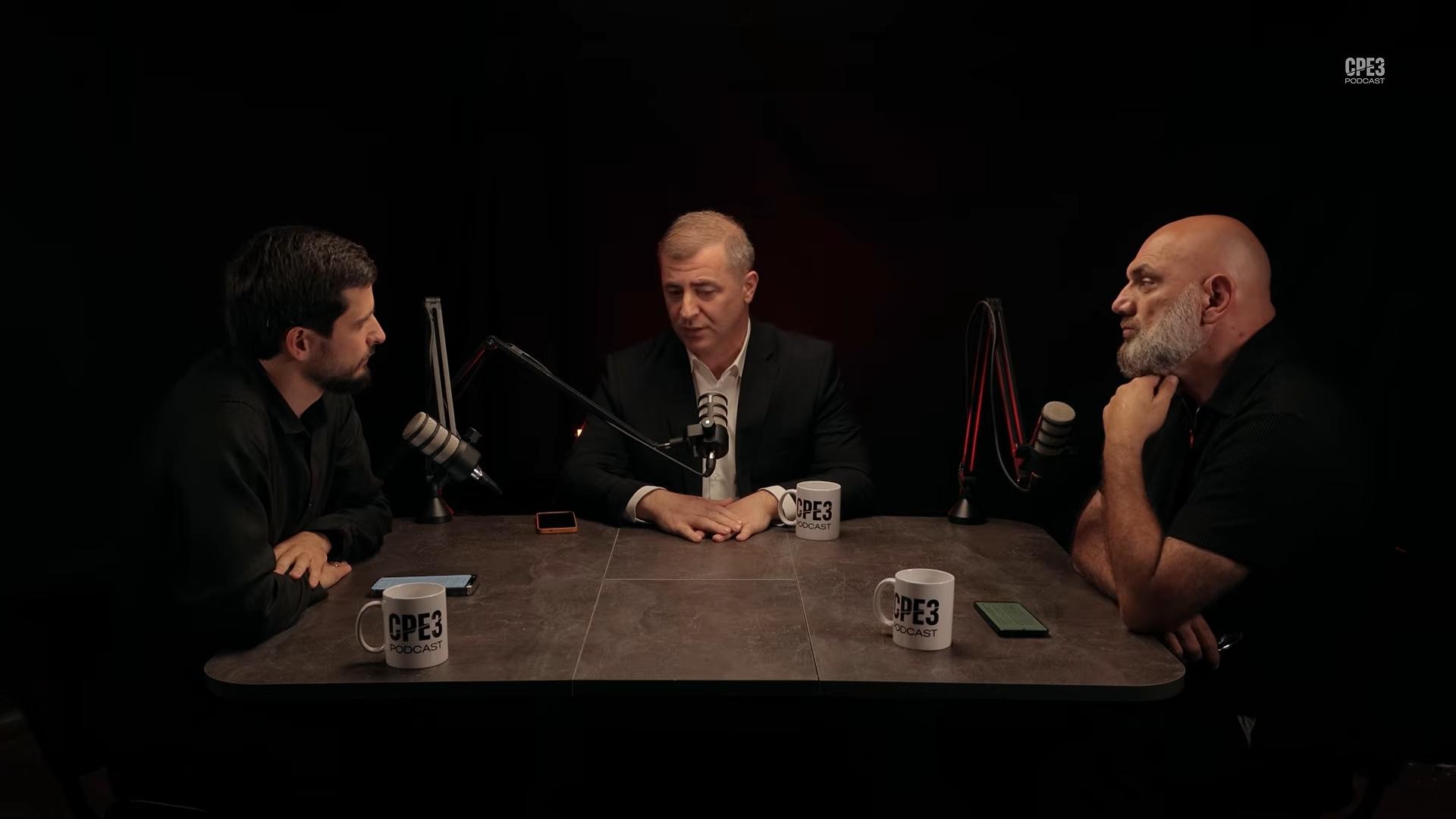
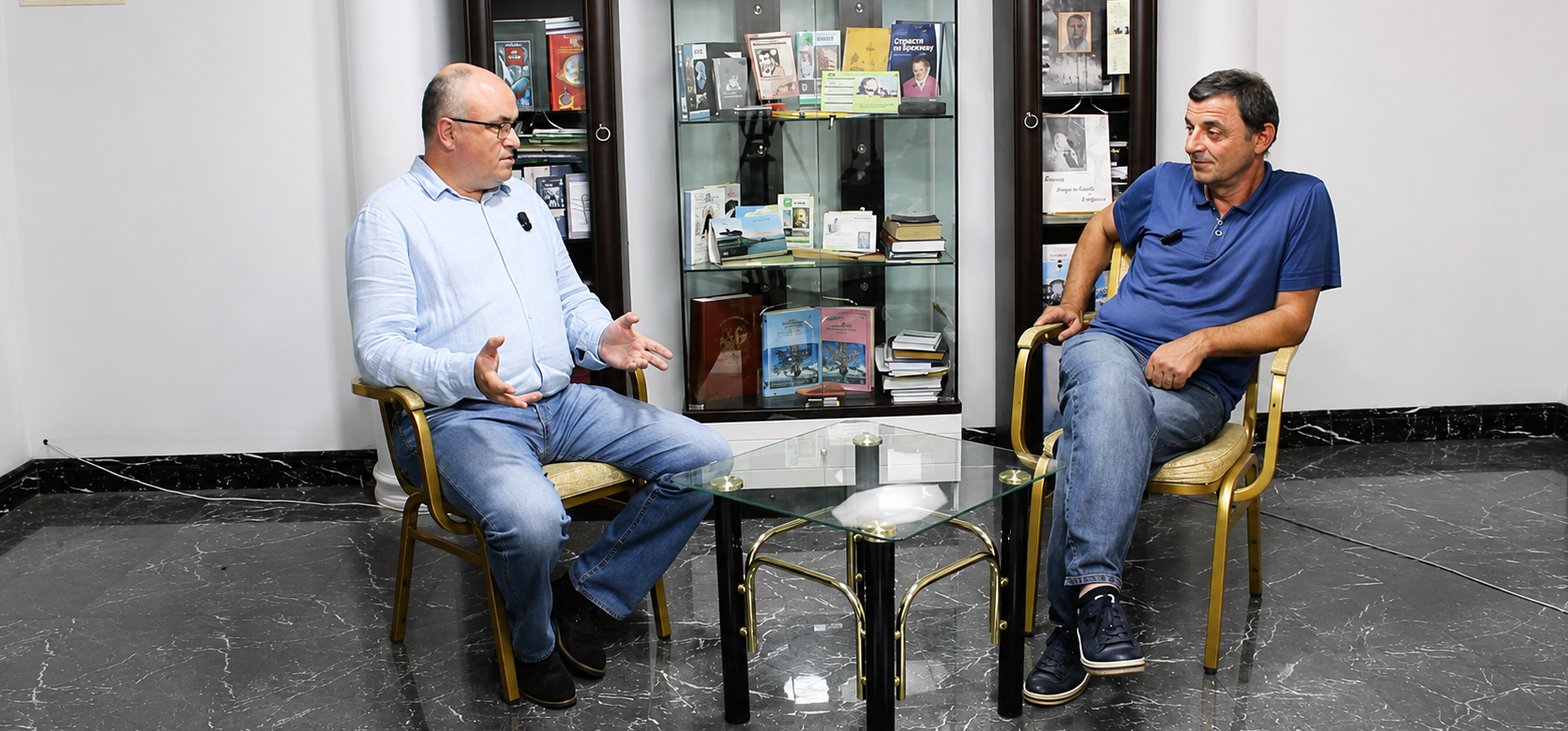
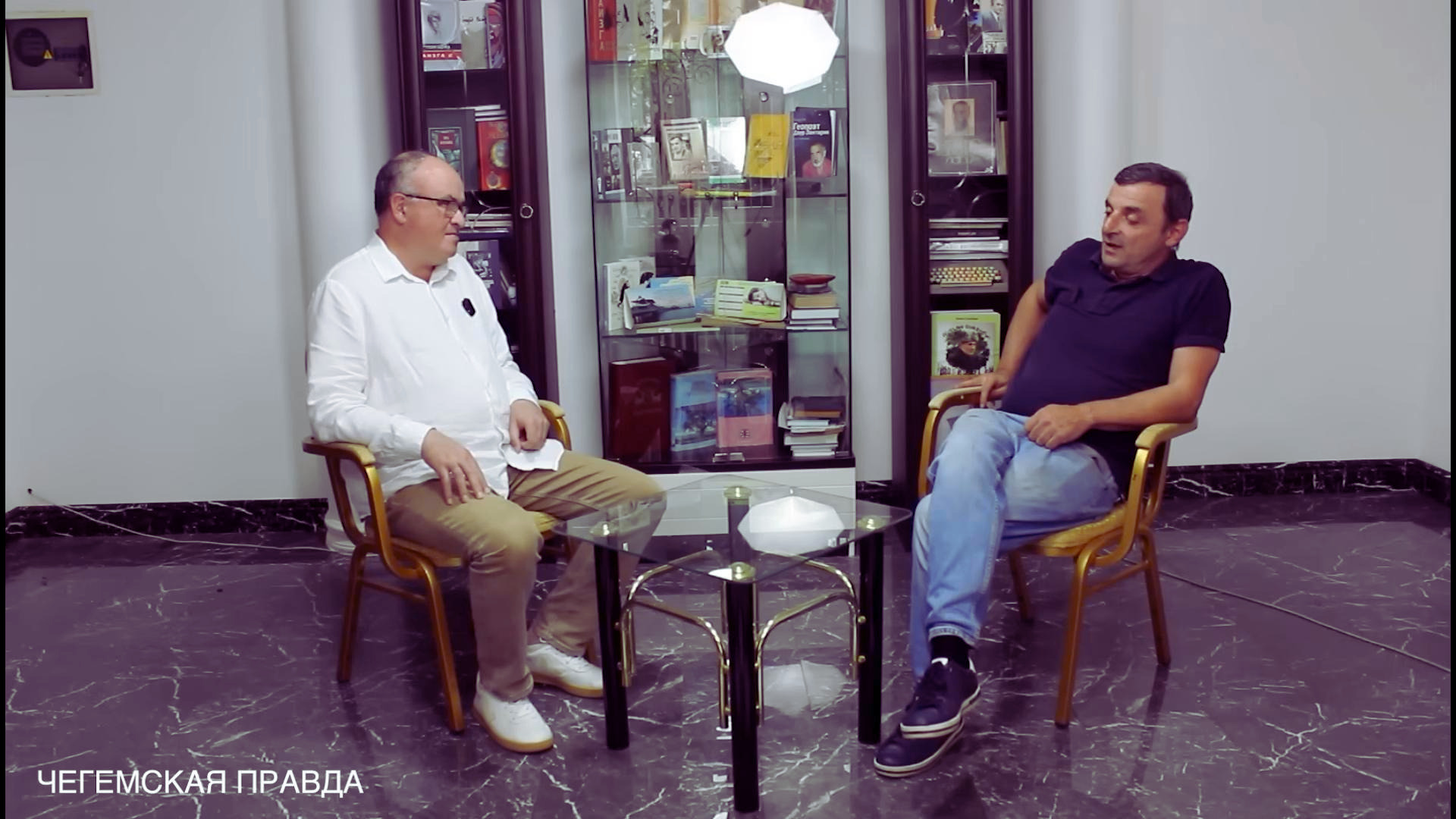
In the program “Chegemskaya Pravda,” Inal Khashig and Adgur Lagvilava discussed the key issues of Abkhazia’s foreign policy and its relations with Georgia.
Key points and arguments:
Inal Khashig: Hello! You are watching “Chegemskaya Pravda.” Another anniversary of the recognition of Abkhazia’s independence by Russia has passed. The festive events have once again brought to the forefront the issue of our development—the development of the Abkhaz state. And this topic resonates not only on its own, but also in the context of relations between Georgia, Abkhazia, and Russia, as well as the global situation. One way or another, there is much to think about. Today, our guest is Adgur Lagvilava. Adgur, good afternoon!
Adgur Lagvilava: Good afternoon, Inal.
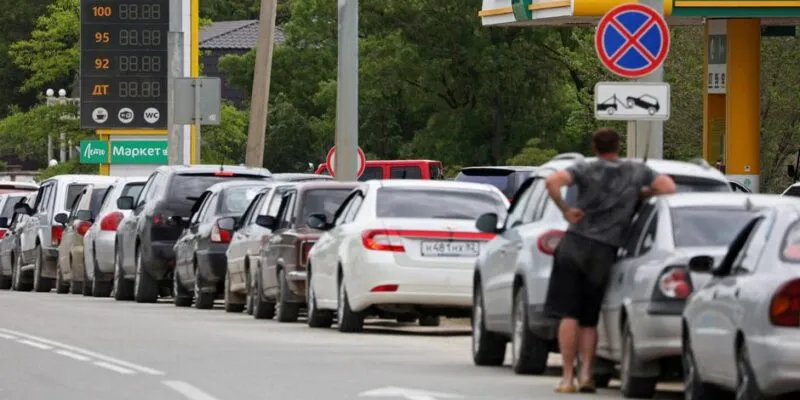
Inal Khashig: Gasoline has finally reappeared, thank God.
Adgur Lagvilava: But it’s expensive.
Inal Khashig: But expensive, yes. Nevertheless, it is available, and thank God for that. Overall, the situation itself, of course, is far from pleasant. The fact that gasoline is back now does not mean that disruptions will not occur again. How do you view this entire situation when we have to, say, make up for the deficit from Georgia?
Adgur Lagvilava: Gasoline is not just a chocolate bar that you can easily forgo (though it’s probably better to give up chocolate). Gasoline is a strategic resource, the foundation of economic activity. Virtually all freight transport inside Abkhazia depends on fuel. Therefore, in the current situation, to provide the economy and the people with fuel, if we were able to take it from Georgia, I see no problem with that. We could also take it from other countries. We had similar experiences after the war: we bought fuel from Romania. Unfortunately, all these alternative supply routes ceased.
Right now, Russia is experiencing a complex fuel situation, and we ended up dragged into this crisis alongside them. If our fuel companies have the opportunity to get gasoline somewhere else to supply the population, I see no problem with it whatsoever.
At the same time, in Georgia itself, this was perceived very negatively—to the point where the opposition accuses the government, alleging that this fuel is supposedly being bought by the Russians for their military needs. That is entering the realm of clinical pathology.
Inal Khashig: For anyone who served in the Soviet Army, it is clear that little has changed in terms of weaponry systems. Most of the equipment—both Soviet and Russian—runs on diesel. In that light, such statements sound simply absurd.
On the other hand, one way or another, fuel enters Abkhazia from Russia, and it is insufficient for our market. But if the Russian military base were lacking gasoline, Russia would first and foremost take care of its own needs. At the very least, Rosneft, which is the primary supplier of gasoline to Abkhazia, would have supplied the Russian military bases first.
Therefore, such assertions are sheer nonsense. And when you read things like that from people who once held major state posts in Georgia—specifically, comments were made, it seems, by the former chairman of the National Bank of Georgia—it sounds extremely unseemly. I understand there is a domestic political agenda, but you cannot allow it to run on tracks where your statements will simply be laughed at.
Adgur Lagvilava: Incidentally, in this context, we have been observing Georgian discourse for many years. We receive precisely the information that is connected to us and occurs around us. One gets the impression that for Georgia’s internal political agenda, Abkhazia has become a sort of mythical country. It is recalled whenever some tension arises. Some use the topic of Abkhazia to direct negativity against the ruling authorities, while the ruling authorities constantly try to “reconcile” with us—though it is completely unclear on what basis all of this is supposed to happen.
That is to say, Abkhazia today is a simulacrum for Georgia that they created for themselves. The country they invented does not actually exist. Some say their territories are occupied; others claim that we in Abkhazia dream of returning to Georgia. They have their own sort of Abkhazia-Narnia, a Middle-earth of sorts in which they believe. Unfortunately, all these myths they constructed around Abkhazia have now maximumly obstructed our ability to obtain fuel. They bought into their own myths, and now it negatively impacts us because we do not know what tomorrow will bring. Perhaps Russia itself will temporarily run out of fuel, leaving us in a desperate situation. That is why our authorities must look for alternative avenues.
Inal Khashig: In any case, we won’t be left entirely without gasoline.
Adgur Lagvilava: I have serious doubts about that. If nothing is done about it…
Inal Khashig: Yes, but I think one way or another there will be gasoline. I am more concerned about the presence of a distorted understanding of the nature of the Georgian-Abkhaz conflict within Georgian society, government, and political circles. They hold a warped perception of the sentiment in Abkhazia. It seems to me that even the Abkhaz nation itself is perceived there in a distorted light: to them, we are some kind of “Apsuas” who descended from the mountains two or three centuries ago, while the real Abkhazia is allegedly something completely different.
What I am driving at is this: there are opportunistic approaches that clearly get in the way, but on the other hand, there are attempts by Georgia itself to change something, and this applies not only to Abkhazia. I have been observing the current discussions in Georgia surrounding the figure of the former King of Kartli-Kakheti, Erekle II, under whom the Treaty of Georgievsk was signed in 1783, placing Kartli and Kakheti under the protectorate of the Russian Empire. For many years after Georgia gained independence, Erekle II was considered a negative figure. Now, his rehabilitation is underway: last year, I believe, a monument to him was unveiled in Tbilisi, and now discussions surrounding his personality have intensified once more. Georgian Prime Minister Irakli Kobakhidze states that Erekle II effectively saved the Georgian people and their future, and that without the Treaty of Georgievsk, modern independent Georgia would not exist.
Reflections on what might have been are highly debatable, but the fact that Erekle II had very little choice at that moment is indisputable. Nevertheless, when history becomes a tool of political expediency, it is quite dangerous. I do not believe Erekle II wished harm upon his people. Historical facts speak volumes, even though the Treaty of Georgievsk did not save Tbilisi from Persian occupation a few years later. But things could have been significantly worse.
Currently, a segment of Georgian society views the rehabilitation of Erekle II quite negatively, perceiving it as a subtle indicator of a possible restoration of diplomatic relations between Tbilisi and Moscow and the conclusion of an alliance treaty. How do you view all of this? Saakashvili goes even further in his predictions, claiming there will be separate agreements with both Abkhazia and South Ossetia. What is your take on all these discussions, and what do you think about this matter?
Adgur Lagvilava: I am not deeply versed in Georgian history of the late 18th and early 19th centuries, but judging by our experience of living with Georgians in a single state, post-war events, and their historical discourse, Georgians frequently use history as an ideological foundation for the current political environment.
They have their own vision of who the Abkhaz are today. Perhaps it is not the official viewpoint, but a perception has taken root in Georgian society that we are an alien element who assimilated the local so-called “Abkhaz” by force of arms and began calling ourselves Abkhaz. This narrative has persisted from the very moment they developed claims over Abkhazia. Historical science and all kinds of pseudo-theories, such as Ingorokva’s famous concept, were tailored to fit this narrative.
If you look deeper into this process: since 2008, a narrative emerged (including in official documents) that we are a territory occupied by Russia. But that is merely the superficial layer. If the Georgians want to, they can peel it away simply by altering a few laws. At a fundamental level, however, they view us, the Abkhaz, as the occupiers. In their view, we occupied this territory after arriving 300–400 years ago from the North Caucasus and destroying or assimilating the Georgian population here.
When these historical narratives first emerged, they may not have carried direct aggression, but ultimately they led to the 1992 war. The radical segment of Georgian society gained an ideological and historical justification, which, naturally, bears a very distant relationship to genuine historical science. Authentic scholars—Georgian, Russian, and international alike—acknowledge this. Yet within Georgian society, this narrative remains potent, as is clearly visible across social media.
This issue could be resolved at the legislative level. Or the Georgian president or prime minister could simply step forward and state that the Abkhaz are an autochthonous people who have inhabited this land throughout their entire history, which aligns with reality.
Given how Georgians handle history, it seems to me that the current discourse surrounding the Treaty of Georgievsk also rests on political expediency—an ideological justification for the present rapprochement between Tbilisi and Moscow. I view it precisely within this context: in Georgia, history is used to justify the current political agenda or to steer it in the desired direction. I believe that is precisely the case.
Inal Khashig: As for the occupation: yes, according to their version, the Abkhaz once came down from the mountains and assimilated the local population. But regarding the occupation, they still maintain the view that Russia occupied the territory—and, by their logic, not in 2008…
Adgur Lagvilava: By their logic, we are an alien population here and ought to vacate this territory. Since we are an incoming element, we should leave Abkhazia.
Inal Khashig: Even if we were an alien people, how are we supposed to vacate the territory? How is that envisioned?
Adgur Lagvilava: In the manner they attempted in 1992.
Inal Khashig: For a state striving to join the civilized world and having declared a course toward Europe for many years, speculating about being “indigenous” or “non-indigenous” is a foolish endeavor altogether.
On the other hand, the thesis of “occupied territories” was originally launched by Saakashvili based on the events of 2008. But then their appetites grew, and now it turns out that Russia began the occupation as far back as 1992. Sometimes you watch broadcasts on the internet where participants ponder with a wise air that Russia started the war in 1992, as if the government and the State Council of Georgia had absolutely nothing to do with it.
Yes, there are many myths, but they lack a coherent picture. When you start asking questions from different angles, this logic collapses. Since the time of Eduard Shevardnadze, they have asserted that a certain “third force” prevented them from avoiding war. At the same time, they did not deny that they sent in troops. And who were those troops? The Mkhedrioni—criminals released from prisons. They explained that Abkhazia is Georgian territory. But if you send criminals who engage in looting and killing civilians onto your own territory against your own citizens, the state forfeits the moral right to that territory and those citizens.
At one time, Russian journalist Yulia Latynina formulated a statement drawing a bottom line under Georgia’s claims: Georgia lost the moral right to Abkhazia the first time when it sent in troops, and the second time when it lost that war. Frankly speaking, that is the starting point we must build upon.
When they appeal to a “third force,” it becomes a question of responsibility. If you are so easily manipulated that a “third force” can compel you to send criminals and cutthroats from the Mkhedrioni into territory you consider your own, what is your level of responsibility? How will you explain to the Abkhaz: “Sorry, the devil made us do it, it was all a third party”? Suppose we hypothetically resolved the conflict and found ourselves in a unified state. Where is the guarantee that some “third force” will not drive them mad again and lead them to wage war on us once more?
Referencing a “third force” demonstrates the failure of the state itself. How attractive must such a state be to the Abkhaz people, who endured the hell of war and lost 4% of their ethnicity, to spark a desire to unite with Georgia?
Another question: you cannot alter geography, and this conflict must be resolved in any case. Sooner or later, it will be resolved. To achieve this, one must talk to the Georgians—perhaps to win back something for their own citizens residing in the Gali district. Who knows what interests might exist. But all of this is resolved through negotiations. Yet how do you conduct negotiations if they believe their conflict is with Russia, not with us?
Adgur Lagvilava: For them, it is a very convenient position—to blame Russia for everything without delving into our actual relationship, problems, and historical context. After all, if Georgians truly immersed themselves in what transpired, they would have to recall more than just the 1992 war. There was the long Soviet period, the alteration of the status of the Abkhaz Republic within the USSR, assimilation processes, and resettlement.
If they objectively studied this history, they would have to draw certain conclusions and assume the main share of responsibility. But they do not want to do that, because then they would have to take concrete steps. It is far more convenient to blame Russia for everything—especially since the global context right now is such that “Russia is to blame for everything.”
If Georgian society and the state wish to take real steps toward us—we are not talking about recognition right now, which is a long-term prospect—the very first step must be the official dismantling of the narrative regarding the “alien” nature of the Abkhaz population. They could do this at least at the level of speeches by top state officials: officially declare that Abkhazia is the historical homeland of the Abkhaz and cease broadcasting these unpleasant assertions. Ideally, they could codify in their legislative acts that the Abkhaz are an autochthonous population. That would be a first step, and I do not believe acknowledging an objective historical truth is so painful for Georgian society. We are not demanding that they recognize us tomorrow and open an embassy here. One must begin precisely with this. And, of course, it is necessary to repeal the Law on Occupied Territories, which serves as the legal foundation of our international isolation.
Inal Khashig: Yes. You have probably read the transcript of the interview with Nika Gvaramia, one of the leaders of the Georgian opposition. He argues that it is necessary to stop picking at the past and reopening the wounds of Georgian society caused by the war and defeat, and instead move forward and speak about the future. As an opposition representative with a distinctly pro-European stance, he speaks about the European Union, the economy, and the need to showcase to the Abkhaz all the benefits the EU provides. How do you assess Georgia’s prospects in the context of the European Union, and how attractive is the European Union itself to Abkhaz?
Adgur Lagvilava: As far as Georgia is concerned, the agenda of European integration sounds much weaker there now than it did 10 years ago, when it was their primary foreign policy strategy. It seems to me that de facto Georgia is moving away from it.
Recall the events in Ukraine: Yanukovych also constantly spoke about European integration, even though he had no intention of executing it. But because a demand existed within society, he was forced to employ at least rhetorical tactics. I compare this to the current situation in Georgia: there is a young population oriented toward Europe, and the authorities cannot simply dismiss their political views, regardless of whether they favor joining the EU or rapprochement with Russia. Therefore, one should view this primarily from a rhetorical perspective.
If we look at the facts of recent years and read international reports on Georgia—European, American—the level of democratization, which is so crucial for the European community, is steadily declining in Georgia. A few years ago, I compared the metrics for Abkhazia and Georgia based on a report by World Vision (I might be mistaken about the organization’s name): our democratization metrics were higher than Georgia’s.
Furthermore, one must not forget that there are dozens, if not hundreds, of political prisoners in Georgia. Many opposition figures are under investigation, and criminal cases are opened over public statements. Georgia may rhetorically articulate plans to join the EU out of inertia, but de facto we see that the country is increasingly closing off.
The European agenda is fading further against the backdrop of cooling relations with the US. American leaders and the Deputy Secretary of State state this directly: a genuine chilling effect is observable. Many experts write that the White House’s focus has shifted further south—to Armenia and Azerbaijan—while Georgia remains on a residual basis. Against this backdrop, rapprochement between Tbilisi and Moscow is taking place. It appears that international support for Georgia today is much weaker than it was 10 years ago.
Inal Khashig: Yes, Georgian Dream lacks a clear goal to join the European Union for quite understandable reasons. After all, it is the party of Ivanishvili—an oligarch who accumulated his fortune quickly. For Europe, a person with such origins of capital looks questionable. On the other hand, without holding any official positions, he is the primary figure in the country, which cannot happen in Europe. With such a status, one is not admitted to the European Union.
However, that is the current situation, and what happens in the long term remains unknown. Georgian Dream is not permanent; sooner or later, the uninterrupted presence of a single political force in power becomes tiresome…
Adgur Lagvilava: Forgive me for interrupting. I do not claim absolute truth and do not consider myself a profound expert on Georgian political processes, but it seems to me that at a fundamental level, the Georgian people approve of Georgian Dream’s policies. Power is maintained not merely through heavy-handed measures. It appears to me that the majority of Georgians do not actually want movement toward Europe and the West, but rather support rapprochement with Russia. Georgian Dream possesses a strong electoral base. To me, this is a bit of a Georgian phenomenon.
Inal Khashig: On one hand, I wouldn’t put it quite like that. When for nearly 35 years—since the late 1980s—a pronounced anti-Russian card was played in Georgia and Russia was consistently portrayed as an enemy, such informational propaganda does not pass without leaving a trace. I see this in the scandals surrounding Russian tourists, where someone might be beaten, insulted, or refused service. On the other hand, a negative image is also forged by the existence of the Law on Occupation, when society is indoctrinated to believe that all problems, including the loss of Abkhazia and South Ossetia, arose because of Russia. Despite the fact that Georgia’s economy interacts closely with Russia’s, the negative image of Russia among the majority of the population persists, and this will be a defining factor for the future of Georgia itself.
Returning to Abkhaz realities: when Georgian politicians speak of attempting to “seduce” us with the European Union, one must understand that the EU has always been closed off to us. Under the Soviet Union, we did not know Europe, and then the war, blockade, and sanctions began. The Law on Occupied Territories prohibits any interaction with Europe, and Europe respects Georgian laws. Residents of Abkhazia are not issued visas, our passports are not recognized, and we have no trade or economic relations with the EU. We have grown accustomed to this; Europe is closed to us.
Adgur Lagvilava: We don’t even know what we are refusing.
Inal Khashig: Exactly. On the other hand, the majority of Abkhazia’s population resides within the Russian information space, where the narratives broadcast about Europe are far from positive. Why would the European Union be attractive to us?
For us to even consider whether we need Europe or not, it would be necessary to repeal the Law on Occupation, allow Abkhaz to travel freely around the world, and trade with European and other countries. Then, perhaps, our horizons would expand and our attitude toward the world would change. But this does not mean that Abkhaz would immediately decide to head toward the European Union. For the idea of European integration to have any prospect at all, they should first open the world to us, and then we will decide for ourselves. For now, while this world remains closed, the European Union is merely an empty phrase to us.
Adgur Lagvilava: It is an entirely dead agenda. It seems to me they formulate these points primarily for themselves, trying to find hypothetical paths to regain Abkhazia: “Let us show the Abkhaz the European Union!” Within Abkhaz society, this topic is not discussed at all.
Inal Khashig: In that same interview, Nika Gvaramia suggests not touching old wounds and speaking about the European Union. He is a politician and understands that describing Abkhazia and South Ossetia as a “lost cause” would mean putting an end to his career.
Nevertheless, a certain thought can be traced in his words: regaining the territories by military force will not succeed; there are no guarantees of victory in a new war. And if Georgia faces a choice—to move toward the European Union or to remain with dreams of restoring territorial integrity—his assertions nudge toward the idea of moving toward the EU, even if without formally relinquishing claims for now.
Europe is unlikely to want to assume responsibility for these unresolved conflicts. Therefore, a pragmatic understanding is emerging among a portion of the Georgian opposition: the perpetual desire to reclaim Abkhazia and South Ossetia hampers the development of Georgia itself. The seeds of this understanding already exist in society. Do you think such a scenario is possible?
Adgur Lagvilava: Regarding joining the European Union?
Inal Khashig: Regarding a pivot toward Europe, if sooner or later such a choice presents itself.
Adgur Lagvilava: It seems to me that in the coming decades, Georgia will not find itself in the European Union. Right now, the country has, one could say, pivoted toward Russia. This is clearly visible in economic relations: Georgia’s economic dependence on Russia today is significantly higher than on the EU.
All logistical projects being implemented in Georgia, even if targeted at Europe, have China and the US as their main beneficiaries. And talk about the EU is a narrative for internal consumption. There is a young segment of the population in Georgia that aspires to the West, travels extensively, and the authorities cannot simply wave away this agenda. They support it at the rhetorical level, but Georgia is taking no real steps toward joining the EU, nor will it in the near future.
The pragmatic element of the Georgian establishment and opposition understands that reclaiming Abkhazia through old Saakashvili-era methods will not succeed. Perhaps they calculate that Abkhazia will open up to Georgia not within a unified state, but on the foundation of some shared integration platform. The European Union in their vision is a structure more akin to the Soviet Union than a union of national states, where Abkhaz borders would open to Georgia. This is a pragmatic approach, but their overarching goal remains unchanged.
At the same time, today we are not prepared to join any integration platforms—neither the European Union nor any others—due to our economic, political, and military vulnerabilities. For us, this represents a colossal risk. We are extremely vulnerable economically: our entire recent political agenda and the resignation of the previous president were linked to economic risks. We are currently not ready for any integration.
If the Georgian authorities truly wish to make correct political moves, they must eliminate the primary landmine planted beneath our future relations—the narrative that we are an alien people. This is a fundamental issue about which the Georgian establishment remains silent. In Georgian society, the perception of us as alien occupiers has become dominant, and that is the bedrock for future conflicts. If they want to demonstrate a constructive approach, it is precisely this stereotype they must combat. The Law on Occupied Territories can be repealed in a single day, but changing society’s perception that Abkhaz are not an alien element is far more difficult. What basis can there be for good-neighborly relations if we are viewed as occupiers?
As for the European agenda, I would not take it seriously. But a major problem lies in how we ourselves behave. Georgians react to our silence: if we do not clearly state our path, where are we actually heading? They, for instance, want to join the European Union or align with Russia, but what is our foreign policy agenda? Our leadership speaks daily about internal issues and expresses gratitude to Russia, but performs no active work toward international recognition. We have found ourselves in the role of passive observers of the geopolitical processes occurring around us. We lack distinct foreign policy initiative.
In such a situation, Georgians interpret our behavior as a weakening of positions and a readiness to concede. A recent example: when a deputy from Turkey made a statement about the possibility of recognizing documents and establishing maritime and air communication with Abkhazia, our authorities effectively ignored it.
Inal Khashig: The Ministry of Foreign Affairs of Abkhazia came out in support, but not a single pro-presidential or pro-government organization issued a statement.
Adgur Lagvilava: The Ministry of Foreign Affairs made a very vague statement in the spirit of “we favor all good things.” I would not attach great significance to it.
Inal Khashig: Nevertheless, it was stated there that they support it. But what bothers me most of all is that all these pro-government parties and various public organizations, which express their views on any occasion, remained silent in this context.
Adgur Lagvilava: Including the fact that neither the president nor the prime minister spoke out. Officially, only individual deputies stepped forward and expressed their support, whereas parliament itself as an institution did not speak out, even though this falls squarely within its domain. Through the Turkish parliament, it might have been possible to find some useful avenues. But the president remained silent, the prime minister remained silent, and pro-government organizations remained silent. The Ministry of Foreign Affairs issued a statement—and it is good that it did—but it was perceived more as a routine formality.
Inal Khashig: You see, the Ministry of Foreign Affairs did note the existence of the movement and welcomed it. But there is a nuance here: this agenda in Turkey itself is pushed by the opposition, by opposition organizations. I understand why the president or other state bodies might not have spoken out, but other public and political organizations could very well have done so. We have “Amtsakhara,” “Aytaira,” and “United Abkhazia,” which convene round tables every week. They ought to have spoken out!
I consider this a very important point. Remember the thesis pushed during the presidential elections about a certain “pro-Turkish” stance of the Abkhaz opposition or a segment of Abkhaz society? At that moment, all players in that field knew perfectly well that it was a suspicion entirely plucked out of thin air. But now it is working. It is entirely possible these pro-government organizations did not speak out precisely because they are afraid: what if someone dislikes it, what if it is seen as a movement toward Turkey, and so forth? This is a case where you spawn fake narratives and then fall victim to them yourself.
Adgur Lagvilava: That happens often—when you fall victim to your own propaganda.
Inal Khashig: Exactly, your own propaganda. It seems to me it is time to move away from this fake reality, from attempts to constantly portray a situation of perpetual celebration in Abkhazia. We must ensure that our economy develops and our sovereignty and security are strengthened. On this note, I will wrap up, but before doing so, I want to briefly return to your words…
Adgur Lagvilava: You mentioned that in Turkey, this process is being driven by opposition organizations. But after all, the locomotive of this process is the Abkhaz residing there. Sitting here in Abkhazia, I should not divide Turkish Abkhaz based on whether they belong to the opposition or support Erdoğan. Turkey is a large country with a great history; it has both a government and an opposition. Yet this initiative was supported by a third of the Turkish parliament—not five or ten individuals.
I voiced criticism regarding our reaction for this reason. Naturally, our society received this news with enthusiasm: genuine joy arose that at least some process of ending Abkhazia’s isolation had begun. But look at the situation from the outside. Step back from being an Abkhaz journalist and view everything through the eyes of an outside observer from another country who needs to examine what is happening in Abkhazia. In recent years, you do not hear Abkhazia declaring the need for international recognition. The impression is created as though we are already recognized by the whole world and belong to all international organizations, including the UN.
In fact, through our inaction, we position ourselves not as a state that strove for recognition, but as someone’s area of responsibility. Today, we are perceived as a territory within Russia’s sphere of responsibility, rather than an independent state pursuing international recognition and participation in international institutions. Any observer watches how a state reacts to ongoing processes. Our state ignored these events, and the Georgians read this perfectly well too. They see our reaction. I can imagine what a psychological blow the beginning of such processes in Turkey was for them. But then they see that our authorities do not react to it in any way. That is, through our own inaction, we demonstrate that we are prepared to shift our own positions.
That is what I was talking about. The point is not whether someone likes the Turkish position or whether there are hidden traps—nobody disputes that. But our state must react to such processes and demonstrate—even if it has no direct involvement in them—that this is part of our strategy.
Inal Khashig: I think it is important for the authorities in any case to formulate a strategy for ending Abkhazia’s isolation. And this applies to such moments as well. It is not strictly necessary to achieve recognition from yet another small Pacific island nation like Nauru, which might revoke its recognition a few years later. By and large, that is merely an emotional factor that has no bearing on our lives: we do not travel to Nauru, and we have no real contacts with them.
Adgur Lagvilava: Recognition of our passports by Turkey would be far more important than recognition by fifty islands in Oceania or the Caribbean.
Inal Khashig: Yes. That is one effective measure that could truly impact the lives of many of our citizens and numerous ethnic Abkhaz living in Turkey. The ability to travel around the world with Abkhaz passports is significantly more important—with all due respect to all the small states of the world with which, by and large, we have no contacts and are unlikely to have any in the near future, even if they recognize us. When we talk about ending isolation, the most important thing is our residents, our citizens, who will be able to move freely across the globe using Abkhaz documents. That is fundamentally important for us.
On this note, I will conclude our broadcast. Let us fight for the end of our isolation!
Adgur Lagvilava: For now, it seems to me, through our own efforts.
Inal Khashig: How else? Do you want someone else to fight for you?
Adgur Lagvilava: I mean—through the efforts of society itself.
Inal Khashig: That is precisely the point: it is always society itself that achieves these goals. Adgur, thank you very much!
Let me remind you that our guest today was Adgur Lagvilava. I bid you farewell. Goodbye, and until next time!
The terminology, place names and views expressed in this article are those of the author and do not necessarily reflect the editorial position of this website.