







The fuel crisis in Abkhazia
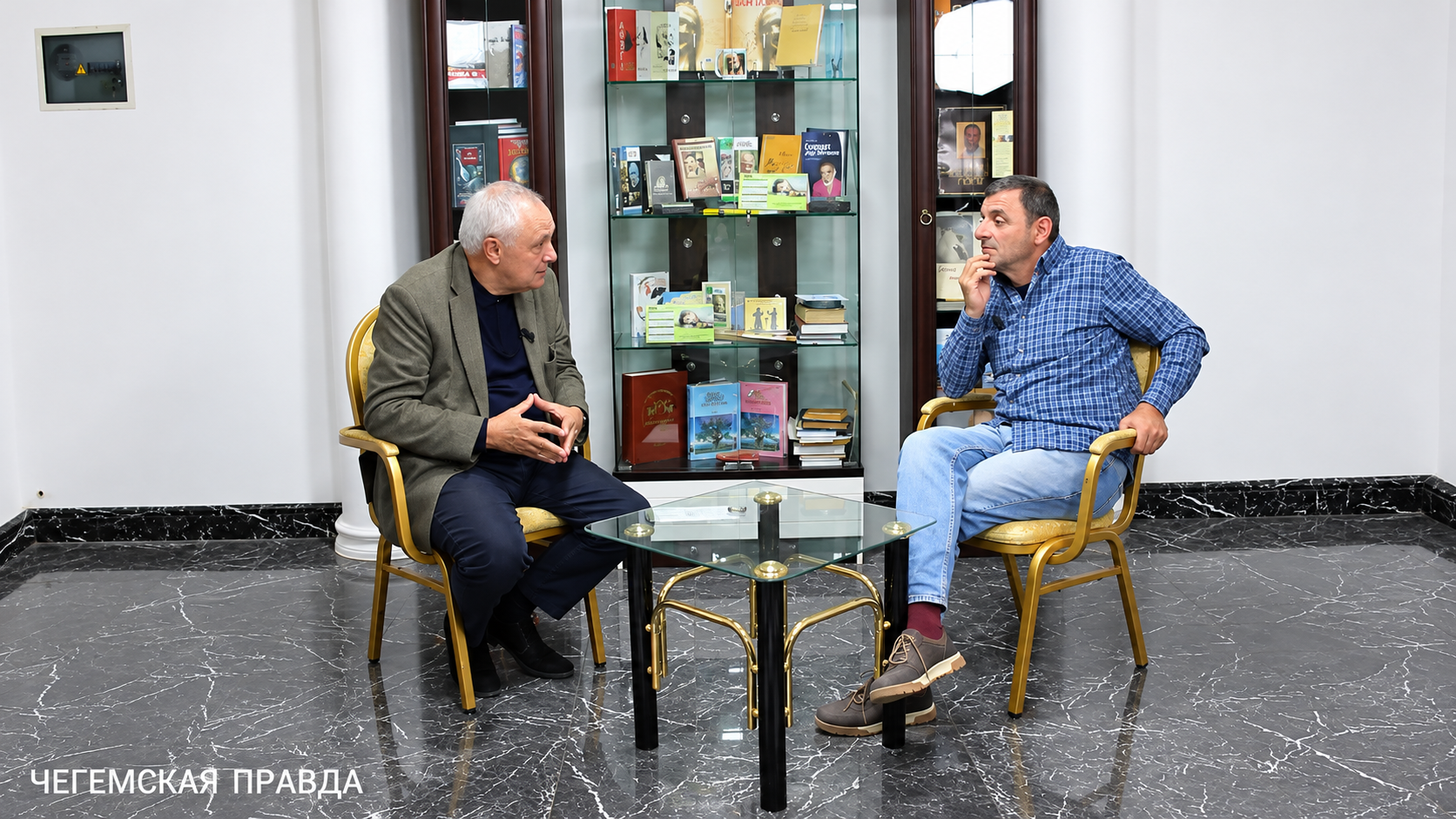
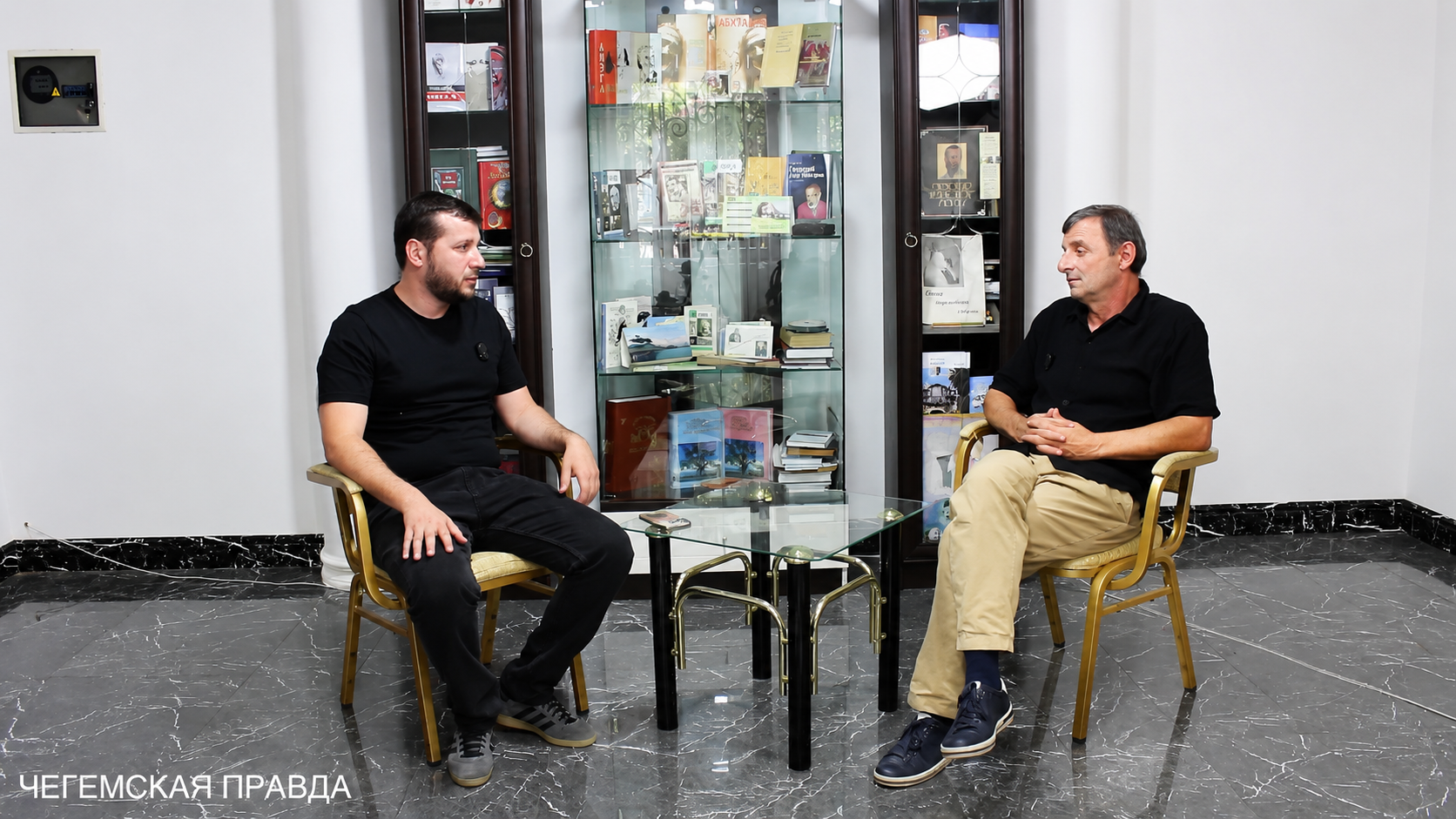
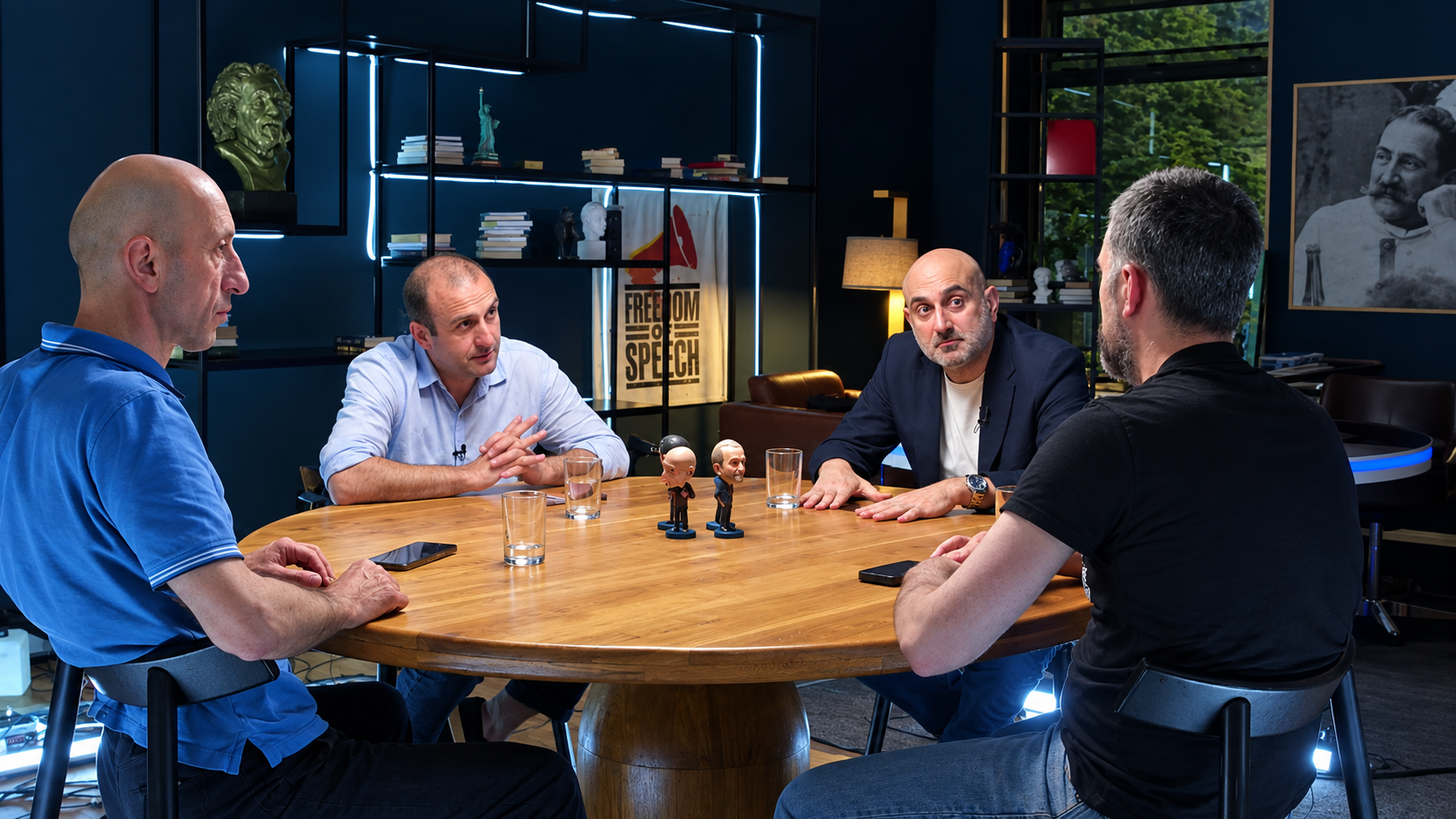
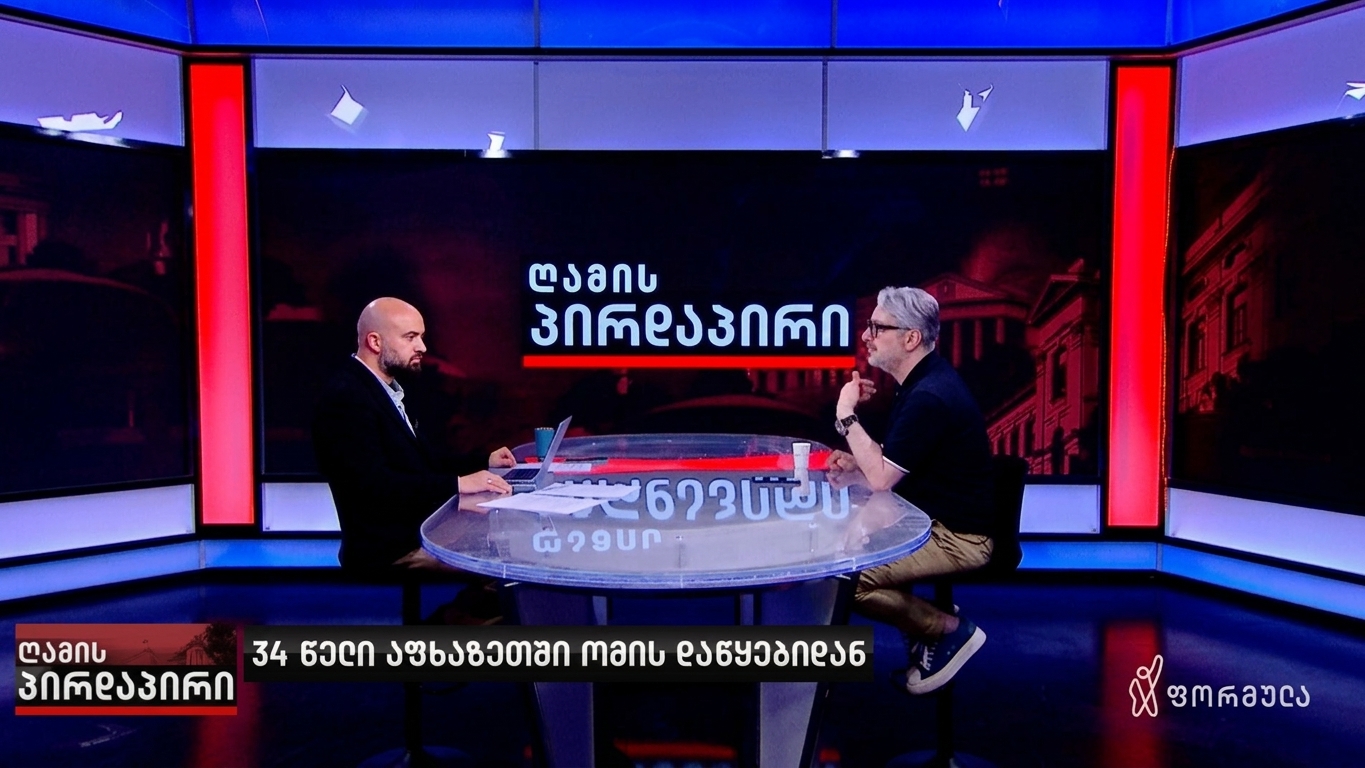
Editor of the Abkhaz newspaper Chegemskaya Pravda Inal Khashig and political analyst Astamur Tania discuss recent developments:
Main arguments:
Inal Khashig: Hello! On the air is “Chegemskaya Pravda.”
The past week was very event-filled. Strictly speaking, that is what we will be discussing. Many events occurred there, both in foreign and domestic policy. And today, our regular political expert, Astamur Tania, is visiting us. Astamur, good day!
Astamur Tania: Good day!
Inal Khashig: Yes, the problem with gasoline, with fuel, which has gripped Abkhazia and not only Abkhazia – Russia is reeling from a gasoline shortage as well. And today I refueled at 110 rubles per liter.
Astamur Tania: You can be congratulated.
Inal Khashig: Yes, two or three weeks ago this would have seemed, probably, like something unnatural.
Astamur Tania: Maybe you’ll save the gasoline and sell it in a week for 150.
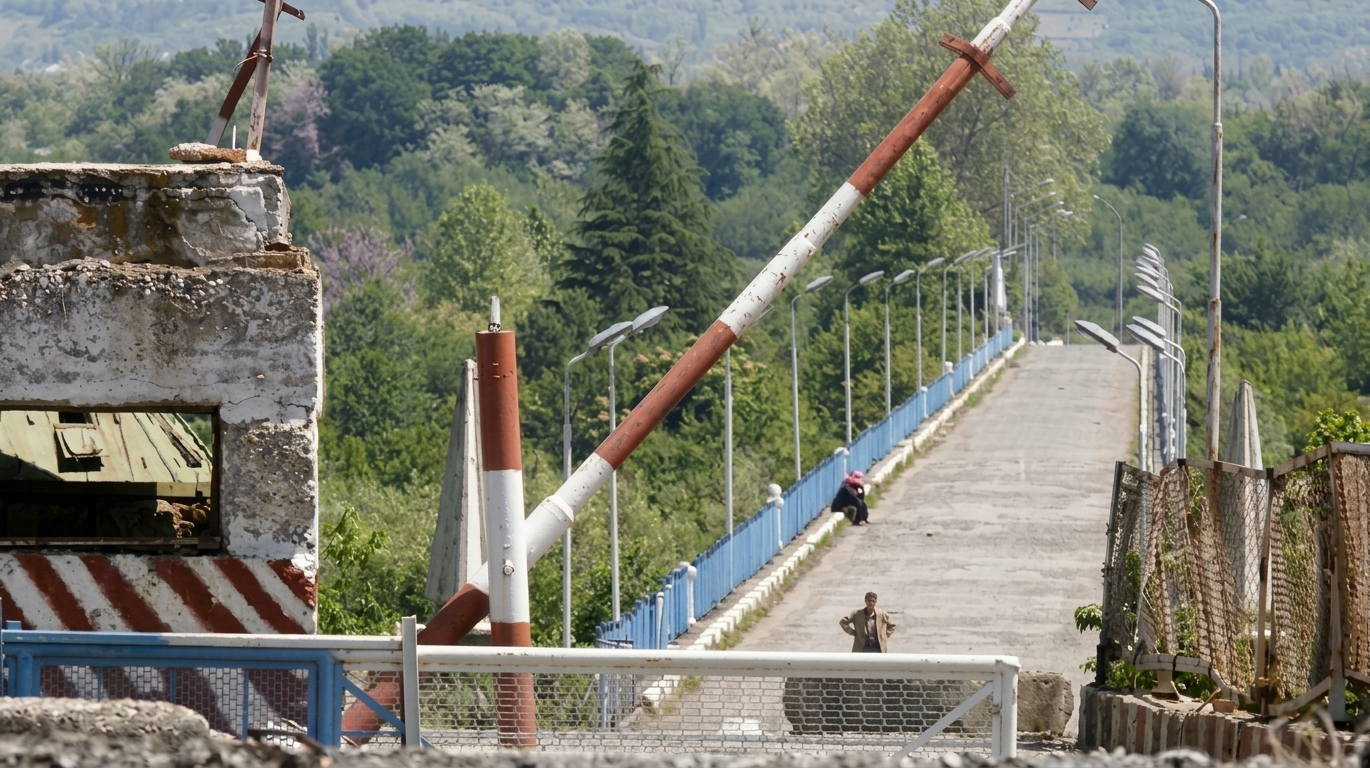
Inal Khashig: Yes, but that’s how it turned out. I refueled and I’m happy. It turns out one doesn’t need much for happiness. And in this context, of course, there is a lot of all kinds of talk regarding this shortage. A certain portion of the shortage was compensated through deliveries from Georgia.
This is no humanitarian aid; it is pure business, but nevertheless, a heap of all kinds of talk. By the way, I took a look with my own eyes at who said what officially. The Abkhaz government acknowledged the shortage and said that it would not obstruct it. In Georgia, the authorities said that the Georgian government has nothing to do with it; it is pure business. Nevertheless, in Georgia itself…
Astamur Tania: They also said that they would not obstruct it.
Inal Khashig: They won’t obstruct it, yes.
A portion of our society is chronically opposed to any contacts with Georgia in this regard. On the other hand, as for me… Well, you know, not all contacts are the same. When your entire economy is at a standstill due to a lack of gasoline at the height of the resort season, and you have the opportunity to buy, to acquire this gasoline in Georgia, then it seems to me that here one needs to set what is more important—certain conventionalities, or the fact that a lack of gasoline primarily hits the security of the country. It seems to me that this is the most important thing.
On the other hand, in Georgia itself, there is also a scandal. That is, there are also people unhappy there with the fact that gasoline is being sold to Abkhazia. And there it is being presented under the sauce that this gasoline goes directly to Russian military bases. That is, such nonsense as well, but which many willingly believe. Nevertheless, such is the situation. And based on what is happening with oil refineries in Russia, the end of this crisis is not visible in the near term at all.
How do you generally view this entire situation with this fuel, with all these deliveries from Georgia, and so on?
Astamur Tania: Over many years, you and I have spoken with enviable regularity about the need to search for and expand contacts in areas representing mutual interest. In particular, we spoke about the development of border trade, about the legalization of trade relations. So it would be strange if I were now to say that I am against these deliveries.
If we speak about the political component of our relations, despite this, we have quite fruitful relations in the field of energy. And why hide it, there are very many Georgian agricultural products on our market. It can be said that an expansion of the product range has occurred.
Despite the fact that both Abkhaz and Georgian representatives of their respective authorities state that they are not obstructing it and that it is linked to humanitarian and other issues, even here it was openly acknowledged that this gasoline comes from Georgia. They even came up with the term “gasoline from alternative sources.” It makes it seem as though we border Russia to the west and alternative sources to the east. A political science term for local application could already be coined: “Abkhaz-Alternative negotiations took place…”
Joking aside, I think this is ultimately a positive step. When you and I discussed this, we were aiming precisely at the point that a de-escalation of our relations is necessary. There is a lot of propaganda and hate speech involved in all of this, yet steps like these help build a climate of trust—that much cannot be denied.
It is another matter entirely whether this will remain a one-off occurrence or project into something broader, leading to significant decisions in other areas. Time will tell.
Naturally, we see that the reaction on the Abkhaz side is also mixed. However, our main political figures refrained from using this situation to issue statements condemning the Abkhazian leadership. We know that voices within opposition circles have also repeatedly stressed the need for a negotiation process with Georgia. In that sense, a certain consensus exists. The situation in Georgia, of course, is quite different, as internal political tensions there are much sharper.
Inal Khashig: They’re jailing people there.
Astamur Tania: Yes. In general, if we look back—even if we trace things back to the origins of the armed conflict—I believe domestic political circumstances were among the main drivers that triggered it.
The illegitimate State Council regime in power at the time held onto authority almost purely through force. In suppressing the supporters of the ousted president, Gamsakhurdia, they conducted bloody raids into Western Georgia. Their position was extremely precarious, so they shifted the center of escalation to Abkhazia to address their internal political objectives.
They ultimately lost control over Abkhazia, but it must be acknowledged that Shevardnadze’s regime managed to retain power back then. That was the price.
Today, the Georgian-Abkhaz conflict continues to be used primarily for domestic political ends.
We saw how former president Saakashvili, currently imprisoned, suddenly re-energized. It appears this entire wave was initiated by him. He provoked it, drawing on his substantial base of supporters, effectively giving the green light to inflame the crisis surrounding gasoline deliveries to Abkhazia.
I view this entire affair as a maneuver in an internal political struggle.
How much restraint and patience the current authorities will display remains to be seen. As for the opposition spectrum, it is naturally heterogeneous.
Even if we imagine a scenario where a power shift takes place in Georgia, it would be naive to expect liberals to take charge. Judging by the prevailing tone in the media space, there is a serious threat that populist-chauvinists could come to power—figures with whom it would be far more difficult for us, and indeed for Georgian society, to deal. That risk is by no means zero.
The real concern is that we risk once again becoming a tool for aggressive domestic political propaganda, and we must keep that in mind.
There is another aspect that directly concerns us: we must diversify all risks related to fuel supplies and secure multiple sources. If the Georgian side were to become the sole supplier of fuel, that position would quickly turn into a lever of economic coercion.
Our approach must remain highly flexible and rely on diverse sources—from Georgia, from Russia, and from other avenues we have yet to explore.
Inal Khashig: As before. There was Romania, Bulgaria.
Astamur Tania: Yes. All these possibilities need to be explored.
In general, we need to get used to the idea that, unfortunately, the stable period—stable in an economic sense, in terms of deliveries, financial inflows, and so on—is, in my opinion, behind us. Our authorities and political circles must be prepared for extraordinary steps and new, unexpected challenges.
We simply need to understand that we are living in such a time, and it is not getting any better.
In this sense, it seems to me that these emerging contacts with the Georgian side still need to be brought into the realm of political detente as well. I believe there is someone to talk to in Georgia.
The tragedy is simply that Georgian legislation on occupied territories prohibits Georgia itself from conducting negotiations with Abkhazia. As a result, our relations are reduced to exchanging mutual claims in the public sphere.
Even regarding this decision on gasoline—localized as it is—if such a situation had occurred during the existence of the Coordination Council prior to 2008, I don’t think it would have caused such upheavals. The two sides would have sat down, agreed, signed a protocol, and affixed the signatures of international representatives, as the UN and others did. It would have been a bilateral agreement, and no questions would have arisen from either side.
Therefore, I say once again: we need to think about how to revive a full-fledged negotiation format where two sides exist. Otherwise, we will encounter these issues continuously and will have to solve them manually.
Inal Khashig: The topic of Georgia has been quite prominent in recent days. I don’t know whether it is connected to another anniversary of the start of the war, the events of August 8, or something else, but nevertheless, while this discussion around the conflict isn’t the primary headline in Georgia, it remains on everyone’s lips.
Former State Minister of Georgia Gia Baramidze gave an interview to a Georgian YouTube channel. In it, he stated that during the war he participated on the Georgian side of the commission for the exchange of prisoners, refugees, and the search for missing persons—working alongside Paata Zakareishvili. Beslan Kobakhia represented our side. To clarify his role back then: he stated that during the war, the Georgians could not execute prisoner exchanges with the Abkhazians because they had no leverage or prisoner pool left, as they were actually executing Abkhazian captives.
Naturally, a scandal erupted in Georgia, leading to a very telling reaction from the Georgian authorities: they opened a criminal case against Baramidze under the charge of high treason—not under slander, mind you, but high treason.
Astamur Tania: Because he was an official who possessed relevant information. And he presented this information, which was classified, in an open format. All of this is being hidden.
Inal Khashig: But on the other hand, this means that they do acknowledge it after all. I see another opportunity here. The war and what happened during it—how it started, how it developed, how it ended, and so on—constantly becomes a tool tailored to the political climate within Georgian society, serving both domestic political agendas and external audiences.
If you remember, it originally started as a Georgian-Abkhaz conflict. Now, however, they deny that it is a Georgian-Abkhaz conflict, choosing instead to view it strictly as a conflict with Russia, with the Abkhaz framed as mere bystanders.
This admission might actually serve as a starting point for them to confront the root causes of the war internally and finally acknowledge what they ultimately did.
If we look at the facts, I can name a dozen Abkhaz right now who were taken prisoner and executed. For example, in August, at the very beginning of the war, Oleg Ashba was captured and shot. The same happened to the Akirtava brothers, Sasha Mirzoyan, Amichba, and many others who were taken prisoner and ostentatiously executed right at the funerals of Georgian soldiers. These facts are well-attested. On our side, thank God, all of this is fully documented: there is the White Book, and the Prosecutor General’s Office formally recorded these cases at the time.
If people in Georgian society truly want to understand what happened and how, it costs nothing to present these documents. The names, surnames, dates of capture, and execution details are all fully recorded. I think this could serve as a genuine starting point in searching for a resolution to the conflict. Obviously, the overall issue is vast, but concrete steps are necessary. If they want to understand why the war started and how it unfolded, this is where they ought to begin—especially now that there is a public admission from a former high-ranking Georgian official who directly handled missing persons and prisoner exchanges. Let them investigate it; I believe it is vital.
There is another interview currently sparking active debate in Georgian society—an interview with Nika Gvaramia, the former Prosecutor General and an opposition leader who recently served time and is now free. By the way, he is originally from Sukhumi. He pointed out that Georgian society spends far too much time clinging to memories, dwelling on what Abkhazia used to be, grieving its loss, and so on. He argues that they need to abandon this mindset and focus instead on the future—discussing what lies ahead rather than constantly digging through the past.
I think this is a very important message. How he visualizes it in practice and how it will unfold remains another question. Nonetheless, he asserts that the Abkhaz must be shown progress toward the European Union, demonstrating that they would feel secure and comfortable within it.
I believe any real initial steps must begin with trust, right? If trust is the goal, then we inevitably return to that ill-fated Law on Occupied Territories that restricts us in every way. That law would likely need to be repealed if you want to achieve results on the other side…
Astamur Tania: Well, at the same time, he sharply criticized the idea of fuel deliveries to the territory of Abkhazia.
Inal Khashig: There is no cohesive approach.
Astamur Tania: In my view, all of this belongs mostly to domestic political discourse. Abkhazia is simply being used there to heighten emotional intensity. That applies to Gvaramia’s statement, and I would emphasize once more that no one should draw far-reaching conclusions based on a single remark. We need to watch how public sentiment evolves.
As for Baramidze’s statements, there is nothing new for us here. Parties in any armed conflict live within a standard narrative—at least one generated for public consumption and propaganda—where only noble knights like Ivanhoe or Wilfred of Ivanhoe fought on your side, while the other side was made up of savages. In reality, to chart a path toward understanding this problem—despite all the complexities of our pre-war political relations with the Georgians (which, by the way, were barely evident at the everyday level, but certainly present politically due to differing national projects)—the primary responsibility always rests with the side that made the moral choice to resort to violence.
If a side made that moral choice, one must expect that military abuses of the kind Baramidze described would stem primarily from them. They did not dispatch regular units into Abkhazia without a track record; these were people whose hands were already stained with blood. They had just brutally suppressed the Zviadists in Samegrelo, gaining extensive experience in illegal detentions, arrests, and crackdowns. They were well-practiced in these methods, and naturally, such behavior came seamlessly to them.
For the residents of Abkhazia, it was an absolute shock—not only for the Abkhaz, but for local Georgians as well. They could not believe their own countrymen were capable of such actions, given the notorious criminal background of the leaders driving the entire process and the figures actively carrying it out.
Of course, as a conflict expands and intensifies, violations inevitably occur on all sides. It would be naive to imagine that the Abkhaz are the kind of people to turn the other cheek in such a situation; it is a completely different reality, and that must be understood.
Crimes were committed on both sides, but the fundamental responsibility for initiating the process rests with the party that started it.
As for their methods… why stick our heads in the sand? Those methods are well known, not just from what happened in Abkhazia, but from what took place within Georgia proper.
It is clear that due to current domestic political issues in Georgia, they prefer to sweep this topic under the rug. I see virtually no public discussion about what transpired in Western Georgia on the eve of the Georgian-Abkhazian conflict. A taboo has been placed on that topic for obvious reasons—nobody wants to reopen those raw wounds when society already faces so many problems. Nevertheless, it must be taken into account.
Sooner or later, history always resurfaces in its darker manifestations if we attempt to study it in a sanitized form. We must know this history in its entirety. As for that… I suppose that is everything I wanted to say on the matter. Yes.
We are operating against a very heavy historical backdrop, yet there are occasional glimmers showing that people are attempting to look at the problem from a different angle. This is even happening within government circles.
Take, for example, the statements made by Georgian Prime Minister Kobakhidze. We certainly do not expect him to tell us how wonderful we are or that they intend to recognize Abkhazia’s independence, but he did mention the restoration of confidence-building measures. That is a very important step. Occasionally, articles appear offering a relatively objective look at the history of our relations since ancient times. Furthermore, some Georgian writers are even addressing the notorious pseudo-scientific theory of Ingorokva, which has poisoned the minds of multiple generations. Granted, such pieces are rare amid the vast sea of opposing literature, but they do appear.
In that sense, there are small glimmers of hope that genuine realization will come.
We also need to draw conclusions regarding our own policies—for instance, concerning the Gali district. That is something we will inevitably need to address.
However, given the current lack of trust, any step forward is easily misinterpreted as granting unfair advantages to the other side. For that reason, I do not believe in grand, immediate solutions, nor do I think it is productive to debate overarching political questions right now. Instead, targeted measures—focusing on transport, communication, humanitarian concerns, and the movement of people and goods across the border—are precisely what would help establish the foundational conditions needed for genuine dialogue.
Inal Khashig: Let’s move on to another topic: the de-isolation of Abkhazia. In Turkey, a campaign to de-isolate Abkhazia is gaining momentum. On the one hand, it includes the recognition of Abkhaz passports as valid travel documents; on the other, it seeks to restore direct communication—specifically maritime links—between Turkey and Abkhazia that existed immediately after the war. For a time, those connections operated, people could travel, and passenger boats ran. Although that was later cut off, a campaign to revive it is unfolding now.
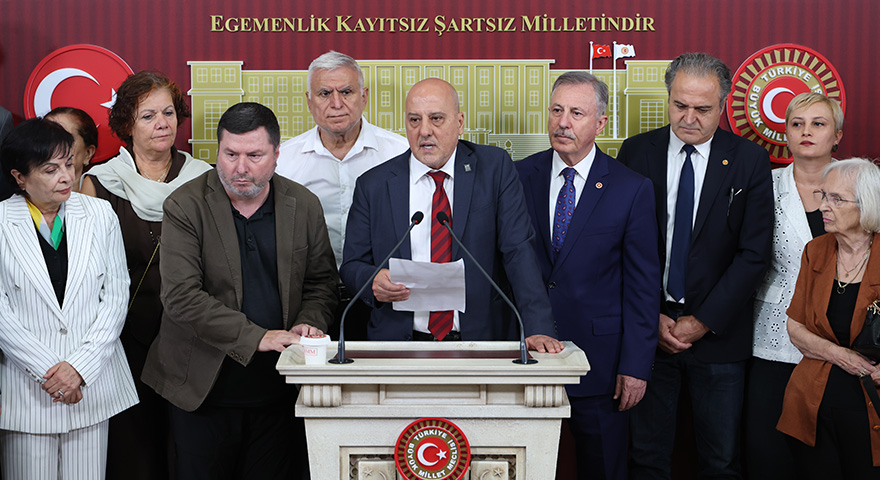
At first, this was an initiative driven by private individuals within the Abkhazian and Adyghe civil sector. It then expanded to the point where eight political parties represented in the Turkish parliament formed a united front, declaring that Abkhazia must be de-isolated. Initially, our Confederation of Abkhaz Communities in Turkey (Abkhazfed) reacted with a certain degree of possessiveness, arguing that the movement had no right to take the lead and that Abkhazfed should have authored the idea. It was a completely unnecessary friction. However, after Abkhazian society here voiced strong support and our Ministry of Foreign Affairs issued a statement, a course correction took place. Representatives from both the initiative group and Abkhazfed met and reached a consensus that a consolidated movement for de-isolation is essential.
How do you view this prospect overall? On the one hand, these eight political parties belong to the opposition, spanning a varied spectrum from left to right. How viable is this initiative, and to what extent might it simply be an element of internal Turkish political maneuvering to capture votes—specifically from the Abkhaz and Adyghe diaspora, who by various estimates number up to four million—ahead of upcoming parliamentary and early presidential elections?
In your view, is this driven purely by domestic politics, or is there a real opportunity here to translate this into a broader movement originating from the civil sector and picked up by the opposition? Could Ankara actually take concrete steps such as de-isolating Abkhazia, recognizing Abkhaz passports, and reopening maritime transport?
Astamur Tania: Naturally, I supported this initiative—as did you and many others. It would be foolish not to support it. Indeed, many on our side did.
At the same time, we must recognize that over the last few decades, there has been an obvious degradation in our expert and public outreach across all fronts, including the Turkish direction.
I carefully read what Elchin Adzinba wrote. Fortunately, we have experts of such high caliber who understand the inner workings of Turkish politics. We must take his insights into account in our work, as there are bound to be hidden undercurrents. But in politics, nothing is ever entirely positive or entirely negative; it is a constant struggle. He called for expanding the circle of people with whom we engage because decisions on such a significant issue—whether made behind the scenes or officially voiced—are ultimately crafted in government corridors. This strategy ensures the effort does not look like a mere pawn in Turkey’s internal political competition. He specifically warned about this, and we must keep it in mind.
Returning to the reaction of our own society: it often resembles a sparkler. Something reactive happens, everyone flares up instantly, and then all at once it goes out, gets forgotten, and passes. In six months, no one will even remember it. That is the tragedy.
We still have public organizations and specialized institutions that operate on state funding. Previously, we periodically held conferences, including on legal issues, where our situation was discussed from the perspective of international law—specifically how our rights are restricted regarding freedom of movement, education, and other matters.
In international politics, only that which exists in the information space actually exists. If we say nothing ourselves—well, thank God Turkish Abkhazians stepped up to raise this topic. But the initial momentum ought to stem from here, as they do not face direct isolation problems themselves; they hold passports that allow free movement worldwide. Yet no initiative originated from our side.
As a proposal, we could hold a scientific conference—one with real public resonance. Rather than merely recounting history, it should analyze how this tightening of constraints came about, which norms of international law it violates, and what consequences it brings. Even if we set aside the Georgian side’s internal political confrontation, the de-isolation of Abkhazia does not contradict their interests either.
Obstacles are always created from that side. For instance, after the armed conflict, we conducted negotiations and signed documents on the non-use of force, peacekeeping forces, and refugee return procedures. Then they claimed it did not suit them because the return was too slow. Now they make empty claims about 300,000 refugees, even though that many people never lived in Abkhazia to begin with. Meanwhile, we returned about 50,000 refugees to the Gal district—which apparently was still not enough for their narrative.
Later, we held negotiations on confederate relations and union structures—using various terminologies from 1997 to 1998, up until the May events. Domestic political circumstances intervened again. In the end, who won? Neither the refugees nor Georgian society. The exact same logic applies to this issue.
Honestly, I would consider it rational if the Georgian side did not obstruct Abkhazia’s de-isolation, as it could easily be included in a package of measures to build mutual trust.
As for Ankara, everyone understands that if the Georgian side stated it had no objections, the matter would be resolved much more easily. Otherwise, it is difficult to predict how long it will take or whether it will yield concrete results.
However, the fact that both our society and our diaspora are actively engaged around this vital issue is a result in itself. Regardless of whether our passports are ultimately recognized in Turkey, it demonstrates that society is thinking about its prospects and modeling its future. It shows a living society.
And this is not our only challenge; we have plenty of other problems. Sometimes one recalls how dynamic things were in the 1990s and early 2000s—the proactive responses, the strong stances taken by different individuals and organizations. Now, it feels like a stagnant swamp, with only the occasional outburst. You cannot achieve results in such a state. We must work on all fronts and in all directions. Some efforts will succeed, others won’t—but it can be said with certainty that if you do nothing, nothing will happen.
Life recently forced us to deal with pressing issues like fuel supplies. We will face many more such challenges, and we will have to manage them. If you claim to be an independent state, you have to act like one. Independence is not just a collection of legislative acts and political declarations; it requires active work to fill those structures with real substance. It is a creative process.
If a nation lacks that creative drive, it begins to fade and dull. Unfortunately, we are observing this trend. You and I spoke about the Abkhaz language earlier—it is good that there is activity, though whether it will yield results remains to be seen. But above all, society must show signs of life. Nobody will look out for us if we don’t stand up for ourselves. That is what I wanted to say.
Inal Khashig: In any case, during our turbulent times—and not only in turbulent times, but in any period, whether peaceful or turbulent—there must be clear plans for the future. Moreover, there should be multiple options across all directions, including a Plan A, Plan B, and Plan C, along with continuous modeling of potential scenarios.
I am basing this once again on the recent gasoline crisis, when under Aslan Bzhania, a sudden decision was made to hand the entire fuel market over to a single pair of hands. One ought to have considered the consequences beforehand and anticipated how all of this would play out—not just focusing on how beautiful and well-maintained our gas stations would look, but realizing that the primary problem arises when there is no gasoline at those stations in the first place. That situation highlights a lack of deep analysis and the absence of a pragmatic, truly calculated strategy.
Astamur Tania: Well, you understand that we aren’t experts in all fields of government, right?
Inal Khashig: No, of course not.
Astamur Tania: On gasoline, I’m definitely not an expert, nor on these monopolies. One simply needs to involve the expert community where we do not understand. Give public resonance to the problem. I see many things being done, but they lack competent public coverage.
Inal Khashig: Astamur, say you have money, right? No level-headed businessman will tell you that all your money needs to be placed in one specific bank. He spreads it across different banks.
What I’m getting at is that when we have no oil of our own—oil might be lying around somewhere, but there is neither refining, nor extraction, nothing—and we buy this gasoline… When you buy this gasoline, there must be different sources.
Astamur Tania: Now you and I are going in circles. I agree with you, which is why we spoke about diversification.
Inal Khashig: On that note, we will actually conclude our conversation: with the fact that Astamur agrees.
Astamur Tania: To each his own sore point. As for me, I don’t drive.
Inal Khashig: I drive. It somehow turned out that not only I, but probably the majority of Abkhazian drivers go to sleep in the evening with the thought of where to refuel tomorrow, where to find this gasoline. And in the morning they wake up with the same thought. And I think that for the state, this should be the very last problem in reality—when for its citizens, their main thought consists of how to get gasoline. In short, so that we don’t have such problems, I will wrap up. Astamur, thank you very much.
Astamur Tania: Thank you. All the best.
Inal Khashig: Let there be light. Goodbye.
The terminology, place names and views expressed in this article are those of the author and do not necessarily reflect the editorial position of this website.