







Russia’s New Policy in the South Caucasus
The full-scale war that Russia is waging in Ukraine has forced Moscow to reconsider the mechanisms it uses to preserve its influence across the post-Soviet space, particularly in the South Caucasus. In an opinion article, Georgian conflict analyst Paata Zakareishvili discusses what he sees as the emergence of a new Kremlin approach, which he describes as a “strategy of controlled uncertainty.”
Zakareishvili argues that Russia’s policy in the region is currently undergoing a fundamental transformation, particularly with regard to Abkhazia and the Tskhinvali region (South Ossetia).
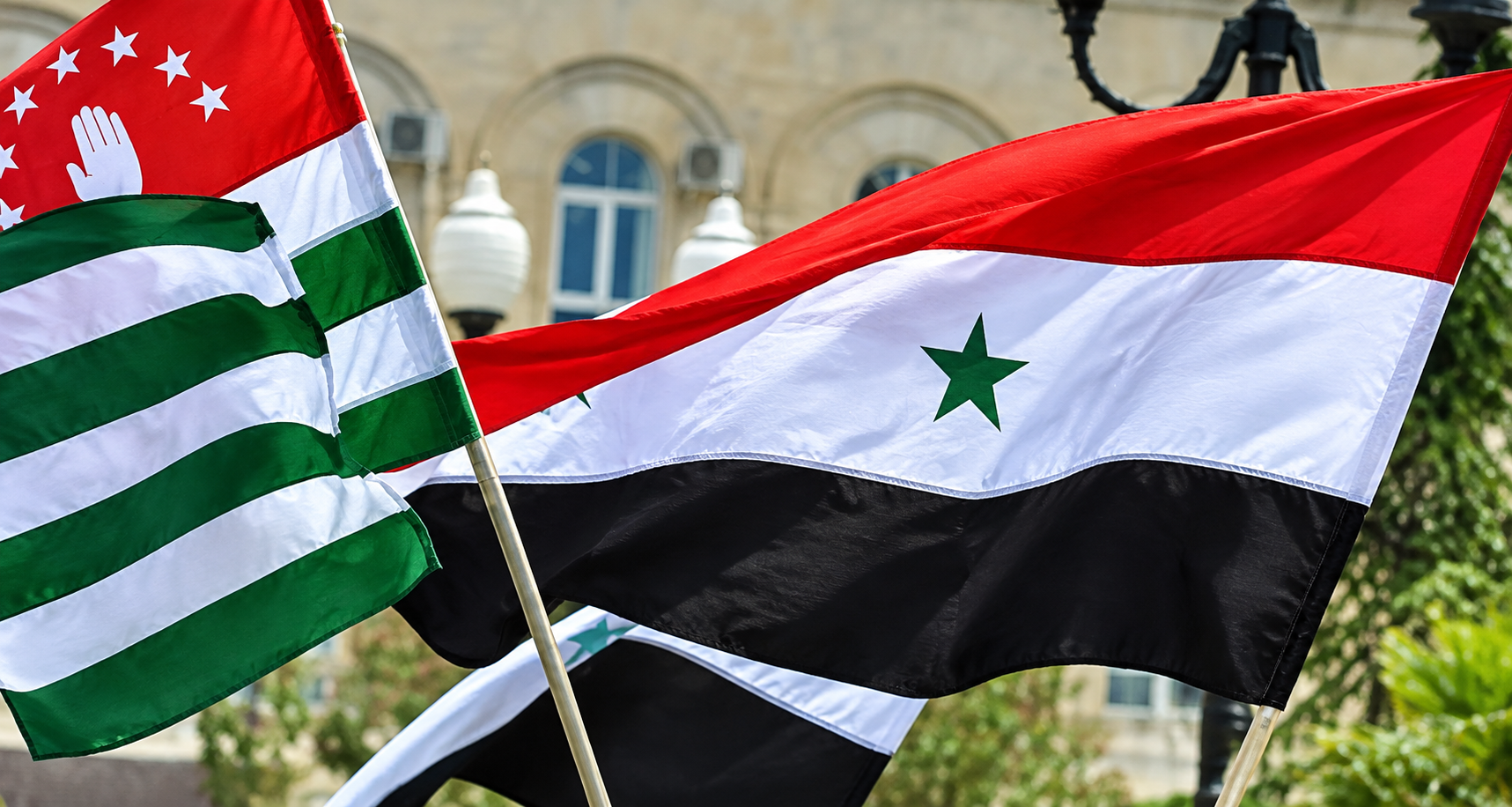
Abkhazia and the Tskhinvali region, also known as South Ossetia, unilaterally declared independence in the early 1990s. Following the August 2008 Russo-Georgian War, Russia recognised both territories as independent states and stationed its troops there. The United Nations and the vast majority of countries around the world support Georgia’s territorial integrity and consider both regions to be territories occupied by Russia.
Since February 2022, the entire system of international relations has entered a period of profound and irreversible change.
Russia’s full-scale war against Ukraine has not only reshaped Europe’s security architecture but has also forced Moscow to rethink how it maintains its influence across the post-Soviet space.
Nowhere is this shift more evident than in the South Caucasus, where Russia has held a dominant military and political position for decades.
After the 2008 Russo-Georgian War, Moscow established a regional order that remained largely stable for many years.
Russia provided security guarantees and financial support to the de facto authorities in Sokhumi and Tskhinvali, while the territories’ lack of international recognition left them completely dependent on the Kremlin.
With regard to Georgia, this model allowed Russia to maintain control on the ground, limit Tbilisi’s foreign policy choices, and preserve its own role as an indispensable participant in negotiations at every level.
Today, however, this model is steadily losing its effectiveness.
The changing balance of power in the region is being driven by several key factors:
In this new political environment, Moscow’s old mechanisms for managing regional conflicts are no longer as effective as they once were. As a result, Russia is being forced to develop a new model for maintaining its presence in the South Caucasus.
It is widely believed among experts that Russia’s ultimate goal is the full annexation of Abkhazia and South Ossetia. However, the Kremlin’s recent actions suggest a more complex picture.
It is in this context that the Kremlin’s recent personnel appointments should be understood.
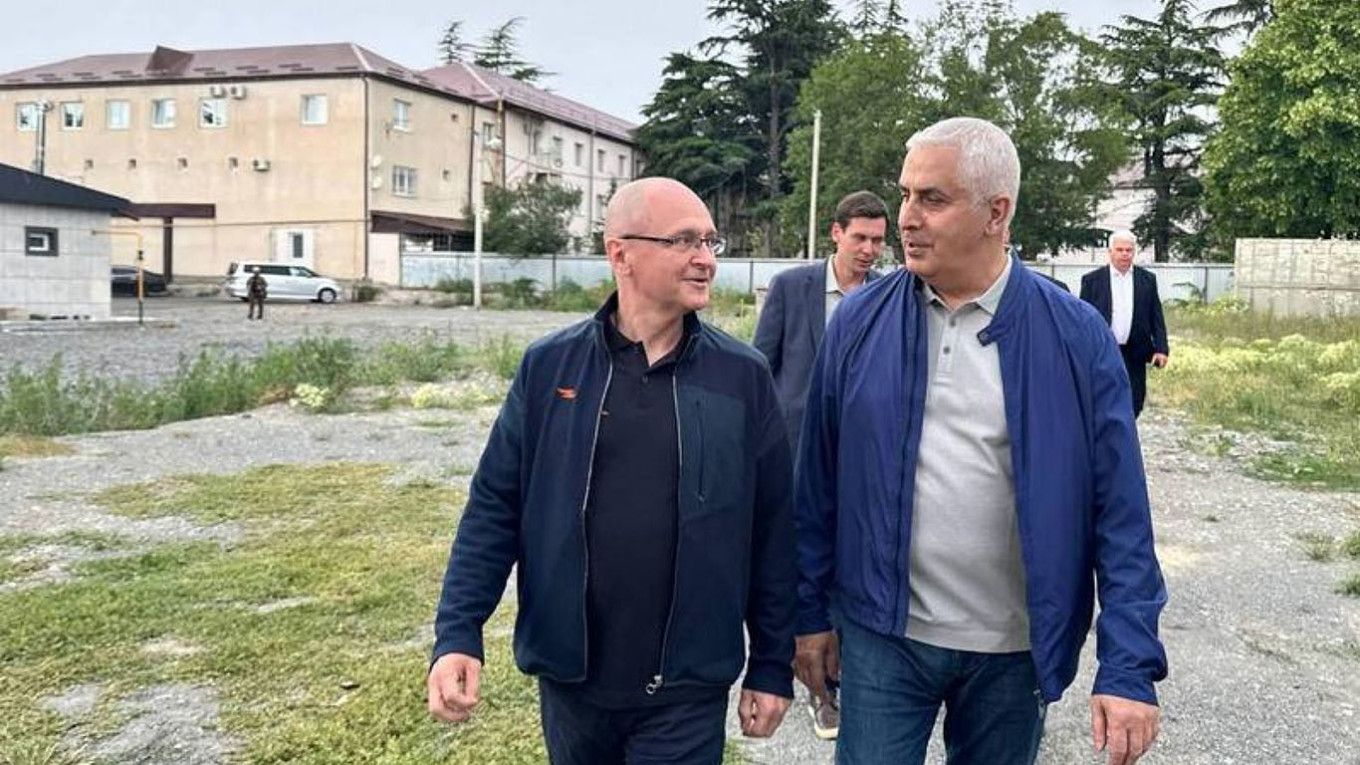
The appointment of senior federal official Marat Kambolov to a leadership position in Tskhinvali, and the decision to send former Belgorod Region governor Vyacheslav Gladkov as Russia’s ambassador to Abkhazia, can hardly be viewed as routine personnel changes.
The political stature of both men far exceeds what would normally be required to administer two small territories.
For years, Moscow has relied on local elites in both Abkhazia and South Ossetia. For the day-to-day administration of the Tskhinvali region, it could easily have appointed an ordinary regional-level Russian official.
Likewise, there had never previously been any need to appoint someone with significant federal political influence as Russia’s ambassador to Abkhazia.
The synchrony of these two decisions suggests that we are not dealing with isolated appointments, but with a broader revision of Russia’s institutional model.
It is notable that this stronger involvement from the centre is happening at the same time in two very different political systems.
Abkhazia and South Ossetia differ significantly in terms of internal political competition, their relationship with Russia, and the level of autonomy of local institutions.
Accordingly, the new appointments are driven not by the internal specifics of these regions, but by a shift in Russia’s overall strategy itself.
If Moscow’s only goal were annexation, the most logical approach would be to preserve the old model: local authorities would initiate another “referendum,” while Moscow would simply “take note of the will of the population” and maintain political distance.
The direct appointment of federal-level representatives points to a completely different logic.
The appointments of Kambolov and Gladkov suggest that, at this stage, Russia is not rushing to formalize the final status of these territories. Instead, it is trying to expand and consolidate its own political leverage.
Circling above “Annexation Airport” is not a sign of indecision. It is a deliberate strategy of controlled uncertainty, which currently gives Moscow the most advantageous position in the South Caucasus.
The threat of annexation is being used as pressure on several actors at once:
A final annexation of any of these territories would actually reduce Russia’s own room for political maneuver, since they would become fully internal subjects of the Russian state.
For years, Moscow claimed that it was not a party to the conflict and positioned itself only as a security guarantor between Tbilisi, Sokhumi, and Tskhinvali.
Today, the beginning of direct political dialogue with Georgia effectively undermines this long-standing legal framework.
In the new model, the de facto authorities that are fully dependent on Moscow could become formal channels of communication.
Formally, contact may take place between Tbilisi and Tskhinvali or between Tbilisi and Sokhumi.
However, in reality, Moscow stands behind this entire process, managing not just individual conflicts but the entire Georgian political space in line with its own geopolitical interests.
Most contemporary research focuses mainly on the confrontation between Russia and the West or on Georgian–Russian relations. As a result, Abkhazia and South Ossetia are often seen only as instruments of Russia’s foreign policy.
This is a highly simplified view of reality.
Despite their international legal status, life in these societies continues. New generations are growing up who have never lived in a single state alongside Georgians. There are local elites, internal political processes, social expectations, and interests.
Their agency is limited and significantly dependent on Russia, but it has not disappeared entirely.
On the one hand, Moscow formally recognizes their statehood, but in practice it steadily reduces their real autonomy and carries out all major decisions through federal institutions.
On the other hand, Tbilisi firmly defends Georgia’s territorial integrity, but often ignores the internal reality of these societies and views the issue solely through the lens of occupation.
The paradox is that Moscow recognizes their statehood but undermines their agency, while Tbilisi defends the territory but often excludes the interests and fears of the people living in those areas from the discourse.
Even if Russia’s influence weakens in the future, this will not automatically restore trust in Georgia among Abkhaz and Ossetian societies.
History shows that changes in the geopolitical environment alone do not rebuild trust. Without direct communication between societies, any political agreement remains only a fragile structure imposed from the outside.
In this context, today’s geopolitical transformation requires Georgia to reconsider its entire de-occupation strategy.
For many years, Tbilisi has rightly relied on the principles of international law. However, if Russia’s behavior model is changing, Georgia’s response should not remain purely reactive.
De-occupation is not only about the return of territories. It primarily means restoring human relations, trust, economic cooperation, and cultural ties.
While Moscow is tightening administrative control, Tbilisi can offer Sokhumi and Tskhinvali something Russia can never offer:
In today’s reality, Russia continues to build a system of strict dependence and is once again circling above “Annexation Airport.” However, this flight cannot continue indefinitely.
In the context of the prolonged war in Ukraine, Russia’s political and economic “fuel” is gradually being depleted.
In these conditions, Georgia can strengthen the attractiveness of its own development model and offer an alternative based on trust, security, and the prospect of a shared European future.