







Abkhazia’s Key Challenges
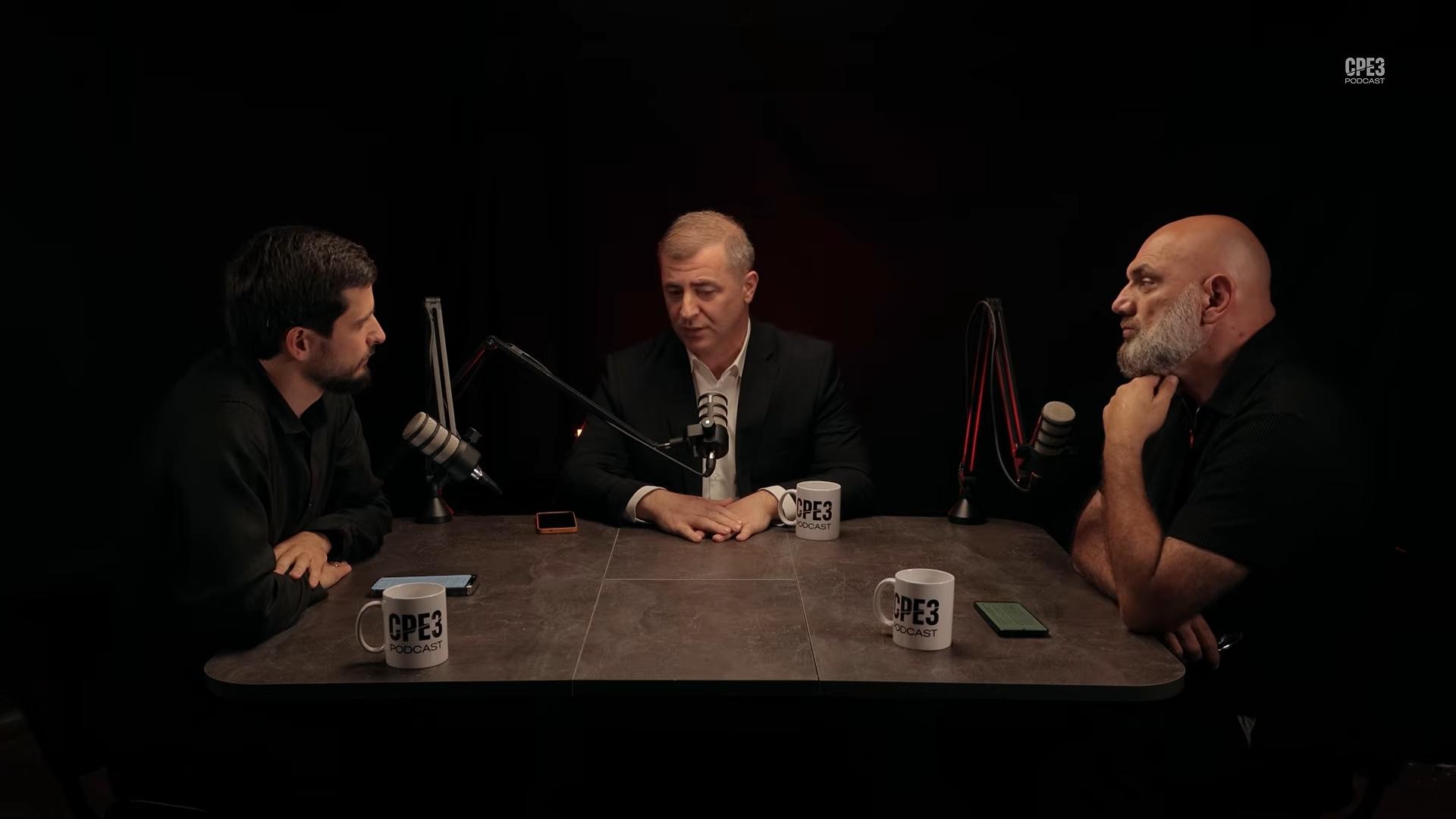
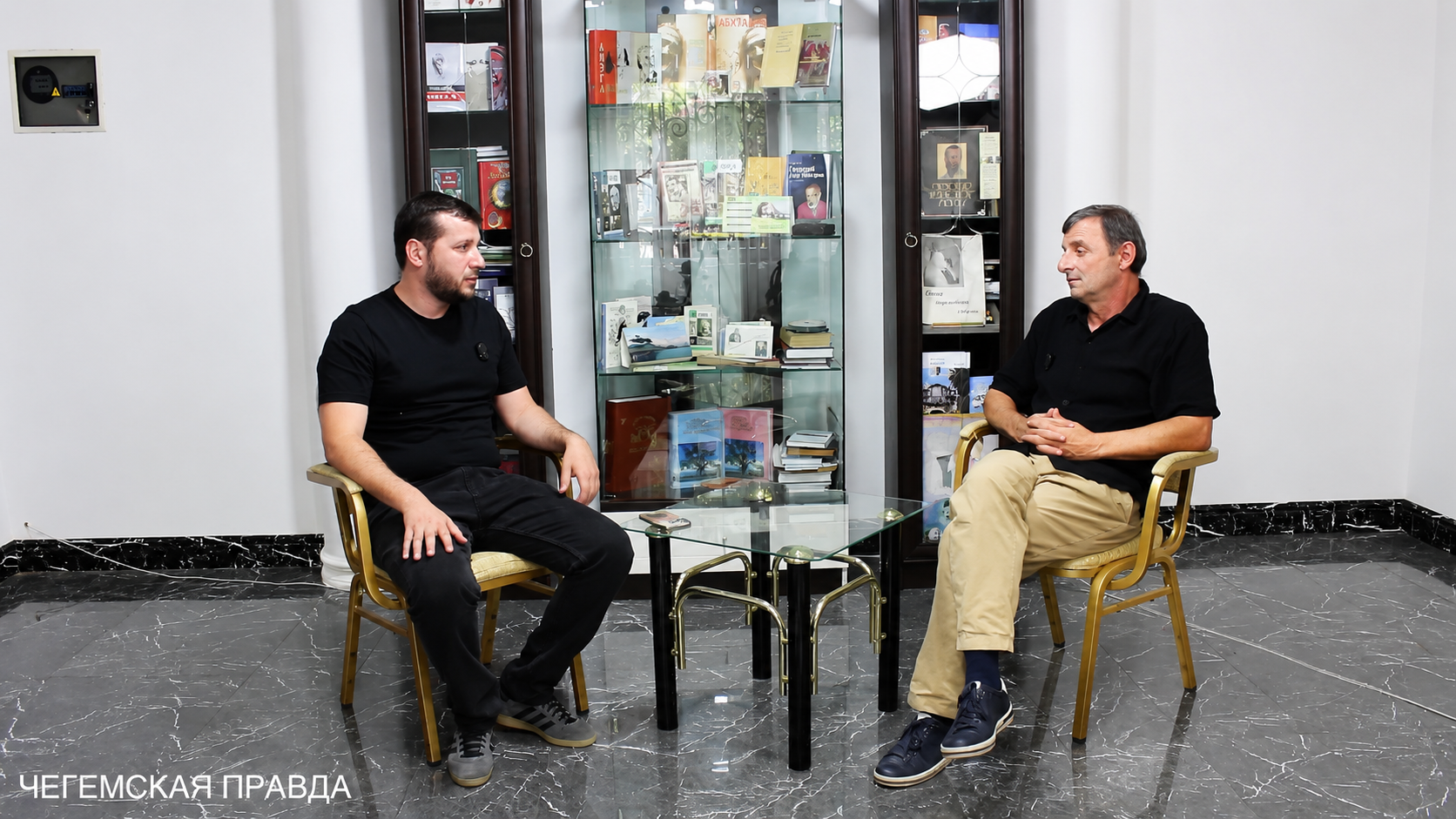
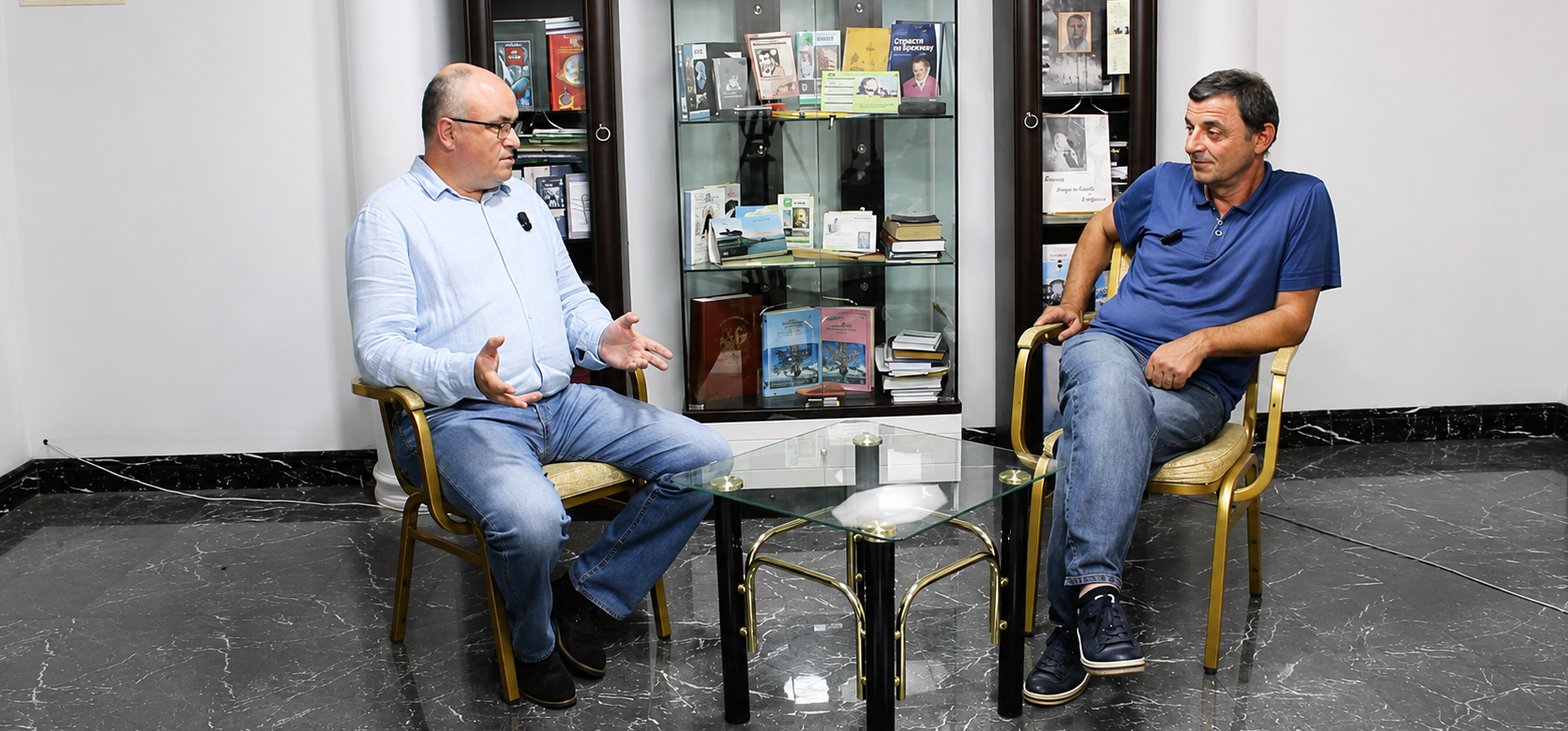
Abkhaz experts – Inal Khashig, editor of the Chegemskaya Pravda publication, and Astamur Tania, a historian and political scientist – discuss three pressing topics for Abkhaz society.
The initiative to introduce an Abkhaz language proficiency requirement as a prerequisite for nominating parliamentary candidates has sparked fierce debate in society. The experts highlight the critically small number of residents who speak the Abkhaz language. They believe it is impossible to preserve identity without the language, warn of the danger of those Abkhazians who have lost their language proficiency dissolving into the Russian-speaking sphere, and call for comprehensive measures to preserve it, including studying international experiences—such as those of Israel and Wales.
In Abkhazia, this project was viewed as a propaganda tool that fosters illusions of returning “by force.” The experts criticize the rhetoric in Georgia that denies the Georgian-Abkhaz conflict and reduces all problems to the Russian-Georgian conflict. They speak of the impossibility of dialogue from a position of arrogance and disrespect for another’s history and culture. The experts see the path forward in the mutual recognition of agency and the repeal of the Georgian Law on Occupied Territories (Georgia, the UN, and most of the world consider Abkhazia and South Ossetia to be territories of Georgia – Editor’s note).
For South Ossetia, unlike Abkhazia, the aspiration to reunite with the Ossetians of North Ossetia within the Russian Federation is a natural desire. Moscow, however, considers this issue depending on the dynamics of its relations with Tbilisi. The experts also note that the arrival of a high-ranking Russian official to lead South Ossetia is linked to Moscow’s decision to better control the expenditure of Russian funds there.
Inal Khashig: Hello! “Chegemskaya Pravda” is on the air. Today we will talk about both internal and external problems. Today our guest is Astamur Tania. Naturally, we will be discussing this agenda with him. I will probably start with… Astamur, good afternoon!
Astamur Tania: Good afternoon!
Inal Khashig: I will start with a topical issue.
Last week, the parliament discussed an entire package of amendments to the electoral legislation, including the mechanism for determining the knowledge of the Abkhaz language and who exactly will be handling this for candidates running for parliament. That is to say, parliamentary elections are just around the corner, at the beginning of next year. And, accordingly, our time, as always, is in short supply. And we always start all of this at the last minute. But, properly speaking, this time it did not happen.
Although it seems to be a technical question, they somehow lumped everything together into one pile, and as a result, the question was removed from the agenda. I think that in any case, it will appear on the agenda, but in the next session, though as it stands in the current session, it became a non-starter.
Generally, what do you think about this whole polemic, given that the law stating that deputies must know the Abkhaz language was adopted long ago, meaning the parliament adopted it in 2021 or 2022. Now it is a matter of technicalities.
Who will determine the degree of knowledge and the very criteria of the required knowledge for you to be approved as a parliamentary candidate? Such a technical question arose so much polemic in Abkhaz society. People, politicians, leaders of political organizations started coming out. They said we are not ready.
I would like to hear your opinion on this matter.
Astamur Tania: The state of the Abkhaz language is sad. You and I have discussed it more than once when we talked about the purpose of our state.
One of the main functions of the Abkhaz state, not the only one, but one of the main functions, is to ensure the preservation of the Abkhaz people. Now hear about how Abkhaz identity can exist even without the Abkhaz language. I hear this, and such opinions have been expressed before.
In my view, this is hardly possible. Because we have many Russian-speaking Abkhaz, to whom I also belong. I speak Abkhaz on an everyday, domestic level. We have many true patriots in Abkhazia who, unfortunately, do not speak the Abkhaz language.
But they must understand that their Abkhaz identity exists only as long as, even if they do not know the Abkhaz language, as long as there is an Abkhaz-speaking Abkhaz.
As a rule, those who do not know the Abkhaz language, are the first generation of people who do not speak the Abkhaz language. Their parents spoke the Abkhaz language. For the next generation and further on this knowledge will simply be dissolution. I just do not see in this sense how the Abkhaz people can function without speaking their language.
For us, this is a question of self-preservation of both ethnic identity and national identity. These are slightly different things. And the question then arises, if this state does not fulfill this functionality, how great is the meaning of its existence in the future? It seems to me that we approach this as a basic task of the functioning of our state, but in practice we do not approach it this way, unfortunately. We
have many different institutions, a university, school and educational programs. Everything is there, but the language is disappearing. Here, sometimes it even comes to my mind that when Abkhaz walk, we often talk to each other in the Russian language. But there are people who have neither a writing system nor schools, yet they continue to speak their language.
Inal Khashig: Nor a territory.
Astamur Tania: Nor territories. They speak their language, they do, because for them it is a factor of self-preservation of an ethnic society.
Inal Khashig: Well, the Roma, for example.
Astamur Tania: Well, not only them.
Inal Khashig: Well, the Roma, who have neither their own territory, nor any kind of writing system. They have nothing, properly speaking. But they preserved their language.
Astamur Tania: But also, the Megrelians, given that they consider themselves Georgians. As a second marker of their identification, already within the Georgian nation, an ethnic marker is their language and the vast majority of them know the Megrelian language.
Therefore, it seems to me, if we put this question at the forefront – we will not treat it formally.
Of course, the question of the knowledge of language of a deputy and of the ruling elite of Abkhazia in general is very important. It must not be turned into a fiction. I understand that this cannot be solved all at once. This is a gigantic, complex problem.
This is a problem of education, a problem of whatever you like. But our state has existed as an independent one for 33 years. Right? Probably we had time to create something in this sense. Or maybe the reason is that to become a part of our ruling elite, it is not mandatory to know the Abkhaz language? Maybe some reason lies in this?
Even regarding the presidential elections, regarding the knowledge of the Abkhaz language, the evaluation criteria are quite formal, to put it mildly, very low for the head of state.
Right now, I do not want to speak about any specific examples, but they are evident. Thank God, the current president speaks the Abkhaz language perfectly. But this could mean, if we continue to treat it the same way, the next president will be half Abkhaz-speaking. More likely Russian-speaking than Abkhaz-speaking. And this sets an example, after all. A stereotype is already being formed.
The ruling elite usually demonstrates a successful model of behavior. If the successful model of behavior does not contain the Abkhaz language, then no one will follow it.
Naturally, this issue of language is written in our constitution. This is also quite a delicate question, based on the fact that we have a polyethnic society. We must keep this in mind as well. It is not by accident that the law stipulates knowledge of the Abkhaz and Russian languages. Bilingualism is predetermined here, because we receive education, access to some modern technologies and knowledge by means of the Russian language.
But there are plenty of such examples in the world. One can look at India, Singapore for instance. There, the teaching of even the natural sciences, economics, everything is conducted in the English language, but without the loss of Chinese identity, because they pay great attention to the teaching of the Chinese language, Chinese ethics.
The humanitarian disciplines form national identity.
If we delay it again and again, then later it will be of no use to anyone.
Right now we are standing on the threshold. For the next generation, this will be an completely irrelevant problem. Either we solve it now and start to solve it now. And maybe this shouldn’t be the only step. It must be a large, purposeful policy, starting from kindergarten.
Unfortunately, you know what has happened already? Due to urbanization and everything, the natural environment for the reproduction of the Abkhaz-speaking population, which used to be the Abkhaz village, has already been significantly weakened. It will not work that way anymore. We must not rely on that.
Right now, we need to work with the Abkhaz language as with an endangered language. There are plenty of examples where endangered languages were restored. Even extinct ones were restored. Israel is the most vivid example. People came from different countries of Europe and Asia, and they learned what was effectively a language that had been accessible only to religious figures. Not even that language itself, but on its basis a modern language was made. And now all Israelis speak it.
There is Wales as well, where they significantly raised the percentage. We need to study modern methodology, after all.
Inal Khashig: We have been deliberating for a long time about the degree of development of the Abkhaz language or the extent of the problem. We say that there is a problem, but any problem is always numbers, statistics. Numbers, indicators.
They adopted the Law on the Abkhaz Language in 2007, and it came into full force in 2015. Throughout this entire period and before, by the way, we also talked about the fact that the state of its language is very poor. But we have not bothered during this time to express this problem in numbers. That is, to give an assessment, to conduct, let’s say, at least a sociological study on the condition the language is in, the percentage of people who are fluent, meaning they read, write, and speak freely, people who possess only an everyday level of the language. Someone there, relatively speaking, knows a set of 500 words. That is, a certain set of words.
We do not have such a gradation, such a sociological study, or such measurements. At the same time, we have funding for the development of the Abkhaz language.
Astamur Tania: Our institutionalization is simply crazy.
Inal Khashig: Yes, institutionalization is there.
Astamur Tania: There are even laws. Nothing works toward this goal.
Inal Khashig: At the same time, we finance projects, but if you allocate money for these projects, you have to understand for yourself that you are allocating huge sums every year. There are no measurements there either. And I think these conversations of ours will be endless as long as we just talk about how the Abkhaz language must be known by everyone and so on, saying that it is in a critical position, but nothing will ever change for us until we apply modern approaches to the problem. To break this problem down into numbers, to understand where our weak spots are, where to direct what funds, and where it is more effective.
Astamur Tania: Livan Mikava, Livan Lagulaa. They are one of the examples.
Inal Khashig: I hope that they have only just started doing it. They will also have some measurements. In a year, in two years. That direction which they are trying to develop. Through this direction, they will make certain sociological calculations. If the teaching goes according to this program that they are developing, to what extent there is progress. That is, without statistics, without some raw bookkeeping, it is impossible to develop a language.
Astamur Tania: First of all, international experience is very rich. We see, don’t we, that our methodology, by means of which we teach the Abkhaz language, does not work in modern conditions.
Our school textbooks are stuffed with agrarian vocabulary. Our way of life has changed. Children are not interested in knowing the names of these agricultural implements. It is possible to move out to another level. But if there were, let’s say, some kind of program, a grant system could be introduced, state grants, so that different profile specialists could implement them.
Nothing terrible will happen if we attract from abroad those who know the methodology. So that they share their experience with us. We had episodes there when our people went to Wales. But this needs to be brought to some kind of systematic level.
It seems to me, we simply must define ourselves politically. We do declare certain things. But this is not a banal conversation for us. If we want to turn this into some real actions, for this we need programs, for this we need money, for this we need people, for this we need to raise prestige, and we need state propaganda.
Now they do not like this word, but a state does not exist without propaganda. You must instill the importance of this by means of state programs. You have television for this, and various Telegram channels, and various internet resources. This must be used, after all. Simply so that all of this works toward this task.
Inal Khashig: Still, considering that our program is not dedicated exclusively to one topic, and to ensure we can discuss other issues more deeply, I will move on to another subject. However, I’ll use this word ‘propaganda’ to build a bridge to it.
I think many people—including you, or at least those who are more or less interested in Georgian-Abkhaz affairs—have read what is being written on various Telegram channels. The Ministry of Education of Georgia recently held an essay competition for Georgian schoolchildren titled ‘When I Return to Abkhazia.’ This was done with the participation of the leadership of the Georgian Church, among others. I understand that this is an instrument of propaganda, and neither today nor tomorrow will these children actually return to Abkhazia.
I don’t know the exact criteria used for grading these essays, but knowing how the Georgian propaganda machine is assembled, I understand the implied context: we will return tomorrow or the day after, and this will be Georgia. How do you feel about these kinds of actions, which do nothing to help us achieve pragmatism in resolving the Georgian-Abkhaz conflict? It seems they only create more problematic issues and breed illusions
Astamur Tania: There have been different periods in Georgia. There were times when aggressive sentiments toward Abkhazia escalated, followed by downturns, and there were even attempts to develop a model for our relationship. We held negotiations and passed through various stages.
As you and I have noted more than once, if we judge solely by the public information available to us—since we may not know what is happening deep within Georgian society—what we see in the public square is quite alarming.
Even the essay program you mentioned is not designed to establish a dialogue with Abkhaz; it is simply titled ‘When I Return to Abkhazia.’ For Abkhaz, the immediate implication of that sentence is by forceful means. It implies a return without conversation or dialogue. How else could one return if not by force?
Our previous program provoked a wave of criticism from various Georgian commentators, even though we had set a different objective. We were trying to highlight the fact that it is impossible to talk to Abkhaz on such terms. They claim that Abkhaz are not actually Abkhaz, but rather ‘Apsuys.’ They even resort to definitions that paint us as some kind of untermenschen—wild highlanders devoid of culture or anything else. I see nothing shameful in the word ‘highlander.’ In fact, a significant portion of Georgians live in mountainous areas, making them a highland people as well, comprised of various sub-ethnic groups. Furthermore, our neighbors all around us are highlanders who have lived alongside us for millennia. Therefore, people need to be more respectful and choose their expressions carefully.
When you give into rhetoric like, ‘Here are wild Adyghe tribes,’ while simultaneously claiming, ‘Look, we need to establish relations with the Circassians and Adyghes,’ you are speaking in contradictions. These ideas are mutually exclusive.
No one will engage in a dialogue from such an arrogant position—especially not in the Caucasus. Adopting that stance means preparing for military action. Yet, as a rule, those who write such comments do not actually participate in combat operations later.
The consequences of conflict could be devastating, not just for us, but for Georgia as well. War is entirely unpredictable. It triggers a chain reaction. Where would it lead? What would the consequences be for the region, and how would different external actors behave? The entire history of warfare proves this is unpredictable, particularly when dealing with protracted conflicts. And we see protracted conflicts all too often. People expect one outcome, and it turns out completely different; an equal and opposite reaction is always found for every action. This must be taken into account. We must never cross the line into military action.
To ensure we don’t cross that line, we must stop inciting the image of an enemy. The Church, in particular, should not engage in this. If it follows the precepts of its founder, Jesus Christ, it should play a reconciling role rather than acting as an ideological tool. It is understandable that perfection is impossible—people are human everywhere—but at the very least, they should remember what their founder wrote.
It is vital to realize that no dialogue can succeed from a position of arrogance and disrespect toward someone else’s history and culture. No matter which way the geopolitical winds blow around us, the belief in Georgia that this is purely a Russian-Georgian conflict—and that a Georgian-Abkhaz conflict does not exist—is a dangerous self-deception.
It has existed for a long time. We spoke in our last program about how it was formed, and how it is intrinsically connected to the process of nation-building. That stage has already been passed. Turning away from its origins or failing to understand them will yield no results.
The foundational condition must be mutual respect. Second, we need to focus our agenda on practical issues—even a small, modest agenda—that will allow us to de-escalate the situation and make confrontation unlikely. Confrontation, after all, begins in the minds of people. There must be alternative ideas, such as border trade, transport, and energy. Thank God we already have cooperation in some areas; all of these issues need to be resolved
Second, we need to think about reconstructing the negotiation format to ensure the actual parties to the conflict are represented. Why is this necessary? It is necessary so that if we reach an agreement, we can actually sign a valid document under some form of mediation, allowing us to recognize each other’s legal capacity. We have been through this process before. From program to program, we repeat the same thing: we had this exact experience prior to 2008. We have our own successful examples to draw from.
Inal Khashig: To achieve this, it is necessary to introduce changes to that very same law of theirs on occupied territories.
Astamur Tania: Yes, it is necessary to repeal the legislation on occupied territories—or at least to fundamentally transform it. If we are aiming to solve the problem peacefully, then we must follow this path: the path of mutual respect, respect for culture—both one’s own and one’s neighbors’—and so on.
This, by the way, is necessary for the Georgians themselves, because a completely false notion is currently being formed about their role in the surrounding world—an illusion that they are practically the center of the universe. Indeed, pride is the most terrible of sins, and it invariably entails many others.
Inal Khashig: By the way, back in 2008, this is exactly the mindset that let Mikheil Saakashvili down.
Astamur Tania: Yes. Right now, Georgia finds itself in a highly complicated situation. First of all, it is clear that there will be no European integration in the near future, because the European Union itself lacks internal certainty. Georgia is geographically very distant; one cannot even accurately call Georgia or Armenia the periphery of the European Union. Geography dictates its own actors. Naturally, the EU is represented there, but it is not the dominant actor in the South Caucasus. There are other, more influential regional players.
First, there is Russia. Right now, we also see Iran. We do not know how the internal situation in Iran will develop further—no one knows, because many subjective factors are at play there. Either a terrible war will erupt, or Iran will emerge standing firmly on its feet. If it’s the latter, it will play a much greater role in the region. Then there is Turkey, with its growing influence over Azerbaijan and Armenia, over regional logistics, and across Central Asia as a whole. Turkey is a very ambitious player.
Currently, the narrative is being framed as if Russia is leaving the South Caucasus. However, a stable international status quo has not yet been established; the old one has been destroyed. The old post-Cold War status quo—the so-called Yalta-Potsdam system, which underwent certain innovations after the collapse of the Soviet Union—is obviously bursting at the seams and has collapsed.
While the formation of a new global system is still underway, it is out of the question to speak definitively about someone having “left” or someone else having “arrived,” because the struggle is still ongoing.
One wishes that all of this would end sooner, but to be honest, it is hard to believe that these tectonic shifts on an international scale will conclude very soon. Nevertheless, we must forecast risks and threats from a long-term perspective.
A state is like a family: a family might focus on the immediate, short-term dependencies, but a state must think about how it will survive far into the future. Therefore, proceeding from all these complexities, there is no need to build unnecessary illusions. One must simply do what is within their power.
What depends on us? First and foremost, we can contribute to regional peace in our own small sector by developing potential cooperation and, subsequently, transport links. It would be ideal if all the existing communications and transport corridors in the South Caucasus began to function. This seems to me like a realistic, fruitful task that is worth engaging in—one that can reconcile the interests of various internal and external players.
Most importantly, it would create the necessary conditions for a long-term peace. By doing so, we can mitigate the negative regional consequences of the grandiose upheavals currently occurring. Perhaps when international stability is finally re-established, our region will emerge with the fewest possible losses.
Above all, we must prevent human losses. The value of human life must be at the forefront of our minds. This is especially true for peoples like the Abkhazians and the Georgians, who are not very numerous when you look at the grand scale. For us, human life carries a different dimension.
While every person is unique, we also face severe demographic pressures that heavily weigh upon us. We must take all of this into account. If we construct a clear picture for ourselves of how we will preserve our people and how we will interact with our neighbors, it becomes much easier to work with political models. This requires active labor, particularly by thinking individuals and public figures.
Inal Khashig: I will switch to one more topic. The President of South Ossetia, Alan Gagloev, announced his resignation. Simultaneously, it was announced that he has been appointed as an advisor to Vladimir Putin, whom he recently met in Moscow. In his farewell statement, he explained his resignation by stating that South Ossetia remains on the path its people have always dreamed of: reunification. He spoke of reuniting with their northern brothers, the North Ossetians, and the discussion, as I understood it, is centered on the revival of the idea of a single, unified South Ossetian state.
Astamur Tania: Not a South Ossetian state, but simply a unified Ossetian state.
Inal Khashig: An Ossetian state, yes, but within the framework and composition of the Russian Federation. How do you view this process in general, given that this idea has functioned one way or another in the South Ossetian information space and in the rhetoric of its politicians for more than thirty years?
Astamur Tania: In this lies a substantial difference between our situations, which is easily explained. The South Ossetians are a smaller portion of the larger—by Caucasian standards—Ossetian nation. A population of several hundred thousand people is a significant figure for the Caucasus. Therefore, from its inception, theirs was an irredentist movement—a movement for reunification. This fundamentally distinguishes it from our national movement in Abkhazia, which has always advocated for the creation of its own independent state.
Reunification is a core part of the national Ossetian project. I think it would have been implemented long ago if it depended solely on South Ossetia. However, Moscow has its own geopolitical calculations. Russia approaches this question as a major regional player. We can see that attempts are being made to establish relations with Georgia, even if only on an informal level. Yet, it is obvious that the South Ossetian case is far from closed.
To me, this current move serves as a demonstration that the momentum toward the full integration of South Ossetia with North Ossetia as a subject of the Russian Federation remains active. It shows the case is open and can develop in either direction, depending heavily on how relations between Moscow and Tbilisi unfold in the near future. That is the first factor.
The second factor, it seems to me, is that in the years since Russia recognized South Ossetia’s independence, it proved difficult to establish effective control over the allocation and spending of federal funds. Had those funds been directed more effectively, the economic impact could have been much higher. The recent political shift is likely connected to this issue, given that an experienced Russian official has been appointed as Prime Minister and will now serve as acting president. He will probably run in the upcoming elections as well.
Inal Khashig: Though he is an ethnic Ossetian.
Astamur Tania: Yes, he is an ethnic Ossetian, but from North Ossetia—specifically, he is a Digor. We must not underestimate this regional factor either. This is an attempt to install an official who, while not entirely an outsider, is deeply integrated into the Russian administrative system. Other personnel changes will probably follow. This administrative factor needs to be taken into account. In principle, nothing fundamentally new is happening, because this aligns entirely with the long-standing desires of South Ossetian society.
Inal Khashig: It fits right into their current and historical political discourse.
Astamur Tania: Of course. This is a deliberate step toward further integration, but the final question is not yet settled. It will depend on how the broader regional situation develops—on Georgian-Russian relations, and more broadly, on Russia’s relations with global players like the United States and Europe. All of this affects the outcome. In any case, we wish the people of South Ossetia the very best, and hope their fate shapes up exactly as they desire.
Inal Khashig: Still, this situation emphasizes once more that Abkhazia and South Ossetia have always operated on different agendas. While no alternative existed for the Abkhazians besides building their own independent state, for South Ossetia, the desire for reunification with North Ossetia always prevailed. It was paramount before Russian recognition, and though it faded into the shadows for a time afterward, the theme of reuniting the Ossetian people was always present.
Now, due to what appears to be a systemic managerial crisis—which isn’t unique to them, as we see it happen elsewhere too—South Ossetia faces unique constraints regarding human resources, natural assets, geographic location, and economic potential. Consequently, problems arise that force them to view their future as more attractive and viable through the prism of alternative projects. If they see that the independent state model is struggling to work out under current conditions, the Republic of South Ossetia may very well choose to reunite with North Ossetia. These thoughts are always present in their political landscape.
Astamur Tania: For them, it is completely natural.
Inal Khashig: Every single presidential candidate there has spoken about it. The early resignation of the president speaks volumes about the depth of this managerial crisis.
Astamur Tania: There was a clear crisis of legitimacy there.
Inal Khashig: And his public support was falling. It seems to me that everything unfolded this way precisely to avoid worse, more unstable scenarios.
On that note, Astamur, we will conclude our program.
Astamur Tania: Thank you.
Inal Khashig: Thank you very much. You have given us highly detailed answers on issues that are of a fundamental character in our modern context, even if they are, unfortunately, not very much in demand right now. Nevertheless, I thank you. Goodbye, until next time.
Oh, and by the way, I almost forgot to mention: the Russian Ministry of Justice recently lifted my “foreign agent” status, a register I was placed on more than a year ago. Very little has changed in my daily life; I didn’t run around filing endless petitions or beating a path to their doors, but the fact remains that they removed me from the list.
Astamur Tania: We shall interpret this as a shift in the vector of Russia’s attitude toward open, public politics in Abkhazia.
Inal Khashig: Public politics in Abkhazia, yes—Astamur Tania said it perfectly for me.
I hate to disappoint many people, but nothing has changed in my life. I was a journalist, and I remain a journalist commenting on political events. I have always said exactly what I think, and I will continue to speak in the very same rhythm and the exact same tonality.
Thank you.
Astamur Tania: Goodbye.