







Georgian-Abkhaz dialogue
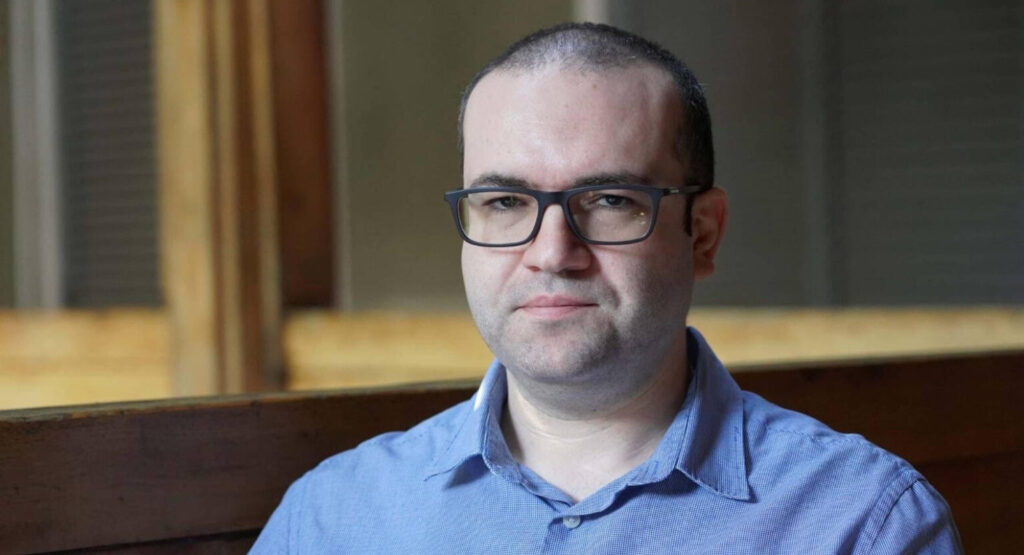
Numerous criticisms are heard regarding the foreign or domestic policy of the Georgian government. One of the main accusations is inattention and inaction toward the topic of conflicts. In an interview with conflict researcher Vano Abramashvili, we attempted to assess the reality in which peace policy finds itself today, to understand the reasons behind this reality, and, most importantly, to discuss future prospects.
Question: How would you evaluate the currently existing peace policy? Where are we now, and what processes are taking place on both the Georgian and Abkhaz sides?
Vano Abramashvili: Currently, we find ourselves in a paradigm-less peace. Georgian Dream has utilized “peace policy” in an entirely different sense. Issues regarding Georgian-Abkhaz relations are completely sidelined. As a result, the process has been left entirely to drift. There is also a total lack of trust toward this policy.
On the one hand, everyone realizes that the end of the war in Ukraine will have a major impact on what the situation will be in Abkhazia and the Tskhinvali region. It will also have a major impact on our policy. We have no guarantee whatsoever that this war will end favorably. Therefore, the Georgian side has entered a spiral of mistrust.
In domestic political discourse, the leading narrative is that we must fortify ourselves like a fortress, that we have no friends, and that everyone has their own interests. This approach has also affected the topic of conflicts.
Every policy and movement related to Abkhazia is perceived as a source of potential destabilization. The attitude is that no way out exists to resolve these problems. There is a feeling that even internal resources do not exist to take these steps.
It is a state of despair and hopelessness.
For our society, this is also an unfamiliar state, because today it seems there are not even alternative visions and ideas. Until now, there existed the idea of Euro-Atlantic integration and, against this backdrop, a vision for conducting peace policy. However, today this Western policy has been suspended. We do not even know how much time and what scale of work will be required of us to restore these damaged relations.
Added to all this is the altered geopolitical situation in the region and globally.
That is why I would call the current state a paradigm-less peace.
Question: Is this paradigm-less state artificially created, or does it simply reflect the reality that took shape after the August 2008 war?
Vano Abramashvili: I think that such a choice was made, and this reality did not create itself.
Any state, no matter what blow it receives, decides for itself what position to place itself in. Back then, the war ended with an undesirable outcome for Tbilisi. The idea of returning the regions through military force became unpopular, and conflict issues shifted entirely into the dimension of Russian-Georgian relations.
Georgian Dream inherited the peace policy of the United National Movement and, in its own way, tailored this policy to its own comfort. It is through this comfort based on nothing that we have arrived at today’s state.
Question: When describing this modern reality, the main attention and responsibility shift to the Georgian side. But if the conflict also has a second side—we must also evaluate the Abkhaz side and its steps. What is their approach and paradigm? What are they doing or not doing that serves to create this lack of perspective?
Vano Abramashvili: The main difference between the Georgian and Abkhaz sides is consistency. The Abkhaz know what they want. Whether it works out for them or not—that does not matter. Their consistent steps obey a logic.
On the Georgian side, it is not like that. Here, policies changed, and individuals changed.
Over the last thirty years, we have clearly seen who is consistent. We must also understand this issue correctly. You can be consistent even in your illusions. The Abkhaz do not have the resources and means to achieve their goals. Creating an independent state is impossible. It is a fact that they are trying to do this, although it is also clear that it is not working out for them.
The Russians also have a consistent vision and plan. There must be an alienation of Georgians and Abkhaz from one another, and Abkhazia must be turned into merely a territory. This territory will ultimately have no ethnic content or purpose.
When the Georgian political class does nothing on a large scale against this and refrains from taking potential political steps due to security risks and fears—this makes it easier for Russia to achieve this long-term goal.
Question: Peace policy must be mutual. Do you notice in Abkhaz political circles or civil society any kind of interest, change, or reflection regarding the policy they themselves carry out toward Georgia? Are there any signs visible that, given a desirable political environment and willingness, peace policy would become mutual?
Vano Abramashvili: A situational alliance with them is possible on many things. We say that peace policy requires two sides, but my argument is that currently not even one side exists.
Both sides today live our own lives; we are in parallel realities.
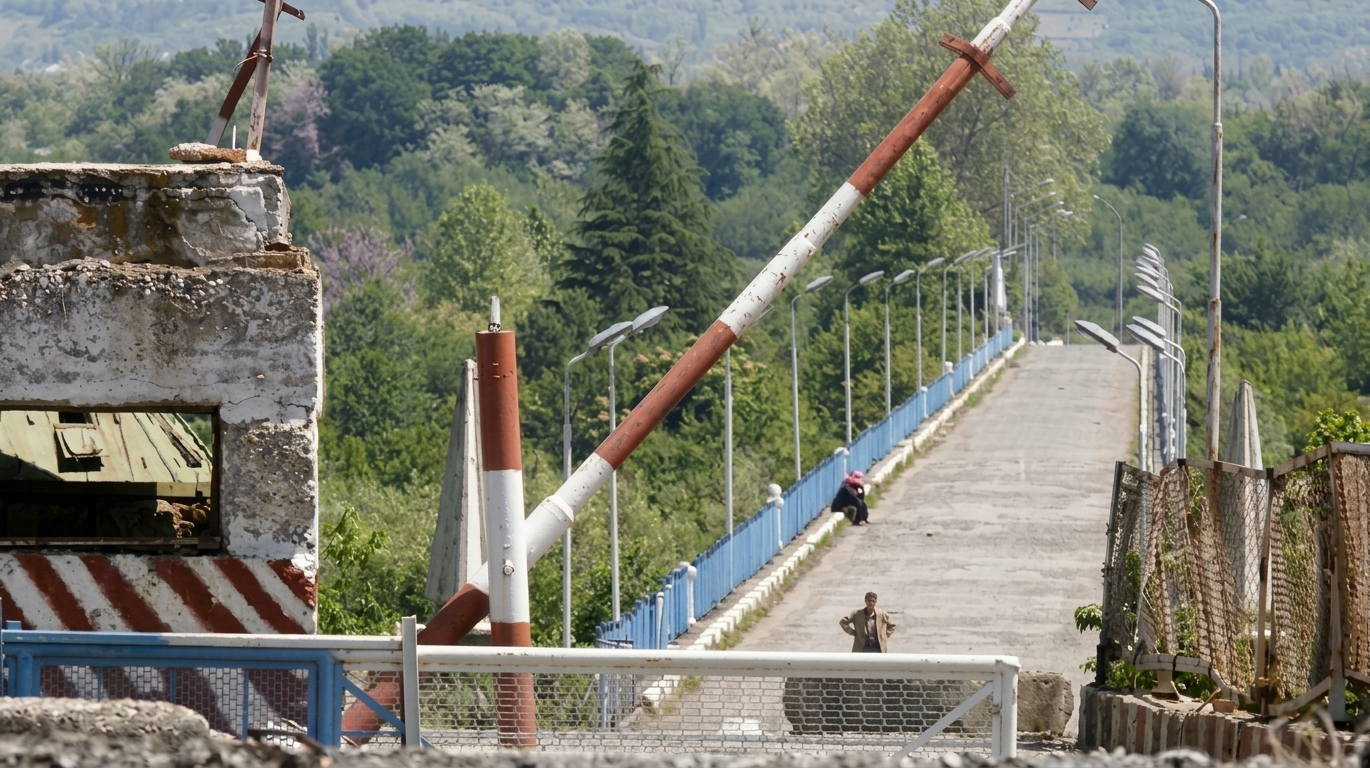
Let us take even the population of Gali, which is our and the Abkhazians’ natural point of intersection, and assess what special attention they feel from our side.
Neither side is actually interested in a positive peace policy. What we have is a negative peace. And this is merely the absence of war. Real peace requires clarifying where we are, what speaking positions we have, who is ready to concede what, and so forth.
Abkhaz society is even smaller than ours, and they have far fewer resources. Given the established political logic, it does not even surprise me that the first steps do not originate from there.
To evaluate peace steps, those steps must first exist. We cannot evaluate what simply does not exist. And this non-existence has its own understandable reasons.
Question: The architects of the current stagnation are the political forces on all three sides. If political will exists, what topics do you think are practical and future-oriented that would interest the Georgian and Abkhaz sides and “force” them to talk to each other?
Vano Abramashvili: These topics must relate to development – socio-economic and rights-based development, and the improvement of the standard of living.
Everything except status.
I think that even under the conditions of occupation with the Abkhaz, we can talk. It simply requires political will and the correct formats.
On our side, we do not see the ruling party demonstrating political courage, committing to a revolutionary change in a good sense, and taking any step.
Topics with which dialogue can be initiated and which are in the interest of both sides could be a shared living space. For example, energy, climate. Everyone wants to live in a predictable natural environment.
If we explicitly state that in the long-term perspective we aim for cohabitation in a unified state, it is important that democracy, as a political system and a political culture, exists on the ground. Accordingly, this too could be a matter of common touch.
“Georgian Dream” failed to draw the line between strengthening the de facto regime on the ground and protecting human rights, choosing instead to avoid touching this topic altogether in public policy. This, however, is a flawed approach.
Question: Considering the ongoing political processes, do you expect any kind of changes in the direction of peace policy? The war in Ukraine also breeds uncertainty. It is not clear where the processes are ultimately heading.
Vano Abramashvili: We see that conducting the war is costing Russia more and more. This cost is human, political, and economic as well. Accordingly, Russia should likely steer this conflict toward an end; it must end it in some form.
It is natural that the end of the war in Ukraine will exert a major influence on our region—whether it be a temporary freezing of the conflict, a pause, or its final end. But if political initiative is not demonstrated and a vision or formats for a renewed peace policy are not proposed, we may again fail to utilize this new geopolitical reality to strengthen the process of restoring trust.
In peace policy, the human dimension is important – how this policy translates into people’s lives. We are talking about living human beings, about the future. If our policy is not reflected in the lives of the people living there—first and foremost, the population of Gali – then it was never a real and sincere peace policy. It is more indicative of political messaging.
If you speak about poverty reduction, this requires concrete steps and instruments. Peace too is achieved and felt through concrete mechanisms at the human level: through security, social attention, and culture. When this is not present on the ground, a person cannot develop a feeling of peace merely through talks on television.