Fuel crisis in Abkhazia
In August 2026, a deficit of fuel imported from Russia triggered a crisis in Abkhazia. Initial temporary restrictions proved ineffective, resulting in long queues at petrol stations across the region. Unexpectedly, the Georgian side also played a role in mitigating the crisis. Fuel entered the region via the Enguri direction, though this quantity proved insufficient to eliminate the deficit. At this stage, it remains unclear whether fuel deliveries from the Georgian side will continue. It is likewise unknown what impact this step will have on Georgian-Abkhaz relations.
The War in Ukraine and Its Impact
The primary cause of the fuel deficit in Abkhazia is the Russo-Ukrainian War. Kyiv launched attacks on the Russian energy sector a few months after the war began. Initially, the targets were oil depots intended to supply the Russian military operating directly within Ukrainian territory. However, in subsequent years, the approach and strategy evolved. As early as January 2024, Ukrainian forces managed to strike oil terminals deep inside Russian territory. In 2024–2025, strikes using drones and other assets were carried out at distances exceeding 1,200–1,500 kilometers from the front line.
In June of this year, Ukrainian President Volodymyr Zelenskyy announced the start of a 40-day military campaign aimed at forcing Russia into peace. As part of these attacks, unprecedented and organized strikes were launched against the Russian oil production and refining sector. In June, the production of petroleum products dropped by 21.7% compared to the same period last year. For the first time in history, Russia was forced to begin importing fuel to address supply issues in specific regions.
Strikes on oil storage facilities and the drop in petroleum product output created a dire situation in oil refining, domestic supply, and exports. This problem was felt particularly acutely in Russia’s Southern Federal District. On the one hand, Russian oil infrastructure located in these regions was targeted by Ukrainian strikes, while on the other, the railway network in this part of Russia experienced frequent congestion due to its proximity to Ukraine and the Black Sea. This, in turn, led to fuel delivery delays.
Concurrently, the tourist season commenced in Abkhazia and Krasnodar Krai—a period traditionally characterized by heightened fuel demand.
It was precisely the combination of these military and logistical factors that prevented Abkhazia from receiving the required volume of fuel in a timely manner at the height of the tourist season, thereby triggering the fuel crisis.
Development of Events in Abkhazia
The crisis originally began in Krasnodar Krai in May–June.
On June 20, the de facto Minister of Energy of Abkhazia stated that sufficient fuel reserves had been accumulated in the region, although signs of logistical disruptions from Russia were already being recorded. Moreover, on the same day, limits on fuel dispensation were introduced at several petrol stations in Abkhazia.
Throughout July, the fuel deficit in Abkhazia was kept under control precisely through partial restrictions. De facto Energy Minister Batal Mushba framed the supply issues as a temporary disruption. However, starting in early August, the depletion of reserves caused the situation to escalate into a full-blown crisis. In a conversation with the de facto Prime Minister, Mushba noted that 1,600 tons of fuel had entered Abkhazia from Russia in the first days of August, with an additional shipment expected over the following two weeks.
However, it appears the fuel received from Russia was either insufficient or the delivery rates signaled a further worsening of the crisis. It was against this backdrop that news emerged on August 12 that fuel had also entered Abkhazia from the Georgian side.
Fuel Deliveries from the Georgian Side
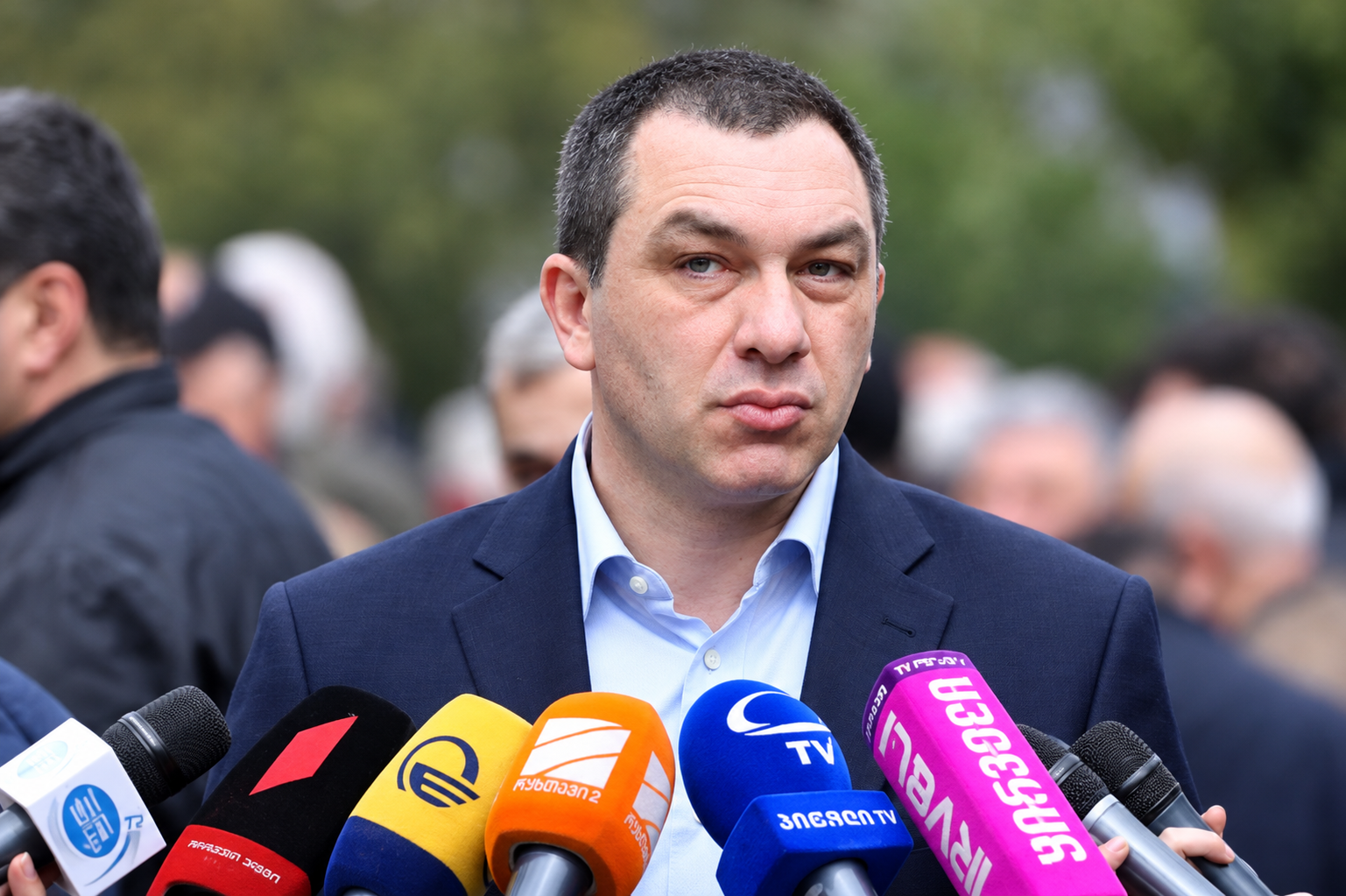
On August 12, Georgian Prime Minister Irakli Kobakhidze confirmed at a press briefing that fuel had entered Abkhazia from territory controlled by Georgia. “We did not import it; business imported it. I repeat: if such a step is taken, it is taken within the framework of the law. If in the future we have the opportunity to ease the situation for the population living there, we will do so again,” Kobakhidze stated.
Georgian Dream MP Rati Ionatamishvili circulated information claiming that 3,000 tons of fuel had entered Abkhazia. This figure caused confusion because, according to Vakhtang Iobashvili, Chairman of the Union of Oil Products Importers, delivering such a volume would only be possible by sea.
The name of the carrier company and other details regarding this transaction also remained unclear.
As established by Radio Free Europe/Radio Liberty, the fuel was delivered to occupied Abkhazia from Tbilisi-controlled territory by the Georgian company Solidus.
Solidus holds “Special Enterprise Status”. This status permits companies to conduct activities in the occupied territories of Georgia. Under a decree signed by Georgian Dream Prime Minister Irakli Kobakhidze on August 11, Solidus’s authorization to operate in the occupied territories was extended for another three months, with retroactive effect covering legal relations arising from July 18.
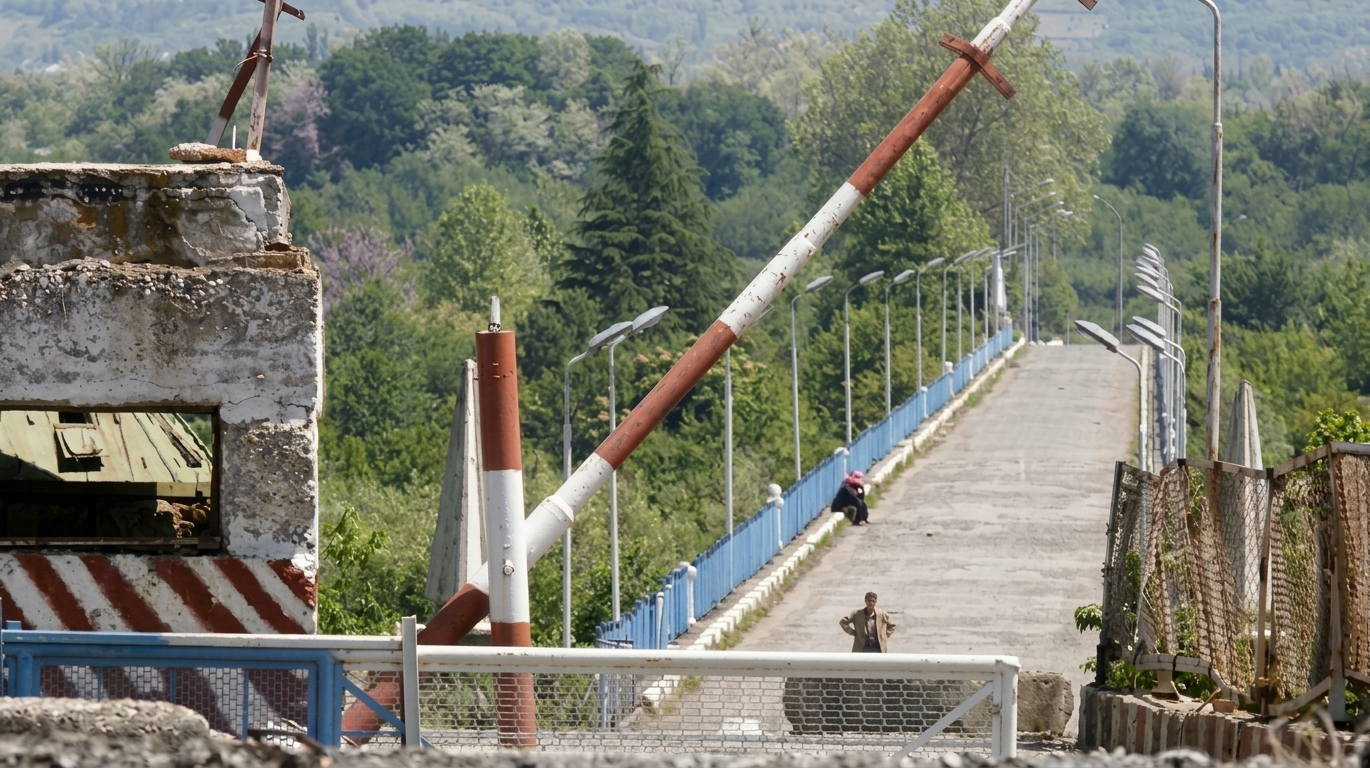
Speaking to the outlet, company owner Giorgi Arveladze stated that the shipment consisted of approximately 300 tons of fuel, which his company delivered to Abkhaz partners via the Enguri Bridge.
In an interview with TV Pirveli, Arveladze reported that his company imported only petrol, not diesel, and that the transaction was carried out jointly with “Abkhaz businessmen,” marking the first such transaction in 33 years.
The supply scheme is as follows:
Solidus purchased the fuel [petrol] on the Georgian market from Repsol. This company owns the “Connect” network of petrol stations in Georgia. According to Repsol, they do not plan additional fuel deliveries to Solidus. At the same time, the company noted that where Solidus LLC sells the purchased petroleum products is not agreed with them and falls outside the scope of their responsibility.
Solidus itself faced challenges procuring fuel on the market. “It is difficult to find petrol on the local market. There is no surplus of petrol here either; sourcing fuel is not easy,” Arveladze stated.
Solidus delivered the fuel in Abkhazia to the company Azid, which owns a network of petrol stations in the region. According to the company, during the fuel crisis, they managed to find “alternative sources” and bring fuel into the region. The company emphasized that the petrol was purchased at a higher-than-usual price; however, to avoid retail price hikes, the fuel was sold below the purchase price, with the company absorbing these excess costs.
The Georgian side was not named as the fuel supplier by the Abkhaz side. Instead, local de facto officials use the term “alternative source“.
At a briefing on August 18, the Prime Minister of Georgia stated that, as of that time, 680 tons of petrol had entered Abkhazia from the Georgian side. Solidus owner Giorgi Arveladze also cited this same volume.
The Fuel Crisis in Abkhazia Continues
Despite the fuel brought into Abkhazia from Russia and the Georgian side, the crisis in the region persists. By decision of the local de facto authorities, priority is given to so-called state bodies and medical institutions. Consequently, restrictions and queues at petrol stations remain.
Presumably, through phased deliveries from Russia and the conclusion of the tourist season, the petrol deficit will gradually be resolved.
Notably, fuel shortages in Abkhazia were also recorded specifically in August in both 2024 and 2025. The Russo-Ukrainian War was considered the main cause of the deficit then as well. Strikes on the Russian oil refining sector slowed petrol production at that time, too, while a railway system overloaded during the peak tourist season failed to ensure timely fuel delivery.