






Trade and Transit
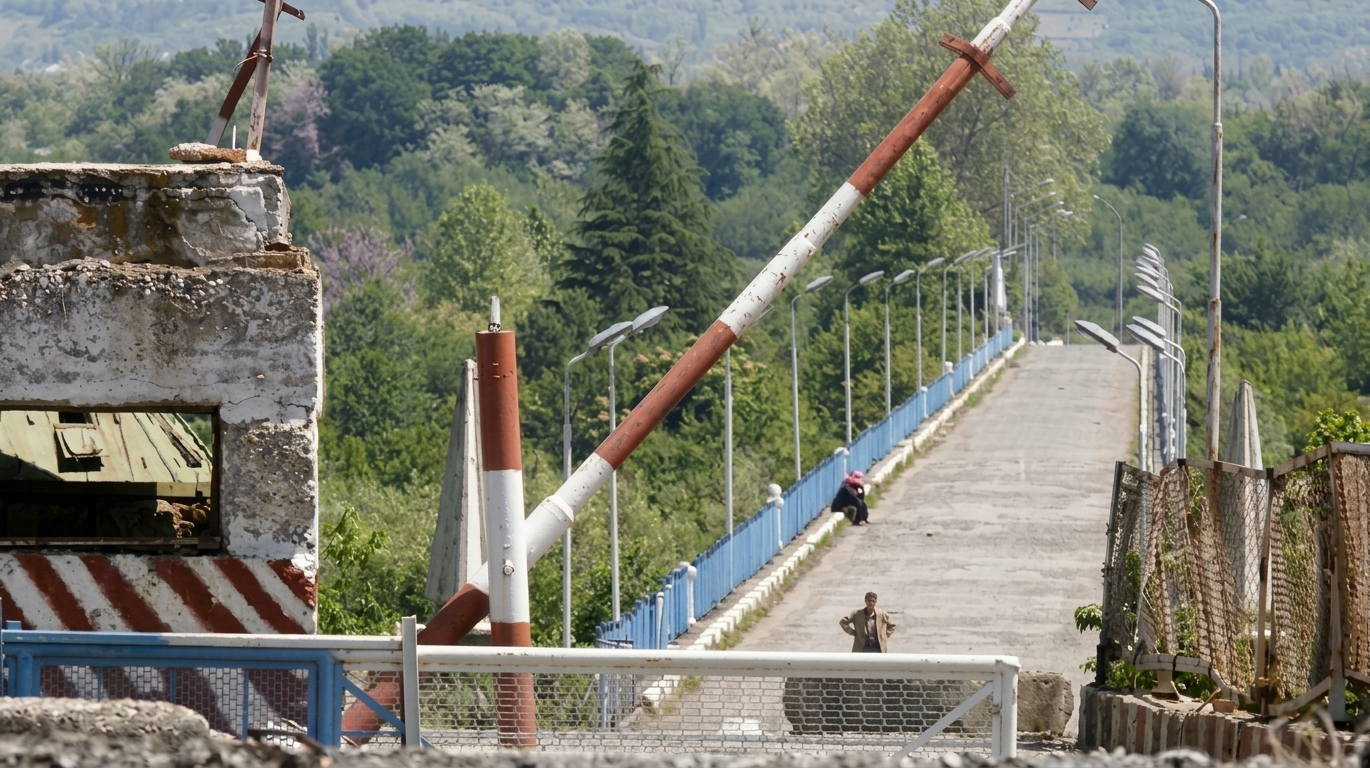
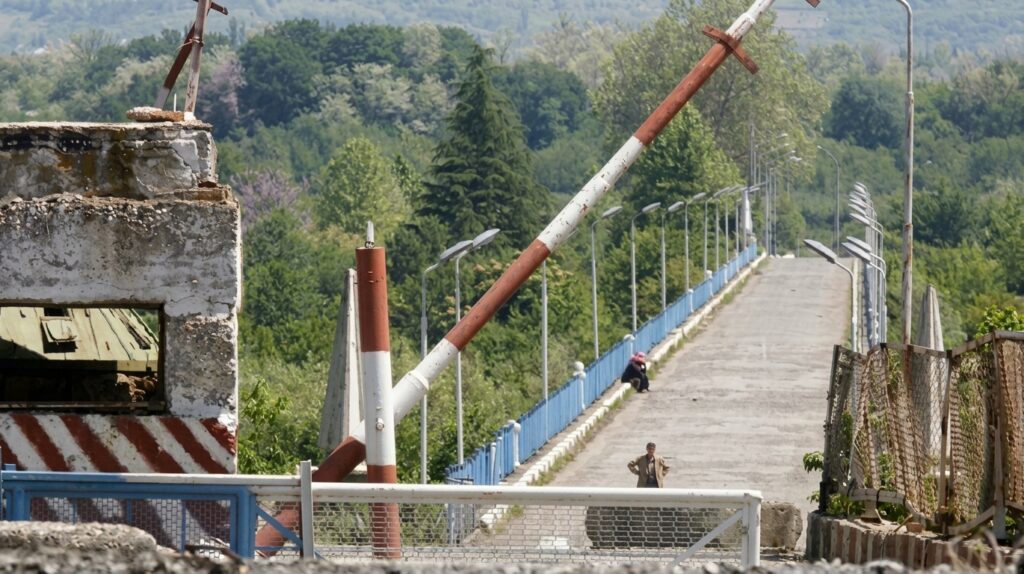
Many attach central importance to the restoration of economic relations in resolving the Georgian-Abkhaz conflict. Thanks to such ties, cooperation naturally arises, which in turn opens up more prospects for dialogue. The regulation of trade on the Enguri River has not yet occurred; however, the fact that gasoline was imported into Abkhazia from the Georgian side in August of this year demonstrated that, with political will, these relations can become regular.
The issue of restoring transit communication through Abkhazia periodically appears in the media space. The leader of the Abkhaz opposition, Adgur Ardzinba, also spoke about these prospects.
In parallel, Russian-Georgian relations are taking on new forms. Hostile rhetoric in statements from Tbilisi and Moscow has disappeared. Fundamental disagreements and conflict between the countries persist, but the reduced level of confrontation has raised expectations that Russia might once again support the idea of negotiations regarding the Abkhazia issue.
We spoke with Abkhaz experts about trade issues and Georgian-Abkhaz relations. They highlight the following key issues and circumstances:
- Regarding the impact of warming Russian-Georgian relations on the Abkhaz-Georgian dialogue, the rapprochement and practical cooperation between Russia and Georgia do not necessarily create a favorable backdrop for Abkhaz-Georgian dialogue and may carry risks for Abkhazia. The main obstacle to restoring official dialogue is cited as Georgia’s legislation on “occupied territories.”
- Regarding economic transit and infrastructure projects as a security factor, the resumption of free transport communication and cross-border trade along the Black Sea coast can produce a multiplicative economic effect, raise the level of trust, and contribute to the transformation of the conflict.
- Regarding the conditions for Abkhazia’s participation in economic projects, economic cooperation can contribute to a political settlement only under the condition of full-fledged political and economic participation of Abkhazia as an equal subject.
- Regarding the need to revive a full-scale negotiation process, the current format of the Geneva Discussions is limited. Experts point to the need to go beyond informal meetings and return to a full-fledged negotiation process where the parties are endowed with status and responsibility for the implementation of decisions.
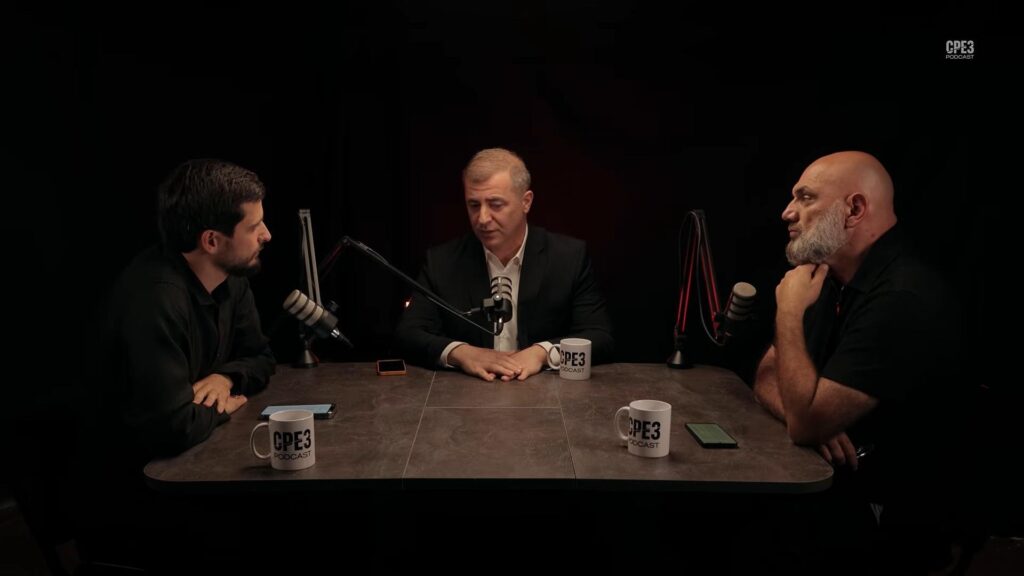
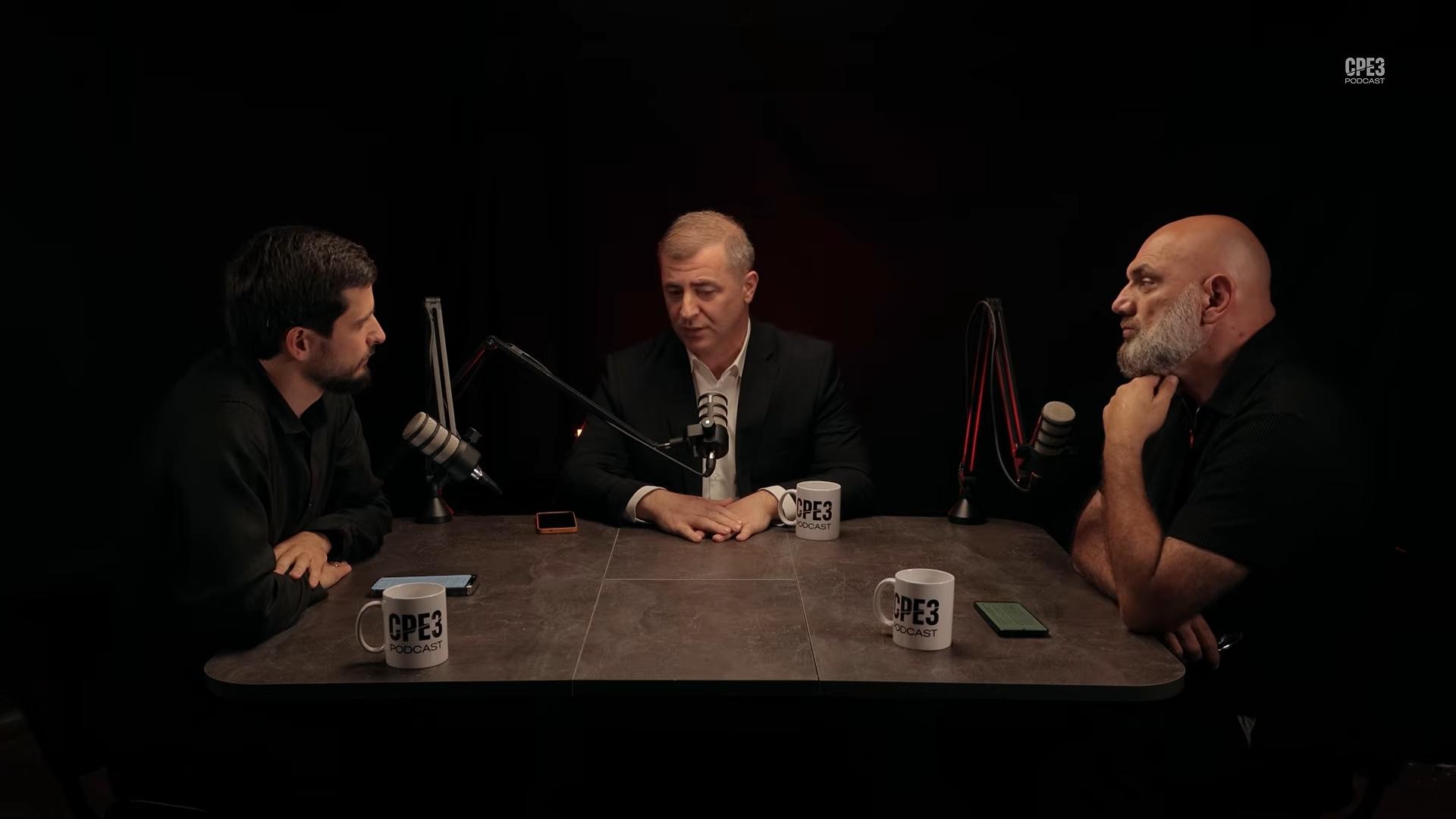
Question: Assessing the current state and specifics of Georgian-Abkhaz relations, can it be said that now is a favorable moment for dialogue with the Georgian side, given the warming of Russian-Georgian relations (as discussed by the participants of the “Srez” podcast with Adgur Ardzinba)?
Respondent 1
Given the fact that negotiations between Abkhazia and Georgia are not being conducted at all – setting aside the Geneva Discussions – any time can be called convenient if there are negotiations. If we take a specific period of time for comparison, for example, Georgia before Georgian Dream came to power and after, it seems to me that now is a less favorable period for conducting political negotiations than in the previous period.
In my view, rapprochement with Russia has become a sustained foreign policy trend of Georgia’s current leadership. Correspondingly, the points of intersection of their mutual interests, including possibly to the detriment of ours, theoretically become more numerous. What Georgia’s ultimate interest in relation to Russia will be, as well as what Russia’s ultimate interest regarding the future of Georgia and Abkhazia will be, is difficult for me to say unequivocally today.
Various options are possible, including those that may not be particularly acceptable to us. All the more so because the political processes in the South Caucasus region are unfolding under very complex conditions and are often extremely heightened. I do not think that Russia is currently interested in a dialogue between Abkhazia and Georgia.
At the same time, I believe that it has or may have a need to implement some political warming in order to achieve possible cooperation between our countries in certain areas of the economy, such as energy and/or potential territorial transit of cargo.
I would also like to note that even in our time, so-called windows of opportunity for various kinds of agreements always exist; consequently, negotiations are always needed. And one must know how to reach agreements.
Respondent 2
In my view, the warming of Georgian-Russian relations can only complicate Abkhaz-Georgian relations. At least, from our vantage point, that is exactly how it looks. Therefore, as paradoxical as it may sound, the Ivanishvili government is more dangerous for us than a conditional Saakashvili government. Here, to be sure, there are nuances that are not very bright for our neighbors, related to the attitude toward Georgia outside the context of the former USSR, but these are already the depths of geopolitics that are not directly related to the present question, at least for now…
In reality, something else is more important: no internal Russian-Georgian-Abkhaz reasons affect progress in bilateral settlement. First, I am not sure that changing today’s status quo is beneficial to all participants in the process. Second, within the framework of, say, the Geneva process, there are no visible forces capable of fighting political inertia in the Georgian establishment. Therefore, reasoning from an Abkhaz-centric point of view, tangible external factors are needed that could reformat the perspective of our relations.
At this moment, Georgian politicians feel themselves in a sufficiently comfortable position to display inflexibility: the ongoing isolation of Abkhazia, a chronic deficit in access to financial, economic, and humanitarian institutions, and everything else stemming from this. Why negotiate with a weak opponent? Let’s wait, and they will come to us themselves, or they will be pushed toward us – that is how they reason.
However, if new variables or players appear in this configuration, then the Georgian-Abkhaz dialogue could reach a different level. Such players could be both countries in the region and the Circassian diaspora, who may have – and most likely do have – their own interests here.
In short, if you are developing in an independent context rather than stagnating, then Georgia’s tactic, which can be described as “they have nowhere else to go,” loses its meaning. Instead, something else acquires meaning: the pointlessness of waiting indefinitely in the pose of an offended guest, especially while losing one’s interests in both a political and economic sense.
Respondent 3
Officially, no warming is taking place. We simply see practical actions related to the development of communications, trade, and so forth. Officially, as is well known, diplomatic relations do not exist.
As for the Georgian-Abkhaz dialogue, the dialogue itself should create conditions for resolving problems generated by conflicts. That is, dialogue is not an end in itself; it is a tool. It must be conducted under any conditions, because the alternative to dialogue is confrontation, an increase in mutual claims, and aggressive propaganda.
There are, of course, obstacles on the path of this dialogue. First and foremost, legislation has been enacted in Georgia (on occupied territories) that prohibits negotiations. We have one format in which the parties are represented as experts, meaning they are not endowed with authority to sign any documents. That is its qualitative difference from the negotiation process we had prior to 2008.
Prior to 2008, we were represented as parties to the conflict endowed with appropriate authority to sign documents in various spheres and be responsible for their implementation. We lost that quality of the tool as a result of the adoption of the relevant legislation.
Currently, dialogue is possible for us only at some informal level, or on that same platform of the Geneva Discussions. We have what we have, but we must strive to revive a full-fledged negotiation process. Otherwise, even if we agree on something within the framework of informal dialogue, we cannot implement it. We cannot fix it in any way or confirm it with our signatures and the signatures of relevant mediators.
If our current capability consists of the Geneva Discussions plus some informal dialogue, then we must see as our immediate goal the revival of a full-scale negotiation process. Otherwise, we will constantly run into the impossibility of resolving basic problems.
Question: Adgur Ardzinba explicitly mentioned in the “Srez” podcast the possibility of free transport communication and transit along the Black Sea coast. Can the development of such practical cooperation precede a comprehensive settlement or serve as a kind of testing ground for interaction capabilities between the sides? Can economic relations become a factor contributing to further political settlement?
Respondent 1
Unfortunately, I have not yet seen the “Srez” podcast with A. Ardzinba, but I can briefly say on my own behalf that, undoubtedly, yes, they can. I will try to expand on this thought a bit. When parties receive benefits and/or economic dividends from their participation in joint economic projects, it always or very often leads both to the intensification of the negotiation process itself and to the search for mutual compromises to align positions within the channel of political dialogue. Consequently, potential economic relations in which both sides are interested and where each side receives economic dividends will most likely contribute to further political settlement between the parties.
The only question is how and in what capacity Abkhazia will be integrated into these economic projects. If Abkhazia’s participation is represented not only economically but also politically, it will naturally be a breakthrough not only in the economy but also in political settlement. If Abkhazia’s participation is merely territorial, then from certain people or groups of people lining their pockets through grey schemes instead of contributing to the state treasury, I personally see no benefit or factors that could contribute to a broad political settlement between us. Nor will I see any real benefit for us and our country from projects of that kind.
To draw a line under this, economic factors can contribute to a political settlement. Of course, one would very much hope that our country could be integrated into economic routes and programs in which Abkhazia, neighboring states, and powerful global players are all interested. In that case, one could be more confident in the stability and security of our territory.
Respondent 2
Regarding the possibility of economic projects influencing a political settlement, I believe that any economic, logistical, cultural, and other projects are a superstructure built upon the resolution of, or at least progress in resolving, political issues. If there is no such progress, I consider discussion of all such matters to be useless and unrealistic. Moreover, in my view, it would run counter to our state and political interests and come into conflict with them.
Respondent 3
For many years now, I have been talking about the need to resolve the issue of resuming cross-border trade, legalizing cross-border trade, and opening transit transport communication. The implementation of this project could undoubtedly have a multiplicative effect and economic consequences, and it could contribute to changing the political climate and increasing the level of trust between the parties – that is, becoming a step on the path toward conflict transformation.
We are unable to foresee all the consequences of this; it would be, it seems to me, a positive decision given the generally complex geopolitical situation, both for Abkhazia and for Georgia. This is because Georgia has also encountered a number of communication – which equates to geopolitical – problems in light of the development of the communication system in the eastern part of the South Caucasus.
We do not know yet, but the process there has also started moving, albeit with difficulty. For long years there was complete stagnation there as well, but now there is the “Trump Route” (officially – Trump Route for International Peace and Prosperity, TRIPP) and the restoration of relations between Armenia and Azerbaijan. All of this will be transformed into communication, that is, geopolitical projects. And this causes an imbalance in the interests of various players. Both regional and non-regional players are present there – Iran, Russia, and Turkey.
This means that if such an imbalance occurs somewhere in someone’s favor, it carries a potential threat of the resumption of armed conflicts.
Therefore, it seems to me that this project would, on the one hand, play a stabilizing role for the South Caucasus as a whole, because it would take into account the interests of different players.
It seems to me one can speak of stability in the Caucasus if the entire complex of communications begins to work and the sluices for free trade are opened. This would contribute to the general transformation of conflicts in the South Caucasus itself. This is also advantageous for Georgia, because it would restore its shaken role as the primary transit region in the South Caucasus. Georgia historically played such a role in that sense.
In other words, if the South Caucasus as a whole transforms into a bridge between Europe and Western Asia, this could even later serve as a starting point for resolving problems in other regions. After all, we are in a period of global instability, and points like these where major players have reached an agreement can have consequences in other regions.
If a mutually acceptable result or some compromise is achieved here among these actors – the European Union, the USA, Turkey, Iran, Russia, and so forth – perhaps later this precedent could be transferred to other regions. Because sooner or later a balance of power will be established in the world, and a balance of power always leads to the establishment of a new international order.
Right now, we simply cannot expect this to happen spontaneously; while this balance of power is not established, competition continues, and relations are heightening. This could spill over into very dangerous events. At the same time, it is desirable for no one that the South Caucasus turn into a powder keg. Therefore, such projects contribute to de-escalation, even if on a local level.
Many things may seem unfeasible right now, but if you just sit on the couch, nothing will ever work. In this sense, what is the Abkhaz role? The role of the Abkhaz side, the expert community, the government, and so on, can consist of shaping a discourse in the information space that is beneficial to us. We must promote models that could be interesting not only to oneself, but perhaps also to one’s opponents and, naturally, to one’s allies.
Setting aside all ideological blinders, this would be a useful geopolitical project, interesting to both Russia and Georgia. But within our capabilities lies the task of proposing and promoting these models. That should be our minimum program, including at the Geneva platform, by the way. One can use the information capabilities of the Geneva platform to advance various ideas. That is what we can do for now.
Not very much depends on us. You see, if we are talking about Abkhazia existing as a state and so forth, it must have international functionality. If you integrate into some global project with your own functionality, even a small one, then at least people will talk to you, conduct dialogue, and you will be a subject of some process. That already reinforces, at the very least, the security factor.
If, for instance, a major project begins working here, that is a security factor. For us, the primary factor is the non-resumption of military actions.
We had a precedent in 1998 when we were on the verge of resuming full-scale military actions – they also thought they would very quickly solve the problem of the Gali district and capture it. As far as we came to know back then, the ambassadors in Georgia representing the states involved in the implementation of the Baku-Tbilisi-Ceyhan project demanded that the Georgian authorities stop the escalation, because it was incompatible with the development of the Baku-Tbilisi-Ceyhan project and because all of them were to one degree or another involved in that process. In other words, such large communication projects contribute to regional stability.
Question: In the existing format of the Geneva Discussions, as is well known, the causes of the 2008 conflict are discussed. The Georgian-Abkhaz conflict of 1992–1993 itself is practically not touched upon there. There are many mediators in this format, and despite the fact that there are no diplomatic contacts between Russia and Georgia, is there a risk that Abkhazia will be completely sidelined as a participant in the conflict on this “Russian-Georgian track”?
Respondent 3
I think there are questions that cannot be agreed upon over our heads. By virtue of the obligations we have undertaken, and by virtue of the fact that Russia recognized Abkhazia and signed a whole package of agreements with us, this simply cannot be nullified just like that. The leadership of Russia says on this matter that there can be no rollback on these decisions. Therefore, they too (Georgia) are constantly in a dead end because they are constrained by this legislation. They can resolve certain situational things; there is, after all, a quasi-embassy representation of Russia in Georgia and Georgia in Russia under the Swiss flag.
However, all these mechanisms will be atrophied until this legislation on occupied territories is repealed. The same applies to the Geneva process. It seems to copy the same working groups that the Coordination Council had prior to 2008, but there are no powers whatsoever, because there is no qualitative state of having two negotiating entities, as we used to have.
By the way, this propaganda discourse about occupied territories was officially fixed in 2008. I think this was done in Georgia based on the internal political circumstances of that time.
I want to remind you that our meetings and contacts used to be quite intensive. Four meetings of the Coordination Council took place – two in Abkhazia and two in Georgia. Between them, sessions of working groups were held, also alternately in Abkhazia and in Georgia. Regular meetings took place in Chuburkhinji, along with trips of delegations and journalists; that is, we had a fairly intensive settlement process. Now this is perceived as some kind of fable or fairytale, but all of it existed. Yet it cannot be restored until these obstacles (the law on occupied territories) are eliminated. In the meantime, there is a piling up of problems around this, because aggressive rhetoric is intensifying and all kinds of populists are gaining strength.
We see what kinds of rallies regularly take place in Georgia. This, by the way, is an internal political problem for the Georgian authorities themselves. These are all questions facing society that do not find any answer. Plus, those problems that we previously could resolve through negotiations – those that interested us – are simply accumulating.
The terminology, place names and views expressed in this article are those of the author and do not necessarily reflect the editorial position of this website.