







Georgian–Abkhaz war
The arrest of former Georgian State Minister Gia Baramidze has brought renewed attention to unresolved questions surrounding the Georgian–Abkhaz war of 1992–1993, including allegations that Abkhaz prisoners of war were executed rather than held for exchange. In an interview with Chegemskaya Pravda, Beslan Kobakhia, who chaired the Abkhaz commission responsible for prisoners of war and the protection of civilians during the conflict, recalled his wartime experience, described cases in which he said prisoners were killed, and called for a thorough investigation into the fate of those still missing. The conversation also moved beyond the circumstances of the arrest to examine competing narratives of the war, the legacy of mutual hostility, and the prospects for a political settlement between Tbilisi and Sukhumi.
Main theses and arguments:
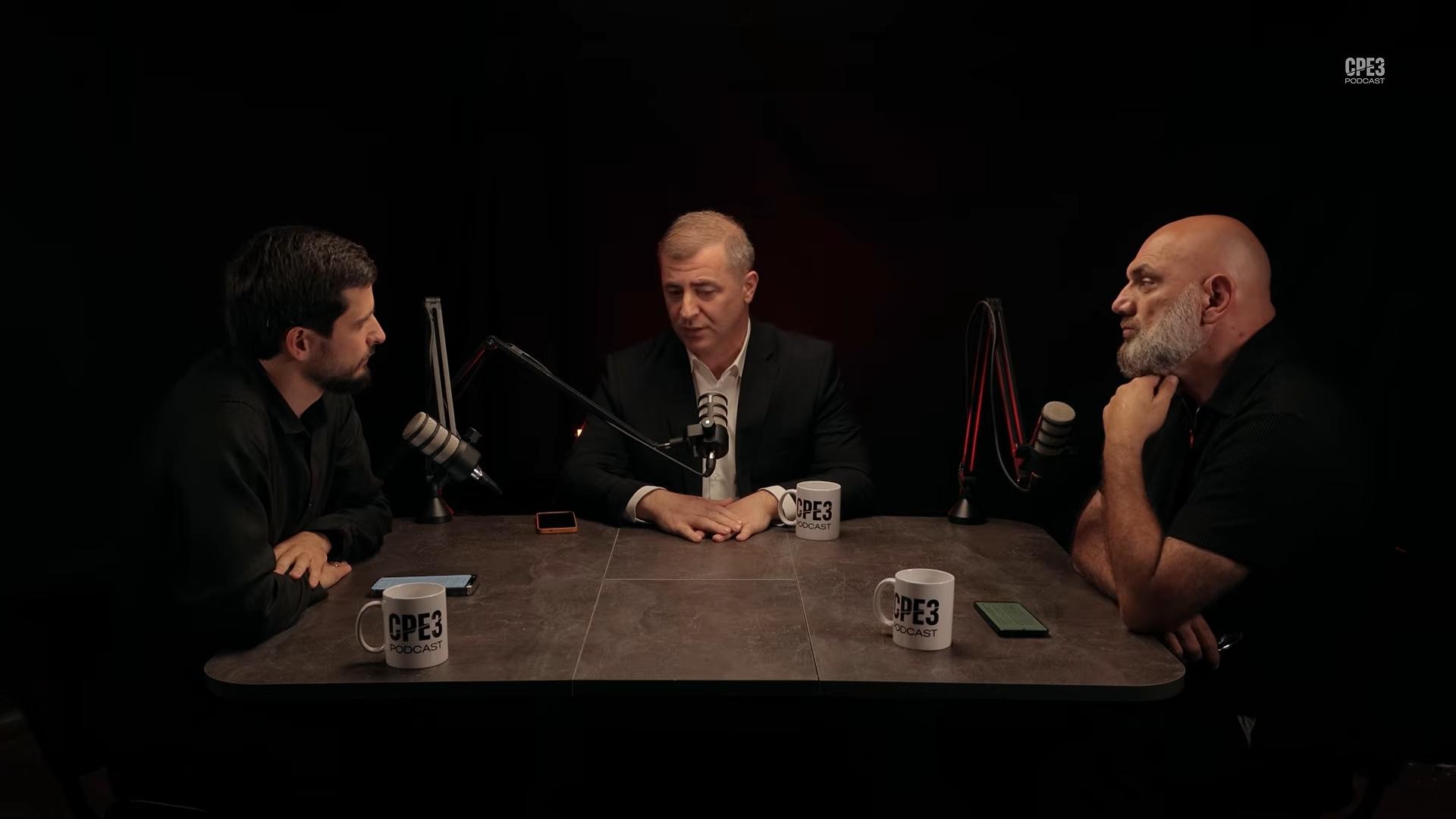
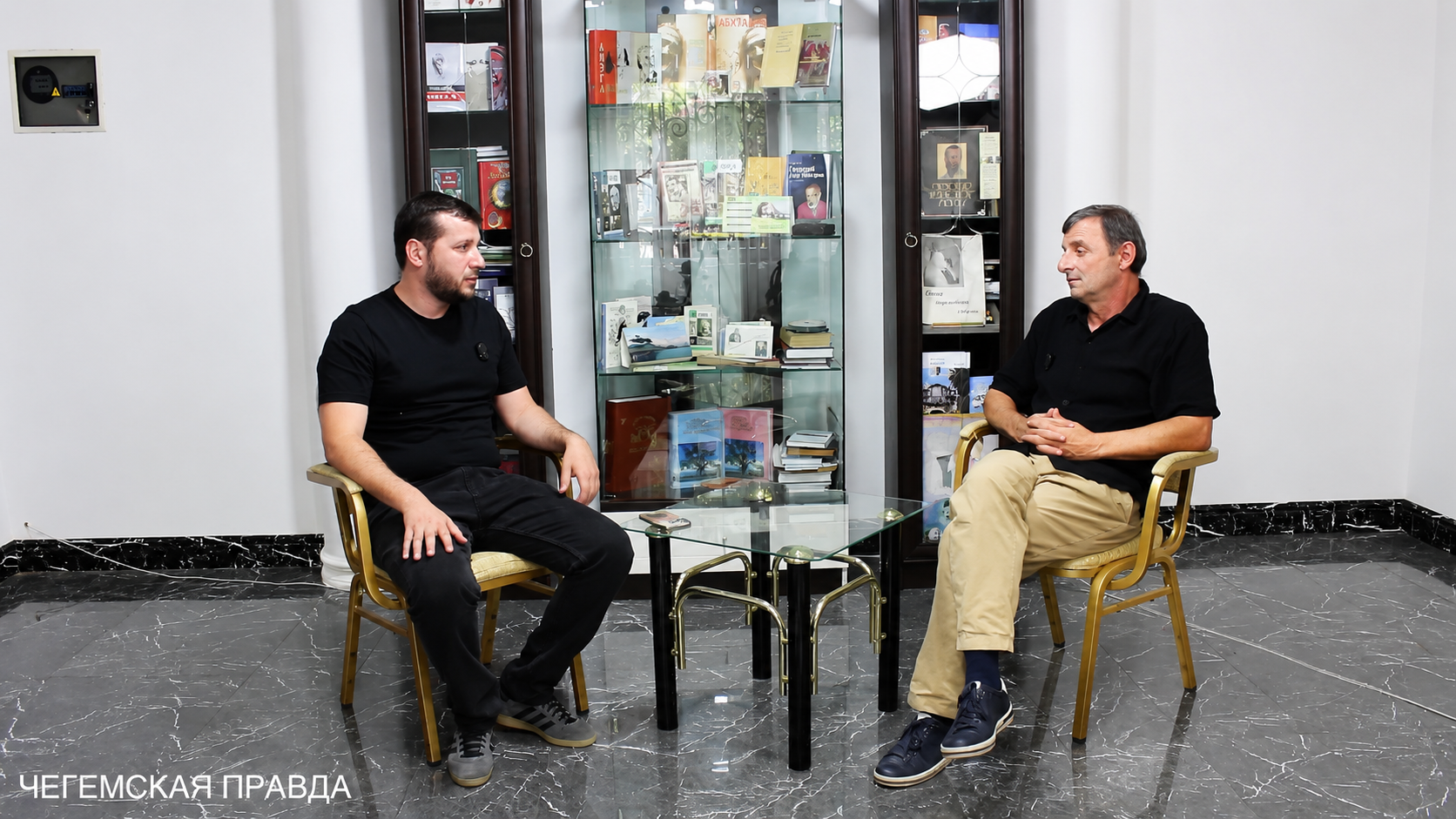
Inal Khashig: Hello! You’re listening to Chegemskaya Pravda. Today, we’re going to talk about the Georgian-Abkhaz war, focusing on one particular detail.
The thing is that in September, in Tbilisi, that is, a couple of weeks ago, Gia Baramidze, a former state minister, was arrested. During the war, he was involved in prisoner-of-war exchanges on the Georgian side. And during an appearance on one of the YouTube channels, he stated that at a certain point Georgia had no pool of prisoners available for exchange because they were shooting prisoners. Abkhaz prisoners who fell into their hands were simply executed.
Today, our guest is Beslan Kobakhia. Beslan knows Gia Baramidze well because during the war Beslan headed the commission responsible for prisoner-of-war exchanges on the Abkhaz side, the Abkhaz commission for the exchange of prisoners of war. I can’t recall the commission’s full official name right now. Nevertheless, Beslan was involved in this work.
Beslan, good afternoon.
Beslan Kobakhia: Good afternoon.
Inal Khashig: What is your view of this situation? Gia Baramidze was arrested not under an article concerning defamation. In other words, if he had been lying, they could have denied all of this and said that he was slandering people. Instead, he was detained and arrested on charges of treason. In general, how do you view this situation?
Beslan Kobakhia: Well, first of all, good afternoon.
Let’s begin with the name of the commission. It was called the Government Commission of the Republic of Abkhazia for Prisoner-of-War Affairs and the Protection of the Rights of the Civilian Population. That was its name. It was established, if my memory serves me correctly, on March 9, 1993. Before it was established, there was a scandalous incident. I won’t talk about it today, and I don’t want to, so to speak. But following an investigation into that incident, Vladislav Grigorievich decided to establish the commission, and I was appointed its chairman.
Now, regarding Gia Baramidze, whom you said I know well: I wouldn’t say that I know him particularly well. I knew Paata Zakareishvili much better; we worked in close contact with one another. As for Gia Baramidze, well, I saw him perhaps once or twice somewhere and spoke with him, so to speak, but that was about it.
I remember an incident when they came to negotiate with us in Gudauta after we had taken Gagra. When we took Gagra and liberated it, they came to us, and we all ended up together in a meeting with Vladislav Grigorievich Ardzinba.
They arrived with lists of people who had allegedly been shot by our Abkhaz militia members and our army – civilians, supposedly. They also claimed that people had played football with the heads of murdered Georgians, using their severed heads at the stadium in Gagra. Well, Vladislav Grigorievich spent a long time trying to explain to them that none of this was true, and so on, but he simply couldn’t convince them. Eventually, Vladislav Grigorievich said, “Listen, why should I keep trying to convince you? I can see that I’m not going to succeed,” he said. “So go with Beslan Kobakhia and Ruslan Yazychba.” Ruslan was the head of the administration in Gagra at the time. Ruslan was also present at that meeting with Vladislav Grigorievich. “They will show you everything you want to see. Go down every street and show them whatever they want.” We said, “All right.”
We left Vladislav Grigorievich’s office. Ruslan drove ahead in his own car, and we followed him out of Gudauta.
Would you like me to go into more detail? It would be interesting because it would help you understand the psychological atmosphere at the time.
We were leaving Gudauta. I had an official car, and a driver was at the wheel. It was Zurik Vozba, who has since passed away. The car had Council of Ministers license plates, beginning with 01, followed by some number. I can’t remember the exact number anymore, but it started with 01. Those plates belonged to the Council of Ministers of Abkhazia.
When we passed the traffic police checkpoint in Gagra, they saw our traffic police officers standing there. They were clean, smartly dressed, and freshly shaven – in other words, they weren’t disheveled or anything like that. When they saw the car, they snapped to attention and saluted as it drove past.
They were talking to one another in Georgian. I don’t understand Georgian, but poor Zurik understood it well. They said, “Look at the order they have here.” They were surprised by the order, discipline, and so on.
As we drove farther, they continued talking among themselves. They were also struck by something they had noticed in Gudauta. They hadn’t seen crowds of people wandering aimlessly around with weapons in their hands. We never had anything like that during the war. At the same time, when I went to Sukhumi – which I had to visit fairly often during the war – I saw crowds of people, actual large crowds, and it was unclear whom they were answerable to. They would walk around, wander off somewhere, and so on. That was the contrast.
They continued talking among themselves. “Look, every little patch of land here is cultivated.” And it was true: as we drove along the road, we could see fields on both the left and right, some sown with crops, others ploughed.
That was how we arrived in Gagra, in the area around the stadium. Ruslan Yazychba arrived there as well. To give you an idea of the timing, this was literally just a couple of weeks, perhaps, after Gagra had been liberated.
A great many ethnic Georgians lived in the area around the stadium, and they continued to live there even after the fighting. We went into practically every house around the stadium. Our so-called guests spoke with each of the residents. You could call them guests, I suppose – the people who had come from Tbilisi.
At first, Ruslan and I stood nearby. Then we stopped approaching the conversations and told them, “You speak to the people one-on-one, so that you don’t think we are trying to put pressure on them or that they are being deceived, and so on.” They became convinced that the alleged events had never taken place. What is more, we went to the stadium itself, and they saw that there was grass there – young grass that had been planted beforehand. It was undamaged anywhere. If something like that had happened there, some traces would have remained in any case. Naturally, there was nothing of the sort.
They recorded the fact that this was the case. We also visited the family of a man named Mikhail Dzhintcharadze, if I remember his surname correctly. Before the war, he had been deputy head of the Gagra city administration, serving under Ruslan Yazychba. He was also a member of the Parliament of Abkhazia. During the occupation, he headed the Gagra administration while Georgian occupying forces were stationed there.
Incidentally, he was also known for something else. When we liberated Gagra, a letter addressed to Shevardnadze and signed by Mikhail Dzhintcharadze was found. In it, he described how badly the troops that had entered Gagra were behaving and how they were looting the local population. In effect, he documented what we later learned ourselves. At the end of the letter, he concluded that if things continued this way, the local population would certainly not support our side but would support the Abkhaz side instead. And, in fact, that is exactly what eventually happened.
As for him, he was killed during the capture of Gagra. According to many people who witnessed the events, he was killed by Georgian servicemen, not by Abkhaz.
Inal Khashig: Was he a former member of parliament?
Beslan Kobakhia: Yes, a former member of parliament. When he was killed, Ruslan was also among those taking part in the assault on Gagra. When he saw his deceased colleague, he managed to find an ambulance, have the dead man’s body taken away, and bring it home to his family, whom he knew well. In other words, he acted humanely, as any decent person should have done.
But the lists brought by the people who came to us to investigate and verify all the facts stated that he had been shot in some kind of crisscross pattern. Apparently, they meant that Muslims had shot a Christian and had shot him in that particular way. I don’t even understand what they meant or how that was supposed to be possible, but that was exactly what was written.
We then went to Mikhail Dzhintcharadze’s family. His wife told them what had actually happened and, on the contrary, expressed her deepest gratitude to Ruslan Yazychba for the humane way he had acted.
After that, we went through literally every address on their list, and not a single alleged incident was confirmed. What is more, most of the houses listed as having been burned down were completely intact.
After that, they asked us to take them to Leselidze, as it was called at the time. Today, we call the place Gechripsh. So we went there. Vladislav Grigorievich had told us to show them things in Gagra. I then told Ruslan, “I’ll take responsibility for this. Since we’ve already come this far, let’s go there as well.” We drove through all of Gechripsh, and we didn’t find a single local Georgian there anymore. Everyone had been evacuated to Sochi. They had all left. In other words, they hadn’t been killed or anything like that; they had left.
When all of this was over, we escorted them back as far as the Gumista River. They crossed over and continued toward Sukhumi, while we naturally stayed in Gudauta.
They know perfectly well that none of this happened. Then, twenty years later, when I was already living in Moscow, I received a phone call on the eve of the twentieth anniversary of our Victory. We had a journalist named Palantos at Radio Liberty, based in Prague. Somehow, he had obtained my phone number and called me in Moscow. At that moment, I was behind the wheel. I was driving when the phone suddenly rang.
They asked me how I remembered that situation, now that twenty years had passed and so much had happened since the war. I said, “You know, I remember everything as if it had happened yesterday.” What is more, some wartime myths are still alive to this day. I pointed out that there were people who now held high-ranking government positions in the Republic of Georgia. I named Paata Zakareishvili and Gia Baramidze. At the time, Gia was, I believe, either the first deputy prime minister or…
Inal Khashig: He was the first deputy prime minister, and then, for some period, he served as acting state minister of Georgia.
Beslan Kobakhia: Well, there you are – he held a senior position. Paata Zakareishvili was the minister responsible for integration, I believe that was the name of the ministry.
I said, “You know, it’s astonishing that they don’t refute these claims, because this lie is still circulating to this day – the story about the ‘severed heads’ and so on.” Putin even mentioned it at some point in one of his interviews, addressing the Georgians and saying, “Have you forgotten how people played football with your heads?” That is how widespread this myth became, so to speak. It has taken on a life of its own.
When Georgian journalists heard my interview, I nearly triggered a political crisis in Georgia. They rushed to Gia Baramidze. When they confronted him, he said, “That’s not true. I wasn’t there.” How could he say he wasn’t there? I remembered it clearly.
Paata Zakareishvili, however, is a decent man. He reacted by saying, “No, everything happened exactly as Beslan described it. That is how it was.” But, he said, these were all wartime myths. “I often heard stories that, in Serbia, pregnant women had their stomachs cut open, and so on. But when you start checking these claims,” he said, “they are never confirmed.”
Regarding the situation in Gagra, he said, “I personally couldn’t find a single eyewitness who had actually seen it with their own eyes. Someone told me there was some video footage of it. But I couldn’t find any such footage either.” Besides, we had actually been there ourselves and had personally established that it was not true.
Inal Khashig: From a technical standpoint, too, a human head weighs seven or eight kilograms. Trying to play football with one would be extremely dangerous for the limbs.
Beslan Kobakhia: You’re saying that it is technically impossible. But before anyone could do something like that, before a person even… well, for a moment, let’s imagine that it really happened. Just think about it: the idea would first have to occur to someone. And if such an idea arose in someone’s mind, that person would be mentally abnormal. So what are you suggesting? There would have to be at least five people on one side and five on the other – ten lunatics from an insane asylum – and not a single person among them would have said, “What on earth are you doing?” This is the ravings of a madman, so to speak.
But I understand why this was done. Before Gagra was captured, the local Georgian population had, by and large, not taken up arms. Of course, there were already some people who had done so, but it had not happened on a mass scale. To force the local population to fight, the Georgian military propaganda apparatus, the military propaganda machine, came up with this myth. And they achieved their objective. After Gagra was captured, many people really did take up arms. By the end of the war, there were practically no people left who had not taken up arms; very few had refrained from doing so.
But do you know where they went too far? They continued fueling the hysteria until it reached such proportions that, when we were liberating the city of Sukhumi, these people, terrified out of their minds, fled Sukhumi through the mountains and across all that terrain. Do you understand? That was the result of the deception spread by the Georgian military propaganda machine at the time.
Later, we had to help the people who remained in Sukhumi and wanted to leave. There were more than forty thousand of them, and we helped people leave Sukhumi at that time. What is more, we did not force anyone to leave. On the contrary, I would get onto every bus and explain that the Abkhaz government had issued no decision to expel anyone from Abkhazia. There was no such decision at all. “You are on these buses only because you want to leave. My task – our task,” I would say, “is to ensure that you can do so safely and comfortably.”
That was how we treated people. We did not mistreat anyone or do anything of the sort. We escorted them under guard all the way to the Inguri River. At that time, we sent more than forty people to Georgia.
There is another point I want to tell you about, in connection with what you said…
Inal Khashig: No, I want to return to the issue of the executions. I understand that the commission was established in March 1993, as you said, Beslan. But the incident in Gagra took place in October 1992. So the process of investigating these matters must already have been underway, right?
Beslan Kobakhia: Of course, it was.
Beslan Kobakhia: We also dealt with prisoner exchanges, but how exactly did we handle them? I would receive instructions concerning specific individuals, and I would deal with those cases. But as for planning the process as a whole, gathering information, and finding out who was being held on the other side, everyone was involved in that work. And when everyone is responsible for something, it means that nobody is responsible for it. The State Security Service, the KGB, the Council of Ministers, the Ministry of Internal Affairs—Alexander Zolotinskovich Ankvab was there at the time, too.
Initially, I dealt exclusively with civilians. But later I had to take on other matters because various unclear situations kept arising, so to speak. Eventually, this led Vladislav Grigorievich to say, “Let’s establish a commission,” and he proposed me for the position. I told him, “I’m already chairing 25 commissions. What, will this be the twenty-sixth?” He replied, “I trust you. I want you to take this position.” Those were his exact words. I said, “Well, if that’s how it is, all right.”
So, the commission formally began its work in March. But in practice, even before that, Alexander Zolotinskovich and I had frequently discussed various situations and often made decisions together, decisions on which a great deal depended, including people’s lives. I can say that without any exaggeration.
At the beginning of the war, there was the situation for which Gia Baramidze has now been arrested. We can judge this situation only from the mass media reports we read. And what do we know about it? We know that, according to his statement, at the beginning of the war they had no pool of prisoners available for exchanging prisoners of war.
I can confirm what he said, because, indeed, at the beginning of the war, we exchanged all prisoners on an all-for-all basis. We always had more prisoners than the Georgian side. And we behaved honestly: whenever we reached an agreement, we always fulfilled everything we had agreed upon. We handed over all the prisoners of war. They handed over those they had, or at least those they believed they had accounted for. Then, a day or two later, some new people would turn up – one or two individuals who had been kept in Georgian military units, so to speak.
Incidentally, we did not have this practice on the Abkhaz side. All prisoners of war were transferred to our central facility, as it was called, in Gudauta. We had a designated place where we held them, and there we could guarantee that nothing would happen to them.
I can tell you that throughout the entire war, not a single prisoner of war held under our control died.
Moreover, those who were wounded received medical attention. We would call in doctors and provide treatment on the spot if necessary. If that was not sufficient, we admitted them to hospital, where they received appropriate treatment. Not a single person from the Georgian side who was held in our captivity and under our control died. I want to emphasize that point.
But after some time, we began to realize that we were handing over everyone, while they were not handing over everyone. A meeting was held at the Ministry of Defence. At that time, Sultan Aslanbekovich Sosnaliev was already the minister. A decision was made that we would no longer conduct exchanges in that manner; from then on, we would exchange one person for one person. Once we started doing this, it forced the Georgian side to bring some order into its ranks, to the extent that it was able to do so, so to speak. They began to approach the matter more responsibly. That is how the situation developed.
Now, let us return to what Baramidze, who has been arrested today, said. He stated that they had executed people whom they had taken prisoner.
You know, to be honest, I know very little about this, because they never admitted to it at the time. And if this has come to light today because Baramidze has spoken about it publicly, then several other questions arise as well.
First, if they executed our men, that constitutes a war crime. Those involved in these events should presumably face the appropriate sanctions. That is the first point.
Second, we must obtain lists of the people who were executed, because we still have many people who went missing and whom we have not found, even after 33 years. If Baramidze has any information about these people, we absolutely must obtain it.
Third, we must find out where these people are buried so that we can do what we are obliged to do: give them a dignified burial, return their remains to their relatives, and do everything that is normally done in a civilized human society, so to speak. To do that, we need to know the burial locations. These are the questions that immediately arise.
And fourth, the international community should almost certainly become involved in this situation. It seems to me that it is the direct responsibility of the International Committee of the Red Cross, for example, to investigate everything connected with this matter and transmit the information to us, to our country.
Inal Khashig: Well, crimes of this kind are already known to us, particularly from the early stages of the war. You said that everyone was involved in these matters back then.
For example, I know that my friend Abzagu Gurgulia was killed in Shroma in August. Nine or ten people were captured along with him. Practically all of them were executed. Two were ransomed, but all the others were executed. And they were shot during the funerals of Georgian fighters.
Beslan Kobakhia: Yes, Abzagu Gurgulia died a heroic death, incidentally. He is a Hero of Abkhazia, a title awarded posthumously. May his memory live forever.
I know for certain of a similar case involving John Dzidzaria. I learned about it later from Greeks who lived in the village where he was brought to be mourned. One of the Georgian Guardsmen had been killed, and John was killed there during the funeral. But he, too, behaved heroically. They wanted to make him kneel. He knelt down, kissed the ground, then stood up and said, “Now do whatever you want with me. Long live Abkhazia!” And that was how he died. As far as I know, he was also posthumously awarded the title of Hero of Abkhazia.
There was another case as well. I did not prepare specifically for this conversation, so I may not remember the surname, but there was another young man who was wounded and taken prisoner. We saw him on Georgian television, specifically the Georgian-language television channel in Sukhumi. Journalists filmed him and showed him, saying, “We have captured this man here.” The young man had ended up in the Republican Hospital.
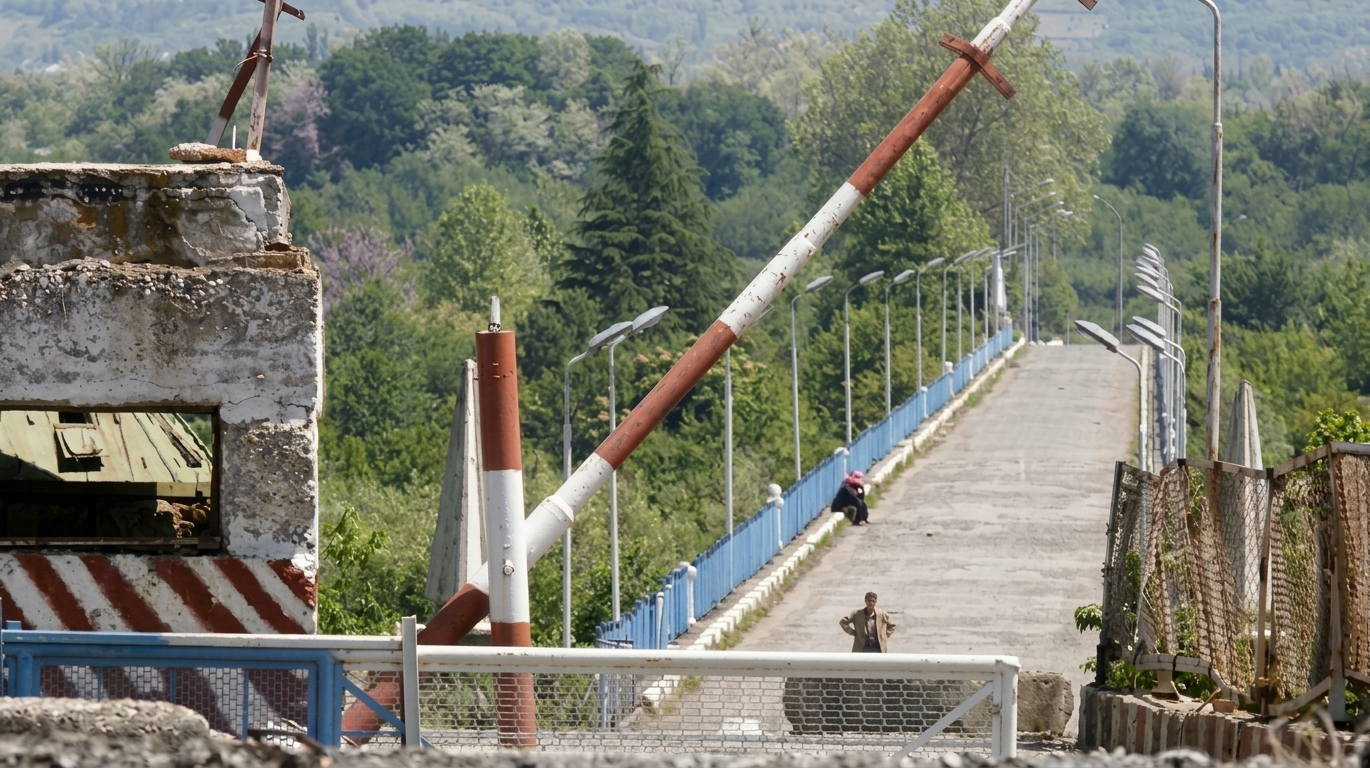
As soon as we saw him, literally the next morning, I immediately requested a prisoner exchange from the Georgian side, because we had many Georgian prisoners of war. They did not even know that someone was being held in the hospital. Then, for some reason, they stopped responding to our calls. One day passed, then two, then three. We kept trying to contact them. Eventually, I requested a meeting, and we met on the Gumista Bridge.
I asked them, “Why have you stopped responding? Let’s arrange an exchange. You have a wounded man, and we saw him with our own eyes on your television. It wasn’t our television station.” They told me, “You know, on the night he was shown on television, it wasn’t just you who saw him. Georgians who were fighting against us saw him too. Those people broke into the hospital during the night, took him away, and killed him.” In other words, they took him away and killed him. These are two cases that I know about with certainty.
I think we can, and probably should, add another case to these: the incident that occurred after our unsuccessful January offensive in 1993.
Inal Khashig: That incident was documented. Let me remind you: it was January 5, following the unsuccessful January operation for the Abkhaz side. Afterward, an exchange of the bodies of the dead and of prisoners of war took place, and so on. Many people noticed that, several days after the operation had ended, most of the bodies returned by the Georgians were still warm. They had literally been shot shortly before being handed over. This was documented afterward.
Beslan Kobakhia: We brought them back in January. It was extremely difficult to reach an agreement with the Georgians, but we eventually managed to do so. We arrived by Russian helicopter and landed near School No. 12. They brought all our fallen men there, and we loaded them onto the helicopter. To give you an idea of the scale, the helicopter was filled with bodies right up to the top. There were many of our men.
We flew to Gudauta, and the bodies were immediately taken to the hospital morgue. We had a Georgian military medic in our custody who had been captured. Naturally, our doctors examined the bodies first, and they unequivocally stated that several of the people handed over to us as having been killed had actually been killed just one or two hours before their bodies were returned.
We then brought in the Georgian military medic, who also took part in examining the bodies, and he confirmed their findings.
All of this is preserved in the archives of Abkhaz television and elsewhere. In other words, a war crime of this kind was committed at that time. And what Baramidze is talking about fits perfectly into the same pattern.
Inal Khashig: As I remember, both during the war and after it, a so-called “White Book” was compiled in which these crimes were documented. These days, they do not seem to talk about them as much. In the first postwar years, however, a great many crimes were documented.
At least, the Georgians say they want us to reconcile with them and find some common ground. If we are talking about reconciliation, then surely these crimes need to be investigated. We have records of them, and some of the crimes are documented in writing. The Prosecutor General’s Office dealt with these cases. We could hand over those documents.
It is strange, in general, that on the one hand they consider us their citizens, while on the other they bring charges of treason against Baramidze. In other words, he is saying that Georgians executed their own citizens of Abkhaz ethnicity. That is not only a war crime; if they considered us their citizens, then what the hell were they shooting us for?
Beslan Kobakhia: In that case, it is a genocide – genocide in its purest form.
Inal Khashig: Yes. There are so many nuances here that, in fact, they also work against this criminal case. It seems to me that if anyone is to be put on trial, it should not necessarily be Baramidze. Instead, the entire matter should be investigated.
Beslan Kobakhia: Well, you know, you are absolutely right.
We recently marked 33 years since those events. Just a few days ago, we celebrated Victory Day, the Day of the Liberation of Abkhazia, so to speak. For us, this is a sacred holiday.
Thirty-three years have passed. Thirty-three years is a very long time, and we had hoped that, after the war that broke out between us – a bloody war – we would eventually find a way forward. It must be understood that we Abkhazians did not attack anyone. We were living ordinary lives. Our holiday homes and sanatoriums were full of vacationers. And then, right in the middle of all that, tanks, aircraft, tracked military vehicles, howitzers – you name it – were sent against us. Every kind of weapon that had been transferred to Georgia under the Tashkent Agreement and through the Transcaucasian Military District was turned over to Georgia.
It is true that one of the clauses of the Tashkent Agreement stipulated that these weapons could not be used in internal conflicts. Everything was signed and agreed upon, apparently. But who remembered that agreement afterward? Everything Georgia received from Russia at the time – I mean Yeltsin’s Russia – under the Tashkent Agreement was subsequently used against us.
Well, in the 33 years since then, we have made many attempts to move forward. After all, every war must come to an end eventually.
For example, I would not want our children and young people to grow up hating Georgia or anyone else in the surrounding world, because you cannot build anything on hatred. As we know, things must be built on pragmatism and, ultimately, on love. You cannot build anything on hatred.
Unfortunately, however, we hear contradictory statements from Georgian officials. When addressing us, they say that we are their brothers, and so on. To some extent, that is true, too, because there were many mixed families among us. As many as 40 percent. Do you know the statistics? Up to 40 percent of Abkhaz families were, in one way or another, intermarried with Georgian families.
Inal Khashig: I cannot vouch for those statistics. It seems to me that they are too politicized.
Beslan Kobakhia: Listen, listen. Incidentally, this did not make any difference at all. It did not prevent us Abkhaz from defending our homeland, because we were the ones who were attacked. You remember how the tanks came into our territory without any real justification, and what were they trying to prove by doing that?
And yet, up to 40 percent of families were mixed. Nevertheless, today, if you open any Abkhaz post on the internet and simply write, “I love Abkhazia,” comments from people living in Georgia will immediately appear, pouring abuse on you from head to toe. They say things that, in any decent society – and certainly in a Caucasian society – should have consequences. These kinds of comments appear every single day, year after year.
So what is happening? The Georgian authorities say one thing, while ordinary citizens sitting on the internet behave in a completely different way. There is a complete contradiction between the two.
We were therefore compelled to hold this academic and practical conference and propose that Georgians abandon the Ingorokva theory, which has a profound influence on the younger generation and benefits neither people – not the Abkhaz nor the Georgians. It sets the two peoples against each other, and it will inevitably lead to further negative consequences.
Inal Khashig: But in any case, this is not just about history; ideological issues are involved as well. If there is a genuine desire to resolve the issue peacefully, then it is a complex, multifaceted task. You cannot put one thing in order in one area and leave everything else unchanged elsewhere.
And the fact is that, by and large, after this bloody war, the reality today is that Georgians do not like Abkhaz and Abkhaz do not like Georgians. That is a fact. So, talking about how we are brothers seems to me somewhat…
Beslan Kobakhia: Were there no mixed families in which Georgian and Abkhaz people were cousins?
Inal Khashig: But nowadays, I mean, not in the sense of calling these peoples brotherly, as they used to say in Soviet terminology.
Beslan Kobakhia: No, no, that’s not what I meant.
Inal Khashig: On the other hand, if we are to agree on certain rules or on some form of peace, this should not be discussed through Facebook or social media. It should be done by representatives of the authorities. Representatives of official Tbilisi should talk to representatives of the Abkhaz authorities, of official Sukhumi. Although Georgia’s Law on Occupied Territories makes it a criminal offence for them to talk to representatives of the Abkhaz authorities, they could nevertheless talk to these so-called representatives of the Abkhaz people. They tried to bring forward one Buava, who recently died of a drug overdose. Of course, they could find another couple of people to talk to as representatives, but how effective would that be?
Beslan Kobakhia: I’ll give you a very straightforward answer.
You say that we are not obliged to love one another. Of course we aren’t. We don’t demand that anyone love us, either. The Abkhaz are not a dollar that people have to love or hate.
But we demand to be treated with respect, just as we treat the entire world around us with respect.
The project we are pursuing is the construction of an independent, democratic state that poses no threat to anyone in this world. This project is entirely humanistic, and it should not – and cannot – provoke rejection from the world around us. Unfortunately, however, the only country that stands in our way and constantly trips us up is Georgia.
I would like to recall, for example, a woman who once served as Georgia’s foreign minister. Her name was Panjikidze, though I can’t remember her first name. She was the daughter of Guram Panjikidze, a well-known Georgian writer whose novels we used to devour during the Soviet era. He was a magnificent writer, a humanist who wrote truly beautiful works. As I recall, one of his novels was called A Year of Active Sun. I liked that novel very much at the time.
And then, many years later, his daughter became foreign minister. I don’t even know whether Badjikidze is still alive—he has probably passed away by now. Yes, his daughter became foreign minister, and once again she suddenly created an obstacle to our children travelling to a singing competition in Bulgaria, if I remember correctly. In another instance, they were not allowed to enter Turkey. And she presented this as one of the greatest victories of Georgian diplomacy: Abkhaz children had been denied entry, and so on.
But I don’t understand: if this is a victory, what kind of victory is it? I think Guram Panjikidze must be turning in his grave when he sees his daughter behaving this way.
Unfortunately, these examples are not isolated incidents. On the very day of the conference we had organized at the university, our permanent representative to the Republic of Turkey, Ibrahim Avidzba, was supposed to participate. Then, just an hour before the conference, he called me from the airport and said that he urgently had to fly to Istanbul because 60 of our gymnasts had travelled to Turkey for a competition, but they were not being allowed to compete. He said he would go there, look into the matter and try to resolve these issues. Naturally, I wished him good luck. He flew out, and just today we received information that they had not been allowed to compete as representatives of Abkhazia – the Republic of Abkhazia – because the country is considered unrecognized and, naturally, we have no diplomatic relations with the Republic of Turkey.
However, they competed there as representatives of the APSNY club. So the name APSNY was heard after all, so to speak, but they were representing a club rather than a country. And some of our children won gold medals there, among other achievements. You see what I mean?
But once again, this situation leaves a bitter aftertaste. What are you doing? On the one hand, you are trying to tell us that we should somehow make peace, and so on, while on the other hand, you create obstacles of this kind for children. Is that normal?
This is the issue we have begun to raise. Every war has a beginning and an end.
As for what happened in 1992, Georgia’s State Council was an illegitimate governing body at the time; it had overthrown the entirely legitimate Zviad Gamsakhurdia. The question of what kind of leader he was and what kind of person he was is a separate matter. But he had been legitimately elected, so to speak. He was driven out by bandits—Jaba Ioseliani and Kitovani—and Shevardnadze later joined their group. Then, on 14 August, they decided to launch military operations against Abkhazia. They sent in troops, and we know how it ended.
Many years have passed since then, yet there is still no end in sight. But this conflict must be brought to an end. We have examples from history. In 1918, Mazniashvili, acting on behalf of the Georgian Democratic Republic led by Noe Zhordania, occupied the entire territory of Abkhazia. Moreover, he advanced into Russian territory at the time, and the towns and villages there were occupied all the way to Tuapse. Later, Denikin intervened, and military operations drove Mazniashvili’s forces out of those areas. Meanwhile, in Abkhazia, the Kiaraz fighters, led by Nestor Lakoba, engaged his forces in battle. The Kodori River ran red with blood; the fighting was that fierce. Historians of that period testify to this. Ultimately, the Georgian army was driven out of Abkhazia, and on 4 March, Abkhazia’s independence was proclaimed.
Events in Georgia also unfolded in such a way that Noe Zhordania was forced to leave the country with his government, and the new Georgian leadership of that period recognized Abkhazia’s independence. You know, that decision led to a situation in which, just two years later, nobody was talking anymore about Mazniashvili having entered Abkhazia with his troops. Instead, normal relations began to develop between Georgia and Abkhazia. For a time, the two continued their relations as equal entities with equal rights.
Inal Khashig: A treaty-based union republic.
Beslan Kobakhia: Later, yes, it was a treaty-based arrangement, and so on. But then came what happened under Stalin, Beria, and the others. I don’t want to delve into that period now.
If we are to bring this war to an end, we must put a full stop to it.
First of all, condemn the war in Georgia. It began there, in Tbilisi. The entire city centre in Tbilisi was devastated at the time. How many people died on your side then? Remember how many people were killed by those leaders who unleashed the war in Abkhazia and carried out punitive expeditions in Mingrelia as well. You know all of this, and so do the Mingrelians living in western Georgia; they know what happened and how it all unfolded. Therefore, that leadership must be condemned, and this criminal war must be condemned, because it brought suffering to the Abkhaz, the Georgians and the Ossetians alike.
What should we do next? We had the Boden Plan, as you remember, along with various other proposals. They were complicated and very costly, among other things. We don’t need any of that. Set all these plans aside. Let us accept the reality we face today. Let us finally meet in a way that would allow us to sign at least a non-aggression pact with one another. For many years, this has been the starting point of our meetings in Geneva, yet there has been no progress on the matter.
You don’t want to sign this agreement, which means you want to attack us. That is the conclusion we have reached; we cannot draw any other conclusion, you see. If we are going to be attacked, then naturally we behave as people who are expecting an attack would behave.
But Abkhazia is no longer what it was 33 years ago. We have fraternal relations with the Russian Federation. Numerous agreements have been signed, including a military agreement that guarantees that no one will be able to launch a surprise attack on us anymore.
Let us take this reality into account and begin building our relations on the basis of that reality.
Believe me, this will be far better than sharpening knives and preparing for another war.
Inal Khashig: I’m going to wrap up our programme. Keep watching us and share your comments.
Let me remind you that today we began our discussion with the news that the Georgian authorities had arrested former Georgian State Minister Gia Baramidze, who headed Georgia’s commission for the exchange of prisoners of war during the war. Starting with this arrest, we recalled the war and the post-war period, and discussed the broader question of how this conflict might be resolved in the future.
That is what we discussed today with Beslan Kobakhia.
Beslan, thank you very much. Until we meet again.