







Abkhazia and dialogue with Russia
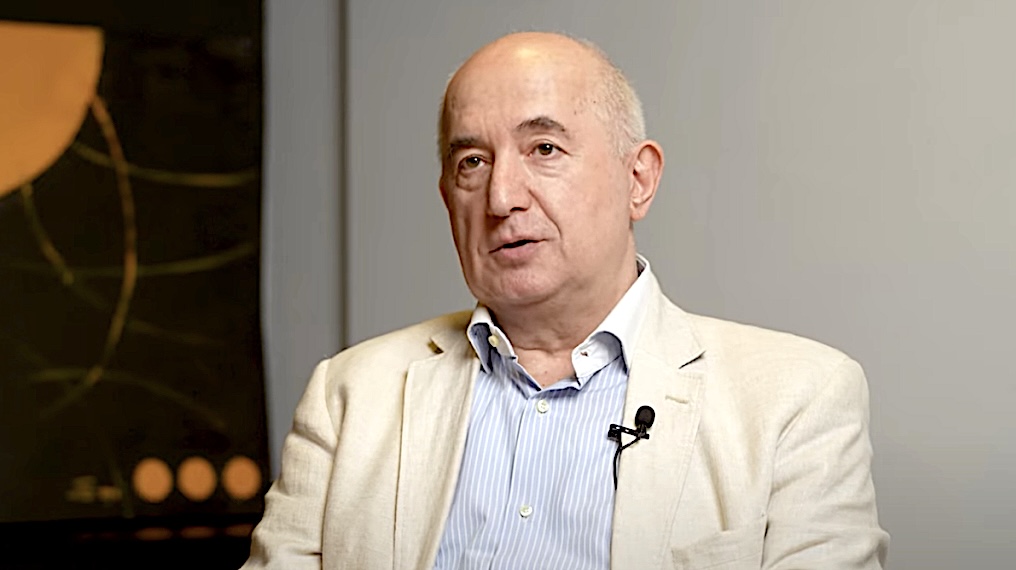
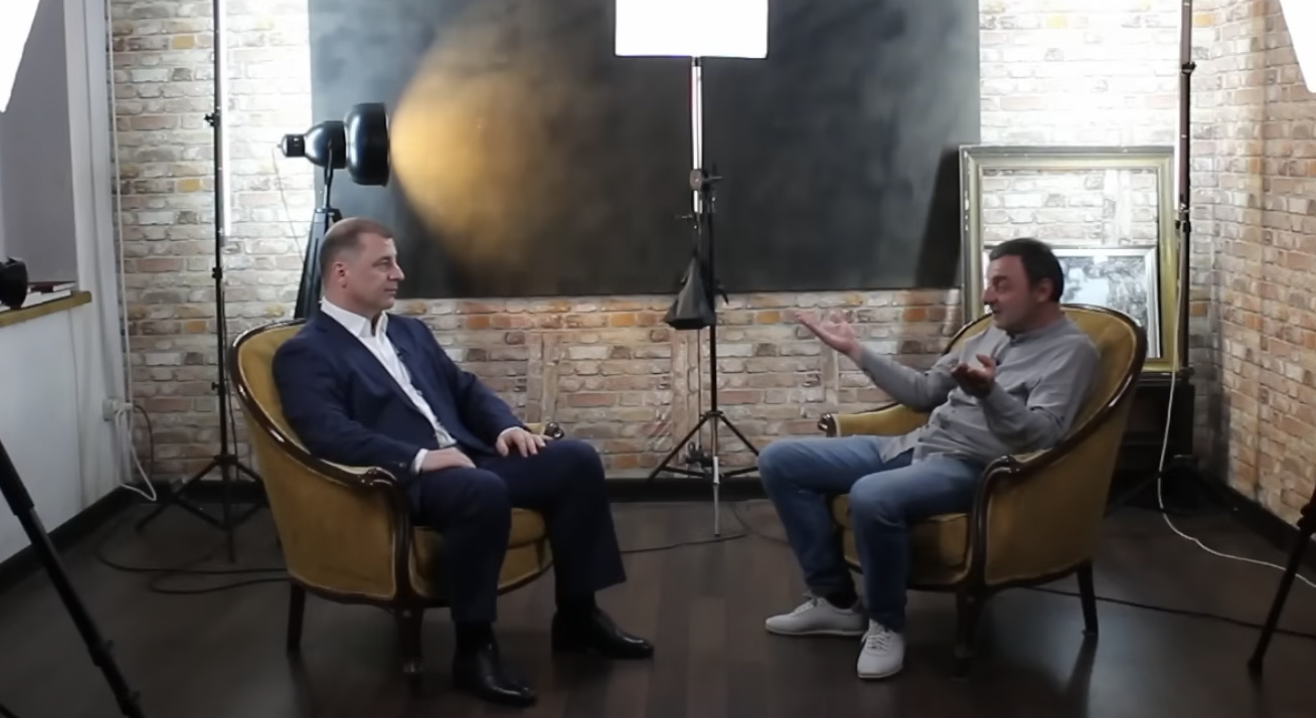
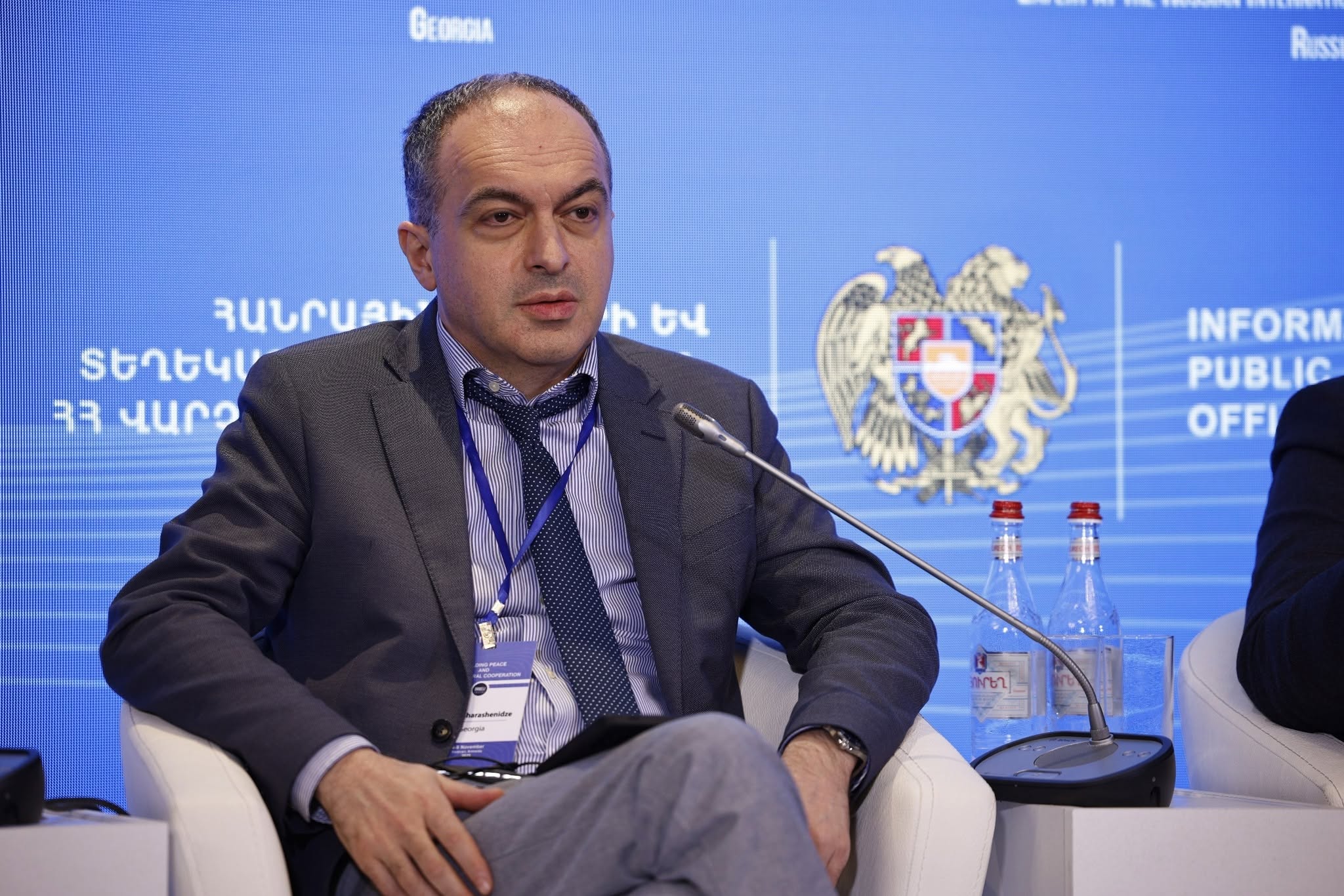
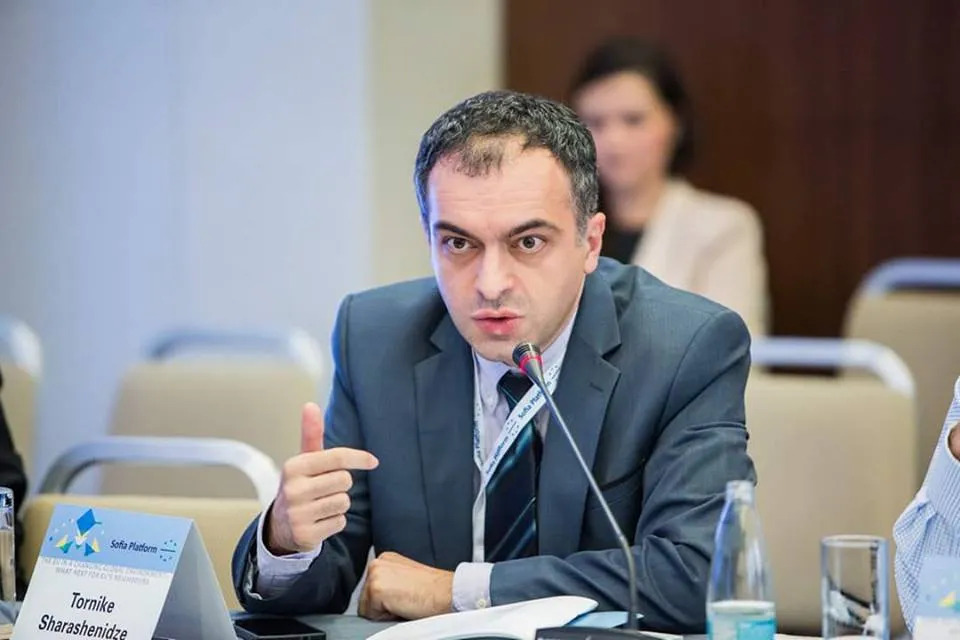
In this interview, Professor of International Relations Tornike Sharashenidze offers his assessment of the Abkhaz conflict and prospects for the future. In his opinion, the 1990s were a period of missed opportunities, which after 2008 was replaced by a harsh geopolitical reality. From Sharashenidze’s point of view, the restoration of Georgia’s territorial integrity is most hindered by the existing Russian military presence in the region. The second negative factor is geography: for the West, Georgia remains a remote space. Due to these reasons, Georgia is forced to act pragmatically and distance itself from idealistic fantasies of Western intervention.
Main theses:
Question: The conflict in Abkhazia has been going on for three decades now. During this time, regional and international politics have changed. If we look at the 1990s—what was the policy of major players toward this conflict during that period, and what prevented its resolution?
Tornike Sharashenidze: As the facts indicate, Boris Yeltsin at one time was not against this problem being settled. However, Yeltsin did not have the kind of well-functioning vertical of power that exists in today’s Russia. Apparently, due to internal contradictions, he did not exert much effort on this issue and did not help Georgia in the ways that were desirable for Tbilisi.
When we mention Russia, we must understand that it is a rather complex political organism, even more so back then, in the 1990s.
Apparently, the view that prevailed in Russian political circles at the time was that these territories should not be returned to Georgia just like that.
There were several arguments for this view:
One argument was that Abkhazia, like the Tskhinvali region, should be used as leverage against Georgia. This approach exists to this day.
On the other hand, by supporting the Abkhaz, they would also win the favor of the North Caucasians. Russia, in the context of the Chechen War, very much needed such sentiments. This was one of the reasons why Russia did not prevent the arrival of fighters from the North Caucasus in Abkhazia.
At the same time, it became clear that Russia did not want to help Georgia, or, if it did help, it would come at a price.
There was talk of a confederation. Primakov even brought Ardzinba to Tbilisi, but it remains unclear to this day what exactly happened at that meeting and what had a negative impact on it.
Question: What changes in the 2000s? A revolution takes place in Georgia, and there is a new government in Russia as well. Were there noticeable changes in Russia’s policy toward the Caucasus or the West? In the case of Georgia, these changes developed in a negative direction. What kind of policy did Russia pursue during those years?
Tornike Sharashenidze: In the beginning, Russia indeed did not have bad relations with the new authorities of Georgia. Apparently, at first, relations between Putin and Saakashvili personally developed well. A manifestation of this was Russia’s constructive stance during the Adjara events in 2004.
These relations apparently deteriorated in August of the same year, when the Georgian side attempted an attack on Tskhinvali. This step was not in Putin’s interests.
From his point of view, if these regions were to be returned to Georgia, the process had to take place taking into account Russia’s interests and without the use of force.
It seems that it is precisely from these events that relations between Russia and Georgia began to spoil. Added to this was the deterioration of relations between Russia and the West. Since 2004, Russia has become increasingly aggressive and revanchist, which has made things even more complicated. Against this background, Russia considered Georgia an ally of the West, which burdened these relations even further. These processes run in parallel.
Question: The main topic of the last decade is the Russo-Ukrainian war. Against this background, the government changes in Georgia, but no activity is observed in Tbilisi’s steps on the Sukhum or Tskhinvali directions. What explanation could such stagnation have—has the time not come for conflict resolution, is this topic politically disadvantageous, or what reason might dominate? There is an opinion that this inaction is also a deliberate policy.
Tornike Sharashenidze: The most favorable time for resolving this problem was the 1990s, and that period has passed. The 2008 war and the recognition of the regions’ independence complicated everything.
Whether we like it or not, today we face a reality: if you want to get these territories back, you will have to talk to Russia, and to achieve this goal we will have to concede much more than we would have had to before the 2008 war.
For the current authorities of Georgia, entering into a dialogue with Russia will not be easy. Since 2012, they have been accused of being pro-Russian. Accordingly, there is no activity in this direction.
Today, resolving the conflict issue is very difficult. And in the course of this process, they will lose political points and support in domestic politics.
To return the territories, talking to Russia is necessary.
There is also a second scenario, which the opposition forces mostly hope for—Russia will collapse, and the West will hand these territories to Georgia as a gift.
I think they are waiting for this scenario, for its fulfillment. If this scenario does not materialize, these forces have no backup plan.
The aggravation of relations between Russia and the West did not benefit us. Russia first vented its anger on us.
Question: One of the accusations against Georgian Dream is that they failed to benefit from the intensified conflict between Russia and the West and did not use these processes to their advantage.
Tornike Sharashenidze: For me, it is unclear what exactly the Georgian authorities should have done. At most, the European Parliament would have adopted more critical resolutions, where they would demand more loudly that Russia withdraw its military units from Georgia.
As long as Russia maintains military forces here, the situation on the ground will not change. It is as simple as two times two equals four.
I do not see even a hint of rationalism in this accusation.
Question: There was also a prominent opinion in our society that at the end of the war in Ukraine, a new European security architecture would be created, and Georgia’s interests and the issue of its territorial integrity would definitely be taken into account in it. How realistic do you consider such a development of events?
Tornike Sharashenidze: All of this seems like fantasies to me. At a time when Georgia is not even given a MAP, its inclusion in a new European security space seems unthinkable to me.
NATO is a much more active organization because the United States is there. If the Europeans create their own security system without the Americans, this system will be much weaker. And an alliance that is weaker than NATO will not dare to accept Georgia into its ranks. As I have already noted, a more active NATO did not give Georgia even a MAP.
We must not forget about geography. In this specific case, geography is not working in our favor. Geography and the presence of Russian forces 40 kilometers from Tbilisi—these are the main factors.
It is clear that Abkhazia worries every Georgian more than the Tskhinvali region, but Abkhazia is far from Tbilisi. When Russian military units are stationed near Tskhinvali—this is a problem of such a scale that I doubt any European security system can help.
Which European country will be ready to defend Georgia from Russia?—I have this simple question, and I doubt anyone has an answer.
Question: Against the background of the war in Ukraine, some believe that the West has woken up and become more active. Others, however, believe the opposite—that this war has shown the crisis the West is in. To what extent do you notice that the West [collectively or individually] has become more active in our region and has developed more interest in weakening, pushing back, or completely expelling Russia from here?
Tornike Sharashenidze: I do not see a pushed-back Russia as of yet.
Question: They say that Armenia has left the Russian orbit, and the Kremlin has lost Azerbaijan as well.
Tornike Sharashenidze: At this stage, it can be said that Azerbaijan has indeed left the Russian orbit. Regarding Armenia, however, I cannot say this.
Russia can raise the price of gas for Armenia and simply collapse its economy. Therefore, Yerevan will not leave this sphere of influence so easily. The European Union could pay the cost of the more expensive gas for Armenia, but is the European Union ready for this? I doubt it.
Against the background of this war, part of Europe has indeed woken up. This is, first of all, Eastern Europe, and even then, only a part of it. In Hungary, for instance, the government changed, but no big changes are visible in foreign policy. Hungary has not shifted to anti-Russian positions.
European countries do not view Russia as a threat. The Baltic countries and Poland consider it a threat. Germany has also become more active, although I do not think Russia is considered a serious threat in Germany. France has become more active because it has ambitions in the European Union and wants to gain the status of a leading country. And England is a historical adversary of Russia. The Scandinavian countries have also become more active, as they are allies of the Baltics.
Other European countries—Bulgaria, Portugal, Spain, Italy—are not overly active. They do not feel a direct threat from Russia and, unlike France, do not have ambitions within the European Union.
Among these countries, I consider Germany’s transition to the anti-Russian camp to be the most important event, since it is the main economy of Europe.
Question: There is an opinion in Georgian political circles that the West should be actively involved in the negotiation process with Russia. To what extent do you see this interest or readiness in Western countries? Or how correct does the approach seem to you that, in addition to Russia, other players should be involved in conflict resolution?
Tornike Sharashenidze: Before 2008, this approach dominated. However, after that war, I cannot imagine how the West can become involved in the resolution of this conflict.
We have three options – either Russia suffers a serious defeat in this war; or it “repents” for its steps and returns the taken territories, or – one needs to talk to it.
The first is unrealistic, the second is even laughable. The third option remains, but if we do not talk to Russia, it means we are hoping for the first and second options.
Question: When talking about the future, dialogue with Moscow remains a central issue. During a dialogue with Russia, what kind of project, what kind of idea should Tbilisi put forward so that Moscow would seriously consider these proposals and a convergence of interests would occur?
Tornike Sharashenidze: Russia, in all probability, along with military neutrality, will also demand a refusal aspiration towards the European Union. This will be their minimum demand. They will demand that their military bases remain in the regions. And only after these issues can they offer Tbilisi the idea of a confederation. Based on today’s situation, I cannot imagine more possibilities than this.
Question: Against the background of these regional processes, how much value do Georgian-Abkhaz relations have? Considering that the Abkhazians are the weakest actors. The Georgian side is also weak compared to Russia. Even if Georgian and Abkhazian interests coincide with each other—how much will this affect negotiations with Russia?
Tornike Sharashenidze: No matter how much Russia’s influence on Abkhazia grows and the role of the Abkhaz in this process decreases—in any case, we must do our maximum to restore relations. But not only has the maximum not been done, even half has not been done.
There is a referral program for Abkhaz. That is good.
When I observe the Abkhaz, they have no idea how people live on this side. Anti-Georgian propaganda internet resources operate actively there, stirring up anti-Georgian sentiments and painting everything as if life here is terrible.
To change these perceptions, modern Georgian films and TV series could be translated into Russian.
Culturally, we and the Abkhaz are very similar to each other. They would be interested in these films; they would like them. They would see how people live on our side, they would see that people here are not thinking at all about bursting into Abkhazia on tanks.
This cultural segment, in my opinion, would be more effective.
We, unfortunately, failed to reach the Abkhaz audience. There was an attempt to create an alternative information channel to balance the Russians, but in this expensive sphere, you cannot compete with Russia. Unfortunately, the time to use alternative approaches has been missed.
Question: In Georgian or Abkhaz political circles, what issues are the hardest for both sides to admit and, at the same time, the existence of which hinders the restoration of relations?
Tornike Sharashenidze: First and foremost, neither side wants to admit the mistakes and crimes they have committed.
If the Georgian side wants to change the post-war status quo, it must acknowledge this past. The Abkhaz side also needs to acknowledge this, because time is not working for them—we may have lost territory, but they are losing absolutely everything.
This seems to me to be the minimum of what must happen.
When both sides admit that they were wrong about something—that, in my opinion, will be a very good first step.
First of all, this needs to be done, and then the remaining processes will follow. If both sides can take this step—then, in my opinion, everything will become easier.