Changes in Georgian-Russian relations: what Abkhazia can expect from the appointment of a special representative. A view from Sukhum
Georgian-Russian relations
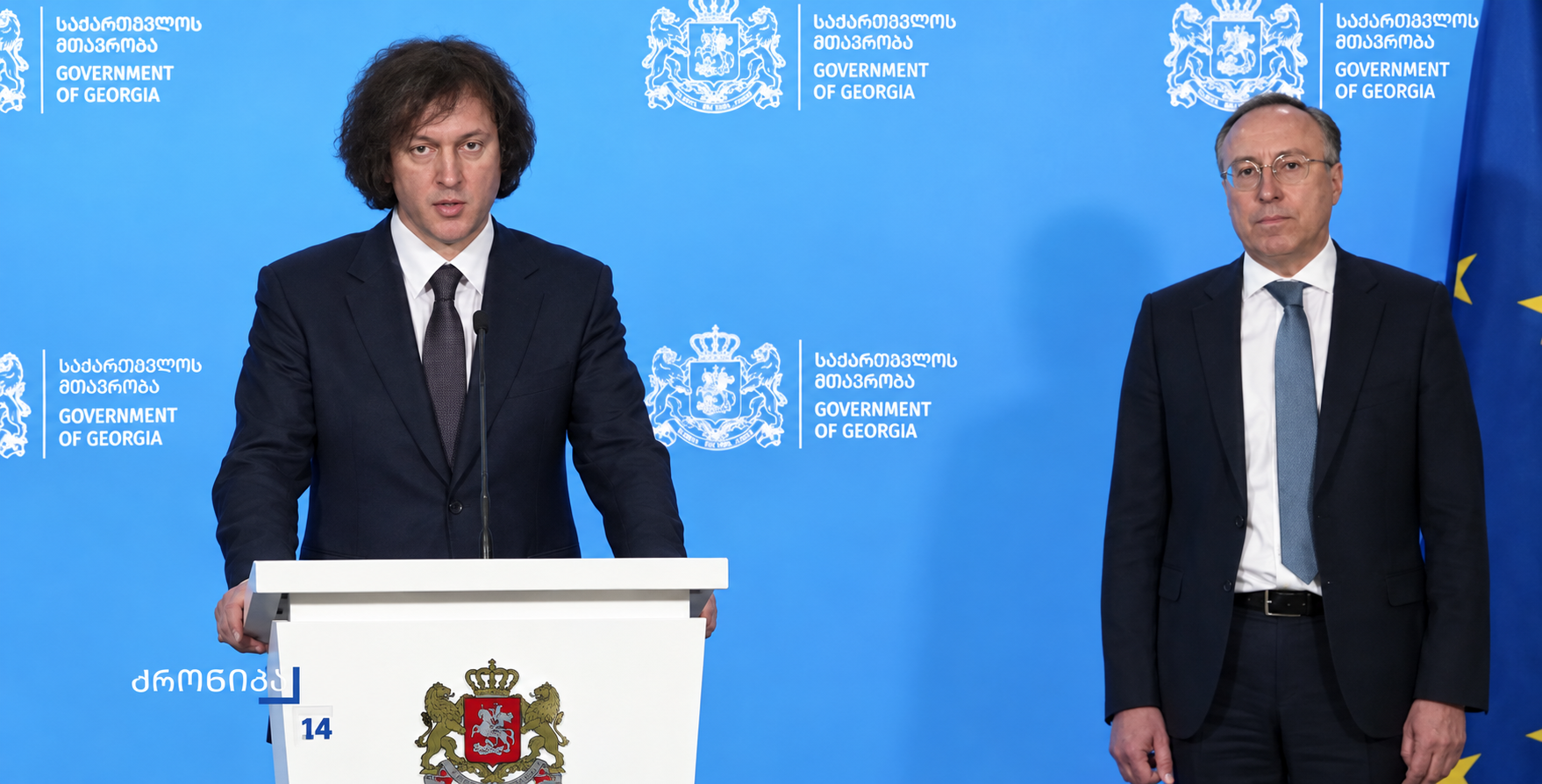
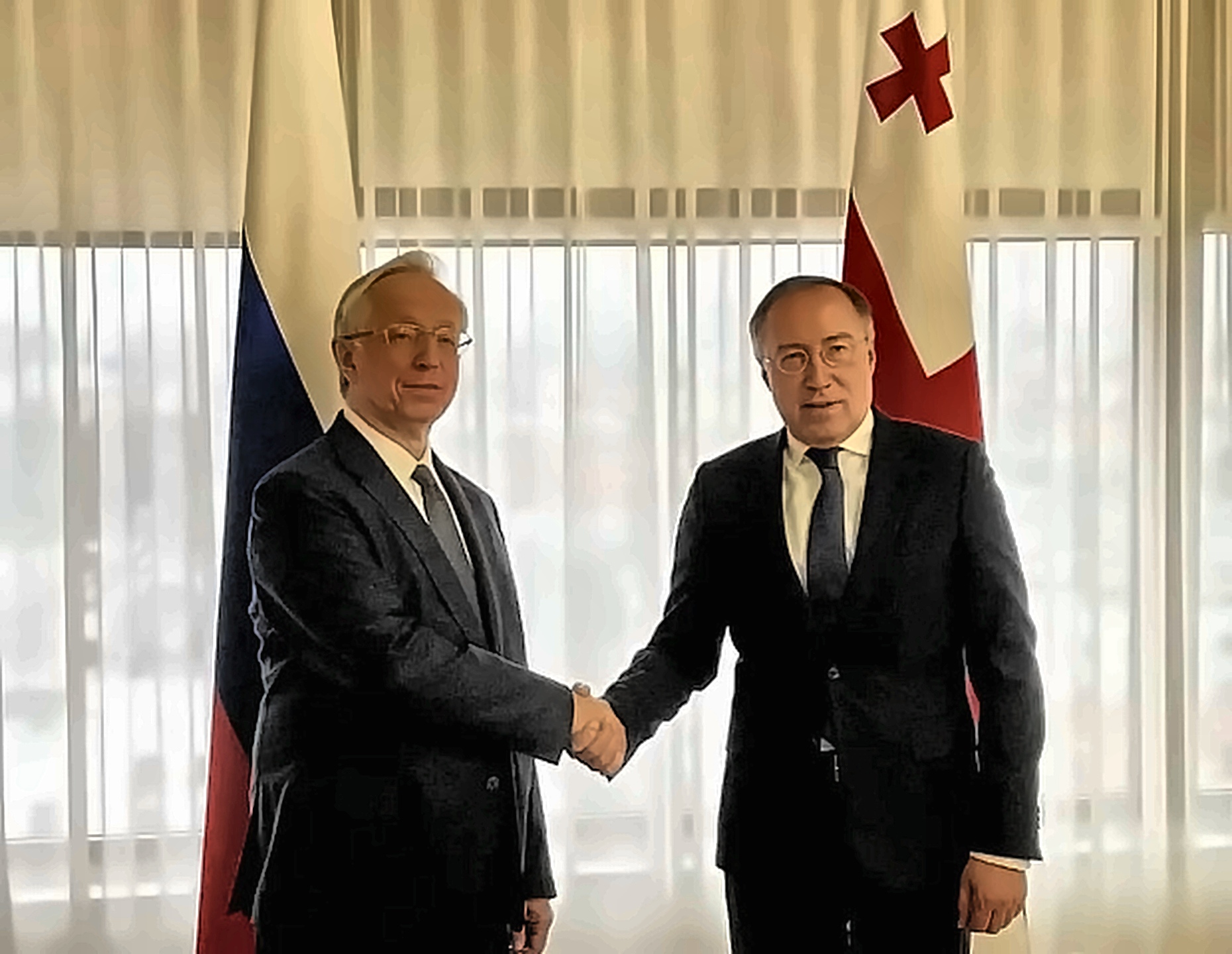
On 21 October, Georgian Prime Minister Irakli Kobakhidze appointed First Deputy Foreign Minister Giorgi Zurabashvili as special representative for relations with Russia. Unlike the former “Abashidze–Karasin” format, his mandate also covers the settlement of conflicts, which some Georgian experts see as a threat to the Geneva format. On 19 November, the first meeting between the Georgian and Russian sides took place in Minsk: Zurabashvili held talks with Russian Deputy Foreign Minister Mikhail Galuzin. We asked Abkhaz respondents to assess these events and to say what Abkhazia should expect.
Main theses:
The appointment signals a new, more institutionalised phase in Georgian-Russian relations. Neither respondent considers it unexpected, and both anticipate that the process could eventually lead to the restoration of diplomatic relations. They see it as an attempt to “reset” the stalled dialogue and bring all Russia-related issues under a single point of responsibility.
The main obstacle to rapprochement, which also directly concerns Abkhazia, is Georgia’s Law on Occupied Territories. As long as the law remains in force, the restoration of diplomatic relations is impossible. According to the respondents, the law contributes to Abkhazia’s isolation and creates serious economic difficulties for the region. They do not rule out the possibility that its repeal or reform will feature on the agenda of talks between Zurabashvili and Galuzin.
Views on the new format are mixed. On the one hand, concerns are raised about the future of the Geneva International Discussions, alongside calls for transparency and strong emphasis on preserving Abkhazia’s agency and maintaining a separate format for the Georgian-Abkhaz conflict. On the other hand, the new format is welcomed as an opportunity to break the deadlock in negotiations.
Questions to the experts and their answers:
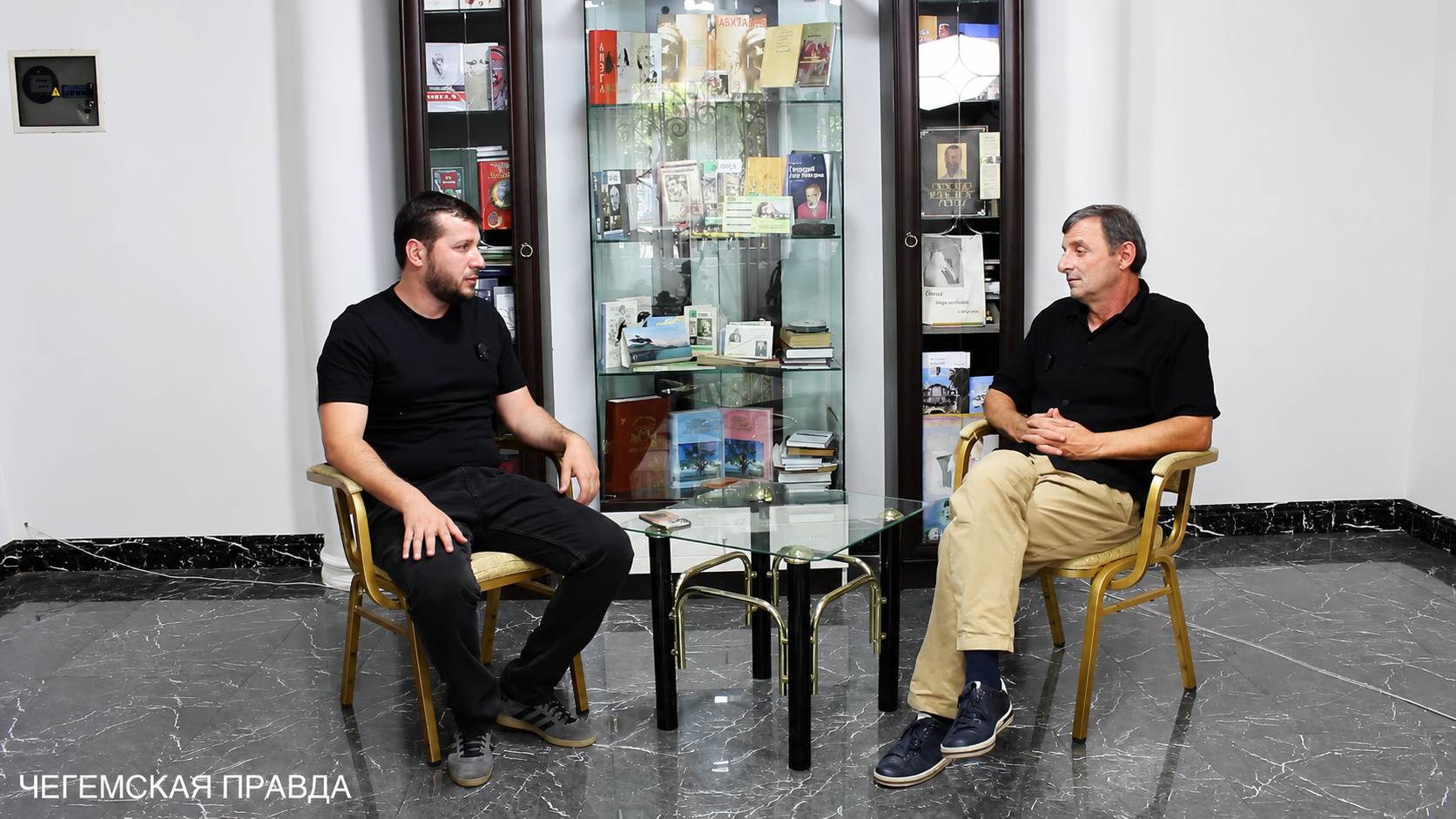
Question: How do you assess the expanded mandate of the Prime Minister of Georgia’s Special Representative for Relations with Russia and the appointment of Giorgi Zurabashvili to this position?
Respondent 1:It is hard to say anything about Zurabashvili himself: in the context of the Georgian-Abkhaz conflict, this name has not come up before. But the very fact that such a post has appeared in Georgia’s Ministry of Foreign Affairs points to the start of a new process: the establishment of diplomatic relations. It did not come as a surprise: lately we have seen the corresponding rhetoric from both sides, from Russian politicians and officials as well as from Georgian politicians in power. It was clear that relations were moving to a new level. The appointment of a diplomat to this post shows that it is precisely diplomatic relations that will be established.
As we know, the first meeting has already taken place in Minsk, where economic and humanitarian issues were discussed, including those related to culture. Humanitarian and cultural issues may not be so fundamental for us, but trade and economic relations may affect Abkhazia too, since one of the trade routes runs through it. Here we need to watch closely how relations develop.
Respondent 2: A reset of relations is plain to see, an attempt to make them livelier. Under “Georgian Dream,” these relations have so far been built on developing economic ties between Moscow and Tbilisi. Now a kind of ceiling is clearly visible, on both sides. For Moscow, building economic relations without restoring diplomatic ones is far from ideal. The economic projects are, essentially, held together on little more than good faith, because there are no diplomatic relations.
The appointment of Zurabashvili, the new special representative of the Georgian government for relations with Moscow, is an attempt to reset the stalled negotiation process and take it to a new stage. We should take into account the previous format, the Abashidze–Karasin commission. If we leave aside the short period when Kajaia was the representative, it all began at the level of Russian Deputy Foreign Minister Karasin and Georgia’s former ambassador to Russia, Abashidze, who was chosen without any special status. At that level, some economic relations were built and immediate, day-to-day issues were resolved, but none of it had any coherence.
At the Geneva talks, where the Russian-Georgian conflict was discussed, including the Georgian-Abkhaz and Georgian-Ossetian ones, Georgia was represented by Deputy Minister Lasha Darsalia, who, by the way, has held that position since Saakashvili’s time. Little changed there. On the other hand, there was the Ministry for Reconciliation and Civic Equality, which dealt with the Georgian-Abkhaz and Georgian-Ossetian conflicts and had no contact with this activity whatsoever.
My feeling is that the whole range of issues in which, in Georgia’s view, the Russian factor is present in one way or another is now being centralized and handed over to a curator, a person who will deal directly with all of these problems. That is what the special representative for relations with Moscow, Zurabashvili, will take on.
Georgian officials do not particularly emphasize it, and half-deny that we are talking about diplomatic relations without the “de-occupation” of Abkhazia and South Ossetia. Nevertheless, it seems to me that the direction in which these relations are developing is toward diplomatic relations between Moscow and Tbilisi being restored one way or another.
Question: Do you see in this appointment a strengthening of the pro-Russian vector in Georgian foreign policy, and what can be forecast in connection with this with regard to Abkhazia?
Respondent 1: It is obvious that if they have started discussing economic and humanitarian issues, at some point they will get to political ones. What matters is what Georgia is ready to do for the sake of dialogue with Russia. Is it ready, for example, to make concessions on the law on occupied territories, which essentially does not allow diplomatic relations with Russia to be established? As long as this law exists, it is impossible. It is hard to say now what would be on the agenda as a response measure if it were repealed. Besides, the law will not necessarily be repealed completely; it may be reformed. In any case, this will have implications for the Geneva process and for the dialogue on the Georgian-Abkhaz conflict that is conducted on this platform. The Geneva platform is above all a Georgian-Russian dialogue, where the issues of Georgia’s conflicts with South Ossetia and Abkhazia are on the table. Our conflict does not play a primary role there, but all of this is, of course, interconnected.
This is a very critical moment. We are waiting for information about what took place in the last round of the Geneva discussions, since new factors have appeared: a new appointment, a new process between Russia and Georgia. What will be the fate of the Geneva process? Will it remain relevant? It concerns primarily Georgian-Russian relations and arose as a result of the events of 2008. This format may be transformed or moved to another platform. We do not have complete information, but I think some trends were already determined during this round. It would be right for our society to have this information and to understand where the process is heading and what to expect.
It is important now to be very attentive and to follow every step, so as to make decisions that concern our fate. Our important task is to defend our agency in all matters related to Georgian-Abkhaz relations and to relations in the region as a whole. We need to convince the Georgian side that the Georgian-Abkhaz conflict is a conflict in its own right and must be resolved in a separate format, in which the Abkhaz side is a party to the conflict.
Respondent 2: The appearance of new formats, when the negotiation process is clearly stagnating, brings new impulses, opportunities and prospects. Given the current state of Georgian-Abkhaz relations, I am, in principle, in favor. It seems to me that everything comes down to a kind of common denominator, on the part of both Tbilisi and Moscow: on the one hand, the Geneva format; on the other, Galuzin as special representative in the talks with the Georgian representative. Figuratively speaking, there will be no “broken telephone” in these relations, and no swan, crayfish and pike pulling in different directions: on both sides, the whole range of issues is placed in a single pair of hands.
The Abkhaz interest here is quite obvious. We are not talking now about Tbilisi recognizing the independence of Abkhazia or South Ossetia. We are talking about a clearly discriminatory law on occupation, which creates serious problems for Abkhazia and isolates us from the rest of the world: many bans on economic relations, on the movement of ordinary citizens, and so on. It is a whole package of prohibitive provisions, which have, one way or another, been adopted, including by the countries of the European Union.
Let me recall how the law on occupation affected us from the very beginning. Our mobile operators, Aquafon and Amobile, or at least Aquafon, worked on equipment from the Finnish company Nokia. Immediately after the law was adopted, the companies could no longer purchase this equipment and had to switch urgently to Chinese equipment. That is an enormous expense. Similar problems have arisen and continue to arise.
If progress is made in the negotiations between Georgia and Russia, it must necessarily touch on the law on occupation, taking into account economic relations and Russian investment in the Georgian economy.
Nevertheless, the image of Russia in Georgia remains quite negative, and it will stay that way as long as the law on occupation exists. When every cell of the organism is reminded that Russia has supposedly occupied Abkhazia and South Ossetia, and that all the problems of Georgia’s future come down to Russia, this law reinforces that perception.
The law on occupation is a kind of red rag to a bull for Moscow. It is perceived there as negatively as it is in Sukhum or Tskhinval.
It is very important for us that this law be repealed, all the more so because it is directed not only against the development of Abkhazia and South Ossetia, but also against Russia.
A ceiling of possibilities has now formed, including in economic and trade contacts between Moscow and Tbilisi, and further development runs up against the existence of this law. It seems to me that the question of repealing the law or substantially revising it will, one way or another, be on the agenda of the Russian-Georgian talks at the level of Zurabashvili and Galuzin.
The terminology, place names and views expressed in this article are those of the author and do not necessarily reflect the editorial position of this website.
Speaking with confidence as someone with expertise in this field, I can say that significantly more prisoners were killed and executed by shooting on the Abkhaz side than on the Georgian side.
A group of Turkish lawmakers has called on Ankara to recognize Abkhaz passports, restore direct maritime and air links, and consider recognizing Abkhazia’s independence.