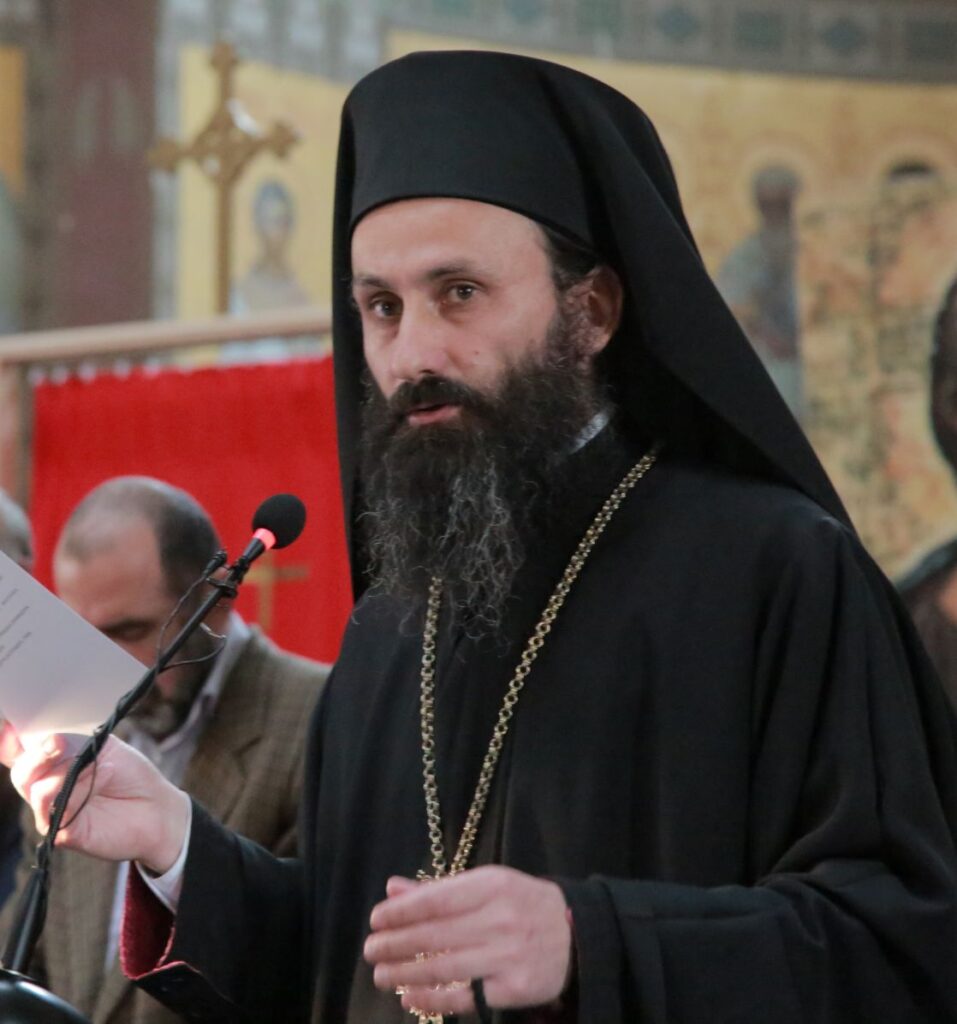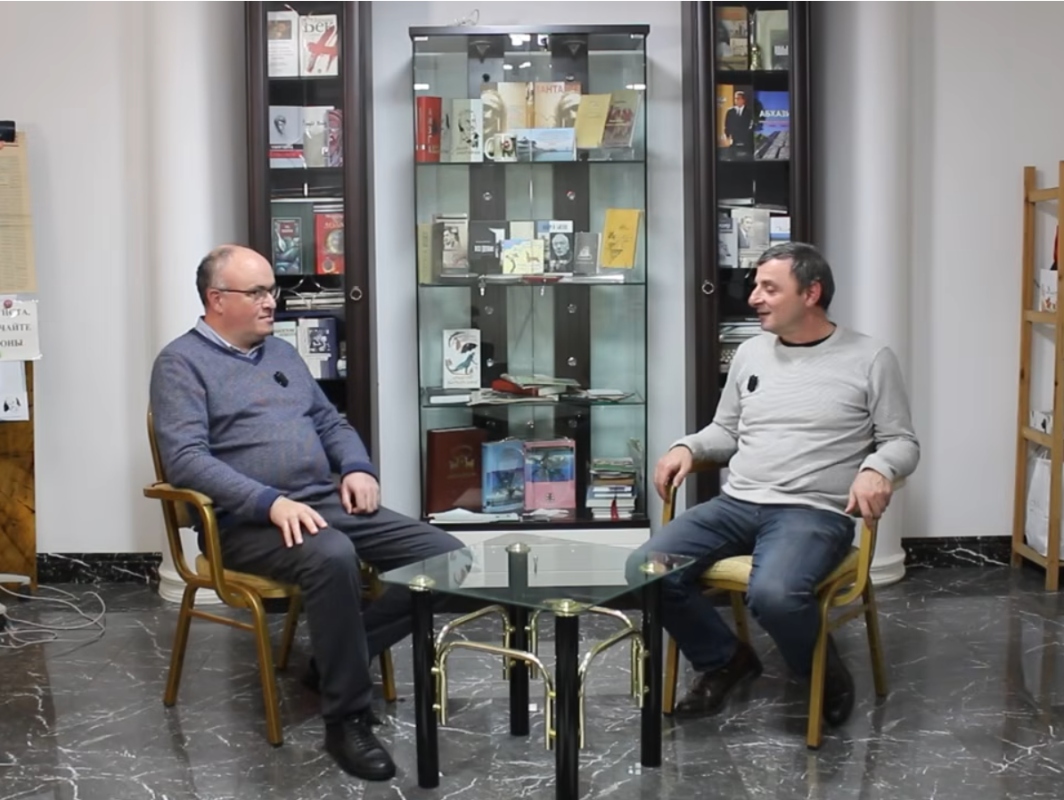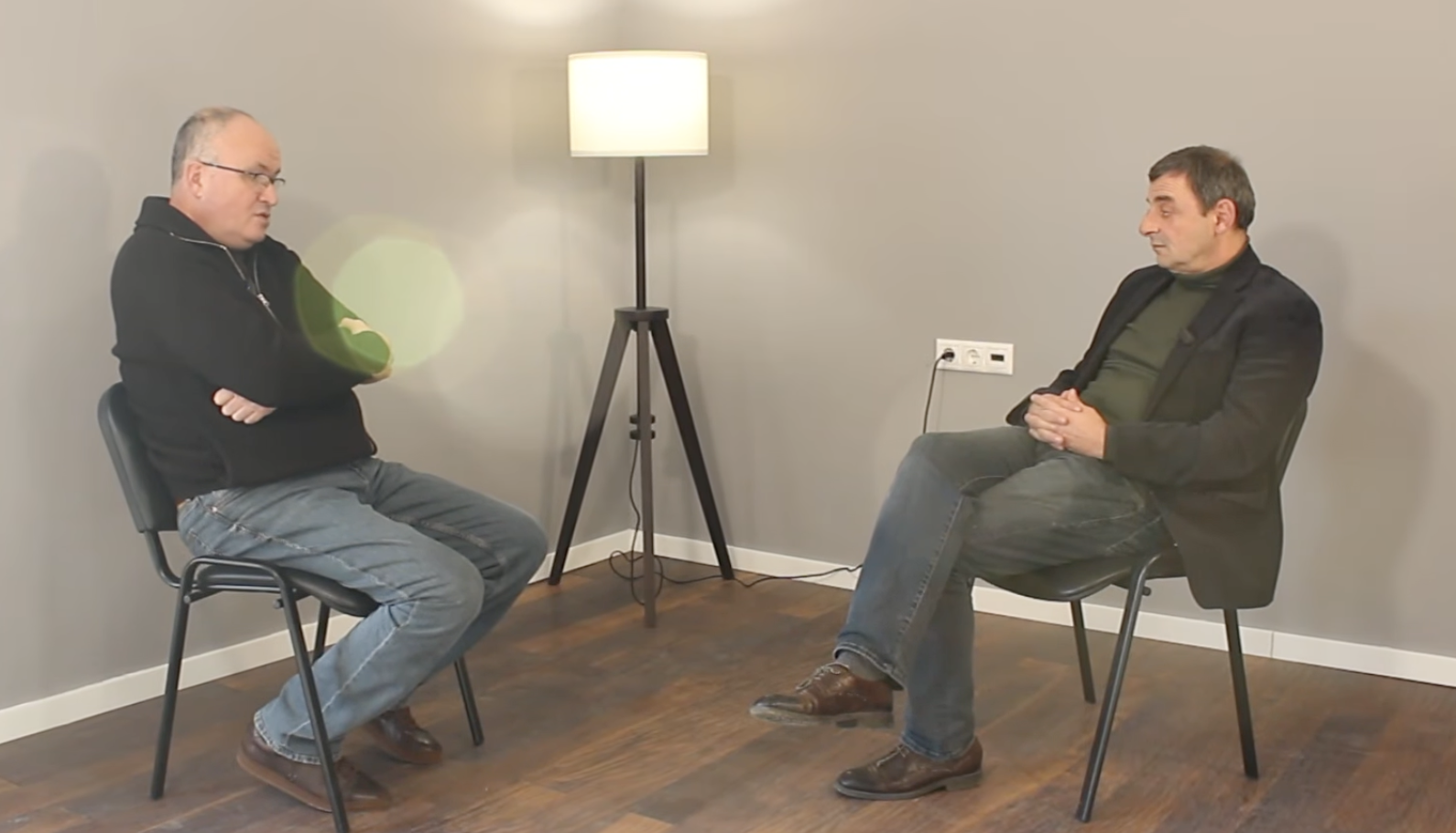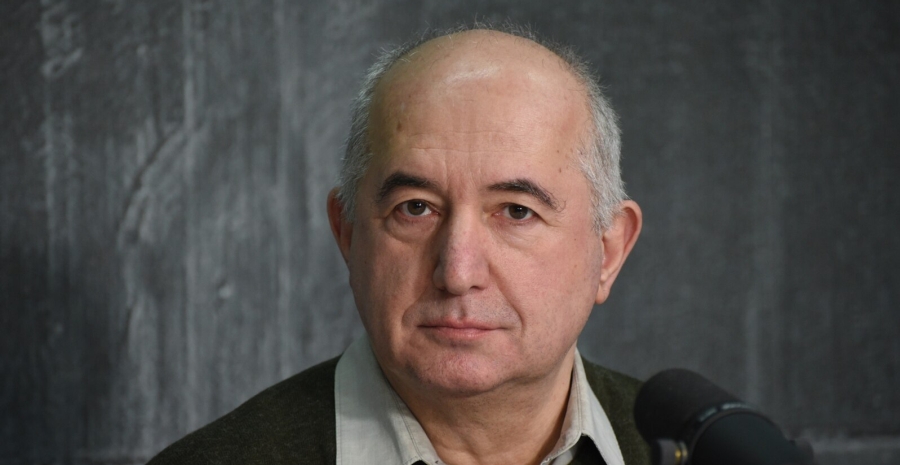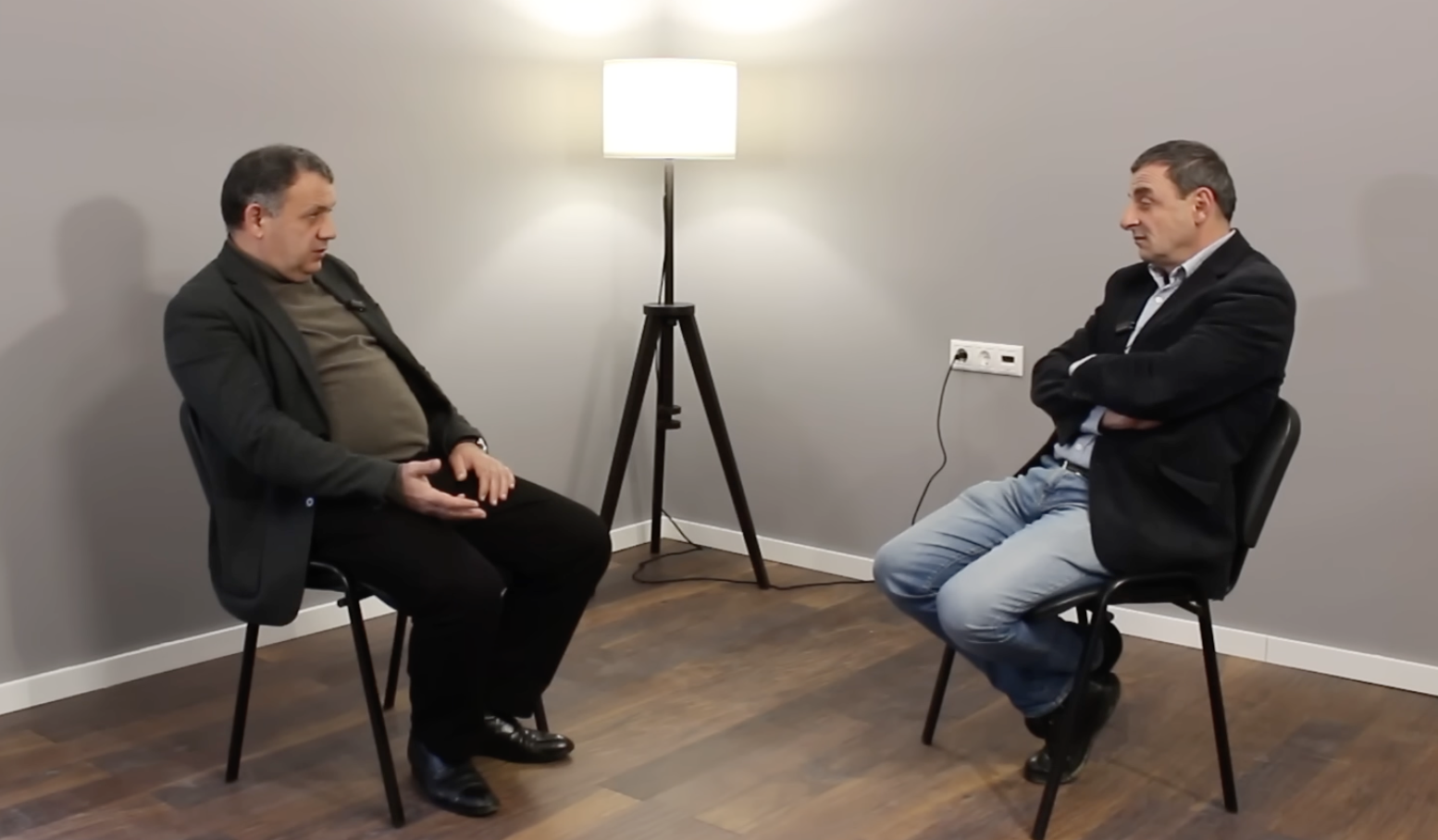








Paata Zakareishvili and Giga Bokeria Debate
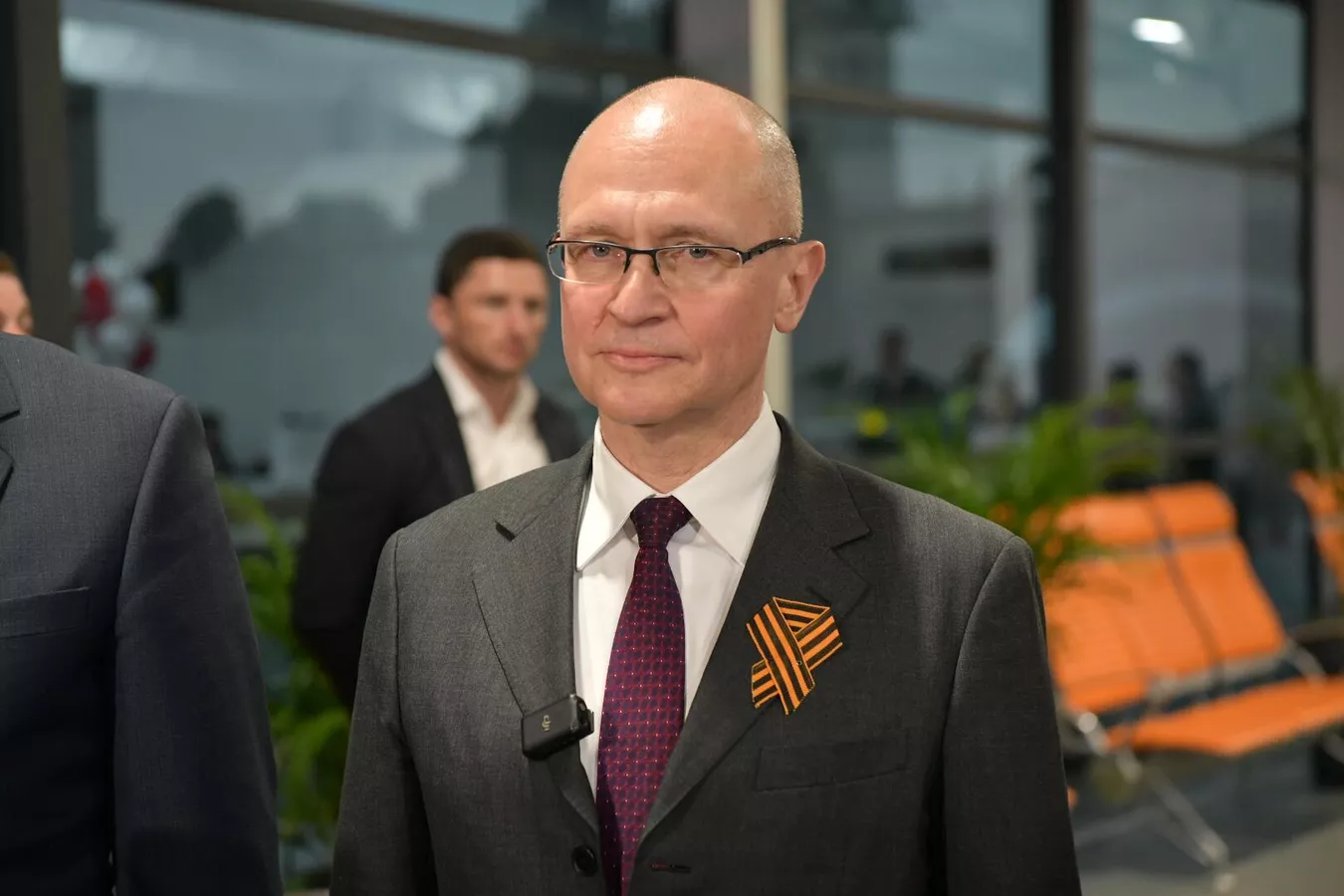
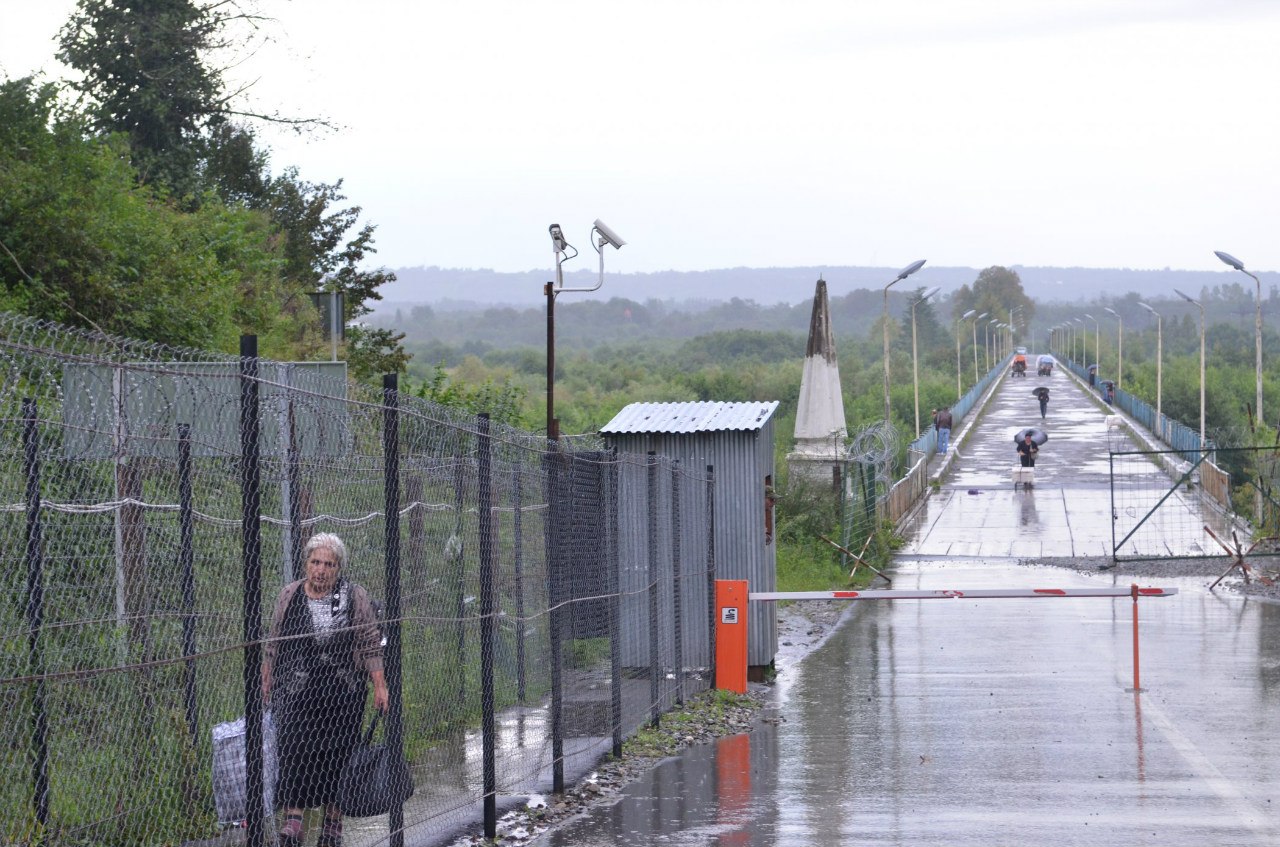
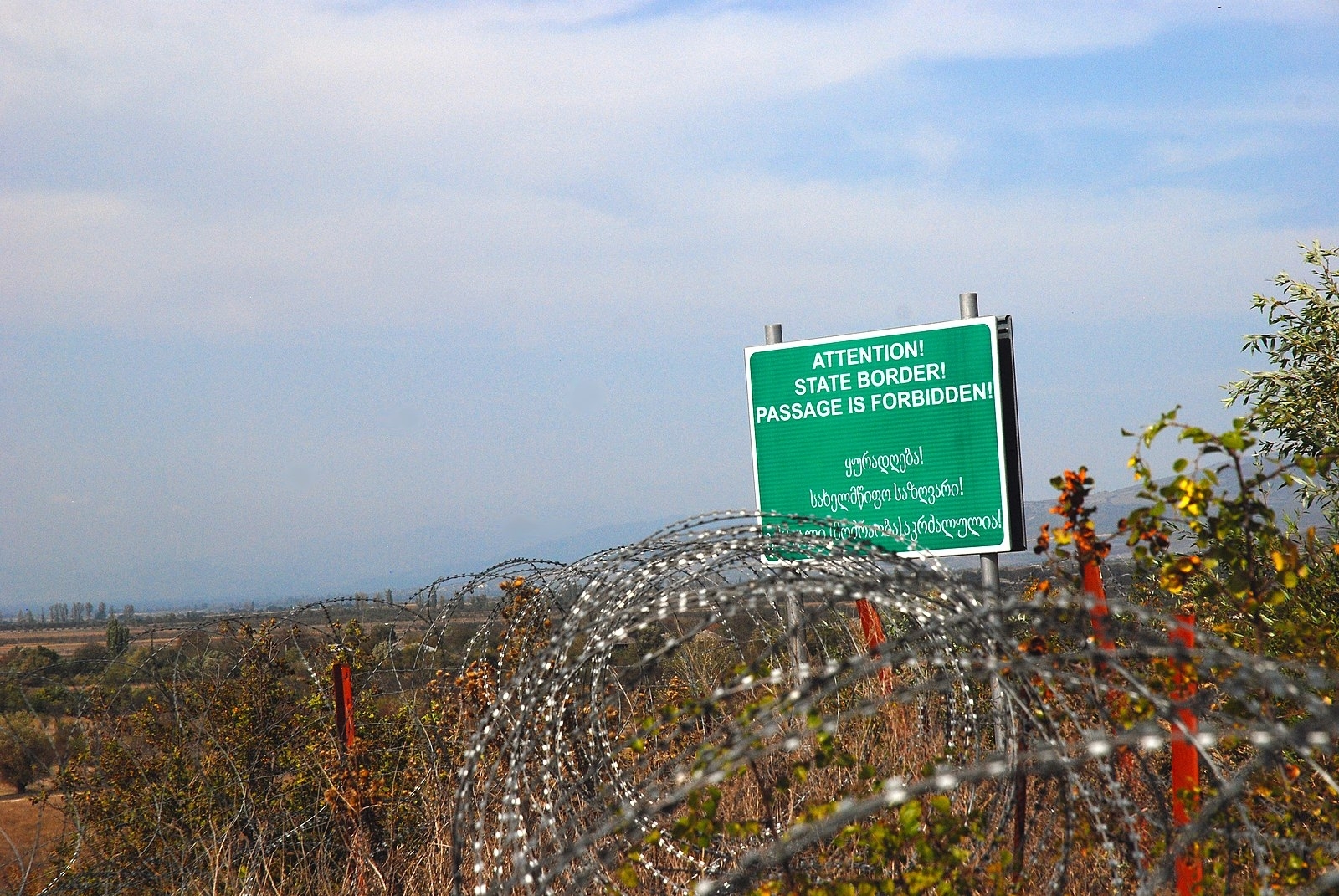
In the program “Kamatoba” (“Debate”) on the YouTube channel “Mismine” (“Listen to Me”), opposition politician Giga Bokeria debates conflict resolution expert Paata Zakareishvili over how to return Abkhazia to Georgian control.
Giga Bokeria and Paata Zakareishvili represent two radically opposed groups in Georgia regarding Tbilisi’s policy toward the occupied territories.
Full text version:
Ana Kaulashvili:
Hello, this is the program Kamatoba (Debate). It is a series of political debates where we discuss current and socially relevant political topics. I am the host of the show, Ana Kaulashvili. A reminder: the programme airs on the YouTube channel MISMINE. We also invite you to watch our videos on Facebook, Instagram, and TikTok.
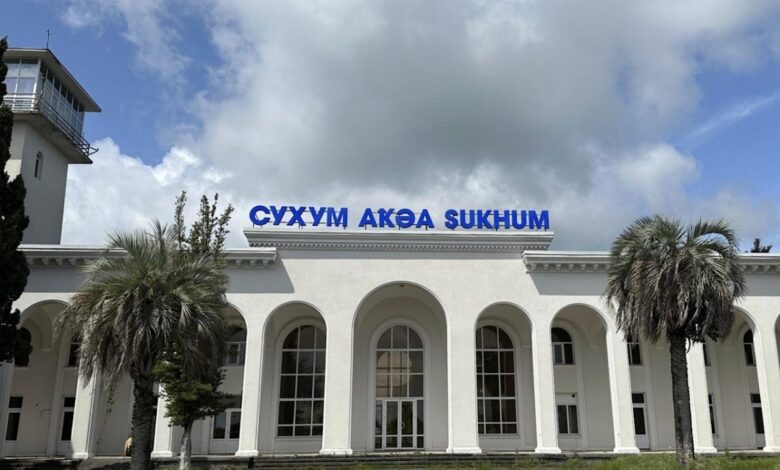
Our main sponsor is the University of Georgia. The entire MISMINE team expresses solidarity with the university, which is currently face a derogatory campaign organized by the authorities. Today we decided to discuss an important topic: Abkhazia and the possibility of its return (as a part of Georgia).
Our guests today are Giga Bokeria, representative of the Federalists party, and Paata Zakareishvili, a conflict expert. Thank you both for coming and making the time. I expect this will be a very interesting debate, as this is a complex and important topic for Georgia. Today we want to talk about what you think Georgia should do now (to regain Abkhazia). What steps should be taken to resolve the conflict?
Should it be a reconciliatory dialogue and reconciliation with our “brothers,” or is a show of strength needed? I’m also interested in discussing whether you see the situation as a single major conflict between Georgia and Russia, or as several ethnic conflicts.
I would also like to discuss what needs to be done if the problem is resolved and de-occupation occurs. That will probably be a relatively smaller problem if things progress in that direction.
But it is still a topic worth discussing and deserves attention. Before we start the debate, I’d like you to introduce yourselves and briefly share your views, not on every topic, but in general. What is your position on this conflict, and what do you think should be done? Just in a few words. Let’s start with Giga. Just briefly outline your position. Which side are you on in this debate?
Giga Bokeria:
This isn’t a five-minute monologue?
Ana Kaulashvili:
No, just an introduction and your position.
Giga Bokeria:
First of all, thank you. This is exactly why the problem arose. It’s wrong to discuss relations with Abkhazia in isolation. This is a confrontation with Russia – Russian aggression and occupation of Abkhazia and the Tskhinvali region. And separately, Russia’s aggression against the Georgian state. My position is unchanged.
Only with strong allies, achieving consensus across the free world and neutralizing Russian aggression, but not treating this only as an ethnic conflict. Only by achieving all these components can we be in a position to carry out de-occupation.
There will be a chance for peaceful de-occupation, not a guarantee. This chance exists if our enemy, Russia, and the groups that remain in these enclaves after it weakens, understand it. If they see that we are strong and capable of using force, then there will be a chance for peaceful de-occupation.
Of course, another factor is what kind of country we are. That will also be a factor. In this sequence – only from a position of strength – can the goal be achieved, which I will explain in more detail. It is urgent to neutralize the narrative of so-called ethnic conflicts, which harms our national interests.
Ana Kaulashvili:
Thank you. Now, Mr. Paata, please.
Paata Zakareishvili:
Greetings. I’m Paata Zakareishvili and have worked in conflict resolution for many years. I’d like to greet Giga.
Giga Bokeria:
I apologize, I missed that. Of course, I should have greeted Mr. Paata.
Paata Zakareishvili:
We have many differences, but I greet you with great respect. There are few in Georgia who follow their principles. I may disagree with you, but I respect you. My viewpoint is fundamentally different. Of course, Russia is a key factor. Without considering the Russian factor, success in the Abkhazia direction is impossible. But for me, these conflicts are threefold. First, it’s the Russian-Georgian conflict and the need to prevent Russian aggression.
Here I fully agree with Giga regarding the Russian component. In my view, it is important to talk about Georgian-Abkhaz relations and Georgia’s responsibilities. Third, the Abkhaz side has its own agency. They have their own interests. If we do not consider and study Abkhaz interests, Georgia cannot effectively take measures against Russia.
We can demonstrate to Abkhazia the strength of a democratic, European-oriented Georgia. This offers completely different prospects to the Abkhaz side.
In this context, I believe Georgia must recognize its responsibility to not only speak about Russia, but also to engage respectfully with Abkhazia, considering their agency and interests.
Ana Kaulashvili:
Both positions are understandable. Let’s agree on the rules. You have both taken part in our discussions before. I’m very glad that you are participating again. Still, I would like to remind you of the rules and remind our viewers that we will have four segments in total. There are a few changes in today’s debate format, and I will explain them now. First, each of you will have five minutes to present your arguments.
This time will be entirely at your disposal. Then there will be a 20-minute period of open discussion in dialogue format. You will be able to address each other directly and respond to one another. There is a small change in the third segment. Previously, this was a Q&A segment. Now we have decided to structure this segment differently. The first 20 minutes will focus on steps toward Abkhazia’s reintegration (into Georgia).
The following 10 minutes will be a Q&A session, where we will discuss what should be done after Abkhazia’s reintegration, how we should act, and what steps should be taken.
I think this is a rather complex topic, so we will stick to this plan. This will make the discussion easier than breaking it up and asking questions later. You will each have two minutes to conclude the debate. You may summarize and add anything you feel is necessary. As always, we will roll the dice to decide who starts.
Paata Zakareishvili:
Three.
Giga Bokeria:
Six.
Ana Kaulashvili:
The higher number starts the debate. So, Giga begins. You have five minutes.
Giga Bokeria:
Thank you very much. I will repeat once again that for me this is about neutralizing Russian aggression and de-occupation. In this sense, there is no fundamental difference between Abkhazia and the Tskhinvali region.
First of all, I would like to say that you, the viewers, or others may have a question. Why should we spend time talking about the occupation in the current situation, under this kind of government?
When today we have a government that serves the interests of the enemy occupying these territories and helps maintain that occupation. I will answer this hypothetical question. This discussion is necessary so that our society can reach at least some level of consensus on questions such as.
What should we do when we have a government that is concerned not with national interests, but with protecting the money and power of one individual, at the expense of the country’s future? The second, and even more important issue, is the narrative that Mr. Paata unfortunately partly supports.
Today, this regime and Russian propaganda use this narrative against our national interests, to disorient and demoralize us. What do I mean by demoralization? Their core position suggests that the Abkhazia issue, and thus the conflicts, can be resolved as if by snapping one’s fingers. (They think that), on the one hand, it is enough to normalize relations with Russia and, on the other, to engage in full dialogue with Sukhumi and Tskhinvali and create a breakthrough there. Mr. Paata expresses this in a more nuanced way. This has been said many times before.
This is a major mistake, a very harmful mistake. A breakthrough is impossible as long as an enemy fully controls the situation there. Moreover, we must put an end to this rhetoric right now so as not to mislead the public. This regime tries to exploit people’s fear of war, claiming it is saving us from war precisely by normalizing relations with Russia and engaging in dialogue with Sukhumi and Tskhinvali. That is their line. We must neutralize this lie.
Second. When we become strong, we will need unconditional support from the free world. Not in resolving ethnic conflicts, but in neutralizing Russian aggression. Because if this is framed as ethnic conflicts, resolving the issue becomes an extremely complicated process. So as not to be only negative, I will say what we should do.
In this case, the steps that the Georgian state and society must take to solve this problem are identical to those needed to preserve our state’s independence overall. We need to make a major leap forward in strengthening our defense capabilities. We must be strong. We must have consensus on this issue; hostile rhetoric must leave no room for maneuver. I am not saying that everyone who makes this mistake is an enemy.
But this false rhetoric must be defeated. We need strong allies and membership in the military-political bloc of the free world. Our task and goal is to join NATO. Strategic political relations with the United States. This is also part of our strength. We must strengthen the understanding among all major players and regional neighbors that this is about neutralizing Russian aggression, not an ethnic conflict.
This is very important. And yes, it is also important that we be a strong, free republic where the rights of every citizen are protected regardless of ethnicity, and where broad self-governance, including regional self-government, exists. This matters. But all of this must be done in exactly this order: once again, we must be prepared for the moment when our enemy, Russia, weakens or transforms.
The latter (the protection of all citizens’ rights) can only happen after (Russia) has weakened. At that moment, the cycle of this evil and what they have created in the occupied territories, filled with ethno-chauvinistic hatred, will come to an end. These centers of hatred cannot be neutralized with kind words. If you are strong, those who remain in Abkhazia will know they have no other chance and that the risk they face is high. Only then will there be a chance to resolve this peacefully. Now I will move on to another topic so as not to spend more time on this.
How we will act afterward. Very serious challenges will lie ahead. The legacy of this evil will not be easy to eradicate. But if we reach that point, that will be what matters most.
We missed our chance twice. In 1991, Russia was weakened. But we were not prepared; the country was in ruins. We allowed all of this to happen because of our weakness. This narrative – that it is an ethnic conflict – was imposed on us.
Russia has used it very effectively all these years, blocking any international initiatives without political consequences. The most well-known example is the Boden Plan, approved by the UN and blocked by Russia through Sukhumi. Claiming that the people there supposedly do not want it.
They have always behaved this way and will continue to do so; as long as this atmosphere exists, there will be no breakthrough.
Dialogue is impossible under tyranny. But the main question is: with whom should we conduct dialogue, and who represents the Abkhazians? And first of all, who are the Abkhazians, given that ethnic cleansing and genocide took place there? There are numerous problems here. But what I have listed are the minimum necessary prerequisites for fulfilling our national objectives.
Ana Kaulashvili:
Mr. Paata, let’s take five minutes to discuss your position.
Paata Zakareishvili:
Of course, I can respond. Giga’s position is clear, and I want mine to be clear as well. The audience should see the difference between our positions. So yes, we should criticize each other if necessary, but I don’t feel the need to attack his position harshly.I completely agree with one part – the segment about Russia.But I disagree with the other two.I just want that to be clear, though any debate is completely normal.
Ethnic conflicts existed from the very beginning, and no one could avoid them. The Soviet Union was created this way. We don’t have time to go through the whole history right now. There was a distorted understanding of ethnic identity. The empire itself was flawed, which is why it collapsed so quickly.
But it collapsed along the very seams it was stitched together on. Lenin and Stalin built the empire based on ethnic components. Georgia, Armenia, Azerbaijan, with small “rooms” for smaller ethnic groups – Abkhazians, Ossetians, and others. The Soviet Union was called a Union of Soviets, but in reality, it was a union of ethnicities. We won’t go further into this topic now.
It’s a completely different subject and would require more time to discuss.But the Soviet Union collapsed, and it was stitched together backward. Like a garment tearing along its seams, it fell apart along these ethnic lines.So it’s not that I particularly want to talk about the ethnic component – it’s just that it naturally forms part of the conflict. There’s a concept called generational trauma.
When a child’s birth is accompanied by trauma, it can affect them their whole life.Ethnicity became one of the reasons for the collapse of the Soviet Union.
It was stitched together incorrectly, and everything else followed. Today it’s no longer as relevant, but it hasn’t disappeared. Now it has taken on a geopolitical dimension.In the 1990s, there were ethno-political conflicts amid the collapse of the Soviet UnionRussia’s internal problems, and its imperial convulsions.
Russia itself faced serious challenges – Yeltsin, Gorbachev, and many other issues. Nevertheless, they didn’t ignore the ethnic components and created hotspots of tension along ethnic lines everywhere.In happened in Moldova, and it was about Karabakh.
The Karabakh conflict was resolved before our eyes.There are many other examples showing how the Soviet empire managed ethnic issues.Over time, the further we move from the original events, the more this takes on a geopolitical dimension, and the harder it becomes.
Yes, I am ready for the “surgical” interventions Giga refers to, but the more time passes, the harder it becomes to resolve the conflict compared to how much easier it was at the start.That’s why I firmly believe we must not overlook ethnic identity.
For the Abkhazians, protecting their ethnic identity is very important. Working on this is not a problem. They are not such a large group that it would be difficult to preserve their culture, nationality, ethnic identity, traditions, language, and so on.We need to address these issues so that they can see their future within one state with Georgia. We need to show them what we are like today. We are talking about a strong state.
Intervention by force is unacceptable to me. I reject it because while it may seem like an easier solution, it doesn’t allow the conflict to be resolved. Even transformation would be impossible (in case of intervention by force). We see this in the example of Azerbaijan and Armenia.
Relations improved between two sovereign states. Our adversary, the Abkhazians, are not a sovereign state.So we need to proceed more cautiously than with imperial Russia, where indeed all the resources Giga mentions, including international relations and strong allies, need to be used.
We’ve lived 30 years in this conflict, but we don’t have another 30 ahead. We must solve the issue with the Abkhazians within at most five years. We need to be ready for how to do that. I would be very glad to devote my efforts to dealing with Russia, but I am spending all my energy on building relations with the Abkhazians.
This is very important. What should we do today?My arguments might not be acceptable right now, but here is what our state must do. Not the Georgian Dream party, which doesn’t care about the state at all. It only thinks about its own interests. But the state must see that Abkhazia is facing serious problems with Russia.Georgia has focused only on itself and is not involved in the (peaceful) process at all.
There are many topics to discuss – investments, apartment hotels, things Giga and I can talk about. A comprehensive strategy must be created that includes the elements and problems currently worrying the Abkhazians.So that they see in Sukhumi that Tbilisi is ready to listen.
This is what must be done today to make the Abkhazians reflect on it. I can explain in more detailwhich concrete steps should be taken today to bring them closer to us in five or ten years. If we take their interests into account, we can align them with ours.Although what needs to be done on the Russian side must also be done.
Ana Kaulashvili:
Thank you, you’ve explained your positions very clearly. It’s good that you raised these topics. Today we are talking about what Georgia should do. But it’s doubly difficult to discuss this and then implement it when the Georgian Dream party is in power.
And yet, it would be useful to discuss in detail which concrete steps should be taken in the current circumstances, in our context, to bring Abkhazia closer and eventually reunite it with Georgia. We can switch to a “one minute” mode. Giga, you could start.
Giga Bokeria:
First of all, what I disagree with – the Soviet Union did not create Georgia along any “seams”.
Paata Zakareishvili:
I meant that the Soviet Union was created along these “seams”.
Giga Bokeria:
There were no “seams” in Georgia. Georgia. Let’s not go deep into history – Abkhazia was part of the historic Georgian feudal state. But we won’t go further into that history.
We had the First Republic, which included Abkhazia. Even then, the Russian Bolsheviks and the “Whites” tried to destabilize the situation but failed, because it was a unified civic space and three elections took place there. After that, Stalin and the Russian state established tyranny.
And so it is very wrong to say it that way. It wasn’t a matter of “seams tearing apart” – they were dropping bombs on us. From your account, it sounds as if this just happened inevitably, with no other way. But we need to consider the real power dynamics.
You say these events were initially ethnic and later became geopolitical, but they were geopolitical from the very start. From the first moment, the Russian elite rejected the collapse of the Soviet Union. From the beginning, they acted against the Georgian state. Russian military forces were directly involved.
It’s a myth that Russians were “just helping” someone there. That’s false. The Russian military-political machine was directly involved, and this led to the outcome, which included acts of genocide.
Bringing ethnicity into this is destructive, both morally and pragmatically. There were problems among different ethnic communities, and the enemy exploited them. This happens everywhere. It’s like demanding Ukraine start a dialogue with Donbas. You don’t agree with that, right? Or do you think they should?
Paata Zakareishvili:
Dialogue with whom? With us?
Giga Bokeria:
No, should the Ukrainian government (start a dialogue with Donbas)?
Paata Zakareishvili:
No, of course not.
Giga Bokeria:
Then why suggest Georgia should have such a dialogue?
Paata Zakareishvili:
Ukraine isn’t my concern. I’m talking about Georgia and Abkhazia. You’re bringing a new topic, so let’s talk about that topic.
Giga Bokeria:
Why are you suggesting Georgia should have such a dialogue (with Abkhazians)?
Paata Zakareishvili:
If you ask a question, I’ll answer it.
Giga Bokeria:
Georgia was not stitched together along any “seams”. It has always been a victim of Russian aggression – then and now. There was no initial ethnic conflict followed by a geopolitical one. From the start, it was geopolitical. And Russian aggression was involved.
They used thousands of pretexts, as enemies always do. In 1921, they came to (Georgia) to “protect the working class” What did that mean?
That they intended to dialogue with the working class? Was that their aim? So both claims are false. Moving to the third part. This topic might be used by those who see themselves as morally-minded regarding the Abkhazians. Let’s discuss and clarify. First, Mr. Paata claimed that we should talk to the people Russia appointed to seize Sukhumi and Tskhinvali. Who do they actually represent?
And by what authority, under this tyranny and hell, do they claim to represent anyone? They carried out genocide, killing and expelling those they didn’t like, primarily ethnic Georgians, as well as others sympathetic to them. In other words, they uphold a purely fascist ideology.
And now we are supposed to normalize relations with these enemies and talk to them from a weak position? And most importantly, what Mr. Paata suggests is already being done by the Ivanishvili regime – for many years.
Paata Zakareishvili:
How does he do it?
Giga Bokeria:
It happens directly. When you were minister, you even changed the name of the ministry so that it would please certain people. I don’t know who exactly, apparently those who thought like you. Their narrative was that everything would be resolved through dialogue with them (the Abkhaz).
That was the government’s line, and it’s still the line of this regime. In the energy sector, the agreement was broken, and that was done by the very government Paata was part of The agreement was made in the 1990s. 80% of energy produced at the Inguri HPP was given to Abkhazia as a “gesture of goodwill”. They (Abkhaz) were given positions. And what did (Georgians) get in return? In response to direct dialogue with Sukhumi?
Georgian schools were closed, people were killed. We cannot create an illusion about the evil that reigns there today, which I feel acutely. If we talk about preserving the ethnic identity of those citizens still there who identify as Abkhaz, whatever kind of country we are, we must do it. Not for them, but for ourselves.
For a normal, free country where the rights of all citizens are protected. We must create a system of broad self-governance in the regions, not as a display for others. Yes, of course, they’ll see it eventually. But the illusion must be abandoned. The structures in Abkhazia are built on an ideology of evil and ethnic supremacy, and society is fully poisoned by it. We must talk about that too. What dialogue are we even talking about?
Even now in Abkhazia, under tyranny, you cannot utter a word about the crimes that were committed. (What happens to anyone) who expresses a differing opinion? There are examples. For instance, a very well-known figure, a hero of the Abkhaz war. For us, he was an enemy. When he said something different from the majority opinion, they pelted him with stones and threw him out.
Ana Kaulashvili:
Your minute is up. Now we’ll give the floor to Mr. Paata.
Giga Bokeria:
It’s self-deception, and for years it has harmed us, those illusions aided our enemy’s propaganda. And unfortunately, my friend Mr. Paata still serves this Agreements with Russia change nothing. You have repeatedly said that direct talks should happen with Sukhumi and Tskhinvali, with a negotiation table, pushing Russia aside.
That is very harmful. It leads to all this falsehood, and society gets immersed in these illusions. Regarding the last question. You say you would never consider using force under any circumstances. That is an invitation for the enemy to behave even worse. And if they attack us, then we also should not use force?
Paata Zakareishvili:
Then we should.
Giga Bokeria:
So in that case, yes? But if they are oppressing ethnic Georgians there – then no? That’s it, my time is up. Now I’m listening to you.
Paata Zakareishvili:
Of course. First of all, there was no geopolitics in the 1990s. Now, let me also speak.
Giga Bokeria:
I’m not saying anything, this is just my reaction.
Paata Zakareishvili:
Back then, the Soviet Union still existed, and Georgia wasn’t concerned with geopolitics at all. Geopolitics starts when the UN and OSCE enter our country. Everything in Georgia begins to be connected to the international context. The Soviet Union collapses. When does the conflict in Tskhinvali start?
It’s a continuation of the USSR’s collapse. Meanwhile, Abkhazia keeps passing laws that clash (with Georgian legislation). The Abkhaz repeatedly enacted laws that contradicted Georgia’s Constitution.
Giga Bokeria:
And Russia wasn’t directly at the center of this, right?
Paata Zakareishvili:
Russia, of course, is involved. But its internal politics hadn’t yet entered the geopolitical sphere. Geopolitics truly starts when Russia begins to lose territories and other states’ interests enter the picture.
Giga Bokeria:
The interests of which countries?
Paata Zakareishvili:
The UN enters, and it includes the interests of many countries. The OSCE too, and the interests of many countries are involved there.
Giga Bokeria:
Did their presence provoke Russian aggression?
Paata Zakareishvili:
No, that happened after the war. Giga, when you were speaking, I didn’t interrupt you and didn’t argue.
Giga Bokeria:
The second part is interactive. I apologize, but when you say such an absurd thing, Mr. Paata… What am I supposed to say now, Giga – your entire speech was absurd, yet I still didn’t interrupt you. It’s the interactive part – those are the rules.
Ana Kaulashvili:
Yes, that’s the rule.
Paata Zakareishvili:
We’ve moved into talking about absurdities. Regarding the ethnic conflict. In 1994, the OSCE called it ethnic cleansing. How can it be ethnic cleansing if there was no ethnic conflict there? Wait, let me speak.
Giga Bokeria:
I haven’t said anything. What, am I not even allowed to gesture when such absurdities are being said?
Ana Kaulashvili:
I’m giving you (Paata) five minutes, and only you can speak.
Paata Zakareishvili:
Let our viewers see the arguments. Gamsakhurdia’s actions were actually quite successful. What did he do to avoid conflict from the start? He created an ethnically-based parliament in Sukhumi. 28/26/11 (seats for Abkhaz, Georgians, and others, respectively). You know about this. This parliament was created in Abkhazia as an autonomous body to calm ethnic tensions. Gamsakhurdia had to step down for various reasons, so he cannot be blamed.
But the attempt to avoid an ethnic conflict is evident in the composition of that parliament. 28 seats were for Abkhaz, 26 for Georgians, and 11 for those who were neither Abkhaz nor Georgian. Then what happens? The parliament collapses. But not into three parts – but into two: Abkhaz and Georgians. And if we don’t want to acknowledge ethnicity, then we can talk about absurdities.
Ana Kaulashvili:
Let’s give Paata some time; Giga, you’ve spoken a lot.
Giga Bokeria:
Fine, let him speak.
Paata Zakareishvili:
Thank you very much for letting me speak.
Giga Bokeria:
I thought this was the time for the interactive part.
Ana Kaulashvili:
Yes, it’s the interactive part, but you spoke a lot before. So let’s give Paata the floor. Then we’ll start the interactive part.
Paata Zakareishvili:
If we need to talk about the past, as you said, I’ll say that in the past it was an ethnic issue. But over time, much around us changes. Now there’s the context of Ukraine, the American context. The ethnic aspect is no longer so visible. The ethnic aspect is no longer presented so directly. I gave the OSCE as an example. The UN also confirmed that there was ethnic cleansing of Georgians in Abkhazia.
Giga Bokeria:
Did genocide and ethnic cleansing happen in Bucha?
Paata Zakareishvili:
Why are you changing the subject?
Giga Bokeria:
Did it?
Paata Zakareishvili:
Yes, it happened.
Giga Bokeria:
So, that was an ethnic conflict there?
Paata Zakareishvili:
Let’s get back to the topic and speak about Abkhazia.
Giga Bokeria:
That’s what we’re talking about. Thus, if the OSCE said there was ethnic cleansing, which is a form of genocide, that means the root of the conflict is ethnic, not Russian aggression? Russia committed aggression in both Georgia and Ukraine. This tool spreads ethnic hatred and then commits genocide against Georgians based on their ethnicity. This does not mean at all that we should encourage this.
Paata Zakareishvili:
That had nothing to do with the situation back then. How the university was organized, in what form it existed – did Russia invent all of that? This is our problem
Giga Bokeria:
I have a question. Equating someone who committed evil with someone who made a mistake is a crime. What mistakes did the Georgian side, the Georgian political class, actually make? No matter how flawed the ethnic perspective (from the Georgian side) was, it doesn’t explain Russian aggression.
Paata Zakareishvili:
I don’t argue with you on that.
Giga Bokeria:
You say we should discuss the current regime in Sukhumi. That means we would be offering the Russian occupation regime a narrative that goes against our interests. The real message, that all citizens should see what kind of country we are, has nothing to do with what you’re saying.
Paata Zakareishvili:
Giga, when you arrived in Geneva, who did you speak to there if that meeting fell through? Why did it fall through?
Giga Bokeria:
I want to read something now, and then ask Mr. Paata a question. I have several quotes, and I’ll read them. The Georgian government must first restore direct contacts with the Abkhaz and South Ossetian sides, recognizing them as parties to the negotiations and the conflict.
Paata Zakareishvili:
Absolutely.
Giga Bokeria:
An agreement with these people must be reached. We are ready to support this. It’s important that Georgia builds relations with Abkhazia and South Ossetia. Whose words are these?
Paata Zakareishvili:
Probably mine.
Giga Bokeria:
Here, your words are mixed with those of Lavrov and Putin. Why?
Paata Zakareishvili:
I’m not interested in their position; I’m interested in my own.
Ana Kaulashvili:
Let’s give Mr. Paata time to respond.
Giga Bokeria:
I know you’re not interested. Now about Geneva (the negotiation platform). Another lie. In Geneva, such first attempt failed precisely because of a principled stance. They wanted to officially recognize the Abkhaz as a party to the conflict, and we did not allow that.
Paata Zakareishvili:
Yes, yes.
Giga Bokeria:
The Geneva format established that the parties are Georgia and Russia.
Paata Zakareishvili:
Nothing like that was ever formally established there.
Giga Bokeria:
Paata, let’s talk about what actually exists. Maybe it’s been forgotten, but it was written in the document of the first plenary session.
Paata Zakareishvili:
Nothing like that was recorded there.
Giga Bokeria:
But this didn’t satisfy the Russians, and probably not you either. The document of that plenary session states that the parties to the conflict are Russia and Georgia, with the USA, EU, and OSCE as mediators. Besides that, working groups were formed with no official parties. Participants had individual status. No one represented South Ossetia or Abkhazia. Russian propaganda called them parties and you just repeat it.
Paata Zakareishvili:
I don’t repeat anyone else’s words.
Giga Bokeria:
Here’s another quote.
Ana Kaulashvili:
Please read it now, and then we’ll give Paata the floor, otherwise we won’t get through anything.
Giga Bokeria:
In Geneva, the meeting actually lasts half a day, and in that time three conflicts are discussed: Georgian-Russian, Georgian-Abkhaz, and Georgian-Ossetian. These are terms from your words. The terms are misused. But the issue isn’t just the terms. There’s something worse. It’s a lie.
The Georgian government has never done this. If it did during your period, that’s very bad. None of our allies ever treated it as three conflicts. Everyone treats it as one conflict. And the Russian delegation turned it to their advantage.
Ana Kaulashvili:
Please wrap up. We’ll make sure to give Paata time to speak.
Giga Bokeria:
Yes, yes, absolutely. Russia has influence over the conflict precisely because, since 2004, when the National Movement developed its new policy on the conflicts, we effectively handed that influence over to them. How could you say that, Mr. Paata? How could you claim that the Russians didn’t have influence before, and only gained it in 2004?
Ana Kaulashvili:
Now we’ll give Paata the floor, and Giga will stay out of the conversation for a while.
Paata Zakareishvili:
When you keep jumping from topic to topic, from Bucha to Cambodia or Vietnam, it won’t work. If we focus on a specific topic, let’s stick to it. What happened in 2004? Tensions in Tskhinvali sharply escalated, and this strengthened the Russian component.
Before that, from the signing of the Dagomys agreement in June 1992 until 2004, the Tskhinvali region had relatively peaceful processes. There was construction, roads were built, and many displaced Georgians returned to all regions except Tskhinvali. In 2004, the tensions began. You asked me this specific question – I’m giving a specific answer.
Giga Bokeria:
So you confirm that Russia became more influential after that?
Ana Kaulashvili:
Giga, please let Paata finish.
Paata Zakareishvili:
Yes, Russia became stronger after the escalation in the summer of 2004. Zhvania acknowledged this, by the way. Zhvania signed an agreement with Kokoyty in Sochi on behalf of Georgia.
Giga Bokeria:
There’s no way Zhvania signed the agreement
Paata Zakareishvili:
What do you mean he didn’t sign it?
Ana Kaulashvili:
I kindly ask you to let Paata finish speaking.
Paata Zakareishvili:
Kokoyty signed the agreement on behalf of South Ossetia. It was Zhvania’s last signature, 2-3 months before his death. I can send this document and it can be shown. It’s an OSCE memorandum.
Giga Bokeria:
He signed an OSCE memorandum, not an agreement with South Ossetia. This is manipulation. It was that OSCE format, but we did not sign any agreement with the so-called South Ossetia.
Paata Zakareishvili:
It was a bilateral agreement.
Giga Bokeria:
No, it wasn’t bilateral.
Paata Zakareishvili:
You say we did not recognize South Ossetia as a party to the conflict. But here’s a well-known document.
Giga Bokeria:
This harmful legacy was correctly blocked by us. Just like the previous Geneva format, where Georgia and the so-called Abkhazia were considered sides. That’s why that OSCE format was blocked. Then the OSCE supported our initiative to consider Russia a party to the conflict.
But Russia blocked that. It was this harmful approach in the 1990s, claiming it was an ethnic conflict, that led us to the situation we are in today. This is exactly what they used, and it’s absurd. The war started because Russia created tension, and that’s why it happened.
Paata Zakareishvili:
No, of course not, none of what you say happened.
Giga Bokeria:
You haven’t changed your mindset at all, Mr. Paata, not at all.
Paata Zakareishvili:
On the contrary, I’ve strengthened my position and feel even more confident in my arguments. It would have been easier for me to change my mind and adopt your point of view.
Giga Bokeria:
Why not admit a mistake?
Ana Kaulashvili:
Please, Giga, let Paata finish his thought.
Paata Zakareishvili:
My position is not a mistake.
Giga Bokeria:
This is my final point. Those who persecuted us for so long, including some of our partners who repeated this harmful rhetoric, admitted they were wrong after Russia’s aggression in Ukraine.
Paata Zakareishvili:
Maybe someone admitted something, but what does that have to do with me?
Giga Bokeria:
Yes, I see, you still won’t admit your mistake today
Paata Zakareishvili:
Why should I follow someone else if I don’t agree? I state clearly: Zhvania’s policy was correct. We need to eliminate bias toward the Abkhaz. We need to negotiate with the Abkhaz and reduce Russian influence there.
Giga Bokeria:
Who represents Abkhazia there?
Paata Zakareishvili:
Those you spoke with when you first went to Gali.
Giga Bokeria:
I didn’t go to Gali
Paata Zakareishvili:
What do you mean you didn’t go? You went to Gali and signed there.
Giga Bokeria:
I never went to Gali. Right now, you’re speaking like a representative of the Russian occupation regime.
Paata Zakareishvili:
Since when is Gali part of the Russian regime? Gali is a district of Georgia.
Giga Bokeria:
It’s occupied territory.
Paata Zakareishvili:
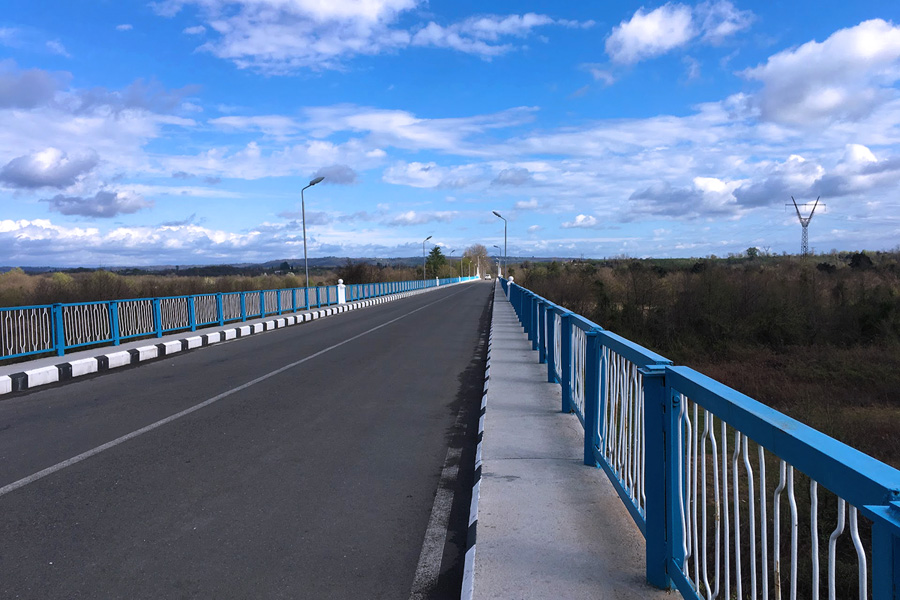
You crossed over the bridge, right?
Giga Bokeria:
The meeting took place in the area we controlled. Repeat (your version) as many times as you want – it’s still a lie. I spoke with representatives of the Russian occupation regime in Geneva, but as representatives of Russia. And you, Mr. Paata, your current propaganda, along with the Russian president, foreign minister, and all those deeply mistaken partners, tell us the same.
Unfortunately, you are still repeating that this dialogue should not be with Russia, but with some of its representatives, whatever you want to call them. (Pretending) a dialogue with the Abkhaz is about ethnic issues, while Russia stays on the sidelines.
Paata Zakareishvili:
Why are you talking about some ethnic issues? We’re talking about the Abkhaz – let’s stick to that.
Giga Bokeria:
And what can we say about the Abkhaz? I’ve already said, I think all this is absurd.
Ana Kaulashvili:
19 minutes left. I’ll add 10 of those, five minutes each. Then we’ll move to the stage where we discuss what needs to be done after de-occupation (of Abkhazia). Right now, Paata has five minutes.
Paata Zakareishvili:
We need to have a dialogue on ending the isolation of (Abkhazia). Right now, the Abkhaz are trapped. Can I continue speaking?
Ana Kaulashvili:
Yes, these are your five minutes.
Giga Bokeria:
I think it doesn’t matter whether I gesture or speak. I’ll just say that it isn’t true
Ana Kaulashvili:
These five minutes are for (Paata) to speak, Giga will not interrupt.
Paata Zakareishvili:
The key point is that the Russians are sharply accusing the Abkhaz, exploiting the fact that they are isolated. They are twisting their arms to get what they want because they realize they are losing something important. One crucial issue is that the Abkhaz cannot leave their territory.
The only place they can go is Russia. The second and third key points. The Abkhaz travel as best they can. For example, 70% go to Russia, the remaining 30% travel to Turkey or Armenia. This is where my idea comes in. Georgia has agreements with Turkey and Armenia allowing Georgian citizens to travel there using internal ID, not just passports. Not only with a passport but also with an internal ID.
This is the idea to help end the isolation of the Abkhaz. You, the National Movement (addressing Giga), left us an interesting healthcare project. We managed to change the National Movement’s requirement that the Abkhaz must take Georgian passports to get treatment in Georgia, even though there was nothing wrong with that. But we added a rule allowing Abkhaz and Ossetians to get treatment in Georgia using their own documents.
Dozens eventually came using their own documents (Abkhaz and Ossetian). I believe steps were taken in the right direction. Because right now, many Abkhaz and Ossetians are in Georgia, receiving treatment using their own documents.
Giga Bokeria:
Sorry, his time is already up. What topic are you talking about?
Ana Kaulashvili:
No, his time isn’t over. I’ve added another 10 minutes for this part of the discussion.
Paata Zakareishvili:
Next, business was added to the same scheme, the program “To the better future”, during (the PM) Kvirikashvili’s time. The Abkhaz and Ossetians were receiving state benefits in Georgia using their own documents. Here’s the idea. You have an ID that’s invalid and illegal in Georgia.
Yet, you use it to get medical care and do business in Georgia. You can even receive state grants using it. (The further steps) might not be publicized, but it’s better to inform about it. Let’s recognize their documents as equivalent to Georgian internal IDs. We’ve already effectively done this.
They receive treatment here using their documents, which are registered legally as Georgian internal IDs. Then we inform Turkey and Armenia that Georgia issues (more) internal IDs.
The first document is the one that all Georgian citizens have. Second – the documents they have in Abkhazia. Third – Ossetian documents. And these people will be able to enter and exit Turkey and Armenia (using their own documents). They won’t be able to travel anywhere else using these documents.
Georgia must show more goodwill and break their isolation. For these two countries, we already have a system in place for such trips. So they (Abkhaz and Ossetians) won’t be able to travel elsewhere. Georgia doesn’t have such agreements with other countries. But in Armenia and Turkey, we can ensure that the maximum number of Ossetians and Abkhaz (can travel there).
Giga Bokeria:
What topic are we talking about? We are talking about the people appointed by the Russian occupation regime in Sukhumi. This is the topic, right?
Ana Kaulashvili:
Giga, please let him finish.
Paata Zakareishvili:
Nothing has been done for 30 years. And now suddenly they have the opportunity to travel to Turkey and Armenia with their document, which also counts as a Georgian ID. Why not start something? We started with healthcare. Continued with business and education.
The education (attempt) failed, but something was achieved. Why not let these people travel through Georgia? They leave Sukhumi, pass through Achara, all of Georgia, go to Turkey, work there, and then return the same way. They won’t be able to travel anywhere else from there.
Giga Bokeria: And then what?
Paata Zakareishvili:
What do you mean, “then”? We need to start with something. How can we endlessly talk about reconciliation steps? These are concrete steps. We can discuss more later. In five years, we’ll see how things develop.
If none of this works, we’ll try other ideas. The Middle Corridor will pass (through Georgia), bringing internet, for example, from Europe. Why not establish another line? So that internet in Abkhazia connects to Georgia, not Russia.
Ana Kaulashvili:
Would Russia even allow this to happen?
Paata Zakareishvili:
We need to start taking action, to change the situation. If Russia doesn’t allow it – then we’ll discuss it later. We need to work on practical measures. Banks, the banking system. Why not create a basic banking system in the Gali region so local Georgians can send and receive funds? Overall, people in Abkhazia would use this system, which would be linked to Georgia’s banking network.
Many steps can be taken even before de-occupation. De-occupation will happen – but by that time we could completely lose these people. And it’s possible that instead of de-occupation, annexation could occur. Just as Crimea was annexed and incorporated by Russia, the same could happen with Abkhazia.
Ana Kaulashvili:
Thank you. Giga, I’m giving you five minutes now.
Giga Bokeria:
I’ve been listening all this time and I don’t understand: what is the topic of this discussion?
Ana Kaulashvili:
The topic is: what concrete steps should be taken for de-occupation.
Giga Bokeria:
I don’t even have illusions anymore after hearing all this today. And after Russia’s aggression in Ukraine. What will help people understand and open their minds to what is actually happening? The steps Georgia takes for citizens in the occupied territories don’t depend on their ethnicity.
Whether it’s healthcare or something else. This could be part of discussing our long-term interests. But this has nothing to do with what Mr. Paata says, and unfortunately, this is where many in our parties are mistaken. And most importantly – our enemy has for years demanded that dialogue be held with the governments it appointed there.
Russia wants us to recognize them as a party to the conflict. And this is exactly what Mr. Paata is saying. These are the statements I read (as Paata’s quotes), and this is what you’ve discussed today.
Paata Zakareishvili:
Yes, yes.
Giga Bokeria:
This is the main evil opposing our national interests. The other steps you listed – some are correct, some are wrong. You can debate some of the steps you mentioned. But it’s absurd to talk about this while Russia has full military and political control there. The assumption that (such steps) could lead to a breakthrough – is, forgive me, a politically harmful foolishness. Why? Because no one gives up power voluntarily. That doesn’t happen.
The current conditions there can roughly be compared to the situation in Gaza. Some say you need to work with public opinion in Gaza. There are people who say that.
Under Hamas’ tyranny? I must say, regardless of the situation in the Tskhinvali region and Abkhazia under Russian rule, any dialogue is impossible until a transitional process is carried out. What kind of country is Georgia? What can it offer everyone?
There are factors for the long-term perspective. However, they have nothing to do with fulfilling the geopolitical goal the enemy wants – recognizing Sukhumi and Tskhinvali as parties to the conflict. This won’t bring any breakthrough in the situation. It’s the illusion I’ve heard from you many times.
That they would see and say: “What a good country Georgia is, let’s join the Georgians”. Evil will never allow anything like that.
Paata Zakareishvili:
Evil is not a political term.
Ana Kaulashvili:
May Russia not allow this, but will this lie be exposed anyway?
Giga Bokeria:
Violence exists. That’s why I gave examples. Look at the situation in Gaza – the whole world helped, invested enormous sums of money. Yet all they did was build tunnels and buy weapons. Because it is a parasitic system built on ethnic hatred – a system Russia has created there, in Abkhazia.
Ana Kaulashvili:
That’s why we need to show goodwill toward Abkhaz and other ethnic groups.
Giga Bokeria:
That has nothing to do with it. Resolving the conflict means neutralizing Russian aggression. We must be a good country for all our citizens. Of course, that matters for the part of the territory we haven’t yet returned to. Once that force is dismantled, than we’ll discuss and may disagree on what the civic order should look like afterward. There is only one political nation – the Georgian nation.
It can include citizens of different ethnic backgrounds, cultures, and religions. But there is no state that contains two nations. State and nation are one – and only one. All these ideas I’ve heard, including from Saakashvili. A “Georgian–Abkhaz state”. That is a catastrophic mistake. History gives us an example of a disastrously wrong step taken by President Gamsakhurdia, which had grave consequences. The rise of Ardzinba.
Paata Zakareishvili:
It had no consequences at all. Unfortunately, that idea failed.
Giga Bokeria:
I know, I know. Ardzinba was elected as a result of that. Both Gamsakhurdia himself and his supporters later admitted it was a wrong decision. But the very approach of building politics on an ethnic basis is destructive to the idea of a national state. I’m not saying people should be forcibly assimilated or made to forget their identity, whether religious, cultural, or ethnic.
That is precisely the task of a strong state, a free society, and a free republic. Political culture and vision must be unified for a single political nation – the Georgian nation. And everyone is part of that nation.
Let’s return to the main question you raised. That supposedly no breakthrough is possible this way. If a breakthrough happens for people living there, it will occur without any direct so‑called dialogue with the enemy.
What does this “dialogue” have to do with anything? I also have experience with such dialogue. Mr. Zakareishvili does as well. They do not allow discussion of any serious issues. They refuse to talk about Georgia’s territorial integrity. They refuse to talk about the return of displaced Georgians. They won’t even discuss the rights of ethnic Georgians living there. Mr. Paata was a minister under Ivanishvili’s regime.
They did everything for them (for Abkhaz). They supplied them with electricity. They violated agreements and supplied it for free. The result was bans on the Georgian language, closures of Georgian schools, killings, and repression. Zero positive outcome. That’s the case with every such step. When you appear weak, the enemy sees it as weakness.
And responds with even greater brutality. All this talk about “brotherhood” applies to Russia and its satellites, raised on an ideology of hatred. Russian control must be completely removed. Mr. Paata says we should avoid topics that might irritate Abkhazians.
Paata Zakareishvili:
I never said that.
Giga Bokeria:
Didn’t you say we shouldn’t talk about what the enemy dislikes? Meaning not to talk about fundamental issues without which coexistence is impossible. You do agree that killing women and children on ethnic grounds is evil, don’t you? If even this cannot be discussed, what kind of breakthrough have you achieved?
Paata Zakareishvili:
This is a settled issue, both the UN and OSCE have a solution.
Giga Bokeria:
The UN and OSCE? (not serious).
Paata Zakareishvili:
Who told you we shouldn’t discuss this?
Giga Bokeria:
These topics aren’t included in the dialogue – so what are we supposed to talk about? I asked, and you said we shouldn’t talk about restoring territorial integrity.
Paata Zakareishvili:
Where did you get that, Giga?
Giga Bokeria:
And why didn’t you bring it up? Does that mean we should be talking about it?
Paata Zakareishvili:
When was I supposed to mention it? We were discussing something else
Giga Bokeria:
That’s the lie you’ve been repeating for years – that Russia gained influence after 2004.
Paata Zakareishvili:
No, that’s not what I said.
Giga Bokeria:
All these international organizations, despite their good intentions, became involved in this so-called “conflictology.” The result of this conflictology was the normalization of evil. (You say:)) we must treat these ethnic Abkhazians as a community, understand them, avoid upsetting them.
Sure, they killed people, but we shouldn’t (talk about it). Some people in these international organizations went along with this – politically, and some not only politically.
Ana Kaulashvili:
We are discussing the past; let’s focus on the future.
Giga Bokeria:
We need to break this cycle of evil. You can’t have a dialogue where someone claims to represent the Abkhaz. Because the people currently there represent no one but the Russian government.
Paata Zakareishvili:
That’s not true; what you’re saying is a lie.
Ana Kaulashvili:
Let’s end this part of the conversation. And let’s move to a ten-minute segment where we’ll discuss the steps that need to be taken after de-occupation. We’ll also divide the time so each of you has five minutes. I think this will make it easier to speak. Mr. Paata, I’ll give you five minutes.
Giga Bokeria:
So, we’ll talk about the time when Georgia controls Abkhazia. Not just under our jurisdiction, but also under our actual control. De jure, Abkhazia is part of Georgia even now, but Russia is there too.
Ana Kaulashvili:
The Abkhaz people live there.
Giga Bokeria:
Not only. Many other nationalities live there too.
Ana Kaulashvili:
Yes, not only. Also displaced persons. Georgians displaced from Abkhazia currently live in different regions of Georgia. They want to return. What about the fact that other people now live in their homes? How should we handle these issues assuming de-occupation has already taken place?
Paata Zakareishvili:
Mr. Giga accused me of using the word “brothers”. I never used the word “brothers” regarding the Abkhaz. Giga has said it probably 20 times. Don’t accuse me of something I never said.
You’re blaming me for things I didn’t even think about. You said I didn’t mention territorial integrity. But our conversation here is about what can and should be done now. We were talking about what the Abkhaz want today.
Giga Bokeria:
Are we going back to that topic again?
Paata Zakareishvili:
Well, I have five minutes.
Ana Kaulashvili:
At the end, each of you will have an additional three minutes. Let’s use these five minutes as agreed.
Paata Zakareishvili:
He accused me of things I hadn’t even thought of. Not only did I not say it – I couldn’t even imagine being accused of it. What do we need to do when de-occupation happens? Of course, some kind of concept should be ready even today. It doesn’t have to be agreed with the Abkhazians.
Though it’s better to discuss with them, it’s not mandatory. A concept of how Georgia views Abkhazia as part of the country. The concept doesn’t have to be fully formed or final. It should remain open.
It should allow room for including live, concrete proposals when the time comes. Similar to what the Federal Republic of Germany did, waiting for the right moment.
Giga Bokeria:
We are talking about a period when (deoccupation) has already occurred, yet you still do not understand it.
Paata Zakareishvili:
As I understand it, we are talking about a time when Abkhazia is already part of Georgia. So what is the problem?
Ana Kaulashvili:
The problem is that other people live there (in Georgian homes), and Georgians now live in other regions of Georgia.
Paata Zakareishvili:
This is actually the simplest problem. The most important thing is, God willing, that Georgians and Abkhazians reach an agreement so that one day unified elections are held across all of Georgia, including Abkhazia. We would elect unified institutions a single parliament.
Ana Kaulashvili:
How will local issues be resolved? Won’t this turn into another dispute?
Paata Zakareishvili:
It will be necessary to create joint commissions from the two sides that will make decisions
Paata Zakareishvili:
For example, an Abkhaz may live in a particular apartment that actually belongs to a Georgian. The Georgian has a claim and wants to get his apartment back. The commission would speak with both the Abkhaz and the Georgian. Whoever leaves the apartment would be offered a better alternative. This is a relatively easy issue.
It has already been discussed here. There is the Kofi Annan plan. It was not implemented because reconciliation did not occur. It is a unique plan. It can be taken up and (implemented).
Giga Bokeria:
And who rejected that plan?
Paata Zakareishvili:
The Greeks.
Giga Bokeria:
Yes, yes. And why did they reject it?
Paata Zakareishvili:
That is a completely different topic.
Giga Bokeria:
You brought up this example yourself.
Paata Zakareishvili:
It did not work in Cyprus. But it may work in our case
Giga Bokeria:
Why do you think it was rejected? It wasn’t the Greeks – it was the Cypriots
Ana Kaulashvili:
Giga, I ask you not to interfere
Paata Zakareishvili:
I know why they rejected it, but that discussion would take us too far. I do not agree with their approach. The Greek side did not want to share the benefits with the Turkish part of the territory.
Ana Kaulashvili:
And could the same thing happen now as well?
Paata Zakareishvili:
Of course, that could happen (in our case as well). It cannot be ruled out
Ana Kaulashvili:
What is the alternative?
Paata Zakareishvili:
The alternative is if Georgians say they will give nothing to the Abkhaz. That is roughly what happened in Cyprus
Ana Kaulashvili:
Or the Abkhaz themselves may refuse, since they are already living there now
Giga Bokeria:
I know, which is why I asked. The same story will repeat here as it did in Cyprus, and nothing else will happen
Paata Zakareishvili:
The Greeks said no. But imagine there’s a referendum in Georgia, asking: “Do you want Georgians and Abkhaz to live in one state?” And Georgians answer: “No”?
Giga Bokeria:
There was resistance to dividing power along ethnic lines.
Ana Kaulashvili:
Giga, please, you’ll speak in your turn.
Paata Zakareishvili:
Giga, there’s a lot to cover.
Giga Bokeria:
Paata’s time is up.
Paata Zakareishvili:
I am sorry, but no.
Giga Bokeria:
It was proposed: “join us” — but this would not even be a Moldova-type scenario; it would be worse than Bosnia, with constant opportunities for Russia to divide people.
Ana Kaulashvili:
Giga, stop. I’m giving a little more time to Paata.
Paata Zakareishvili:
I’ve been to Cyprus many times and could debate it at length. I’m not saying I know it better than you, I don’t. I could talk about Cyprus for the entire show without a problem. But I gave this example to show how a well-designed restitution project failed. Let’s take that project and adapt it for Georgia. I don’t mean just translating, it’s already exist in Georgian. I mean adapting it to Georgia’s context.
There are many ways to distribute property between Abkhaz and Georgians so both sides are more or less satisfied. Nothing will be perfect. But that’s not the main problem. The bigger issue comes first: how will reconciliation happen? Here’s the point. How will it happen? As we see, Giga isn’t willing to talk to them. However, it’ll be impossible to move forward otherwise.
The process must include both parties. That’s why I insist. If we don’t talk to Abkhaz and don’t recognize them as a negotiation party and a conflict party, we can’t create the first spark for a federative solution. Who do we talk to? Anyone who represents Abkhaz society. A little pushback, a little goodwill. Whoever they may be, we need to engage with anyone who can represent the interests of Abkhazian society within their mandate.
Even if Russia appointed them once. We have no other choice. You and I actually know who’s who in Abkhazia, in Sukhumi. We know what each of these people represents. We’ll take that experience into account. That’s why I enjoy debating with you. Because more is expected of both of us – of you and of me – including when we act on our own, outside this broadcast.
Giga Bokeria:
I would say the same thing separately as I am saying here.
Paata Zakareishvili:
You cannot be a real party to the process if you don’t understand who is on the other side. If they don’t take responsibility and don’t carry the proposals coming from the Georgian side to Sukhumi, nothing will work. That’s why this spark is essential – constant contact with Sukhumi, with someone responsible who can pass on our messages.
Otherwise, nothing will come of it. That’s why I believe it’s necessary to agree on a bilateral memorandum – some form of arrangement – with international support and the backing of our strong partners, in order to create guarantees.
The problems Abkhaz have with Georgians have existed for thirty years. Nothing has been done. The situation there is steadily deteriorating. We have many problems as well.
Ana Kaulashvili:
We are also slowly moving backward.
Paata Zakareishvili:
It is happening very slowly. But it’s not as catastrophic as in Abkhazia. Unfortunately, we are moving backward too. Once we manage to put Georgia on a democratic track. And I say “put,” not “return,” because we are not returning Georgia to democracy but placing it on that path.
Because so far Georgia has not been independent enough for that, unfortunately. We must truly commit to a genuine European democratic path. And then Georgia will look completely different in the eyes of Abkhaz.
Ana Kaulashvili:
Thank you. I’m giving Giga five minutes now. You may ask questions if you wish. Or you can continue the topic Mr. Paata was speaking about. Whatever you think is appropriate.
Giga Bokeria:
No, not on that topic. I’ve already stated all my arguments on that issue. The most dangerous thing is adopting models where people are treated according to ethnicity, even though they are citizens (of the same state). I can give many examples from around the world where the result is either catastrophe or a very severe political and social crisis.
Ana Kaulashvili:
Because of ethnic tensions?
Giga Bokeria:
(It’s pretending) as if dividing people along ethnic lines were somehow a sign of conflict resolution. When someone decides that this or that position should belong to an Abkhaz. That’s how it was in the Soviet Union. Your ethnicity was written in your passport. Because they didn’t want the concept of a civic nation to exist
Ana Kaulashvili:
Let’s allow Giga to finish
Giga Bokeria:
We were united, including Abkhaz and Georgians – citizens living in Abkhazia. And the idea of a Georgian civic nation prevailed
Paata Zakareishvili:
How exactly was that?
Giga Bokeria:
Yes, yes. There were three rounds of elections. There’s an excellent organization called the Laboratory for the Study of the Soviet Past. They uncovered strong archival documents and produced solid research.
Including how “ethnic Georgian” Bolsheviks carried out the work of our enemy, while “ethnic Abkhaz” were part of Georgia’s political elite. That’s the difference between the chauvinism imposed in the Soviet Union by Stalin and the Russians under the guise of ethnicity, and our task today: building civic nationalism.
Civic nationalism means there is only one civic nation. Attempts in the free world to replace this concept with ‘multiculturalism’ and multiple identities (have not succeeded). Mr. Paata said he didn’t call Abkhazians “brothers”. But the essence is the same. You just repeated it again: that there must be two subjects. But in a state, there is only one subject. There is only one state nation
Paata Zakareishvili:
Negotiations, Giga.
Giga Bokeria:
That is the core principle that must guide our approach. Now about what happens after that hoped‑for day, when our enemy weakens or changes – God willing, though we can hardly expect this from Russia. At that point, Georgia would be a unified nation, with a government fully controlling Abkhazia. Then the problem of a very heavy legacy emerges. We must be cautious, because evil never disappears without consequences.
There is international experience that shows this. For example, after Nazi Germany was defeated, the Allies assumed control over parts of the country. Or in Japan after the defeat of its fascist regime.
You have to carefully calculate how to act. And in this case, the situation is essentially the same. State institutions must establish relations with the community living there. With those who are free from the evil Russia created and left behind – embodied by the current authorities in Sukhumi and Tskhinvali. And you, Mr. Paata, are calling for dialogue with them.
Of course, the emergence of local leaders in a community free from that influence will be an important factor. That will be taken into account, and at that point Georgia itself will become a stabilizing force, ensuring civil peace and eliminating the need for force. But the factor of force will always exist.
Because, I repeat, the legacy of this parasitic system filled with hatred and evil will persist. That’s why I mentioned Gaza as an example. Simply letting people go and giving them money isn’t enough when such an ideology dominates society. There are people there who disagree with Hamas as well.
Just as during Russian aggression, there were ethnic Abkhazians in Georgian public service who were killed for it. This is not only about ethnic Georgians.
People from various ethnic groups were killed or expelled because they rejected the Russian regime, refused to take part in hatred and killings, and defended Georgians. A well‑known example is the two Greek women killed for heroically sheltering Georgians.
That is how fascist the hell created by Russia was. As for property. The starting principle is that property belongs to those from whom it was taken by force. Of course, there may be cases where alternative solutions are possible. But this must remain the guiding principle.
Those living in someone else’s property should be given options – if they committed no crimes against humanity and accept Georgia’s Constitution and the rules of the new system. They should have many opportunities to live there as Georgian citizens who accept the Constitution.
But not at the expense of the rightful owner. Not by telling the owner that some commission might decide not to return their home. That is the wrong approach.
We must find other solutions – without burdening the victim. Overall, this is the issue both Mr. Paata and I are talking about. Every individual – our citizens – and every group, whether defined by culture or religion, must be treated as equal citizens. In this respect, Georgia’s political class had serious problems in the past.
The current regime is now taking disastrous steps in this direction. But it must be understood that these equal rights come not from being an ethnic Abkhaz, but from being a citizen of Georgia. Not as representatives of groups – especially those installed by our enemy to manage this evil.
You want to talk to them to understand what Abkhaz want. No. After Georgia restores its territorial integrity, a system of broad self‑government will be implemented there. We are federalists and strong supporters of this approach. But not on an ethnic basis. There are many possible models. For example, territorial rotation could be used so no group feels dominated by another.
Solutions like that can be designed. But none of this should be based on bloodlines or ethnic origin. Every one of us will be a citizen of Georgia. These kinds of divisions are exactly what our enemy wants – and what destroys civil peace. So yes, overcoming this legacy of evil will not be easy.
Those who committed crimes of extreme brutality must be punished. That society will require a form of denazification. The same process that must occur in Donbas and Crimea. Mr. Paata did not like this comparison. Even though the comparison is very accurate.
Paata Zakareishvili:
I don’t like it when unrelated topics are brought into the conversation.
Giga Bokeria:
Well, that certainly didn’t sit well with you.
Paata Zakareishvili:
I don’t like it when an unrelated topic is introduced.
Giga Bokeria:
It’s not unrelated. It’s the same issue – Russian aggression is the main problem.
Ana Kaulashvili:
You have only a few words left, so please finish up.
Giga Bokeria:
Sorry, I’ll finish. For such a transition, denazification is necessary. Very painful events happened in that society. We need to understand what crimes were committed. The Georgian state and society can help with this, especially those who view things rationally, considering both their own identity and the future.
That’s why I gave these examples, even though none of them are exact matches. The situation after the defeat of Nazi Germany or Japan. Or what Ukraine will face after de-occupation – which will not be simple. These are complex processes. We arrived at this topic because of your question.
I believe the Georgian state will be capable of handling this problem. At that time, Georgia will be a republic where every citizen feels fully included. Rights will be protected, and ethnicity will not matter. Everyone will be, in a civic sense, a Georgian.
Ana Kaulashvili:
Thank you for an interesting discussion. Now we’ll move to the final round. Each of you will have three minutes. You can summarize today’s debate and say anything you feel you didn’t get a chance to express. Let’s start with Paata.
Paata Zakareishvili:
Thank you very much, Mr. Giga. In our society, there are two clearly defined positions, which became evident during this discussion. These positions largely contradict each other and cannot complement one another. I believe they converge on one point: the Russian factor.
However, my key point is that there must be a direct and clear dialogue with the Abkhaz side – as a conflict party and as a negotiation party. They must become a recognized party. This is necessary to create a format of two parties – not between states, not between Georgia and Abkhazia, but between the conflict parties: the Abkhaz and Georgian sides. On that basis, any form of state acceptable to both sides could be built.
This is where I see the fundamental importance. We also must take into account Russia’s reality in this format, as Giga points out. Russia is weakening during this period, while we are growing stronger. Our geopolitical position is strong. Russia is genuinely retreating from the Caucasus, and it’s visible. We must show the Abkhaz where they stand. We can see how this is happening in Azerbaijan and Armenia.
Georgia has no diplomatic or institutional ties with Russia, and there’s no movement toward that – I hope there won’t be. But judging by their actions, we are moving toward Russia. If we manage to keep the Caucasus free from Russia, naturally, implementing bilateral relations with the Abkhaz side will be a thousand times easier.
I think this should be our main direction. If Russia says, “With our support and our assistance, and with the support of the West,” then it will definitely work.. We need to think carefully about what comes next. Today, we need to focus on what is happening now.
Ana Kaulashvili:
Thank you, Mr. Paata. Now, Giga, you can summarize the debate.
Giga Bokeria:
Mr. Paata keeps repeating the same mistake, and it’s very harmful. What kind of satellite structures exist today in Sukhumi and Tskhinvali? Puppets. And you want to have a dialogue with them? These people are entirely under Russia’s control. The situation is fully controlled by Russia.
We discussed what will happen after Russian aggression is neutralized. Then, in that space – which will be de-Russified and denazified – initiative groups will emerge among Georgian citizens, regardless of ethnicity. We need a dialogue with them – they are co-owners of our country. There is no debate about that. Anyone who tries to change things or set rules on this basis will be an enemy of Georgia’s national interests.
But (the dialogue) should not be conducted under the excuse that they have a difficult legacy and that it won’t be easy. Today, we cannot do what our enemy wants. Pretending this isn’t a problem with Russia – or that it’s just one of many issues – won’t lead to any agreement with them, except outcomes that harm us. That’s simply impossible. They are serving the enemy.
Today, if you look at social media there, I’m shocked at what I see. It’s a hysterical celebration of evil. They go to war in Ukraine and become part of Russia’s war machine. The people you, Mr. Paata, suggest dialoguing with are the main supporters of all this. They are the main propagators of normalized hatred and ethnically motivated violence. You cannot reach a settlement unless you speak to them from a position of strength. If we speak from a position of strength, a compromise may be possible with some of these enclaves of evil.
This is necessary to ensure de-occupation happens with minimal damage and risk. This is entirely acceptable. But this approach has nothing to do with the future civil peace in our country, of which Abkhazia is a part. On the contrary, the key will be the rise of local leaders from among our Georgian citizens. They must feel that the Georgian state is their state, and be ready to do everything for it.
But this has nothing to do with illusions or repeating harmful enemy propaganda about a path to the future or easing tensions. For years before Russia’s aggression in Ukraine, many – even in the European political class – followed this line, and it was a disaster. “Discuss with them and everything will be solved” – that was the claim. And, of course, it was a lie. From the perspective of Ukrainian victims, the heroic struggle of Ukraine and this tragic aggression. There was the opportunity to neutralize (Russia).
If we had a normal national government now, it would do this – before we even physically regain control of our territory. We have a project created by the “Federalists” party and our allies – the Abkhaz Assembly, the Institute of Freedom. It’s the “Before Bucha, There Was Abkhazia” project. It’s an attempt to neutralize the remnants of this poison among our allies in the political class. I’ll repeat this again.
When Russia weakens, and we are ready – as I hope – we must tackle this problem, because it won’t disappear on its own. If the conversation turns back to ethnicity and “two sides,” this evil will have the chance to manipulate and create more problems for us. That’s why the narrative must be clear and unified. Russian aggression must be neutralized first.
Then we can talk with our citizens about building a country with broad regional self-governance, ensuring that no one’s identity is threatened. If we want, we can learn from successful examples in the free world, where civic nationalism prevailed and a civic nation was built.
But not the bad experience, where compromises led to ethnic quota systems that caused catastrophe or constant danger in those countries.
Ana Kaulashvili:
Thank you both. This is a very complex topic, and the debate reflected that. I hope that very soon we will somehow manage to regain Abkhazia and Samachablo. Then the only topic will be who lives where and how at the local level. I hope that time comes very soon. Once again, thank you.
Giga Bokeria:
Thank you, and thanks to Mr. Paata.
Paata Zakareishvili:
Thank you.
Ana Kaulashvili:
Thank you to our viewers for joining us. Follow us on Facebook, Instagram, and TikTok. I’d also like to announce that our main sponsor is the University of Georgia.