







Abkhaz agenda in the world
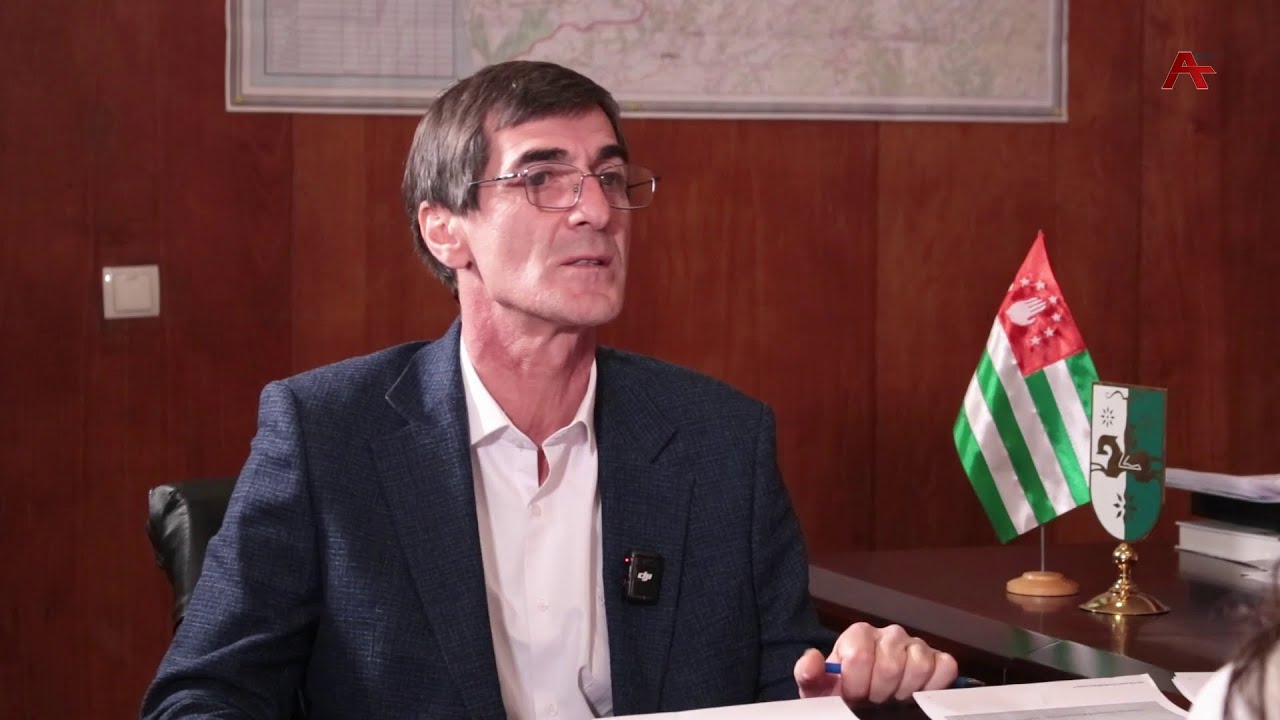
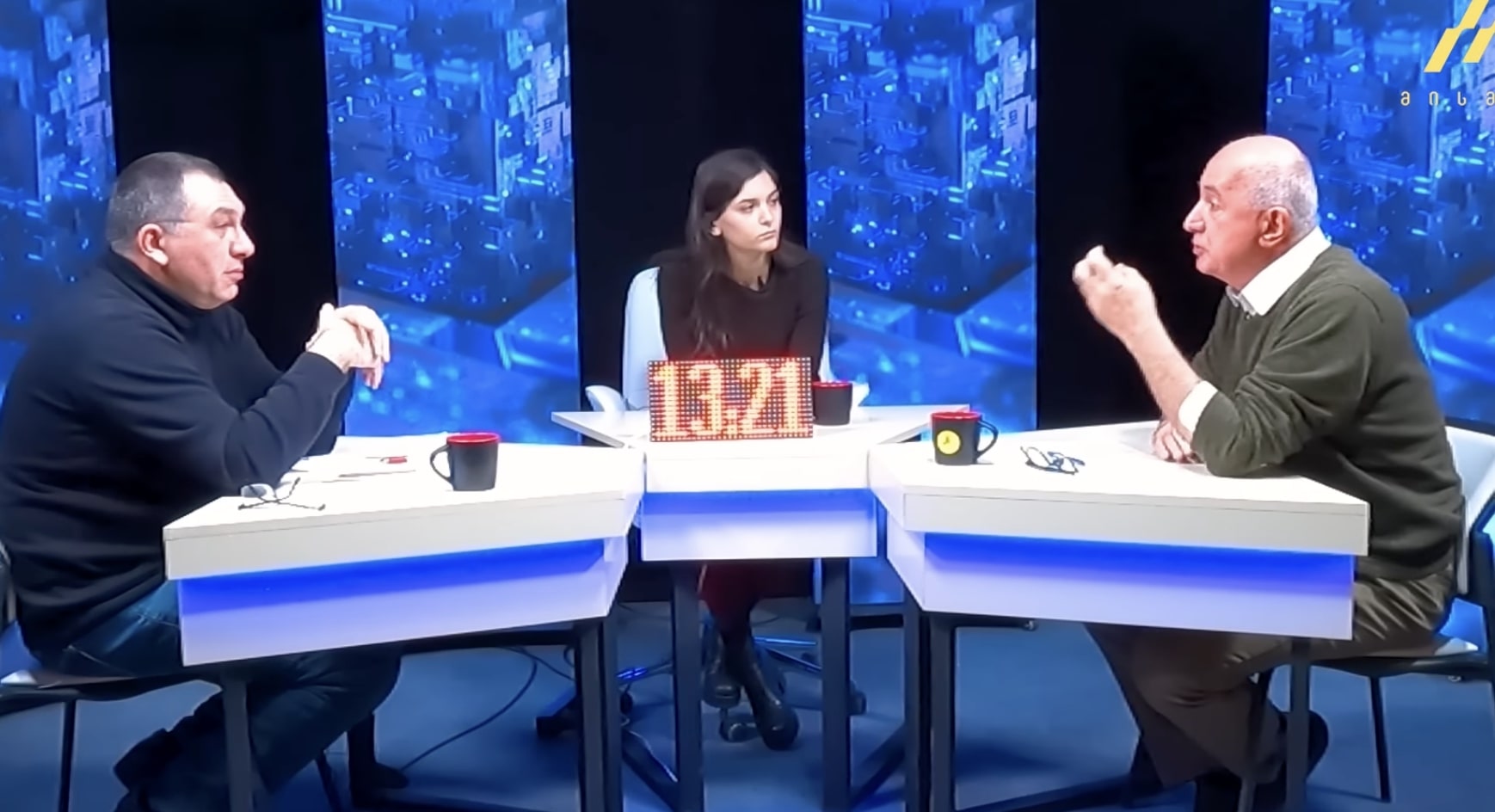
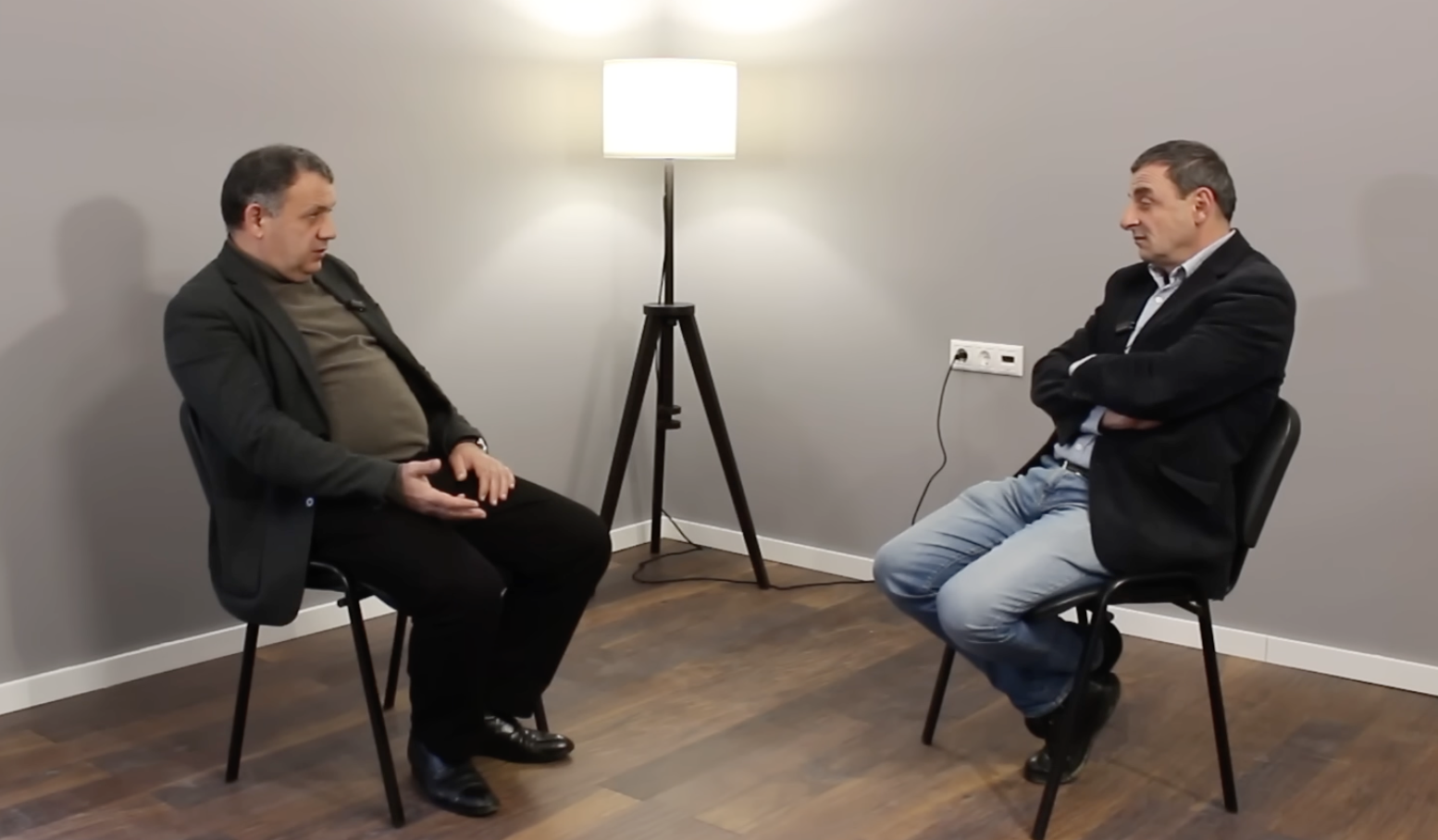
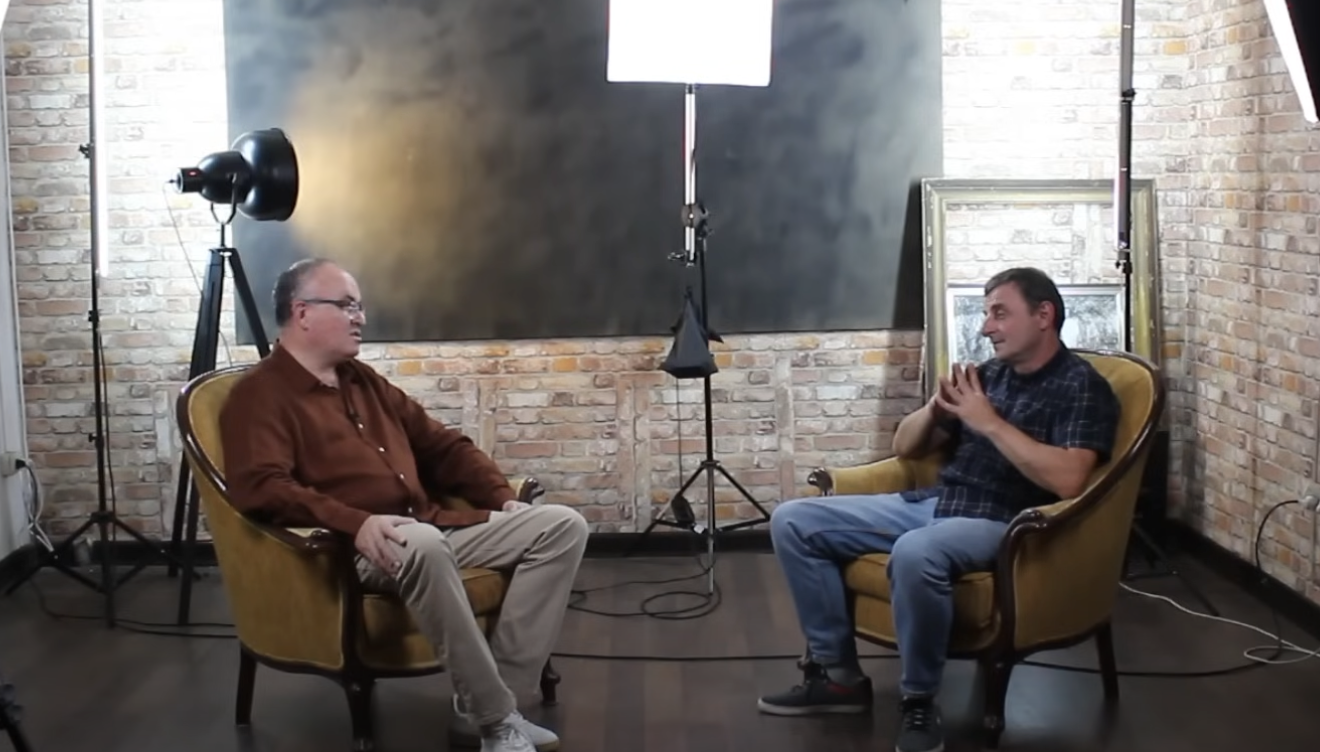
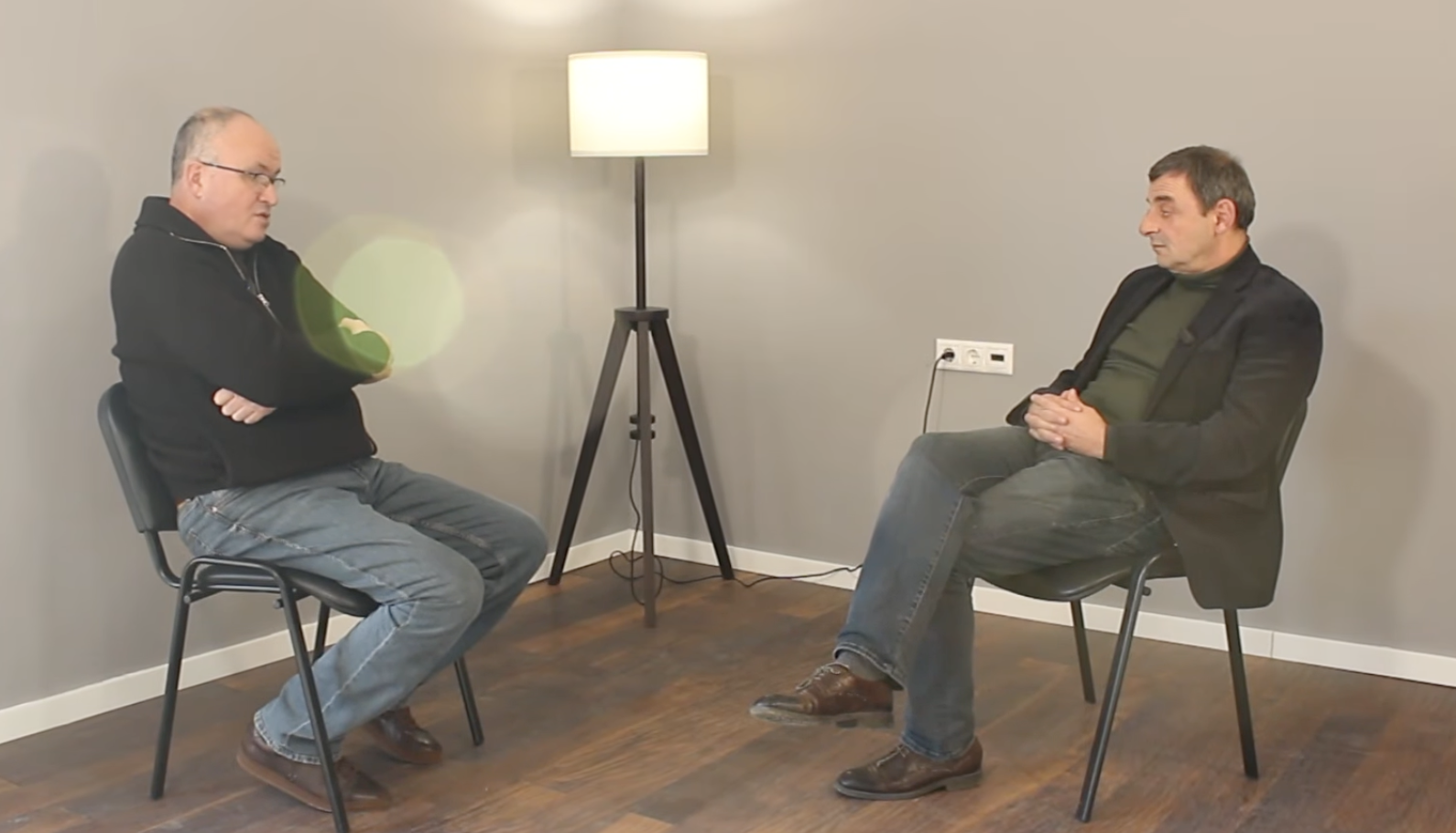
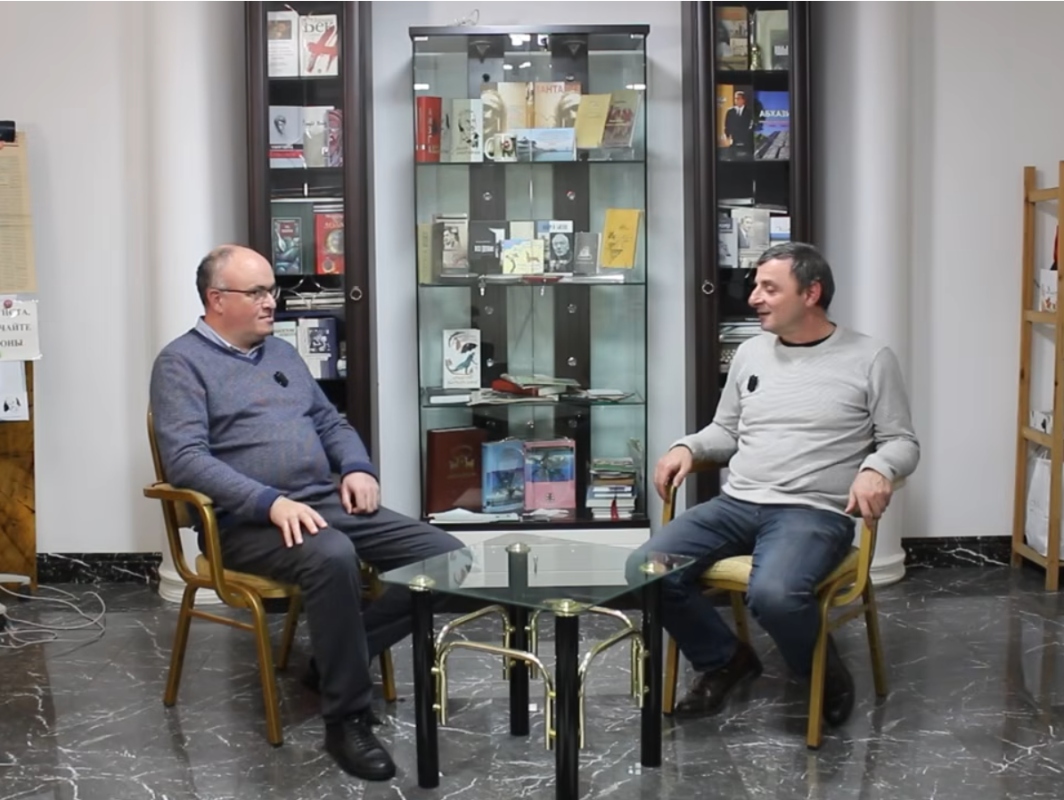
Trump demands Greenland for himself and creates his own “UN”. Dugin proposes to force Georgia, Armenia and Azerbaijan into a new union state. In general, the previous world order is collapsing before our eyes with kaleidoscopic speed. The editor of the Chegemskaya Pravda newspaper Inal Khashig discussed the prospects of Abkhazia in this context with historian and political scientist Astamur Tania.
Inal Khashig: Hello, this is Chegemskaya Pravda on air. We have finally returned after the New Year holidays. This is our debut programme this year, and we will thus be summing up the results and also talking about the present day.
Our guest today is our regular political expert, Astamur Tania. Good afternoon.
Astamur Tania: Good afternoon, and happy belated wishes after the long holidays.
Inal Khashig: They are over, and we are gradually getting back into our usual routine.
I would like you to briefly summarise what happened last year. The main events.
We had difficult presidential elections. Then we somehow emerged from the zone of turbulence. There was an attempt to reset the situation.
How do you see it now? In your view, have we managed, in this story, to move on to a new stage of development?
Taking into account the confrontation that existed under Aslan Bzhania and led to his resignation, and the agenda that existed at the time. Have we managed to restructure [policy], to take into account the mistakes that were made? I would like you to talk about this — not in excessive detail, but also not in just a couple of words.
Astamur Tania: Overall, I assess the results of the past year positively, despite all the problems that arose. On the whole, it seems to me that we coped.
Compared with what existed before, the current authorities have managed to stabilize the situation in the country. And in terms of the emotional climate, to smooth over certain sharp edges.
During this short period of time since the [presidential] elections, a kind of political consensus has emerged in Abkhazia.
I think this reflects well on the current president.
Among the shortcomings, I would note that there are very few political initiatives aimed at consolidating this situation, at shaping a positive agenda together with different political forces across all areas — the economy, domestic politics, security, and so on.
Perhaps at some stage it would even have been possible to institutionalise such an ongoing public dialogue. And this is not only about the authorities and the opposition. The public spectrum is not limited to these forces alone. Clearly, they are the leading ones, but they themselves are not homogeneous.
A broader approach could have been taken.Involving the intelligentsia, civic activists, and experts in various fields.
Because Abkhazia is not a giant empire. We traditionally face the same problems that we must solve. They are linked to our survival, security, demography, language, and economic issues.
I do not think we are our own enemies. I think such a dialogue can be established. Especially since such signals were also coming from the opposition environment. And the president, in his address, spoke about this as well. But time must not be wasted on this, because we could lose a favourable moment.
It is noticeable that a reset has taken place in relations with the strategic partner.
The conflict-prone agenda that had been formed by the previous authorities has been left in the past. It is clear that certain problems are being addressed in the energy sector and the economy. Concrete, visible projects are being implemented on the territory of Abkhazia.
But here too, it seems to me, some kind of long-term foundation needs to be laid. We need to look at what major tasks, including regional ones, we could solve jointly.
Undoubtedly, this agenda could include the issue that is now being discussed from different angles — transit through our territory. How could this be done? What steps would be necessary for this? It seems to me that this would be of interest to both sides.
Overall, regional security as well. Here too, we could play a role. The relevance of these issues will grow in light of the fact that international turbulence is, in general, gaining momentum.
Inal Khashig: But it did happen nonetheless. I’m not asking questions here — I’m trying to engage polemically on this point. The reset did take place. But Russia changed its behaviour and its attitude towards Abkhazia.
This change has filled the agenda of Russian–Abkhaz relations with all sorts of projects. Almost every other day we see something being opened — festivals, programmes of various kinds.
Astamur Tania: Maritime links, air links.
Inal Khashig: Yes, air links. There is also a cultural dimension, an ideological one, and a propagandistic one. There are many different projects of all kinds.
But it seems to me that there are not particularly many Abkhaz ideas among them.
Astamur Tania: Who is to blame for this? Wasn’t the previous agenda also essentially handed down from Moscow?
Inal Khashig: What I am saying is that I have always had complaints about the Abkhaz authorities in this regard. It seems to me that there is not much initiative to be seen.
One thing is when someone brings an idea, it gets approved, a ribbon is cut, a few routine words are said — and that is the end of it.
And some projects simply do not fit into our reality, into the way things actually are.
On the other hand, there are, were good ideas — genuinely good ones — whose future later turned out to be very bleak.
I remember when Badra Gunba became president, he said that we would nurture new cadres, new potential — “Team Abkhazia”, and so on.
Then suddenly this “Team Abkhazia” was handed over to political technologists, they suddenly started taking part in municipal elections, and so on. The project — the very idea — ended up being rather sullied.
Astamur Tania: PR should not run ahead of real action. That is a serious mistake. Especially for small societies like Abkhazia, PR and propaganda can have only a very short-lived effect.
The problem is that the programme which is supposed to be promoted has not been formulated. There is no clear vision in specific areas. What exactly are we going to do? We have a large number of acute issues. Perhaps some unpopular measures are needed.
Once this is formulated, it should ideally be done jointly — not only behind the closed doors of government offices, but together with different political forces. Because the situation is difficult, the context is extremely difficult.
We have to think about how we are going to survive in this context, because the situation is developing unpredictably. In such circumstances, there has to be a certain degree of manageability, a necessary level of mutual trust and interaction between different political forces.
Proceeding from these interests, it seems to me that the authorities should have long since initiated a series of meetings and spoken out more on these pressing issues. And then the question arises of how to present this to society. PR is, of course, needed.
If you have a clear line, it needs to be promoted. And then there will be no so-called backlash effect.
Inal Khashig: Perhaps there are some theses after all. This year has been declared the Year of the Village. And the same Badra Gunba, in his first annual address to parliament, stated that every Abkhaz village would receive one million roubles this year.
Astamur Tania: It is good that the year has been declared the Year of the Village. We need to think about food security.
Inal Khashig: It sounds wonderful on the surface — a million for an Abkhaz village. But there is no real explanation of what this million is for. Our villages are very different. Some are very large. Lykhny, Duripsh, Kutol — these are villages that, in terms of size and population, are comparable to district centres.
Astamur Tania: Lykhny has more people than district centres.
Inal Khashig: The number of residents in Lykhny is larger than in Gudauta, that’s for sure. And then there is some small village — Agaraki, or my native village Khuap — which is also quite small.
Astamur Tania: Then you’ll be better off — you’ll get more out of that million than the people of Lykhny.
Inal Khashig: That’s exactly why I’m worried about the people of Lykhny. I took just one small detail, although I had plenty of questions even about that same address. But I thought there would at least be some clarification from the relevant ministries and agencies after the address. Beyond the president’s remark — can you yourselves do something? — to fill all these theses with substance, with some kind of concrete content.
On the other hand, I now recalled the instructions that Badra Gunba, the president, issued at the end of August last year. They included deadlines and specific tasks. And we never really saw any reporting on those instructions.
Then, after this address was delivered, I started digging around online, studying and recalling those instructions given in August. And I realised that more than half of them had not been implemented. That is, there is absolutely no system of reporting or accountability for results.
Astamur Tania: That’s a very good example. We have very limited resources. And it is obvious that trying to plug every hole with these limited resources is like tinkering at the margins — it will tear in different places..
I’ll say it again: we need at least a short-term programme. What will the authorities do this year in key areas? We now see inflation accelerating, food prices and other goods becoming more expensive.
Faced with this, what measures are we going to take? What are our own capabilities? How can we build up our economic capacity? Because difficult times lie ahead — for the planet as a whole, for our regions, and for us in particular.
So, and I repeat, we need to mobilise our limited resources and channel them into addressing these tasks.
Naturally, the fact that our relations with Moscow have improved and that some new opportunities have emerged should also be used to the maximum.
At the same time, we must strengthen our reputation as much as possible.
First and foremost, these projects need to be implemented consistently and with quality. I read that there are already some complaints about how they are being carried out.
But above all, our internal programme must be developed. What can we offer internally, and what can we offer externally? What is our regional function overall?
We say that we are an independent state. An independent state must perform some kind of function — so that certain external actors, external forces, and large capital are interested in its existence.
In other words, we must find our place. This is a very urgent task. We have spoken about this many times. Especially in light of the development of Zangezur. And this direction is a dead end for us.
This issue cannot be resolved on the fly. It requires serious diplomatic work. It is not that simple.
Georgian society views this warily. Abkhaz society also views it warily.
There are many other obstacles — various legislative acts and decisions that have been adopted in Georgia.
This needs to be worked on. It should also be part of our agenda, so that this direction can start functioning. It seems to me that this is something we should think about this year.
Inal Khashig: I would now like to shift from the domestic agenda to the external one. Especially given everything that is happening in the world right now.
Astamur Tania: Yes, Donald Trump is stirring things up.
Inal Khashig: And it feels as if you’ve been plunged into the 1930s.
Astamur Tania: No, earlier than that, in my view.
Inal Khashig: The Sudetenland issue?
Astamur Tania: No, in my view, earlier — a period when there was still no generally recognised system of international law.
Inal Khashig: My chain of associations is the Sudetenland story — when Adolf Hitler made his demands.
Astamur Tania: At least Germans lived there.
Inal Khashig: But, to be honest, it’s hard for me to say who would be playing the role of Neville Chamberlain now.
Astamur Tania: History cannot be extrapolated — it does not repeat itself. It always unfolds in new forms. There are certain patterns, of course.
Inal Khashig: But still — just as in literature there are a couple of dozen plots which, one way or another, throughout the entire history of humanity, ever since people learned to write, they try to express in prose, in poetry, and so on.
In politics, this storyline, in terms of its diversity, is also not very different. Therefore, history always repeats itself in one way or another.
We are now quite seriously talking about the fact that the UN is going through an acute crisis. The UN has acquired a tangible opponent, an all-powerful one, in the person of Trump, who believes that the UN has outlived its usefulness, that it needs other, different kinds of institutions, and he is creating his own — Board of Peace, and so on.
How is this breakdown of the international system that has existed for 80 years capable of affecting us? Given our status, we are not members of the UN, we are, in international terminology, partially recognised, but nevertheless — how will all this affect us, all these events that are happening there, in Greenland, and so on?
Astamur Tania: It probably sounds funny now, when Abkhaz experts try to predict the fate of the world. But let’s try.
Inal Khashig: I suggest that we simply look at all of this through the prism of Abkhazia.
Astamur Tania: Of course, you are absolutely right. The UN, in general, was sustained by a balance of forces — by forces that counterbalanced one another. At present, such a balance is absent.
Even those ties that once seemed unshakable — the US and Europe — are visibly coming apart before our eyes. We need to look ahead: congressional elections in the US are not far off. Depending on whether Trump’s positions strengthen or weaken, it will then be possible to judge to what extent this course — Trumpism — will be prolonged over time.
Naturally, I am far from thinking that current policy is simply the result of Trump’s capriciousness — of one individual. Undoubtedly, there is an influential political class there, relying on a certain electoral base, which enables this policy to be pursued. We do not yet see any serious internal resistance in the US to this course — at least, not so far.
Inal Khashig: This is a situation that reflects the crisis which exists.
Astamur Tania: An ideological crisis is being experienced by Western Europe as well, and by the Western space in general — linked to disappointment in left liberalism. Or rather, in its consequences.
But now the pendulum has swung to the right, which was inevitable. This had been predicted many years ago. And now we see it happening.
By the way, this is not only happening in the US. It is happening in Europe as well.
That is why I have always opposed the cliché of the “collective West”. There is nothing collective about it, because there are different interests. And the internal rhythms of development of these states also differ. The interests differ.
We see that Eastern European countries are more conservative. National ideas are more strongly represented there than in the more western countries. But the countries of Old Europe have not remained outside this process either. A kind of reconfiguration is under way — if this course continues.
We already see attempts to create some new international structure, into which the influence of the old UN would flow. That is, it is assumed that it would be based not on the old balance of power, but on the dictate of the strongest country.
I do not think this will cause much enthusiasm.
If the interests of the United States and Europe continue to diverge, it cannot be ruled out that Europe will begin to build up its relations with China — as a state capable of acting as a counterbalance to such US policy. That is, a Europe–China alliance. This would previously have looked completely unrealistic. But China is pursuing a fairly respectable policy. This is, in general, the style of Chinese policy — when results are achieved not through the direct use of force, but through its demonstration, through economic power, simply through demonstrating its scale and capabilities. This makes a very strong impression.
Naturally, if we look at individual countries, the only one with an economy comparable — more or less comparable — to that of the United States is China.
I am not talking about the European Union, because from a political point of view we see a loose formation. Too much bureaucracy. I doubt that, in this form, the European Union will withstand these challenges. I think it is facing serious upheavals.
If the United States returns to the framework, to the traditional course of its policy on the European continent, that is one scenario. If not — which is very likely — then we will see a new configuration.
How might this affect us? Here, one simply has to stick with a strategic ally capable of ensuring your security, build relations with it, and look for what joint regional configurations we might have.
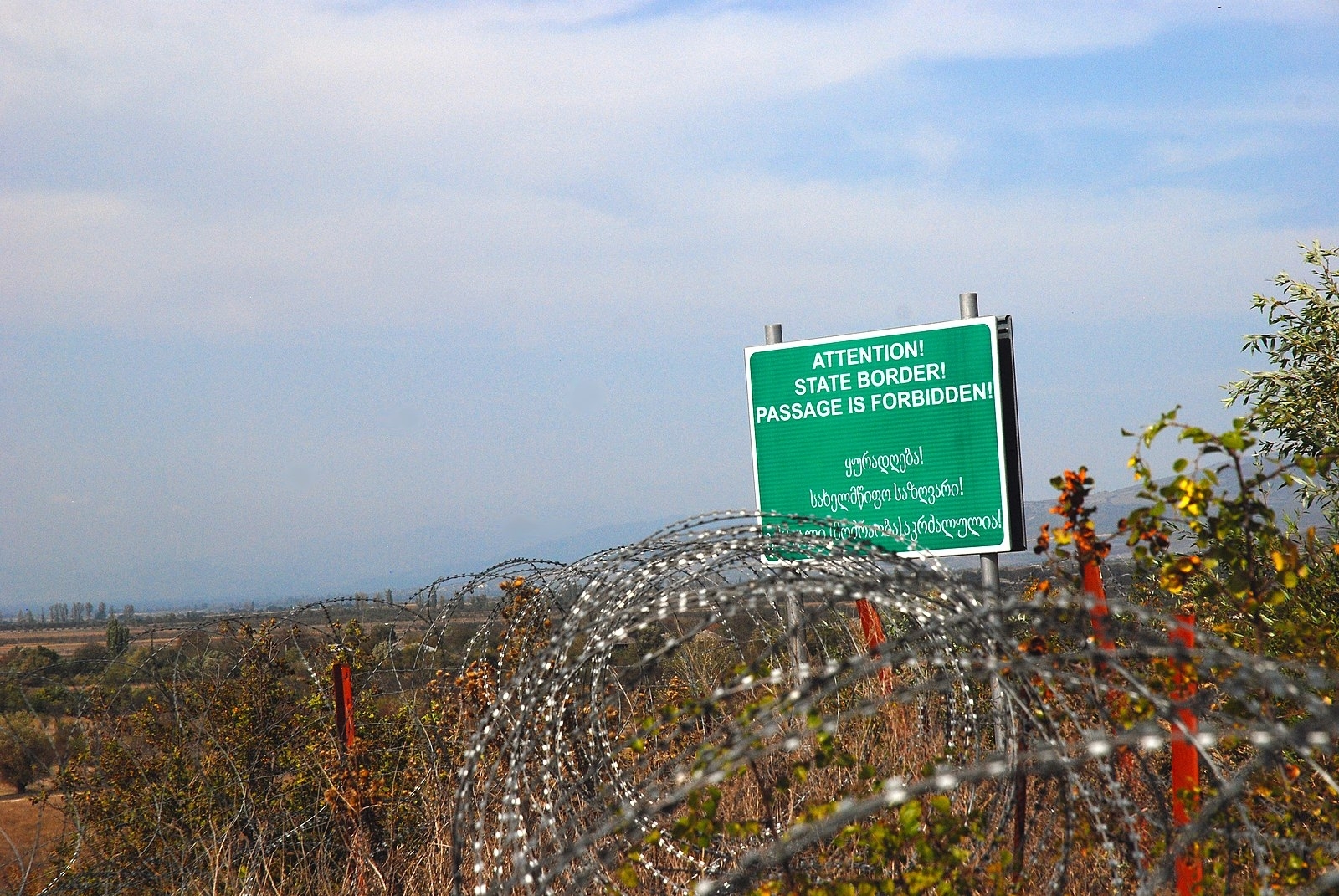
Because we know that we always live under conditions of a military threat from Georgia. That threat, incidentally, has not gone anywhere.
Georgia itself is also going through complex internal processes, but what we see in the mass media does not inspire much optimism. Because we see a revival of this aggressive rhetoric towards us.
This undoubtedly needs to be addressed by our diplomats. Not simply by exchanging accusations through official statements. We need to engage in diplomacy. To look at where the areas are in which we cannot achieve any progress — this is the issue of state and legal relations.
But there are areas where we can move forward. This is the situation in the border areas, cross-border trade. At least to find some mechanisms for easing this tension, which will inevitably flow from the media into the sphere of real politics. Because public opinion influences real policy. And the Georgian authorities will be forced to follow in the wake of these radical sentiments towards Abkhazia.
That is, we must understand all this, engage in diplomacy, strengthen our military capabilities and our capabilities in the field of security, in interaction with our strategic partner. At the same time, articulate ideas that could correspond to the geopolitical context.
Here it is important to understand that different actors are present in the region. They both conflict with and interact with one another. We must find our long-term position in this complex world. To get through this difficult period and ensure stability here, so that we are not seen as some kind of threat, as a source of threat emanating from us.
Inal Khashig: You were saying that we are now in a period of creating new zones of interest, redistribution, the emergence of new alliances, new forms of cooperation, and so on.
As for the post-Soviet space, the government of Moldova has stated that it is already initiating its country’s withdrawal from the CIS.
On the other hand, in the context of what is happening, Aleksandr Dugin, the well-known Russian political analyst, has said that Russia needs to exert very strong influence on Armenia, Azerbaijan, and Georgia — that they should become pro-Russian and enter into an alliance. To what extent is this idea even viable? It is clear that the CIS, in the form in which it was created, was not a particularly viable organism even then, and now it is clear that it is, in general, a dying structure. And how realistic is what many experts are talking about — not only Dugin — namely, the recreation of some kind of USSR 2.0 in this space?
Astamur Tania: A lot is said about recreating a USSR-2. But at the same time, none of those talking about it have formulated what it would be based on, or what it would be needed for. The USSR itself did not emerge just like that either. It was needed by the political elite of that time — the Bolshevik one.
First of all, the ideas of communism then had international popularity. Let me remind you: the First World War had just thundered through history. Enormous losses, disillusionment, a drop in living standards — and, accordingly, the rise of left-wing ideology were taking place. Against this backdrop, the Soviet Union emerged. Its creators offered the subjects of the Soviet Union ideas that seemed attractive to them.
I remember that among these ideas was, in particular, the right of nations to self-determination. Strange as it may sound, the Soviet Union was created precisely on the basis of promoting the right of nations to self-determination. And on the idea that it would be easier for these self-determined nations, together, to resolve their political, social, and economic problems.
By the way, there was a lot that was bad in the Soviet Union. I myself am not a fan of that form of governance. Because it turned out to be a dead-end model economically. There was too much idealism. And all of this degenerated into a kind of religion detached from reality — which, incidentally, is what is now happening with left liberalism. But nevertheless, there were achievements in terms of modernising the country.
If we talk about any kind of integration, in this case Russia is spoken of as a centre of attraction. Russia has to offer what these states need. These are ideas of economic development, security, scientific and technological progress. For the outskirts of the Russian Empire at the time, Moscow — and then St Petersburg — were suppliers of advanced knowledge, advanced ideas, and a source of material, intellectual, and cultural growth.
Empires do not exist just like that. Otherwise, they would resemble the empire of Alexander the Great — which collapsed almost instantly once the military force sufficient to control that territory disappeared.
Therefore, when people talk about some kind of integration models, they should not appeal to emotions, but look at them from a programmatic point of view — what this or that integration model can give to its participants.
And imposing something from above by force will not work now. That can provoke a series of conflicts. This also relates to what we were talking about at the beginning — that PR should not run ahead of real developments. When you have a programme of action, then it can be promoted. Otherwise, it simply generates tension. We see the reaction in these countries. You can create problems for yourself out of nothing.
So, of course, such statements are not something to joke about. I hope this is just the personal opinion of Dugin, and nothing more. Because the consequences could be the opposite of what the authors of these statements intend. That is what can happen.
Inal Khashig: On that note, I will be bringing our programme to a close. Happy New Year to everyone. I hope this year will be noticeably better for us.
Astamur Tania: It will be a difficult year.
Inal Khashig: That goes without saying.
Astamur Tania: And there will be no easy years in the near future. This needs to be understood clearly. That period of relatively stable development which existed in the early 2000s — especially after our recognition — is, unfortunately, coming to an end. That page has already been almost turned. As regrettable as it may be, this is the reality.
Inal Khashig: Nevertheless, let us hope that everything will turn out well for us. I will be saying goodbye to you now. Let me remind you once again that our guest today was Astamur Tania. We summed up the results of the past year and talked about the present day. We hardly spoke about Greenland, but we had it in mind. Happy New Year to everyone. Until we meet again.
Astamur Tania: All the best.