







Stereotypes of Georgians and Abkhaz
In the Georgian-Abkhaz conflict, alongside political interests and factors, the narratives and stereotypes existing about one another within the societies have also exerted their influence. Their impact and relevance have not lost their significance today.
In particular, widespread dissatisfaction and even protest among Abkhaz is caused by the perception prevalent in Georgian society regarding “real Abkhaz” and “resettled Apsuas.”
Such a historical version was proposed as early as the 1950s by the Georgian historian Pavle Ingorokva (1893–1983). His theory asserts that modern Abkhaz are an ethnos of Adyghe origin, the Apsua, who migrated to the territory of modern Abkhazia from the North Caucasus in the 17th century. According to Ingorokva’s concept, the real Abkhaz existed in antiquity as the indigenous population of the region but were assimilated by another indigenous ethnic group – the Georgians (Kartvelians). Meanwhile, the newly arrived Adyghe tribes, Ingorokva believed, merely appropriated the historical name “Abkhaz” for themselves
In turn, it is popular within Abkhaz society to consider Georgians as late settlers to the region and as colonizers.
Main theses:
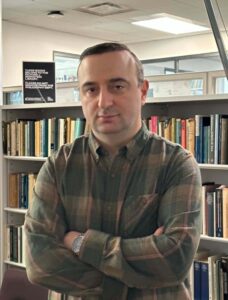
Question: In Georgian and Abkhaz societies, perceptions and stereotypes exist about one another that are unacceptable and even irritating to both sides. Within this discussion, one of the central places for Abkhaz is occupied by the Ingorokva theory, its popularity in Georgian society, and in scientific or political circles. It is precisely from this theory that the well-known “Abkhaz/Apsua” issue stems. To what extent is this theory recognized in the Georgian scientific community?
Malkhaz Toria: If we observe Georgian historical science, I would not consider the “Abkhaz/Apsua” issue to be the primary historical line. It is rather one of the alternative views.
The dominant historiographical opinion originates from Simon Janashia, whose views are also reflected in the work of Zurab Anchabadze.
Janashia is the author of the moderate and central vision of Georgian historiography. He recognized close historical and cultural ties between Abkhaz and Georgians and emphasized a shared state-political experience.
At the same time, he distinguished between an Abkhaz and a Georgian based on ethnic and linguistic traits, seeing them as a “different people”; however, this “different people” was so close and tightly bound to Georgians that he considered them part of a shared cultural, political, and state space. He recognized Abkhaz as a separate, “individual” group from a linguistic and ethnic standpoint, yet he placed them within a shared historical-cultural space with Georgians.
In the Georgian scientific community, many have criticized Ingorokva’s theory, many have agreed with it, and it must be said that the divergence of opinions continues to this day.
Regarding Abkhazia, the Georgian historical school, regardless of the political control under which it operated, has always encompassed diverse opinions, and Ingorokva’s theory was no exception. Within the Georgian scientific community, many criticized it, yet many agreed with it. It must be noted that disagreements regarding it continue to this day.
We cannot say that this theory is recognized by official historiography, although even today there are scholars who agree with it. This diversity within the scientific community does exist.
The majority of Georgian scholars believe that the ancestors of modern Abkhaz are the tribes of the historical Apsils and Abasgians. The view that today’s Abkhaz are actually the Apsua tribe that arrived from the north is considered a kind of radical position. Some even consider this theory to be marginal.
What unites the various Georgian historical opinions is that Abkhazia and the Abkhaz are viewed within a shared Georgian historical, cultural, and political space. Georgian historiography speaks of a very close historical connection between Georgians and Abkhaz.
Upon its publication, Ingorokva’s theory sparked a sharp discussion among historians and scholars of other fields in Tbilisi. It lacked sufficient scientific evidence and reliability.
However, when analyzing this criticism, one must consider the factor of who was in power at the time – the general political climate of that period.
The popularization of this theory is likely connected to the national movement and begins in the 1980s. Furthermore, the environment following the Georgian-Abkhaz armed conflict infused its popularity with greater energy.
Pluralism persists within Georgian scientific circles and public discussions to this day. Someone may be guided by Ingorokva’s theory, but another person will invariably appear in this discussion to criticize it.
To summarize, Ingorokva’s theory does not define Georgian historical knowledge, science, or memory. It is, to a greater extent, an opinion popular within society that has been broken down into banal messages. Its ideas travel through the Georgian space, including via modern social media, but they do not define official Georgian historiography.
Question: What is the attitude of Georgian political elites and the state toward this theory?
Malkhaz Toria: As for the political attitude toward this theory – it is nowhere recorded that Georgian political elites or state policy are guided by Ingorokva’s theory and consider Abkhaz to be “Apsuas” who migrated from the North Caucasus.
Nor is the opinion firmly shared that Abkhaz are actually ethnic Georgians and possess no cultural identity of their own.
Instead, the emphasis is placed on brotherhood, a shared past, etc. It must be said that this is also a kind of formula that often sounds artificial, but politicians follow it consciously or subconsciously.
In the eighties, when a wave of exclusive nationalism emerged among both Georgians and Abkhaz – Ingorokva’s theory gained a second life and, within a short span of time, penetrated everyday life precisely from political circles, consciously or unconsciously.
It was precisely the notion that Abkhaz are Apsuas, guests, etc., that turned out to be ideally suited for exclusive nationalism.
It is as if these opinions took root more firmly in society during the post-war period, since a kind of compensation for the collective trauma caused by the loss of control over Abkhazia occurred precisely through these views known from Ingorokva’s theory.
Question: It seems that the popularity of this theory is also conditioned by the interaction between science and political circumstances, or conjuncture.
Malkhaz Toria: Historical science, as a rule, falls victim to this interaction. In societies with a totalitarian experience, whatever the political climate is, so too is history.
For example, it is precisely because of this conflict and the authorities’ support for the criticism of Ingorokva’s theory that migration theories and work on them have almost completely disappeared from scientific circles. A complex emerged that if you research migration issues, it means you are a supporter of Ingorokva and a radical.
This is a specific example of how science suffers precisely because of the political climate.
Meanwhile, migration as a factor can be an interesting question for research. Throughout history, we constantly notice migrations on a mass or regional scale.
This process is even more interesting in the case of Abkhazia, as it is a region where two worlds meet—the Kartvelian and the Adyghe. The relations between them, even the migration processes, are an interesting scientific direction. However, a kind of political taboo has been placed upon it.
One does not necessarily have to be a supporter of Ingorokva’s theory to notice migration processes in the region of Abkhazia.
Question: What negative influences of political conjuncture do you notice in Abkhaz scientific circles?
Malkhaz Toria: The negative impact of political conjuncture on history is also clearly visible in Abkhaz society and among its intellectual elites. Their interpretation and explanation of history are also tailored to the existing political conjuncture, which, in turn, is built on detachment and differentiation from Georgians.
Unfortunately, their historiography aims precisely at the “scientific” substantiation and demonstration of this difference; showing how distinct the history of Georgians and Abkhaz, of Georgia and Abkhazia, really is.
We notice the problem of politicized historiography or science, where theoretical approaches are used to reinforce a predetermined conclusion.
The main function of history is not to draw conclusions; its role is a multifaceted description and explanation of processes. We must possess as diverse information and knowledge as possible about a given event.
For example, in Abkhaz scientific circles, the dominant opinion is that Georgians are a constructed nation that has no pre-modern foundations. In contrast to them, Abkhaz are a formed nation, whose formation was completed almost in the Middle Ages. The Georgian national project attempted to swallow it and failed.
This kind of approach contributes to the estrangement and division of Georgian and Abkhaz societies.
We must at least see that Georgian-Abkhaz relations are complex to say the least. Factual knowledge is not enough to explain them. They require social and cultural research and discussion. How can one see only conflict in Georgian-Abkhaz relations?!
Question: How similar or different is the attitude toward history in Georgian and Abkhazian societies?
Malkhaz Toria: In many cases, these views on history are even identical. I use the term – mirror nationalism.
For example, it is part of the Georgian discourse that Abkhazia is an exclusively Georgian region. We see the same discussion in Abkhaz society.
During analysis, both sides use the exact same mechanisms, the only difference being in the content.
Another approach is the absolutization of history, or of an event, and with specific emphases at that.
For instance, in Abkhazia, the process of Georgian settlement is considered excessively massive, while at the same time, less is said about the settlement of Russians, Armenians, or other groups.
When speaking of the Muhajirism, the emphasis is placed on the so-called Georgian lobby, which managed to persuade the viceroy of the Russian emperor and proceeded to exploit the region. The emphasis shifts from the perpetrator to something else, even though it was precisely the Russian Empire that was the organizer and executor of Muhajirism.
Concurrently, as I said, a conscious husking up of Georgian-Abkhaz cultural and political ties takes place.
Question: If we take history – how do you see Georgian-Abkhaz history, its nature?
Malkhaz Toria: I see the history of Abkhazia as a history of long-standing relationships between Georgians and Abkhaz. These two groups in this region were in constant interaction. They influenced each other – politically, culturally, or otherwise. Both of these groups are the creators of that reality which Simon Janashia and Niko Berdzenishvili called a shared historical, state, and cultural space.
Question: What are those barriers that have been created on the Abkhazian side and are this time already causing criticism and dissatisfaction in Georgian society?
Malkhaz Toria: Abkhaz historical perceptions and their political ideology coincide. In the Georgian case, this is not so.
For example, even in scientific circles, there is the Ingorokva line, but it is not dominant. Criticizing Ingorokva is also considered normal. Moreover, today in the modern scientific community, it is not even considered good form when you agree with Ingorokva. It is not regarded as solid historiography.
In the case of the Abkhaz, however, popular, banal nationalist historiography and political ideology coincide. This is expressed in their school education, in the politics of memory. We see this in the epistemological, symbolic violence toward the inhabitants of Gali, in the forms of achieving cultural hegemony. Unfortunately, what they accused Georgians of, they themselves now use in language policy. This is clearly visible in the school education there and in the ban on teaching in the Georgian language.
We see that the symbolic policy of the Abkhaz coincides with their administrative policy, with their attitude toward civil rights issues. Gali today represents a zone of interest for Abkhaz ethnocentric, primordial, exclusive nationalism.
And this creates not only symbolic but also real barriers, as it determines the economic and political vulnerability of the local Georgian population.
In Gali, we see that students celebrate Ardzinba’s birthday and recite poems. No matter how much time has passed since the conflict – no one will believe that these children, locals, are doing this with joy, of their own free will. But the Abkhaz elites, looking at this, are satisfied.
I am reminded of Frantz Fanon’s post-colonial studies. He describes how societies liberated from imperial rule can use the same imperial methods and mechanisms against other groups and for their oppression.
In addition, we see a second approach as well: since they notice that the Abkhaz language has not established itself so successfully among the Gali residents – the emphasis is placed on “Russification.” This approach shows that the de facto Abkhaz administration is trying in every way to erase Georgian identity in the Gali district. Gali residents might not start speaking Abkhaz, but transferring instruction in local schools to the Russian language is a completely realistic plan, which is moreover being implemented.
There is also a separate attempt to replace Georgian identity with a “Megrelian identity.”
The post-colonial condition also manifests itself in so-called hybrid identities. For example, Sergei Shamba notes in an interview that during Beria’s time, Abkhaz were irritated not so much by the settlement of Megrelians as by the conversion of the Abkhaz alphabet to Georgian. According to him, by doing this, Georgians tried to change the identity of the Abkhaz. And at another moment, he says himself that we are, supposedly, Russian at heart.
These are contradictory positions. In such moments, the incompatible becomes compatible: you can say that you are an ethnically expressed Abkhaz, but add that you speak the language of Pushkin. Concurrently, you consider Georgians to be the main threat, and you see the problem of the erasure of Abkhaz identity in Georgians.
This is a sad manifestation of tribalism. The Russians called us, Caucasians, “natives” (tuzemtsy). They got rid of one group of local “natives” with the help of another, cleared the space, and fully subordinated the region.
We also frequently hear that the independence of Abkhazia is already an accomplished fact with which Georgia must reconcile and which it must recognize, as if this were a final verdict in history or the will of God that you can never change.
I think this is a methodologically incorrect approach as well, since it is resolutely difficult to rule out that one day the geopolitical configuration might change radically. And this, in itself, will have a great impact on the issue of Abkhazia.
I think Abkhaz society is also insufficiently self-critical. They do not allow the thought that, perhaps, their views, their ethnocentric ideas about the past or the future require alteration or revision.
Unfortunately, the Abkhaz historical and political narrative creates barriers already for themselves as well, since they themselves are captives of these nationalist, ethnocentric narratives.
The world viewed from these frameworks is dualistic, dichotomous. It constantly needs an image of the enemy. This role is performed by Georgians, although we see their problematic attitude toward local Armenians as well.
Question: What is the cause of this, what conditions it?
Malkhaz Toria: I think that this is a result of the legacy of the conflict. A manifestation of the geopolitical reality that formed here after the collapse of the Soviet Union. This environment is against the revision of dominant paradigms.
Our attitude toward history will not change until the political situation changes. At the same time, a change in the geopolitical situation does not automatically mean any kind of positive changes in other directions.
Sometimes history is not merely a result of political conjuncture; it itself becomes a mechanism, an independent factor.
Question: The main question in a conversation about stereotypes probably concerns the search for a way out. What both sides should or can do. In both scientific circles, a Soviet identity is felt, where it is not the norm for a scientist to be bold, controversial, or to go against the main political line. In addition to the need to revitalize independence in science, what else can compel societies to change their negative perceptions of each other?
Malkhaz Toria: Yes, it is difficult to express alternative opinions at a time when we notice the rise of right-wing ideologies. We must also understand that alternative does not necessarily mean scientific.
For me, distancing myself from Georgian nationalism does not mean accepting and embracing Abkhaz nationalism. Conditionally speaking, I can distance myself from ethnocentric and exclusive views coming from both sides – both from Abkhaz and from Georgians.
In general, we cannot wait around for when the geopolitical environment changes. At this stage, a way out can be seen in demonstrating initiative and in constant conversation and dialogue with each other.
Even today, I teach a course – “History of Abkhazia – Georgian-Abkhaz Perspectives.” The final block of the course concerns precisely this question – what should be done?
We must use every opportunity for dialogue and conversation. Not with the motive of making someone change their opinion. We simply must talk, we must enter each other’s “field of understanding.”
When you see someone else’s world in more detail – it becomes easier for you to find a way out, more ideas appear. During conversation, the sides often discover each other, and themselves as well. This process enriches both sides; in such a way that they do not notice it themselves – both sides begin to change.
Dialogue is not an abstract concept. What seems impossible today – tomorrow can be a reality. As they say, nothing is permanent in this world, so why should a conflict be eternal?
The Georgian-Abkhaz conflict is a tragic event that cannot be ignored. We need a new, more positive event that will turn a different page. And for this, we need contact with each other.
I am not saying anything new: it is not necessary from the very beginning to start discussing the political status. Let’s start with the topic of transport communication, say, between Zugdidi and Gali; there is a whole array of economic, sporting, humanitarian, or medical issues around which cooperation is entirely possible, given the desire, of course.
It is clear that the Russians do not want relations, conversation, or reconciliation between us and the Abkhaz. I think that we will find common topics for conversation or common interests regardless. I do not think that this is an insurmountable wall. It simply requires political support as well.
As for overcoming stereotypes, I think the way out lies in public science.
Academic discussion and scientific knowledge must reach a wider public audience. This will help us in overcoming these stereotypical and banal historical perceptions as well.