Russia is preparing ground for painful decisions in Abkhazia | Interview with Paata Zakareishvili
Interview with Paata Zakareishvili
The year 2025 turned out to be eventful for Abkhazia. It was also interesting in terms of the Georgian-Abkhaz context and geopolitical changes related to regional conflicts. We offer you an interview with Paata Zakareishvili, where the conflict studies specialist summarizes the most important political issues of the past year.
In the past year, de facto presidential elections were held in Abkhazia, as a result of which Badra Gunba became the de facto leader of the region. How would you evaluate these elections and Russia’s unusually open interference in these processes?
Yes, these elections reflected a significant turn in Russia’s policy toward Abkhazia. For many years, Moscow did not openly involve itself in Abkhazian elections. The last time this happened was during the confrontation between Bagapsh and Khajimba, and even then, this activity proved counterproductive for Russia.
Since then, Russia had not openly interfered in the matter of elections, as it was clearly visible that this approach caused agitation among Abkhazians. Everyone there is pro-Russian, and no one liked crude interventions in internal affairs. After many years, this is the first case when Russia interfered in Abkhazian elections fundamentally and purposefully.
The reason for this is that, apparently, it was worth it to them to obtain such a local government that would not depart from Russia’s interests in a critical situation. In a geopolitical context, Russia has no problems in Abkhazia. Against the background of international sanctions, it is clearly visible that Russia needs Abkhazia in a completely different direction, and precisely this is one of the leading themes of 2025.
Russia found a new function for Abkhazia, and moreover, by using the Georgia factor. The territory of Georgia, which it recognized as independent itself, Russia is now using precisely as the territory of Georgia and not as an independent political unit.
Gunba was vice-president during Bzhania’s time, did not interfere in anything and was quiet, but it turned out that he possessed certain ambitions and a readiness to perform his role. This role is to be a reliable figure for Russia, a person endowed with its trust. Gunba fully takes upon himself the obligation of “whitewashing” Russian imperialism. No matter how much Russia humiliates the Abkhazians — Gunba whitewashes it and takes it upon himself.
The de facto president of Abkhazia must be a person endowed with Russia’s trust — this is a kind of axiom, but how did Gunba surpass Adgur Ardzinba, his main competitor? What level of obedience did Gunba offer that Ardzinba’s team could not convince the Russian side to place their bet on them?
I think the matter is simple here. Gunba was a representative of the previous de facto government, vice-president, and with his support, the Russians would not have to implement any serious, fundamental political changes in Abkhazia. Adgur Ardzinba would have been just as obedient as Gunba is today, but if he had won, a new team would have come to Sokhumi with new ambitions, and the Russians would have needed to satisfy new interests.
Russia did not trouble itself with extra risks. They could have let the processes take their course, Ardzinba could have won too, and today the situation would be exactly the same, nothing would have fundamentally changed. But this would have been followed by a feeling among Abkhazians that they are tough, that they managed the Russian pressure, the Russian press.
Russia showed them that they did not manage it and showed that the Kremlin manages the situation in the region. Russia could have stepped aside and not interfered, but now was not the time for this. They are not achieving successes in Ukraine, sanctions were imposed on them, and at this time giving the Abkhazians the feeling that they are tough — this is what did not suit the Kremlin.
The Russians understand that their failure strengthens others. After the start of the war in Ukraine, in many countries in the post-Soviet space [Central Asian countries, Azerbaijan], self-awareness strengthened that it is possible to argue with Russia and even to demand things — the Abkhazians could have developed this feeling as well.
So here it is not about Ardzinba’s mistakes. He simply found himself in the wrong place at the wrong time. It was not his time. In this interference, primitive Russian imperialism was revealed. They have this attitude not only toward Abkhazians, the same is revealed toward Georgia too.
It is precisely primitive imperialism that forces the Russians to think and act with the following logic — Georgia or another country cannot achieve success in anything or work successfully with Russia. The other must necessarily be unsuccessful in this relationship, and the Kremlin must necessarily dictate to the other how to behave.
Let’s touch upon the issue that was activated several times last year — transit through Abkhazia. There is an opinion that after recognition, Abkhazia lost its function for Russia, but the war in Ukraine created this function — transit to bypass sanctions. To what extent is Abkhazia performing this role?
The form in which the Gali terminal was built in Abkhazia and how they intend to use it testifies that Russia does not look at Abkhazia properly. It grants it only the function of a territory and not a political function. No one asks the Abkhazians. The Russians ask Georgia, but the Abkhazians — no.
I think they are talking to the Abkhazians from a very humiliating position. The Russians do not create a feeling in the Abkhazians that they have acquired some new role. Abkhazia simply turned out to be a unique black hole: nowhere else, in none of the neighboring countries, does Russia have such a gray zone where cargo can enter the territory of one country and then be re-registered as Russian cargo.
Does the Tskhinvali region not possess these signs to be used for transit? Why is such an emphasis placed on Abkhazia?
In Abkhazia there is a railway, an airport, and sea ports, while Tskhinvali is closed and such infrastructure does not even exist. If it becomes very difficult for Russia, it will use the Tskhinvali Road too, but today there is no need for this. Tunnels and a highway are being built at Lars, and this is enough.
Abkhazia, however, is unique — warm sea, roads do not close. Russians need not ports more, but the Gali terminal. Cargo entering Poti will be recorded as Georgia’s cargo, and what happens beyond Poti, no one will be able to control. Gali is the territory of Georgia, and international organizations will not be able to monitor cargo that has arrived there. Gali is not controlled, and Tbilisi will say that it does not know what is happening there.
However, this issue still needs to be verified because through this scheme the law on occupation might be violated in some aspect. Russia used the theme of occupation ideally to carry out this unsanctioned transit.
If you can, describe the scheme of this unsanctioned transit for us. It seems the focus is on bringing cargo into Russia from outside via Abkhazia and not vice versa. What is this scheme in reality: where does the cargo come from, what route do they use?
I think Iran and Turkey are involved in this process, and potentially any country might be using it. One of the main points of transit is the Port of Poti, where there is container traffic. The scheme is likely as follows: cargo from a third country enters the Port of Poti by ship and is registered as Georgia’s cargo.
The main thing here is that in the documents, the final destination of the cargo should be Georgia. Therefore, I think that Iranian cargoes also enter the country via this route. Iran also has the Caspian Sea and they use that route too, but this path is risky because trade with Russia by bypassing sanctions cannot be hidden that way.
When cargo from any corner of the entire world enters the Port of Poti, it will be reloaded and then will enter Gali. Where this cargo goes — to Gori, Kutaisi, or enters Gali and from there to Russia — checking this is practically impossible. This cargo will enter the Gali terminal from Poti, be re-registered, loaded onto new trailers, and turn into Russian cargo.
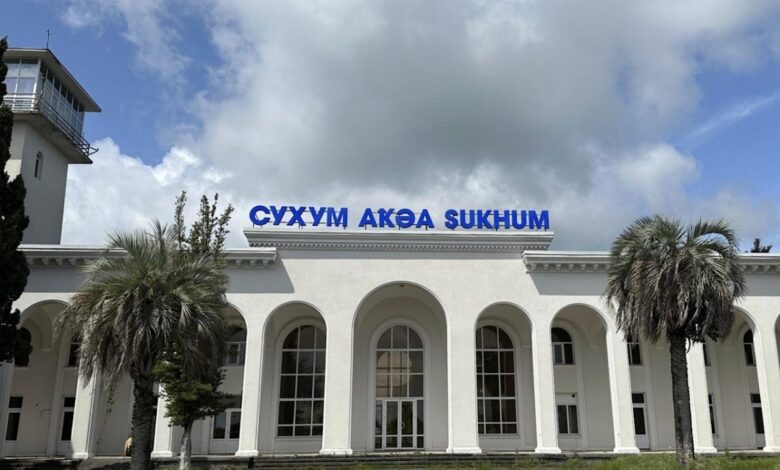
I think that the Ochamchire port works more on export than on import, while the Gali terminal serves cargo that has entered Abkhazia. From Gali, cargo can go to Russia by rail or from the Sokhumi airport by air.
Presumably, someone among us and among the Abkhazians will make money on this. That we have elite corruption — I think is not a debatable topic. The Ochamchire port might be used for secret weapons or small quantities of cargo, because this is a risky path and its control is easy.
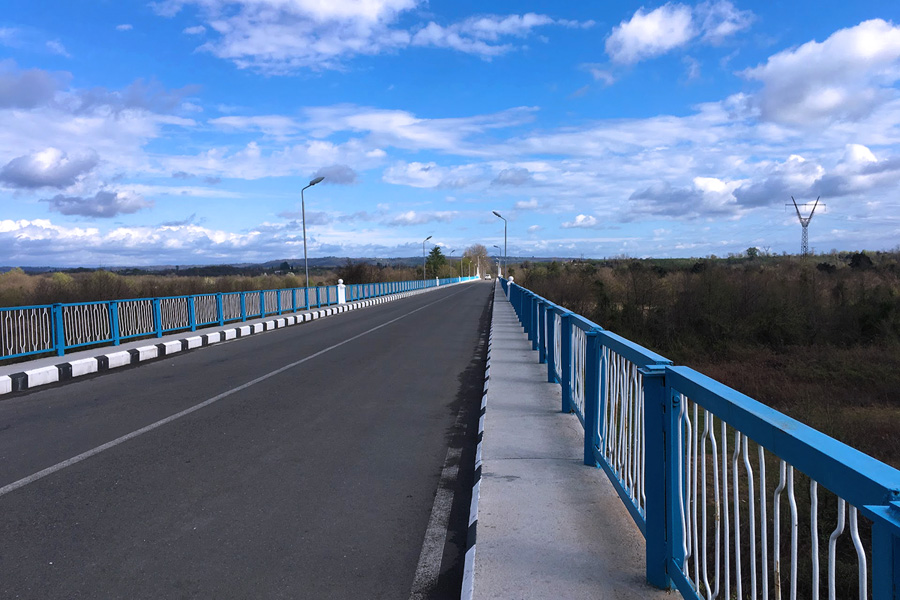
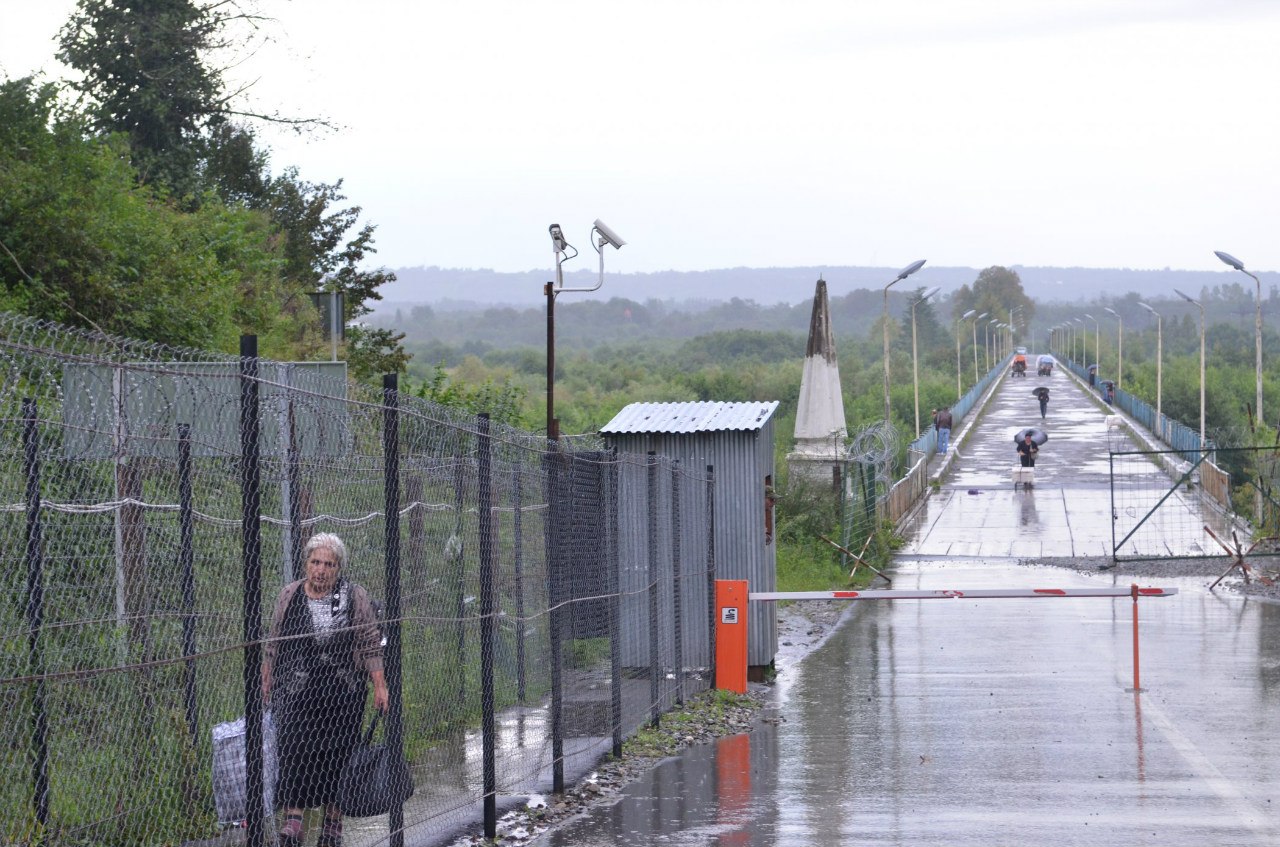
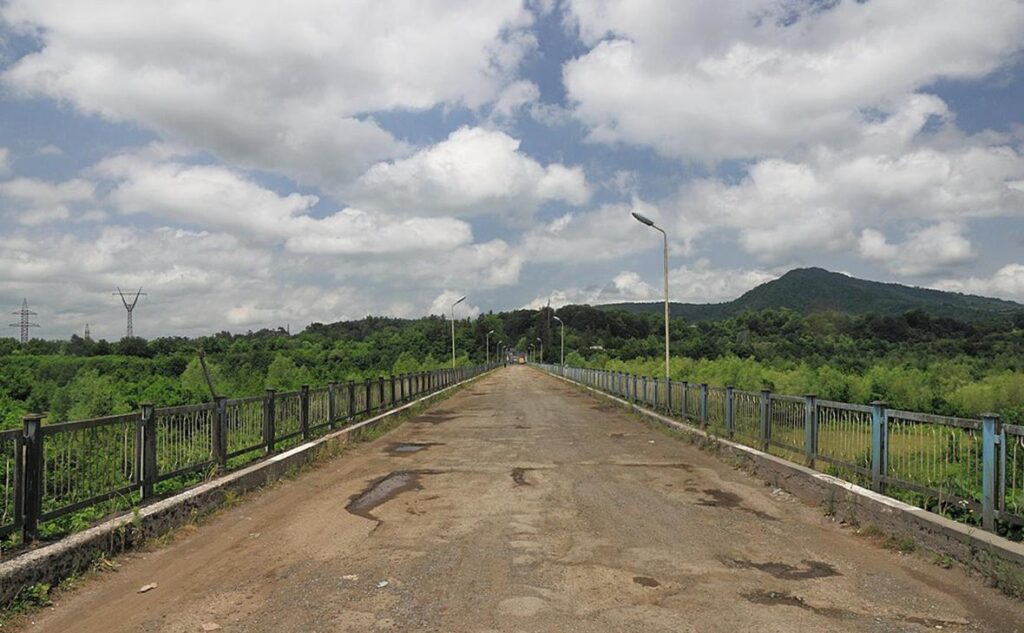
There is an opinion that transit traffic on the Enguri is de facto already acting. Some believe that trailers are driving actively. What do you think, how much has this traffic increased on the Enguri Bridge?
I don’t think the pace has increased. Perhaps trailers are driving, but I haven’t heard about any kind of frequency increase. It would also be difficult to hide this; it couldn’t be hidden. The Gali terminal is a large place and its monitoring is easy even from the Rukhi side, and there too, monitoring of entering cargoes will be easy. For now, this terminal is not working, but if it were working, it would be difficult to hide this.
Is the Gali terminal not creating an analogue of the Ergneti market for Georgia? Do you see any similarity between them?
In Ergneti there was a spontaneous market, and then the mafia and corruption sat upon this process. After the revolution, the government stopped this process crudely. In that form, the market could not remain due to law violations, but in some form, this format should have been preserved. The local population was involved in Ergneti. Ergneti was on our controlled territory, while the Gali terminal is beyond the Enguri and only Russians control it; they don’t trust this business even to the Abkhazians.
At the same time, almost the entire Caucasus traded in Ergneti because it was geographically in the center. Armenians, Azerbaijanis, and others traded here. The Lilo market has been performing this function for years already. Besides, relations are being settled between Armenia and Azerbaijan, and direct trade will likely be restored.
Gali cannot perform the function of Ergneti, and I don’t think that the Gali terminal will turn into a similar trade center. Georgian-Abkhaz trade relations have already been established for years. It is ugly, it is illegal, but it is as it is.
Furniture also enters Abkhazia from Kutaisi, many other products and items. Georgian-Abkhaz illegal trade relations have been settled for years and the terminal cannot bring anything additional.
What will you say about Russian sanctions — several Abkhaz journalists were granted the status of foreign agent, several opposition politicians were stripped of Russian citizenship, and criminal cases were initiated against some. What processes are we dealing with?
This is one of the expressions of the process of taming Abkhazia. Abkhazians, know your place, know what you say, when and how you say it — this is what the Russians are telling them.
They are openly showing — we are punishing a few now, but know everyone that we will reach you too. And I think that with this step the Russians even calmed the situation. Many fell silent. The same PR campaign started against Ardzinba, the anti-Turkish campaign, and others are expressions of this process.
This execution against Abkhazians is at the same time an expression of a new policy — Russians are preparing the ground to clear the field and resistance for future painful decisions.
They are preparing the ground so that after the next parliamentary elections they can make the Abkhazians accept investment and other types of agreements without problems. Local government bodies were also cleared in this regard this autumn — forces supporting Gunba staffed almost all local bodies.
What moods did you notice among the Abkhazians themselves last year, how do they look at these processes?
I think that the Abkhazians are tired. They are waiting for the end of the war in Ukraine and are preparing to concede. They see that Georgia has conceded, and in such an environment the Abkhazians’ power of resistance is being exhausted. Georgia neither helps nor hinders Russia to do anything in Abkhazia, and the Abkhazians feel this too.
The main problem is that they are no longer talking and discussing the future in Abkhazia. The international situation is changing and the world is being arranged in a new way. Now, where the Abkhazians will be in this new world — discussion on this is no longer taking place among the Abkhazians.
For them, the traditional picture that Russia exists permanently and the Kremlin is their protector — this guarantee has disappeared. Russia no longer appears as a stable, permanent factor. Perhaps at the end of the war in Ukraine, Russia will be demanded to withdraw troops from all illegally occupied territories.
Bidzina Ivanishvili is not permanent either; perhaps Georgia will wake up too and Russia will have to withdraw troops. Discussion of these future issues is not observed among Abkhazians at all anymore.
Journalist Inal Khashig and historian Astamur Tania discuss ways to ease the standoff between the authorities and the opposition and Abkhazia’s role in regional transit projects