Georgia abolishes the administration of South Ossetia | What does this mean for Abkhazia?
What is the difference in Georgian legislation between South Ossetia and Abkhazia?
The Parliament of Georgia has decided to abolish two laws, effective January 1, 2026: the law “On creating proper conditions for the peaceful settlement of the conflict in the former South Ossetian Autonomous Oblast” and the law “On property restitution and compensation for persons affected on the territory of Georgia as a result of the conflict in the former South Ossetian Autonomous Oblast.”
Particular attention has been drawn to the cancellation of the first law, as this decision effectively abolishes the so-called Provisional Administration of South Ossetia. This has sparked discussion, assessments, and even fears that Georgia might also move to abolish the Government of the Autonomous Republic of Abkhazia in exile.
Naturally, few things can impede such a political decision, but there is a substantive difference in status and content between the Provisional Administration of South Ossetia and the Abkhazian government. The “Georgian Dream” party will inevitably have to consider these distinctions and other political factors.
The South Ossetian Autonomous Oblast was created in April 1922 following the Sovietization of Georgia and was abolished by the Supreme Council of Georgia in December 1990. Since that date, Georgian legislation and the Constitution do not recognize South Ossetia as a political entity.
Despite this, the term “South Ossetia” still appears in the Sochi [Dagomys] Agreement of June 1992 and other later international documents. For example, the term is mentioned in the so-called Sarkozy-Medvedev agreement of 2008.
In May 2007, by decision of Tbilisi, the Provisional Administration of South Ossetia was established on the territory of the former South Ossetian Autonomous Oblast where Georgian jurisdiction operated.
Consequently, two local administrations emerged in the Tskhinvali region: one, separatist, backed by Russia, and the other by Tbilisi. Following the August 2008 war, the territory of the Provisional Administration fully fell under occupation, and the administration has since been operating from Tbilisi.
The legitimacy of this temporary body rested on the results of elections held by the Georgian side on the ground in 2006. However, the Georgian government never officially or legally recognized those elections, and the issue was considered only as part of a political process. “Georgian Dream” has used both issues—legitimacy and political expediency—to explain its decision.
The situation surrounding the Government of the Autonomous Republic of Abkhazia, which operates from Tbilisi, is different.
Abkhazia’s autonomous status was enshrined in the 1921 Constitution of the First Republic of Georgia. The status of the autonomous republic was reinforced by the 1931 decision. The region retained the same status in the 1995 Constitution of Georgia and its subsequent amendments.
The legislative body of the Autonomous Republic of Abkhazia—the Supreme Council of Abkhazia—was constituted based on the September 1991 election results. These elections are recognized as legitimate because they were held before the war and expressed the will of the local population. During the war, a Supreme Council and a Council of Ministers [Government] of Abkhazia were formed from the Georgian delegation.
The Abkhaz side also established a similar structure. In 1994, the Parliament of Georgia dissolved the Supreme Council of the AR of Abkhazia. However, in 1995, it recognized the deputation elected in 1991 who had not participated in anti-constitutional activities as the highest representative and legislative body (the Supreme Council) of the Autonomous Republic of Abkhazia. Status was restored for 26 deputies and is maintained by them to this day.
The legal status of the Abkhazian autonomy administration in exile is stronger than that of the Provisional Administration of South Ossetia. Georgia has not abolished Abkhazia’s autonomous status and granted legitimacy to the pre-war legislative body. However, given the political will, it would not be difficult to find legal flaws in the legislative and executive bodies of the Abkhazian autonomy either.
The deputies of the Supreme Council were elected thirty years ago. Renewing the composition through elections is impossible, which creates a legal loophole. The Abkhazian autonomy government also faces a similar legitimacy problem.
Naturally, the abolition of these bodies requires political will, which will effectively utilize the existing legal and procedural deficiencies. However, unlike the Tskhinvali Provisional Administration, the political cost of this decision is significantly higher.
A purely legal explanation for this decision will not suffice. Regarding the political component, it can be said that if “Georgian Dream” decides to proceed, there is almost no political leverage available to stop them.
For now, the necessity of making such a decision is not apparent, but the abolition of the Provisional Administration of South Ossetia was also unexpected for the public.
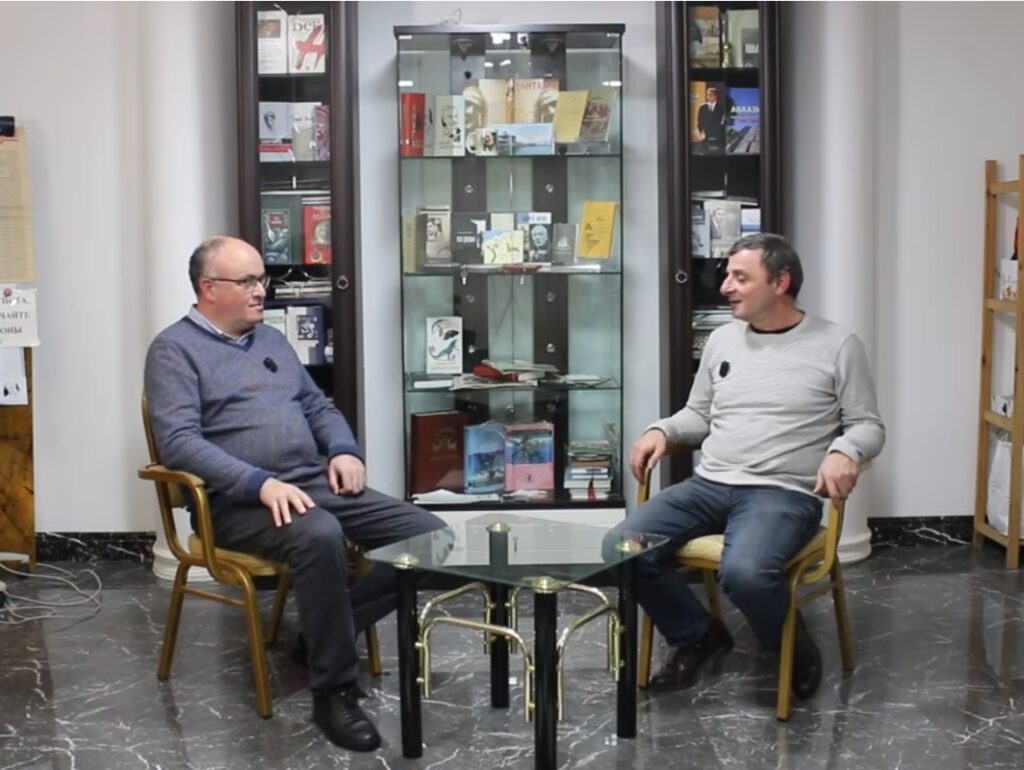
Journalist Inal Khashig and historian Astamur Tania discuss ways to ease the standoff between the authorities and the opposition and Abkhazia’s role in regional transit projects