







Abkhazia in the context of Russian-Georgian relations
For Georgia, deteriorating relations with Washington and Brussels have become an almost routine trend: personal sanctions are being imposed against the leaders of the Georgian Dream party, and the ruling party’s spiritual leader, Bidzina Ivanishvili, is refusing to meet with the US ambassador. Meanwhile, Russian-Georgian contacts are developing dynamically.
They are so fruitful, at least in the trade sector, that the Georgian Dream party is being called pro-Russian by its opponents. Trade between the countries is growing by leaps and bounds, but due to extensive logistics, it has its limits. Representatives of the Georgian and Russian business communities, having met and discussed the need to restore rail service.
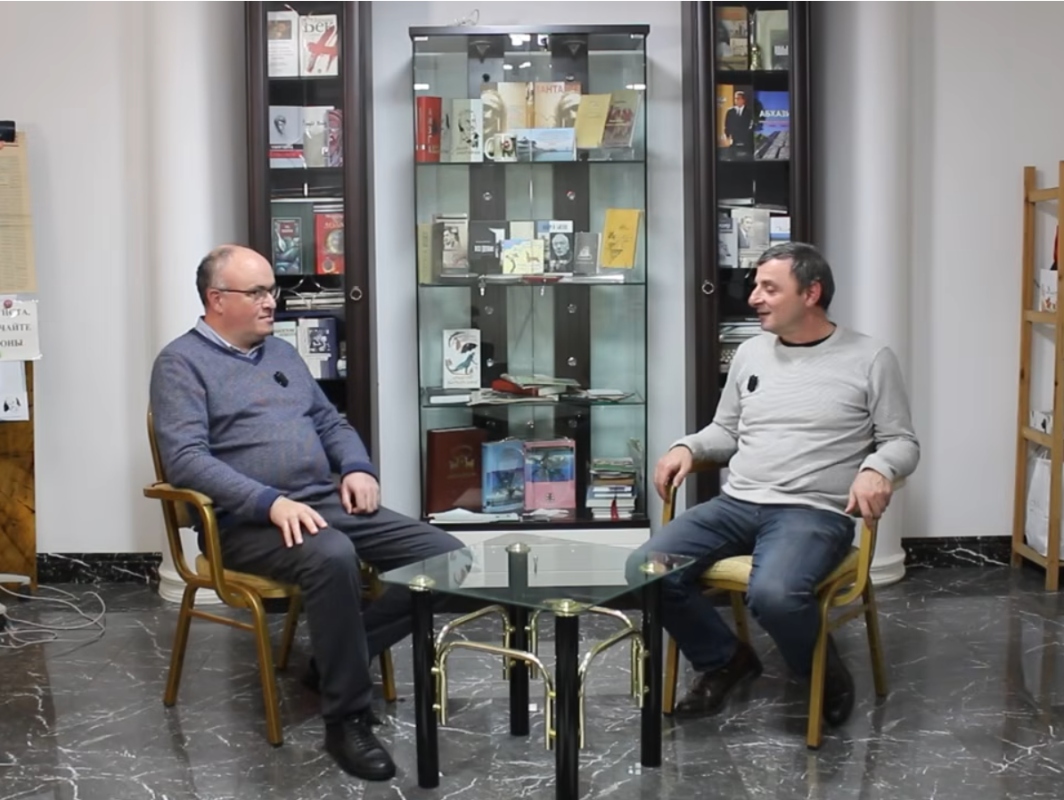
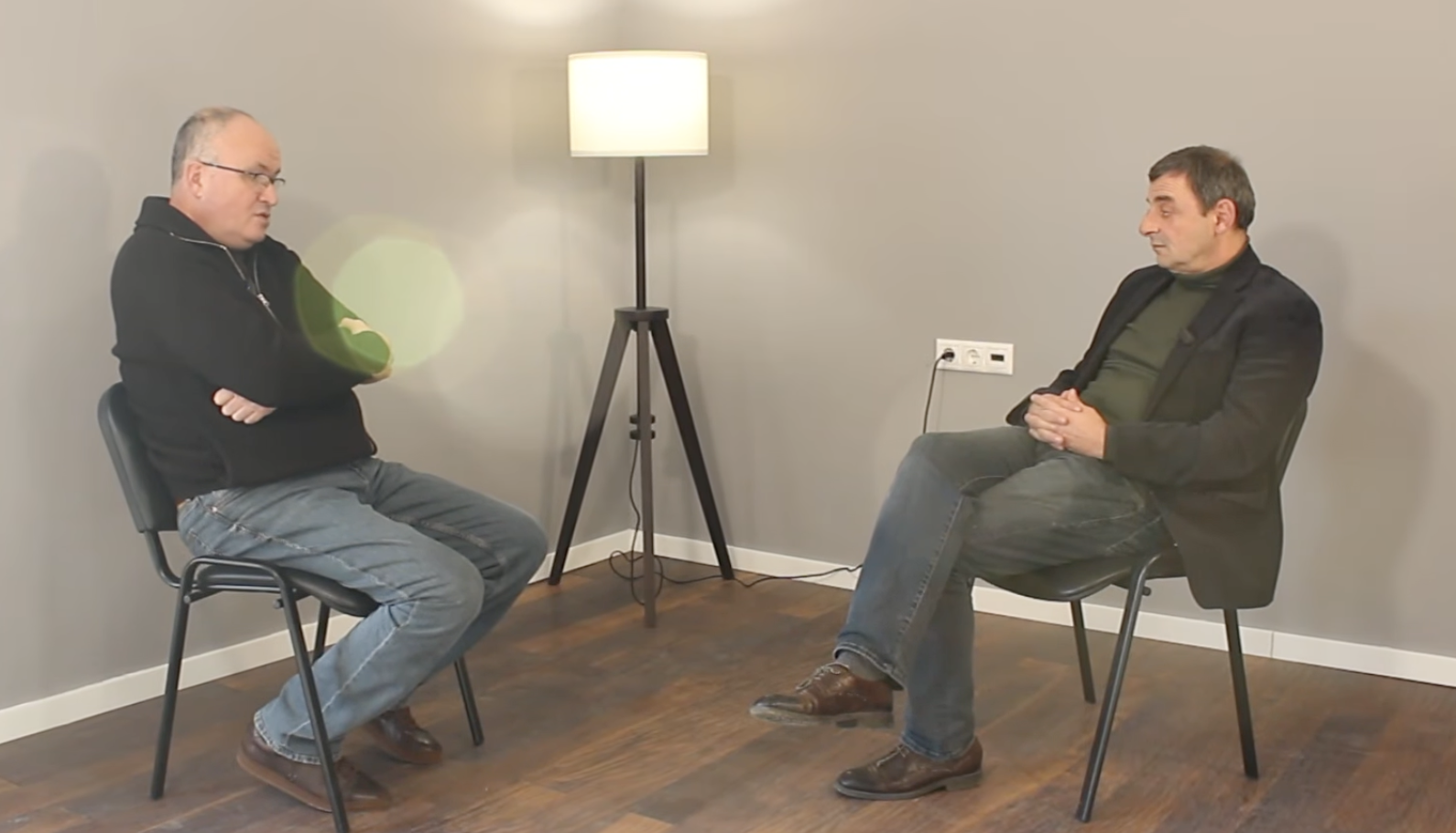
The road in question passes through Abkhazia. Inal Khashig*, editor of the newspaper “CHEGEMSKAYA PRAVDA,” discussed the prospects for cargo transit, Sukhum’s position, and the geopolitical impact on this process with historian and political scientist Astamur Tania.
*Inal Khashig has been added to the Russian Ministry of Justice’s register of foreign agents. However, Inal Khashig categorically disagrees with this and is challenging the decision in court.
Inal Khashig: Hello, this is Chegemskaya Pravda. It’s been a while since we talked about Georgia
Now, I think it’s time to return to that topic. Especially since there are some new developments. Today, our regular guest is Astamur Tania. Good afternoon
Astamur Tania: Hello
Inal Khashig:
It’s May 27 today, that’s when this recording is taking place. Yesterday, Georgia celebrated another Independence Day.
Once again, they declared that Georgians will build their state together with their Abkhaz and Ossetian brothers
A couple of weeks before that, representatives of Georgian and Russian business communities met in Moscow.
They represented certain associations
During that conversation, it was concluded
that to expand growing trade and economic ties between Georgia and Russia,
it’s necessary to use the railway
Since all other logistics routes are already at full capacity
If we talk about the railway –
it’s the one running through Abkhazia
What do you think about this prospect?
One would think – what’s the big deal about business associations?
Some people met and agreed on something.But you have to know the context
A lot actually happens under the label of such business associations in Georgian-Russian relations
They have no diplomatic ties,
but economic relations between the two countries are quite active
Trade turnover is growing
Georgia has become an important hub for Russia,
a hub for import substitution
Georgia’s territory is used for re-exporting goods to Russia
It feels like these business groups, disguised as public organizations,
are actually a platform for making deals
Astamur Tania:There’s a factual situation one cannot ignore
There’s also the legal side, which you mentioned Diplomatic relations are absent,
as are official channels for cooperation
But there are Swiss representations
that effectively serve as reduced versions of Georgian and Russian embassies
They host both Georgian and Russian diplomats
Naturally, informal business contacts are developing too, nothing surprising about that
Looking back, Georgian political elites
have always had a knack for sensing the situation
They usually know how to bet on the strong players
We can recall how Georgian-Russian relations emerged and how they have evolved
Today, Georgia faces an uncertain situation
It wants to maintain good relations with all external actors
As for Russia’s interests, I think it’s wrong to exaggerate Georgia’s importance
as a direct trading partner
It’s unlikely that Georgia could meet Russia’s extensive foreign trade needs
But Georgia is a strategic territory – a central South Caucasus state
through which all major transport routes pass
So it’s no coincidence that the railway issue came up. We’ve talked about it many times, maybe for two years now
The changes after the last Karabakh war have strengthened Turkey’s role in the region
Azerbaijan’s influence is also growing as Turkey’s smaller but important partner
Armenia, finding itself in a communications dead end,
may gradually, despite years of ideology, fall into Turkey’s sphere of influence
That process will accelerate if the Zangezur Corridor opens
In this context, a conflict of interests may arise between Turkey and Russia
It seems to me that reopening the railway and overall transit through Abkhazia
could serve as compensation for Russia’s strategic losses in the eastern South Caucasus
and help balance competing interests
These transport links could support regional development
while also serving the strategic interests of external players
Relations between them are complex
On the surface, Russia and Turkey appear friendly,
but historically, their ties have been tense
That tension has flared up at times – in the Middle East, North Africa,
and the South Caucasus
There’s another actor we shouldn’t forget – Iran,
also a major player in both the South Caucasus and the Middle East
If both internal and external actors can agree on a formula for peaceful cooperation
based on reopening communications,
we might achieve long-term peace in our region
Naturally, this raises the question of Abkhazia’s role
Who are we? We’re recognized only by Russia
Inal Khashig:
We’ll talk about our role later
You mentioned the Zangezur corridor
Iran said it will not allow the narrow corridor to be opened in the way Baku envisions
I believe that
It’s all right at Iran’s border
If this corridor is opened, it seriously impacts Iran’s security
Turkey has always been a competitor to Iran
And on the other hand, Iran sees Turkey as a kind of U.S. ally
Astamur Tania:These are old players who interacted even before the United States existed. No one wants to be left “empty-handed”. Statements from Tehran should be seen in the sense that it will not allow such communication projects to proceed without its involvement. It’s no coincidence that the “3+3” formula was proposed
Georgia is officially not part of it, so it becomes “3+2,” and even then only sporadically. Nevertheless, Georgia interacts bilaterally with Russia and other actors.
Inal Khashig: But this project hasn’t started working yet
Astamur Tania: Yes, meetings in this format have taken place. But we need to think about what it could be transformed into. Here arises the question of the fate of unrecognized, or rather partially recognized, states
We are primarily concerned about our own fate
From a communications standpoint, we represent the greatest interest
In Abkhazia, the entire communications complex is present: ports, airport
Notice – Georgia hasn’t strongly opposed the opening of the Sukhumi airport
Routine statements were made, but there was no publicity
And this leads to certain thoughts
Inal Khashig: What could Georgia have done?
Astamur Tania: Obviously, nothing except to make statements. But the form also matters, as does the intensity of work on this front I think, overall, moderate optimism is possible. Some de-escalation can be achieved in the region so it doesn’t get drawn into some global confrontation,God forbid, military We’ve said this many times, repeating the same thing
But no other mechanisms are visible yet. It’s necessary to restore an international negotiation platform with the participation of Abkhazia, Georgia, Russia, and international organizations.
So that an intermediate mechanism, like the former Coordinating Council, can appear
Through it, the parties could interact and implement projects with international participation,
without sharply raising the issue of recognition or non-recognition
We have experience where Georgia recognized Abkhazia as a conflict party
and interacted with it in this capacity
There is scope here for intensive, broad work by experts and diplomats
Non-trivial solutions are needed
Inal Khashig:
You mean, primarily transit?
Astamur Tania:
Yes, primarily transit
When people talk about “geopolitics,” it’s not abstract
It’s built around points of economic and military influence, around communications,whether it’s the Silk Road, or communications through the South Caucasus
You can recall the 19th and 20th centuries -how relations between different states developed then
Here, the field is, so to speak, uncultivated,
and something good can be made to grow instead of conflict
Conflict prospects also exist, both among regional actors and with international involvement
We need to work on this to prevent conflicts
Inal Khashig:
We’ve actually been talking about transit for two to three years
Astamur Tania: We’re not the UN Security Council
It’s hard to expect that everyone will sit and listen to what we discuss here
Inal Khashig:
Yes, the situation needs to mature
Over the past year, the situation in Georgia itself has changed significantly
If we take May 26, 2024, as a starting point,
when Georgian Prime Minister Kobakhidze stated:
“By 2030 we will join the European Union
together with our Abkhaz and Ossetian brothers and sisters”
Astamur Tania:
But we don’t even know what the European Union itself will be like in 2030
Inal Khashig:
But (in 2025) there were no statements about the European Union
Astamur Tania:
I think it’s becoming completely abstract now for Georgia,
what’s the point of talking about it?
Inal Khashig:
Moreover, the European vector of Georgia,
despite all the rhetoric of “we want to go to Europe,” doesn’t exist in practice
From Europe’s side, there is clear disregard toward the Georgian government
Not only from the EU
Even the U.S. Congress passed a law
that hits the top of the Georgian Dream party and Georgian authorities
They are under sanctions
For Ivanishvili and his party, it’s a trap everywhere
The West, which was always nearby with open pathways,
is becoming narrower and narrower
Astamur Tania:
First of all, the idea of the ‘collective West’ is a completely unfounded cliché
There is no ‘collective West’ because different players have different interests
The situation increasingly shows this
It seems we are at a moment of global restructuring
But what’s left for us?
The future is variable, we cannot predict how it will end
But this isn’t the first time, a conflict among European players
Russia is also a European player
We can recall World War I, World War II, the Seven Years’ War, the Napoleonic Wars
Each century had its own, so to speak,
and world war starting with conflicts on the European continent
Today, with new technologies and information possibilities,
this naturally takes different forms
But the essence – that conflicts exist specifically in Europe among European players –
does not change
Today, someone gets sanctioned or laws are passed
For example, it happened with Syrian figures
Previously they were considered terrorists,
now they have access to banking through the United States
Even though there’s plenty of video footage of how these people behaved during combat
Despite this, everyone turned a blind eye
Annalena Baerbock even flew in and shook hands with them in Damascus
Practically, international law is breaking down
Everything is becoming very ephemeral
Inal Khashig:
That’s what I mean
Old stereotypical patterns of friendship, cooperation, and development directions
are changing quickly
Syria was under sanctions from many countries
Now, the United States has lifted all sanctions on Syria
The same goes for Georgia
Astamur Tania:
Russia is establishing cooperation with the Taliban
It seems their ban has already been lifted? Or not yet?
As far as I know, they are still recognized as a terrorist organization in Russia
Was it lifted? In any case, it seemed to be heading that way
Inal Khashig:
Now, perceptions of Georgia, its place, goals, tasks, and ambitions, are also changing
Could this change lead to more active development,
like opening railways or restoring transit routes?
Astamur Tania:
Undoubtedly, it could
But we need to stay grounded
I think Abkhazia’s side, its diplomats and experts,
should publicly propose models that are acceptable to us
This must be done
When actual negotiations happen, the Abkhaz side should already have its vision ready
We don’t want a situation where big players have already made deals over our heads
and present us with facts
If we prepare our proposals, they will be taken into account
Others need to understand our interests and what is acceptable for us
This must be stated publicly
We need to think this through, discuss it within our society, and present it externally
Inal Khashig:
We’ve returned to our Abkhaz theme
We must state our interests, focus attention on the problems,
and propose various options
Currently, this isn’t happening
Looking at the new government, which is essentially a continuation of the old one,
slightly renewed, there should still be some new ideas
Two months have passed,
but I don’t see fundamental strategic ideas for Abkhazia’s development
How should it develop amid today’s complex global situation?
What should the economy be based on?
How to deal with energy?
How should we respond to global disruptions as old relationships break and new ones form?
How should we act in this context?
Currently, none of this exists
I’d like to hear your vision or recommendations
Astamur Tania:
I don’t entirely agree that only a minor upgrade occurred
I think the government has undergone substantial changes, even in personnel
Key positions are now held by a new generation
They were deputies in secondary positions before
I think ideologically they also differ from their predecessors
Currently, following the March elections,
there is another “honeymoon” period with Russia
I think it should be used as much as possible
To implement projects, including those we discussed before:
communication projects, improving socio-economic conditions in Abkhazia,
building economic ties, tourism, and so on
Now seems a favorable situation for this,
considering the change of curators from Moscow
This window of opportunity is open
What else?
I think the current government lacks public engagement
There are many reports, but they are routine and official
More public communication is needed, especially from the top leadership, to explain policies
Abkhaz society is used to direct contact with leadership
This is our political culture
Secondly, given our context, there’s a need for some kind of concordat
between political forces, both pro-government and opposition, all active participants
A document should reflect shared values, which all political actors will adhere to
This won’t eliminate political struggle, but basic principles must be agreed upon
Attempts were made over the last ten years
But now the context is not the same as in 2008 or 2014
The situation around us and our strategic partner (Russia) is completely different
We cannot allow escalations
Political forces shouldn’t turn to Moscow to gain competitive advantages, as predecessors did
Some issues we must resolve ourselves. Basic principles in relations with Russia remain unchanged for all political actors. This must be done
Inal Khashig:So you mean we must avoid a situation where Moscow openly backs a candidate in our elections
Astamur Tania:That’s just one example I’m talking about the broader moment. We must formulate internal and external policy principles that ensure our state’s survival as a subject
We must show that the Abkhaz people participate in all major calculations.We must show our role Another point
We must also dialogue with the Georgian side, at least on practical issues
I don’t want to use high rhetoric,
but from the late 1950s to the late 1970s, a generation grew up in Abkhazia
that didn’t see war or repression
This generation gave our nation its character
Many of this generation died defending the homeland in the 1992–1993 war
The generation now in power is “scarred” by war
They went through hardships – economic, financial, lack of electricity,
blockade, many basic problems
Naturally, this leaves its mark
Since the early 2000s, a new generation is forming
that hasn’t experienced these hardships
They grow up in peaceful, independent Abkhazia
They know only an independent Abkhaz state
We must do everything to ensure this generation can stand on its own,
and that the baton of managing Abkhazia passes to them under peaceful conditions
Both internal and external politics should aim at this
To give our nation a future, to participate in international processes, to modernize
Many issues – demographic, linguistic, cultural – must be solved at a modern level
Methods from the 1970s won’t work
When discussing Abkhazia’s future, we must focus on this
All political actors must consider it
How vulnerable is our society?
What steps can we not take because they threaten our existence?
We must agree on this
This demonstrates our maturity
A constitutional reform commission is currently working
I support constitutional reform
But the time for it may have already passed
This must be carefully worked on at the expert level
I would postpone direct constitutional reform and changes to electoral law
It could lead to unpredictable consequences, legal and political instability
For example, there are calls to adopt a mixed or proportional system
Under the current constitutional setup, it would sooner or later lead to power usurpation
We must navigate this complex stage carefully
Steps, including reforming the political system,
must match the context around us: resources, time
Inal Khashig: I agree with your second principle. All steps must consider the surrounding context. But power usurpation has already been happening. We have a single authority, where legislative, executive, and judiciary are effectively linked
We recall the parliament.But on November 15, the same parliament was ready to vote for ratification,only outside intervention stopped it
Astamur Tania:Yes, I know I’m contradicting myself. We’ve discussed this issue many times. I’m not saying we should abandon the idea of reforms entirely I think we need to take steps in the domestic political sphere to build mutual trust between political forces. To overcome this difficult historical stage,
and only then work together on reform models
If I believed reforms could be carried out without conflicts or subjective overreach,
I would fully support them
I’m just suggesting we wait for a while
Not just wait idly, but weigh the pros and cons and conduct thorough expert analysis
Inal Khashig:
I agree with that
All political forces need to create a kind of roadmap
Not only defining a development strategy but also the red lines we won’t cross
But again, the initiator cannot be Ivanov, Petrov, or Pupkin,
even if they represent some organization
The initiative must come from the government
The government must start this conversation, propose the idea
If, after that, political, opposition, or civic organizations refuse, that’s another matter
But the initiative must come from the government
Astamur Tania:
We live in a society where everyone knows each other,
with its own traditions of communication
I agree that the initiative and responsibility rest with the government
Steps can be taken, meetings held, that improve the climate of trust
Then decisions can be made
Inal Khashig:
Yes, there are different options
You could first meet informally with some players, then with others.
Astamur Tania:
Let them think, any method that works is good
Inal Khashig:
We support methods that lead to development
And that’s where we’ll end
Today we talked about Georgian-Abkhaz negotiations,
issues within our state, our political system,
and how they affect the development of the state, its institutions, and civil society
Astamur, thank you very much, until next time